Is Replacing an Air Filter Easy Heres What You Need to Know
Replacing an air filter is one of the easiest car maintenance tasks you can do at home. Most drivers can swap out a dirty engine air filter in under 15 minutes with basic tools. This guide walks you through everything from finding your filter to choosing the right replacement and avoiding common mistakes.
This is a comprehensive guide about Is Replacing an Air Filter Easy?.
Key Takeaways
- It is easy: Replacing an engine air filter is one of the simplest DIY car maintenance jobs anyone can do.
- You save money: Doing it yourself costs a fraction of what a shop charges for the same quick job.
- Tools are minimal: You usually only need a screwdriver and a few minutes of your time.
- Timing matters: Most filters need replacement every 12,000 to 15,000 miles or once a year.
- Location varies: The air filter housing is different in every car, but the process is similar across most models.
- Wrong filters cause problems: Always match the filter size and type to your vehicle for best performance.
[FEATURED_IMAGE_PLACEHOLDER]
Is Replacing an Air Filter Easy? Here Is Everything You Need to Know
The short answer is yes. Replacing an air filter is one of the easiest maintenance tasks any car owner can handle. You do not need special skills, expensive tools, or a trip to the mechanic. In most cases, you can finish the job in less than fifteen minutes right in your driveway.
Many people put off this simple job because they think it is complicated. That could not be further from the truth. Whether you drive a sedan, truck, or SUV, the basic process is almost the same. Once you see how straightforward it is, you will wonder why you ever paid someone else to do it.
In this article, we will walk you through every step. You will learn where your air filter lives, how to remove the old one, how to pick the right replacement, and how to avoid mistakes that trip up beginners. By the end, you will feel confident enough to do it on your own every single time.
Replacing an air filter is also a great way to save money. A new filter costs between fifteen and thirty dollars. A shop might charge you fifty to seventy-five dollars for the same work. Over the life of your vehicle, those savings add up fast. Plus, you gain the satisfaction of handling your own car care.
So let us dive in and show you exactly how simple this job really is.
Why Air Filter Replacement Matters
Your engine needs clean air to run properly. Just like you need fresh air to breathe, your engine needs clean air to burn fuel efficiently. A dirty filter blocks airflow and causes a long list of problems. Understanding why this job matters helps you stay on top of your maintenance schedule.
How a Dirty Air Filter Hurts Your Engine
A clogged engine air filter restricts the amount of air reaching the engine. When the engine gets less air, it burns fuel less efficiently. This leads to several noticeable symptoms:
- Reduced fuel economy: Your car uses more gas than it should because the engine is not breathing properly.
- Sluggish acceleration: You may notice your car feels slow when you press the gas pedal.
- Rough idling: The engine may shake or sound uneven when you are stopped.
- Check engine light: In some cases, a very dirty filter can trigger the warning light on your dash.
- Black smoke from the exhaust: This happens when the engine burns too much fuel due to poor air intake.
These problems start small but get worse over time. A filter that costs twenty dollars can prevent expensive repairs down the road if you replace it on schedule.
How Often Should You Replace Your Air Filter?
Most manufacturers recommend replacing the engine air filter every 12,000 to 15,000 miles. However, this interval can change based on your driving conditions. If you drive on dusty roads, in heavy traffic, or in areas with poor air quality, you may need to replace it more often.
A good rule of thumb is to inspect your filter every time you check your oil. If it looks dark and dirty, go ahead and swap it out. There is no harm in replacing it early. A clean air filter keeps your engine healthy and your fuel economy in check.
For those who prefer professional service, Jiffy Lube offers air filter replacement as part of many service packages. But as you will see, doing it yourself is even easier.
What You Need Before You Start
One of the best things about this job is how little you need. You probably already have everything in your garage or kitchen drawer. Here is your checklist before you begin.
Tools and Supplies
- New air filter: Buy the correct filter for your vehicle. Check your owner manual or look up your car model online to find the right part number.
- Screwdriver: Most air filter housings use Phillips or flat-head screws. A basic set covers almost every car.
- Flashlight: Helpful for seeing inside the housing, especially in low light.
- Clean cloth: Use this to wipe out any debris inside the filter housing before installing the new filter.
- Owner manual: This is your best friend. It shows exactly where the filter is and how the housing opens.
Where Is the Air Filter Located?
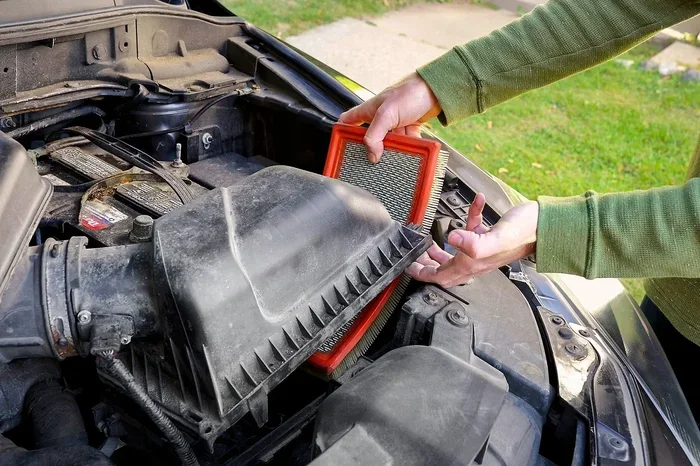
The air filter sits inside a rectangular or round housing near the top of the engine. In most cars, you will find it by following the large plastic tube that connects to the engine. That tube is the air intake, and the filter housing is usually right where it meets the engine.
Do not confuse the engine air filter with the cabin air filter. The cabin filter cleans the air inside your car. The engine filter cleans the air that goes into the combustion chamber. Changing your car air filter yourself is a great first step, but the cabin filter is a separate job with its own location and process.
Some vehicles have the housing held down with clips instead of screws. Others use a wing-nut design. Your owner manual will show you exactly what to expect before you start.
Step-by-Step: How to Replace Your Air Filter
Now for the fun part. Let us walk through the actual replacement process step by step. This guide applies to most standard vehicles, but always refer to your owner manual for model-specific details.
Step 1: Park and Cool Down
Park your car on a flat surface and turn off the engine. Wait at least ten minutes for the engine to cool down. You do not want to burn your hands on hot engine parts while working.
Step 2: Open the Hood
Pop the hood release from inside the car. Secure the hood with the prop rod. Take a moment to locate the air filter housing. It is usually a large, black plastic box near the top of the engine with a big hose attached to it.
Step 3: Open the Housing
Look at how the housing is held together. Most use clips or screws. If it is a clip design, press the clips inward and lift the lid. If it uses screws, remove them with your screwdriver and set them somewhere safe.
Step 4: Remove the Old Filter
Lift the old filter out carefully. Notice which direction it sits in the housing. You will need to place the new filter in the exact same orientation. Take a photo with your phone if you are unsure.
Look at the old filter. If it is covered in dust and debris, that confirms it is time for a replacement. A clean filter should look white or light gray.
Step 5: Clean the Housing
Use your clean cloth to wipe out any loose dirt or debris inside the filter housing. This prevents contamination of the new filter. Do not use water or cleaning chemicals inside the housing. A dry cloth is all you need.
Step 6: Install the New Filter
Place the new engine air filter into the housing in the same direction as the old one. Make sure it sits flat and fits snugly against all sides. Any gaps can let unfiltered air bypass the filter and enter the engine.
Step 7: Close the Housing
Put the lid back on and secure it with clips or screws. Make sure it is fully sealed. A loose housing lets dirt and debris enter the engine, which defeats the purpose of the filter entirely.
Step 8: Close the Hood and Test
Close the hood, start the engine, and listen for any unusual sounds. The engine should start smoothly and idle evenly. If you notice any issues, check that the filter is seated properly and the housing is fully closed.
That is it! You just replaced your air filter in about ten to fifteen minutes. Not bad for a task that could have cost you fifty dollars or more at a shop.
Common Mistakes to Avoid
Even though this is an easy job, a few common mistakes can cause problems. Here is what to watch out for so you get it right the first time.
Buying the Wrong Filter
This is the number one mistake people make. Air filters come in many shapes and sizes. A filter that is even slightly too small will not seal properly, and a filter that is too big will not fit. Always double-check your vehicle make, model, and year before purchasing a replacement.
Forgetting to Clean the Housing
Dirt and debris left inside the housing can work their way past the new filter. Taking thirty seconds to wipe out the housing saves you from contaminating your fresh filter.
Installing the Filter Backward
Some filters have a specific top and bottom. Installing it backward reduces its effectiveness and can restrict airflow. Look for arrows on the filter frame that show the direction of airflow.
Over-Tightening the Housing
You want the housing sealed, but you do not need to crank the screws or clips down as hard as possible. Over-tightening can crack the plastic housing, which creates a whole new problem.
Ignoring the Cabin Air Filter
Many people replace the engine filter and forget about the cabin filter. A dirty cabin filter reduces airflow from your vents and can even stop your air conditioning from working properly. A dirty cabin filter can absolutely stop your AC from blowing cold air. If you notice weak airflow from your vents, the cabin filter may be the culprit.
How to Choose the Right Air Filter
Not all air filters are created equal. When you go to buy a replacement, you will see several options on the shelf. Understanding the differences helps you make the best choice for your vehicle and your driving habits.
Standard OEM Filters
Original Equipment Manufacturer filters are the ones that came with your car from the factory. They are reliable, affordable, and designed to meet your vehicle manufacturer specifications. For most drivers, these are the best choice. They strike a great balance between filtration and airflow.
High-Performance Filters
Aftermarket high-performance air filters claim to increase horsepower and improve throttle response. Brands like K&N offer reusable filters that you can wash and re-oil. These filters allow more air into the engine, which can improve performance slightly.
However, high-performance filters come with trade-offs. They are more expensive upfront, and if not maintained properly, they can actually let more dirt into the engine. They also require more frequent cleaning. Unless you are a performance enthusiast, a standard OEM filter is probably all you need.
Washable and Reusable Filters
Washable filters save money over time because you do not need to buy a new one every replacement cycle. You simply wash the filter, let it dry, and re-oil it before reinstalling. These filters typically last for the lifetime of the vehicle with proper care.
The downside is the upfront cost. A quality washable filter can run fifty to one hundred dollars or more. It takes a few more minutes to clean compared to a standard swap. But for long-term savings, many drivers find them worth it.
| Filter Type | Average Cost | Lifespan | Best For |
|---|---|---|---|
| Standard OEM | $15-$30 | 12,000-15,000 miles | Daily drivers, routine maintenance |
| High-Performance | $40-$80 | 50,000+ miles (with cleaning) | Enthusiasts, performance vehicles |
| Washable/Reusable | $50-$100 | Lifetime (with maintenance) | Long-term savings, off-road driving |
Can You Replace the Cabin Air Filter Too?
While we are on the topic of filters, it is worth mentioning the cabin air filter. This filter cleans the air that enters your car through the vents. Many people do not even know their vehicle has one, but most cars built after 2000 include it.
Replacing the cabin filter is also very easy. The location varies by vehicle, but it is usually found behind the glove box or under the dashboard. In many cases, you just need to remove a few screws or clips, slide out the old filter, and slide in the new one.
If you want professional help with this, you can always visit a service center. But if you are already comfortable changing your engine air filter, the cabin filter is a natural next step. Replacing your car AC filter yourself follows the same basic principles as the engine filter job. Just make sure you buy the correct cabin filter for your vehicle.
A clean cabin filter makes a noticeable difference inside your car. You will smell fresher air and feel stronger airflow from the vents. It is a small job that improves your daily driving comfort in a big way.
When to Seek Professional Help
For most vehicles, replacing an air filter is a straightforward DIY task. But there are situations where professional help makes sense.
If your engine has an unusual filter housing design, it might be tricky to access without the right tools. Some modern vehicles have complex intake systems with multiple components that need to be removed before you can reach the filter. In these cases, a mechanic can save you frustration.
Also, if you notice your check engine light stays on after replacing the filter, something else may be going on. A dirty filter rarely triggers the light on its own. The light usually points to a sensor issue or another problem that needs professional diagnosis.
Finally, if you are simply not comfortable working on your car, there is no shame in paying for the service. A quick oil and filter change at a local shop often includes air filter inspection and replacement for a reasonable price. Doing an oil and filter change yourself is also a great DIY option if you want to handle more of your car care at home.
Final Thoughts on Air Filter Replacement
So, is replacing an air filter easy? Absolutely. It is one of the most straightforward maintenance jobs you can do. No special training, no expensive equipment, no waiting at the shop. Just a few minutes, a basic screwdriver, and a new filter.
Regular air filter maintenance keeps your engine running strong, improves your fuel economy, and prevents costly repairs. It is the kind of simple habit that pays off for years. Every time you pop the hood and swap out that old filter, you are taking better care of your car.
Start today. Grab your owner manual, order the correct filter online, and spend fifteen minutes giving your car the care it deserves. Once you see how easy it is, you will never pay a shop to do it again. Your car, your wallet, and your confidence will all thank you.
Keep this guide bookmarked and share it with a friend who has been putting off their own air filter replacement. Simple maintenance like this is what keeps cars running reliably for hundreds of thousands of miles.
Can I Clean My Engine Air Filter Instead of Replacing It?
Some people wonder if they can clean a dirty engine air filter and reuse it. The answer depends on the filter type. Standard paper filters are designed for single use and cannot be effectively cleaned. However, if you have a washable or reusable filter, you can clean it according to the manufacturer instructions. For most drivers, simply replacing the filter with a new one is the safest and most effective approach. Learn more about cleaning versus replacing your engine air filter in our detailed guide.
How Do I Know if My Air Filter Needs Replacement?
There are several clear signs that your air filter needs attention. Look for reduced fuel economy, sluggish acceleration, rough idling, or a dirty-looking filter when you open the housing. Most manufacturers also recommend a replacement interval of 12,000 to 15,000 miles. If you are unsure, pull out the filter and hold it up to a light. If light cannot pass through easily, it is time for a new one.
What Happens if I Never Change My Air Filter?
A neglected air filter gets progressively dirtier and more clogged over time. This restricts airflow to the engine, causing poor performance, increased fuel consumption, and potentially serious engine damage. In extreme cases, a completely blocked filter can prevent the engine from starting altogether. Regular replacement is a small cost that prevents major problems down the road.
Can a Dirty Air Filter Cause the Check Engine Light to Come On?
While a dirty air filter alone rarely triggers the check engine light, it can contribute to engine performance issues that do. Restricted airflow can cause the oxygen sensor or mass airflow sensor to send incorrect readings to the car computer. If your check engine light comes on, it is worth checking the air filter as part of your diagnostic process.
Is It Better to Replace the Air Filter Before a Long Road Trip?
Yes, this is a smart move. A clean air filter ensures your engine performs at its best during long drives. You will have better acceleration, improved fuel economy, and peace of mind knowing your car is in top shape. It takes only minutes to swap out a filter, making it one of the easiest pre-trip preparations you can do.
How Long Does an Air Filter Last?
Most standard air filters last between 12,000 and 15,000 miles under normal driving conditions. However, if you frequently drive in dusty areas, on unpaved roads, or in heavy traffic, your filter may need replacement sooner. Always inspect your filter regularly and replace it whenever it looks dark, dirty, or clogged. High-performance and washable filters can last significantly longer with proper maintenance.
Frequently Asked Questions
What is Is Replacing an Air Filter Easy??
Is Replacing an Air Filter Easy? is an important topic with many practical applications.