Can a Dirty Cabin Filter Stop the AC from Cooling
Yes, a dirty cabin filter can absolutely stop your AC from cooling properly. When the filter gets clogged with dust, pollen, and debris, it restricts airflow and makes your air conditioning system work harder. This guide covers the signs of a dirty filter, how it affects cooling, and easy steps to fix the problem.
You hop in your car on a hot summer day. You turn the AC on full blast. But instead of cool, refreshing air, you get warm air blowing through the vents. Frustrating, right?
Most people assume the problem is a low refrigerant level or a broken compressor. But here is the thing — a dirty cabin filter could be the real culprit. And it is one of the easiest problems to fix.
Your car’s cabin air filter plays a big role in keeping the air inside your vehicle clean and cool. When that filter gets clogged with dirt, pollen, and debris, it restricts airflow. And when airflow is restricted, your AC cooling system suffers. In this article, we will explain exactly how a dirty cabin filter stops your AC from cooling. We will also cover the warning signs, the replacement process, and tips to keep your vehicle ventilation system running at its best.
Key Takeaways
- A clogged cabin filter blocks airflow and reduces your AC’s ability to cool the cabin effectively.
- Common signs include weak airflow, warm air, and strange smells coming from the vents.
- Replacing the cabin filter is cheap and easy and can restore proper AC cooling in minutes.
- A dirty filter strains the AC compressor and can lead to bigger repair costs over time.
- Most drivers should change their cabin filter every 12,000 to 15,000 miles or once a year.
- Regular AC maintenance including filter checks keeps the whole ventilation system running smoothly.
- Ignoring a dirty filter can cause ice buildup on the evaporator coil and even system failure.
📑 Table of Contents
- What Is a Cabin Filter and Why Does It Matter?
- Can a Dirty Cabin Filter Actually Stop AC Cooling?
- Warning Signs Your Cabin Filter Is Clogged
- How Often Should You Replace Your Cabin Filter?
- How a Dirty Cabin Filter Affects Other AC Components
- Preventing Cabin Filter Problems for Better AC Cooling
- When a Dirty Filter Is Not the Problem
- Key Takeaways
- Conclusion
What Is a Cabin Filter and Why Does It Matter?
Every modern car has a cabin air filter. It is usually located behind the glove box or under the dashboard. Its job is simple — filter the air that enters your car’s interior. It traps dust, pollen, mold spores, and other particles before they reach your lungs.
But the cabin filter does more than just clean the air. It also protects the air conditioning system. When the filter is clean, air flows freely through the HVAC system. When it gets dirty, that flow gets blocked. And blocked airflow is the number one enemy of AC performance.
Think of it like breathing through a straw. If the straw is wide open, you breathe easily. But if the straw is clogged with debris, breathing becomes hard work. Your AC compressor feels the same way. It needs steady airflow to cool the refrigerant and push cold air through the air vents. A clogged filter chokes that process.
How the Cabin Filter Works With the AC System
The evaporator coil is the part of your AC system that actually creates cold air. It needs warm air to flow over it constantly. That warm air passes through the cabin filter first. If the filter is dirty, less warm air reaches the evaporator coil. And less warm air means less cooling. Over time, the evaporator coil can even freeze up because it is not getting enough warm air to absorb. This is a serious problem that can lead to AC system failure.
So the cabin filter is not just an air quality part. It is a critical component of your entire cooling system. Keeping it clean is essential for proper AC maintenance.
Can a Dirty Cabin Filter Actually Stop AC Cooling?
The short answer is yes. A dirty cabin filter can significantly reduce or even completely stop your AC from cooling. Here is how it happens step by step.
First, dust and debris build up on the filter. This happens slowly over weeks and months. You might not notice at first. But eventually, the filter becomes so clogged that air cannot pass through easily.
Second, reduced airflow means the AC evaporator does not get enough warm air. The refrigerant inside the coil cannot absorb heat properly. The result is weak or warm air from the car AC vents.
Third, the AC blower motor has to work harder to push air through the dirty filter. This puts extra strain on the motor and the entire HVAC blower system. Over time, this can cause the blower motor to burn out.
Fourth, in severe cases, the evaporator coil freezes. Ice forms on the coil because there is not enough warm air flowing over it. A frozen coil completely stops cooling. At this point, you might notice water dripping under your car or strange rattling sounds from the dashboard area.
Real-World Example: The Clogged Filter Problem
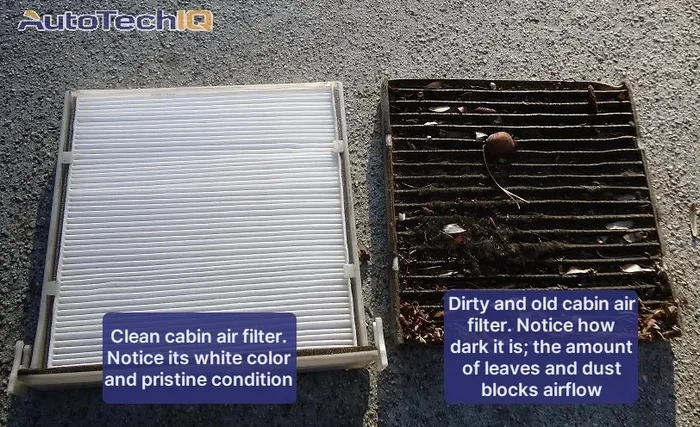
Here is a real scenario that mechanics see all the time. A driver brings their car in because the AC is blowing warm air. The technician checks the refrigerant level. It is fine. They check the compressor. It engages properly. They check the condenser. No issues there. Then they pull out the cabin filter. It is completely black and clogged with debris. They replace the filter, and the AC starts blowing cold air again within minutes.
This happens more often than most drivers realize. A dirty cabin filter is one of the most overlooked causes of poor AC cooling. It is also one of the cheapest to fix.
Warning Signs Your Cabin Filter Is Clogged
Knowing the warning signs can save you from a miserable drive on a hot day. Watch for these AC troubleshooting clues.
Weak airflow from the vents. This is the most common sign. If the air coming out of your dashboard vents feels weak or barely there, the cabin filter might be blocked. You will notice it most on the highest fan speed setting.
Warm or lukewarm air instead of cold air. If your AC runs but does not cool, a clogged filter could be the reason. The system is running, but it cannot move enough air to create cold temperatures.
Strange smells from the vents. A dirty filter traps moisture and organic matter. This creates the perfect environment for mold and mildew. If you smell a musty or musty odor when the AC runs, check the filter.
Increased noise from the blower. When the blower motor works harder to push air through a clogged filter, it makes more noise. You might hear a rattling or whining sound that gets louder at higher fan speeds.
Reduced fuel efficiency. This one surprises people. When the AC compressor works harder because of restricted airflow, the engine works harder too. That means more fuel consumption. A simple filter change can actually help your gas mileage.
Ice buildup on AC components. If you notice ice forming on the evaporator or refrigerant lines, airflow is severely restricted. This is a serious sign that needs immediate attention.
Quick Tip: The Tissue Test
Want a simple way to check your cabin filter without removing it? Hold a thin tissue or piece of paper near the air intake vents with the AC on. If the tissue barely moves or does not move at all, your airflow is restricted. The cabin filter is likely the problem.
How Often Should You Replace Your Cabin Filter?
Most car manufacturers recommend replacing the cabin air filter every 12,000 to 15,000 miles or once a year. However, your driving conditions can change this timeline significantly.
If you drive in dusty areas, on unpaved roads, or in heavy traffic, you should replace the filter more often. The same goes for drivers in humid climates where mold and pollen are common. People with allergies should also check their filter more frequently.
The good news is that replacing a cabin filter is one of the easiest DIY car maintenance tasks you can do. Most filters cost between 15 and 50 dollars. You can find the filter behind the glove box or under the dashboard. Check your owner’s manual for the exact location.
Step-by-Step Cabin Filter Replacement
- Open the glove box and remove any items inside.
- Locate the filter housing. On most cars, the cabin filter sits right behind the glove box. Some models have a separate access panel under the dashboard.
- Remove the old filter. It usually slides out through a rectangular or circular opening. Note the airflow direction marked on the old filter.
- Inspect the old filter. Hold it up to the light. If you cannot see light through it, it is definitely time for a replacement.
- Insert the new filter. Make sure the airflow arrow points in the correct direction. Usually, the arrow points toward the dashboard or toward the blower motor.
- Close everything back up and turn on the AC. You should notice improved airflow and cooler air immediately.
Pro tip: Keep a spare cabin filter in your trunk. It takes about five minutes to swap one out, and you will never be stuck with a clogged filter on a hot day.
How a Dirty Cabin Filter Affects Other AC Components
A clogged cabin filter does not just affect the filter itself. It puts stress on several other parts of your air conditioning system. Understanding this connection helps you see why regular filter changes matter so much.
The AC Compressor
The AC compressor is the heart of your cooling system. It pumps refrigerant through the system and creates the pressure difference that allows cooling. When airflow is restricted by a dirty filter, the compressor has to work harder to achieve the same cooling effect. Over time, this extra strain can cause the compressor to overheat and fail. Compressor replacement is one of the most expensive AC repairs. A simple filter change can help prevent it.
The Evaporator Coil
The evaporator coil absorbs heat from the air inside your car. It relies on a steady flow of warm, moist air to do its job. When a dirty cabin filter limits that airflow, the coil gets too cold. Moisture on the coil freezes, forming ice. A frozen evaporator coil cannot absorb heat. Your AC stops cooling entirely. In worst cases, the ice can damage the coil or cause refrigerant leaks.
The Blower Motor
The blower motor pushes air through the cabin filter and into the car. A clogged filter forces this motor to run at higher speeds and for longer periods. This increases wear and tear on the motor. Eventually, the blower motor can burn out. Replacing a blower motor is far more expensive than replacing a cabin filter.
The Condenser and Cooling System
While the cabin filter does not directly affect the condenser, the overall AC system is connected. When one part struggles, the others compensate. A stressed compressor and a frozen evaporator coil put extra load on the entire refrigeration cycle. This can lead to reduced cooling efficiency across the board.
Preventing Cabin Filter Problems for Better AC Cooling
Prevention is always better than repair. Here are some simple habits that keep your cabin filter and AC system in great shape.
- Check your cabin filter every 6 months. A quick visual inspection takes less than a minute. Look for dark discoloration or visible debris.
- Replace the filter on schedule. Do not wait until you notice symptoms. By the time you feel weak airflow, the filter is already significantly clogged.
- Use quality replacement filters. Cheap filters may not trap particles effectively and can degrade faster. Look for filters that meet or exceed OEM specifications.
- Park in shaded areas when possible. Less direct sun exposure means the AC system does not have to work as hard from the start.
- Run the AC regularly, even in winter. This keeps the refrigerant circulating and the seals lubricated. It also prevents moisture buildup inside the system.
- Clean the area around the air intake. Leaves, dirt, and debris can block the external air intake vent. Keep this area clear to ensure proper airflow.
Quick tip: If you drive frequently in dusty or pollen-heavy areas, consider using a HEPA cabin filter. These filters capture smaller particles and provide better filtration. They also tend to last longer than standard filters.
The Cost of Ignoring a Dirty Cabin Filter
Some drivers ignore a clogged cabin filter because they do not see an immediate problem. But ignoring it comes with real costs. A strained AC compressor can fail, costing 500 to 1,000 dollars or more to repair. A frozen evaporator coil can crack and leak refrigerant, requiring a full system recharge and coil replacement. A burned-out blower motor can cost 300 to 600 dollars to replace. Meanwhile, a new cabin filter costs 15 to 50 dollars and takes about five minutes to install.
The math is clear. Regular cabin filter replacement saves you money and keeps your AC cooling working at peak performance.
When a Dirty Filter Is Not the Problem
While a dirty cabin filter is a common cause of poor AC cooling, it is not the only one. If you replace the filter and your AC still does not cool properly, other issues could be at play.
Low refrigerant levels. Refrigerant leaks are a common cause of warm AC air. If the system is low on refrigerant, it cannot cool effectively. A technician can check the refrigerant level and recharge the system if needed.
Faulty compressor clutch. If the compressor clutch is not engaging, the refrigerant does not circulate. This requires professional diagnosis and repair.
Blocked condenser. The condenser sits in front of the radiator. If it is clogged with dirt, bugs, or debris, it cannot release heat properly. This reduces overall cooling performance.
Thermostat or blend door issues. Sometimes the problem is not the cooling system itself but the controls. A stuck blend door or faulty thermostat can send warm air through the vents even when the AC is on.
Electrical problems. Faulty wiring, blown fuses, or bad relays can prevent the AC system from running at full capacity.
If you have replaced the cabin filter and still experience weak AC cooling, it is time to visit a qualified mechanic for a full AC system inspection.
Key Takeaways
- A dirty cabin filter restricts airflow and is one of the most common reasons your AC stops cooling properly.
- Warning signs include weak airflow, warm air, strange smells, and increased noise from the blower.
- Replacing the cabin filter is inexpensive, easy, and fast — usually under 15 minutes.
- A clogged filter strains the AC compressor, evaporator coil, and blower motor, leading to expensive repairs if ignored.
- Most drivers should replace their cabin filter every 12,000 to 15,000 miles or at least once a year.
- Regular AC maintenance including cabin filter checks keeps your entire cooling system running smoothly and efficiently.
Conclusion
A dirty cabin filter can absolutely stop your AC from cooling. It is one of the simplest and most overlooked causes of poor AC performance. When the filter gets clogged with dust, pollen, and debris, it restricts airflow to the evaporator coil and forces the entire air conditioning system to work harder. The result is weak airflow, warm air from the vents, and eventually, system failure.
The good news is that this problem is easy to prevent. Regular cabin filter replacement keeps your vehicle ventilation system working at its best. It is cheap, fast, and something every driver can do themselves. You should also watch for the warning signs of a clogged filter and address the problem early before it causes damage to more expensive components like the AC compressor or evaporator coil.
Take care of your cabin air filter and your AC will take care of you. On the next hot day, you will step into a cool, comfortable car without a second thought. That is the power of simple AC maintenance.
Frequently Asked Questions
Can a dirty cabin filter cause AC to stop working completely?
Yes, in severe cases a completely clogged cabin filter can stop your AC from working at all. When airflow is completely blocked, the evaporator coil freezes and the system cannot cool. This is why regular filter checks are so important for keeping your air conditioning system running properly.
How do I know if my cabin filter is dirty?
The easiest way is to remove the filter and hold it up to a light source. If you cannot see light passing through, the filter is clogged and needs replacement. You can also watch for warning signs like weak airflow, warm air from the vents, and musty smells coming from the dashboard vents.
What happens if I drive with a dirty cabin filter for too long?
Driving with a dirty filter for an extended period puts extra strain on your AC blower motor and compressor. It can cause ice buildup on the evaporator coil, reduce fuel efficiency, and eventually lead to costly repairs. The longer you wait, the more damage it can cause to your entire cooling system.
Is a cabin filter the same as an engine air filter?
No, they are different parts. The cabin air filter cleans the air that enters your car’s interior. The engine air filter cleans the air that enters the engine’s combustion chamber. Both are important for vehicle performance, but they serve completely different purposes in your HVAC system and engine respectively.
Can I clean my cabin filter instead of replacing it?
Some cabin filters can be gently cleaned with compressed air, but most manufacturers recommend replacement. Reusable cabin filters exist but are less common. For most drivers, replacing the filter is the safest and most effective approach for maintaining proper AC airflow and cooling performance.
How much does it cost to replace a cabin filter?
A cabin filter typically costs between 15 and 50 dollars for the part alone. If you have a mechanic install it, you may pay an additional 20 to 50 dollars for labor. However, replacing it yourself takes only a few minutes and requires no special tools, making it one of the most affordable DIY car maintenance tasks you can do.