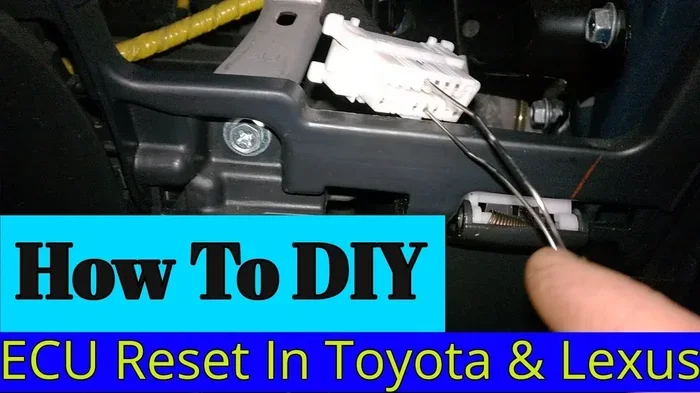
How Do I Reset My Toyota ECU Manually Without Tools
Resetting your Toyota ECU manually is easier than you think and requires no expensive tools or dealership visits. This guide walks you through the simple steps to reset Toyota ECU manually using basic methods anyone can do at home. You will learn why an ECU reset helps, what to prepare, and how to avoid common mistakes that could cause problems.
Have you ever had a check engine light on your Toyota and wondered if there was a way to fix it yourself? The good news is that you can often reset Toyota ECU manually without any fancy equipment. Whether your check engine light just came on, your car feels sluggish, or you simply want to clear old error codes, a manual ECU reset can do the trick.
The engine control unit, or ECU, is the brain of your Toyota. It manages everything from fuel injection to ignition timing. When the ECU stores a fault code, it can cause all sorts of issues. A manual reset clears these codes and gives your vehicle a fresh start. Resetting Toyota ECU manually is something every Toyota owner should know how to do.
In this guide, you will learn exactly how to reset your Toyota ECU without any tools. I will walk you through each step in plain language. You will also learn why ECU resets matter, what to watch out for, and how to keep your Toyota running smoothly afterward. Let us get into it.
Key Takeaways
- No tools needed: You can reset your Toyota ECU manually using just your key and the vehicle’s ignition.
- Saves money: Avoid costly dealership visits or mechanic fees for a simple ECU reset.
- Improves performance: A manual ECU reset can clear error codes and restore your Toyota’s smooth operation.
- Quick process: Most Toyota ECU resets take less than 30 minutes from start to finish.
- Safety first: Always follow the correct steps to prevent electrical issues or data loss.
- Know when to reset: Understanding the signs your ECU needs a reset helps you act before bigger problems develop.
📑 Table of Contents
- What Is a Toyota ECU and Why Does It Need Resetting?
- How to Reset Toyota ECU Manually Without Tools
- What Happens When You Reset Your Toyota ECU?
- Common Mistakes to Avoid When Resetting Your Toyota ECU
- How Long Does It Take for the ECU to Relearn After a Reset?
- When Should You NOT Reset Your Toyota ECU?
- Can You Reset the ECU on Any Toyota Model?
- How to Keep Your Toyota ECU Healthy After a Reset
- Final Thoughts on Resetting Your Toyota ECU Manually
What Is a Toyota ECU and Why Does It Need Resetting?
The engine control unit is a small computer inside your Toyota. It constantly monitors sensors throughout the engine and transmission. When something goes wrong, the ECU stores a trouble code. This code triggers your check engine light or other warning signs on the dashboard.
Over time, these stored codes can pile up. Old codes may cause your Toyota to run poorly even after the original problem is fixed. This is where resetting Toyota ECU manually becomes valuable. Clearing the old codes lets the ECU start fresh and relearn driving conditions.
Signs Your Toyota ECU Needs a Reset
How do you know when your ECU needs a reset? Here are the most common signs:
- Check engine light stays on after repairs
- Your Toyota idles roughly or stalls unexpectedly
- Fuel economy drops without a clear reason
- Warning lights flash on and off randomly
- The car feels sluggish during acceleration
- Old diagnostic codes keep coming back
If you notice any of these issues, a manual ECU reset may help. Before you start, it is a good idea to clear your check engine code first so you know what you are dealing with. You should also check your car battery to make sure it has a full charge. A weak battery can interfere with the reset process.
How to Reset Toyota ECU Manually Without Tools
The beauty of a manual ECU reset is that you do not need any special equipment. You do not need an OBD2 scanner or a trip to the dealership. You just need your Toyota key and about 15 to 30 minutes of your time. Here is the step-by-step process.
Step 1: Turn Off All Accessories
Start by parking your Toyota on a flat surface. Turn off the engine and switch off every accessory. This includes the radio, air conditioning, headlights, and heated seats. Turning off all accessories ensures a clean reset without any electrical interference.
Make sure all doors are closed and the driver side door is shut tight. Some Toyota models will not allow the ECU reset sequence to start if a door is open.
Step 2: Wait for the ECU to Fully Power Down
This step is crucial and many people skip it. After turning off the engine, you need to wait at least 30 seconds. This gives the ECU time to fully power down and discharge any remaining electrical charge in its circuits.
For best results, wait a full two minutes. This ensures the ECU memory is completely cleared of temporary data. Think of it like restarting your computer — you need to give it time to fully shut down before turning it back on.
Step 3: Turn the Key to the ON Position
Insert your key into the ignition and turn it to the ON position. Do not start the engine. Just turn it far enough so that the dashboard lights come on. On newer Toyota models with push-button start, simply press the start button without pressing the brake pedal.
You should see all the warning lights on the dashboard illuminate briefly. This is normal. The ECU is now receiving power and preparing for the reset sequence.
Step 4: Wait for the Check Engine Light to Flash
Here is where the magic happens. After turning the key to ON, wait for the check engine light to start flashing. On most Toyota models, this takes about 10 to 20 seconds. The flashing light means the ECU is in reset mode.
If the check engine light does not flash, try turning the key OFF and back to ON again. Sometimes it takes two attempts. Be patient and do not rush this step.
Step 5: Turn the Key Back to OFF
Once the check engine light starts flashing, turn the key back to the OFF position. Wait another 30 seconds. This pause allows the ECU to process the reset command and clear the stored codes from memory.
Some Toyota owners find it helpful to address the engine management light after the reset to ensure all related systems are properly cleared. This extra step can prevent the light from returning too quickly.
Step 6: Turn the Key to ON Again and Start the Engine
Now turn the key back to ON one more time. Wait for the dashboard lights to come on and then start the engine. Let the Toyota idle for about two to three minutes. During this time, the ECU is recalibrating and relearning your driving patterns.
You may notice the check engine light stays on for a few seconds after starting. This is normal. If the light goes off after a short period, the reset was successful. If the light stays on or comes back quickly, you may need to repeat the process or investigate the underlying issue further.
What Happens When You Reset Your Toyota ECU?
Understanding what a manual ECU reset actually does helps you appreciate the process more. When you reset the ECU, several things happen at once.
First, all stored diagnostic trouble codes are cleared from the ECU memory. These codes were recorded when the ECU detected a problem. Removing them turns off warning lights like the check engine light.
Second, the ECU returns to its factory default settings. This means any custom adjustments or learned driving habits are wiped clean. The ECU will need to relearn your driving style over the next 50 to 100 miles of driving.
Third, the fuel trim values and idle air control settings reset to baseline. This can actually improve performance if those values had drifted over time. Many Toyota owners notice smoother idling and better fuel economy after a successful reset.
However, a reset does not fix the actual mechanical problem. If your oxygen sensor is failing or your spark plugs are worn, the codes will come back after the reset. A reset simply clears the symptoms so you can see if the problem returns.
What Gets Cleared During an ECU Reset
- Stored diagnostic trouble codes (DTCs)
- Check engine light and other warning indicators
- Fuel trim adaptation values
- Idle speed learned values
- Transmission shift point adaptations
- Short-term and long-term fuel adjustments
What Does NOT Get Cleared
- Radio presets and clock settings
- Power window calibration
- Maintenance reminder mileage
- Bluetooth and phone pairings
- Navigation system data
Knowing what gets cleared and what does not helps set the right expectations. Your personal settings stay safe, but the ECU starts with a clean slate for engine management.
Common Mistakes to Avoid When Resetting Your Toyota ECU
Even though a manual ECU reset is straightforward, mistakes can happen. Here are the most common errors Toyota owners make and how to avoid them.
Skipping the Wait Time
One of the biggest mistakes is not waiting long enough between steps. The ECU needs time to fully power down and process the reset. Rushing through the steps can result in an incomplete reset. Always wait at least 30 seconds at each pause point in the process.
Resetting With a Low Battery
A weak battery can cause the reset to fail or even create new problems. If your battery is already struggling, the ECU may lose power mid-reset and corrupt its memory. Always check your battery health before attempting a reset. A fully charged battery is essential for a clean reset.
Resetting Without Addressing the Root Problem
A common trap is resetting the ECU to make a warning light go away without fixing the actual issue. The light will return, often with more codes. Always diagnose the problem first. Use a scanner or visit a mechanic to find out what triggered the check engine light before you reset.
Starting the Engine Too Soon
Some people turn the key back to ON and immediately start the engine. This does not give the ECU enough time to process the reset. Wait the full two minutes after turning the key back to ON before cranking the engine.
Resetting Too Frequently
Resetting your ECU too often can actually cause problems. The ECU needs time to relearn and adapt. If you reset every week, the ECU never gets a chance to stabilize. Only reset when you have a clear reason to do so.
How Long Does It Take for the ECU to Relearn After a Reset?
After a successful manual reset, your Toyota’s ECU enters a relearning phase. During this time, the ECU watches your driving habits and adjusts fuel delivery, ignition timing, and idle speed accordingly.
The relearning process typically takes 50 to 100 miles of driving. During the first 20 to 30 miles, you might notice some slight changes in how your Toyota feels. The idle might be a bit rough, or the transmission might shift differently. This is completely normal.
By the 50-mile mark, most Toyotas have relearned the basic driving patterns. By 100 miles, the ECU should be fully calibrated again. During this period, avoid aggressive driving and give your Toyota a chance to adapt naturally.
You can speed up the relearning process by driving at a steady pace. Highway driving is especially helpful because it gives the ECU consistent data to work with. Avoid lots of short trips during the relearning period if possible.
Tips to Help Your ECU Relearn Faster
- Drive at a steady 45 to 65 mph for at least 20 minutes
- Avoid rapid acceleration and hard braking
- Let the engine warm up fully before driving
- Use cruise control on highways when safe
- Avoid turning the engine off and on repeatedly
When Should You NOT Reset Your Toyota ECU?
While a manual ECU reset is helpful in many situations, there are times when you should skip it entirely. Understanding when not to reset saves you time and prevents potential issues.
If your Toyota is in the middle of a diagnostic test, resetting the ECU will erase the codes that a mechanic needs to see. Always wait until after a professional diagnosis before clearing any codes.
If you recently installed new parts like sensors, spark plugs, or filters, give the ECU time to adapt to the new components. Resetting too soon after a part replacement can confuse the system and cause the check engine light to return.
Also, if your Toyota has a hybrid Connect system or advanced electronics, the reset process may differ slightly. Always consult your Toyota owner’s manual for model-specific instructions before proceeding.
Finally, if your battery has been recently disconnected or replaced, the ECU may already have reset itself. In this case, you do not need to perform a manual reset. Just drive the vehicle normally and let the ECU relearn on its own.
Can You Reset the ECU on Any Toyota Model?
The manual reset method described above works on most Toyota models. However, there are some differences between model years and trim levels. Here is a quick comparison of how the reset process varies across popular Toyota models.
| Toyota Model | Reset Method | Approximate Time | Special Notes |
|---|---|---|---|
| Camry | Key to ON, wait for CEL flash | 15-20 minutes | Works on all years |
| Corolla | Key to ON, wait for CEL flash | 15-20 minutes | Same process as Camry |
| RAV4 | Key to ON, wait for CEL flash | 15-20 minutes | Check for software updates first |
| Highlander | Key to ON, wait for CEL flash | 15-20 minutes | Works with both key and push start |
| Prius | Key to ON, wait for CEL flash | 15-20 minutes | Hybrid system may need extra relearn time |
| Tacoma | Key to ON, wait for CEL flash | 15-20 minutes | Turn off all accessories first |
While the basic process is the same, always refer to your specific model’s owner manual for any unique instructions. Some newer Toyota models have slightly different procedures for the ECU reset Toyota process, especially models from 2018 and later with updated software.
How to Keep Your Toyota ECU Healthy After a Reset
Once you have successfully reset your ECU, you want to keep it in good shape. A healthy ECU means a healthy Toyota. Here are some simple habits that go a long way.
Use the Right Fuel
Always use the fuel grade recommended in your Toyota owner’s manual. Using the wrong octane can cause the ECU to store trouble codes. If you are unsure about fuel choices, check out our guide on whether you can use 87 octane gas in your Toyota.
Keep Up with Regular Maintenance
Regular oil changes, spark plug replacements, and air filter changes all help the ECU work properly. A dirty engine air filter can cause the ECU to adjust fuel delivery incorrectly. Learn how to tell if your air filter is bad in our engine air filter guide.
Address Warning Lights Promptly
Do not ignore dashboard warning lights. The longer you drive with a warning light on, the more potential damage can occur. Address issues quickly to prevent the ECU from storing additional codes.
Keep Your Battery in Good Condition
A healthy battery is essential for proper ECU function. Voltage drops or electrical surges can corrupt ECU data. Regularly check your battery terminals for corrosion and ensure the connections are tight.
Final Thoughts on Resetting Your Toyota ECU Manually
Resetting Toyota ECU manually without tools is one of the simplest and most useful skills any Toyota owner can learn. It saves you money, time, and the hassle of visiting a dealership or mechanic for a simple code clear. The process is straightforward, takes less than 30 minutes, and requires nothing more than your ignition key.
Remember to always diagnose the root cause before resetting. A reset clears the symptoms but does not fix the underlying problem. Use the reset as part of a broader maintenance strategy, not as a permanent solution to a mechanical issue.
After the reset, give your Toyota time to relearn. Drive steadily for 50 to 100 miles and let the ECU recalibrate on its own. Avoid the common mistakes outlined in this guide, and your Toyota’s ECU will stay healthy and responsive for years to come.
If you ever run into issues after a reset or the check engine light keeps coming back, do not hesitate to seek professional help. Sometimes the problem needs more than a simple reset to fully resolve. But for those everyday situations where your Toyota just needs a fresh start, a manual ECU reset is all you need.