Why Wont My Toyota Key Fob Start My Car Right Now
Your Toyota key fob may fail to start your car due to a dead battery, signal interference, a faulty immobilizer, or a damaged key fob. This guide walks you through the most common reasons and the fastest fixes so you can get back on the road quickly. We cover everything from simple battery swaps to troubleshooting the smart key system and immobilizer. By the end, you will know exactly what to check and what to do next.
You hop into your Toyota, press the start button, and nothing happens. The dashboard lights up, the radio works, but the engine refuses to turn over. Your key fob is right there in your hand, so why won’t it work? This is a frustrating situation that Toyota owners face more often than you might think.
The good news is that most causes are simple and easy to fix. In this guide, we will walk you through every reason your Toyota key fob might fail to start your car. We also give you step-by-step solutions you can try right now. Whether you drive a Toyota Camry, a Highlander, or a RAV4, this article has you covered.
Let us get into it. By the time you finish reading, you will know exactly what is wrong and how to fix it fast.
Key Takeaways
- Dead Key Fob Battery: A drained CR2032 or CR2025 battery is the number one reason your Toyota key fob won’t start the car.
- Signal Interference: Electronic devices, metal objects, and even parking garages can block the signal between your key fob and the car.
- Immobilizer Issues: A faulty immobilizer system can prevent the engine from starting even if the fob has power.
- Smart Key System Malfunctions: The Toyota smart key module can fail due to moisture, wear, or electrical glitches.
- Backup Start Methods Work: Most Toyota models let you start the car manually using the physical key or by placing the fob against the start button.
- Regular Maintenance Helps: Replacing the key fob battery every 2 years and keeping the fob dry can prevent most problems.
📑 Table of Contents
Common Reasons Your Toyota Key Fob Won’t Start the Car
Before you panic, take a deep breath. There are only a handful of reasons this happens. Most of them are easy to diagnose. Let us look at each one closely.
Dead Key Fob Battery
This is the most common reason by a wide margin. Your Toyota key fob runs on a small coin battery, usually a CR2032 or CR2025. These batteries last about 2 to 4 years. When they die, the fob loses its signal and the car will not recognize it.
You might notice warning signs before the battery dies completely. The remote range gets shorter. You have to press the button harder or hold it closer to the car. Eventually, the fob stops working altogether.
Replacing the battery is cheap and easy. You can buy a CR2032 at any drugstore or grocery store for about a few dollars. Pop open the back of the fob, swap the old battery for the new one, and you are good to go. If you are unsure which battery your fob uses, check this guide on how to know if your key fob needs a new battery for detailed steps.
Signal Interference
Toyota key fobs use a radio frequency signal to communicate with the car. Sometimes, other electronic devices can block or disrupt that signal. This is called signal interference.
Common sources of interference include:
- Cell phones and tablets sitting near the fob
- Laptops or USB chargers in the same pocket
- Metal objects like keys or coins stacked with the fob
- High-voltage power lines or large electronic signs in parking lots
- Other vehicles with similar key fob systems parked nearby
If you are in a parking garage or near a tower, the interference can be stronger. Try moving away from other electronics and pressing the start button again. You can also try holding the fob directly against the start button, which boosts the signal strength.
Immobilizer System Problems
Every modern Toyota has an immobilizer system. This is a security feature that prevents the engine from starting unless the correct key fob is detected. It is a great anti-theft feature, but it can cause headaches when something goes wrong.
If the immobilizer does not recognize your fob, the car will crank but not start. You might see a flashing security light on the dashboard. This is the car telling you it does not trust the key fob.
Immobilizer problems can happen for several reasons. The antenna ring around the ignition barrel can wear out. The transponder chip inside the fob can get damaged. Or the immobilizer module itself can fail. If you suspect this is the issue, you should read up on how to fix your immobilizer problem for detailed troubleshooting steps.
Faulty Key Fob or Smart Key Module
Key fobs take a beating. They get dropped, sat on, spilled on, and exposed to heat and cold. Over time, the internal electronics can wear out or break.
The smart key module in your Toyota is the receiver that picks up the fob signal. If this module fails, the car will not detect the fob at all. Water damage is a common cause. If you have ever spilled a drink on your fob or left it in a wet pocket, moisture can seep inside and corrode the circuit board.
Signs of a faulty key fob include:
- The buttons work but the car does not start
- The fob works intermittently, then stops
- The car starts some days but not others with no clear pattern
- The fob needs to be held at a very specific angle to work
In these cases, you may need a replacement fob or a repair to the smart key module.
Low Voltage in the Car Battery
Here is one that surprises a lot of people. Your Toyota key fob and the car’s main battery are connected in ways you might not expect. If the car battery is low or dying, the smart key system may not power up enough to read your fob.
The key fob uses a low-frequency signal to talk to the car. The car’s antenna needs power to receive that signal. If the car battery is weak, the antenna may not work properly. This creates a situation where the fob is fine and the car is the problem.
If you have jump starter cables or a portable jump pack, try giving the car battery a boost. If the car starts after that, the battery was the culprit all along.
How to Start Your Toyota When the Key Fob Fails
Knowing the causes is helpful, but what do you do when you are standing in your driveway and the fob is dead? Here are the backup methods that work on most Toyota models.
Use the Physical Key
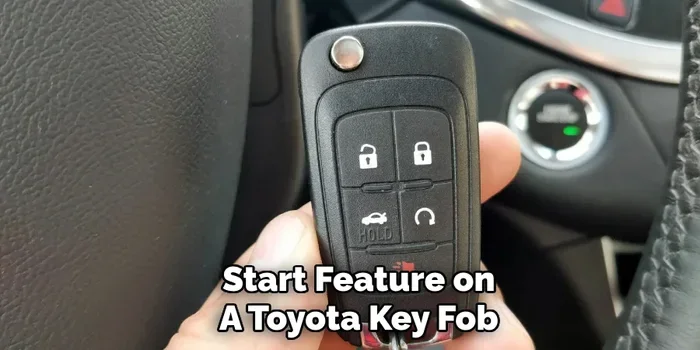
Every Toyota key fob has a hidden physical key inside. You can use it to unlock the door and, in some models, to start the car directly. Slide the small tab on the fob to release the metal key. Use it to open the driver’s door.
Once inside, look for a key slot near the start button. Insert the physical key and turn it. The car should start normally. This method bypasses the smart key system entirely.
Hold the Fob Against the Start Button
Most Toyota models have a backup antenna built into the start button. If you hold the fob directly against the button and press it, the car can read the signal even if the fob battery is very low.
Try this with the fob pressed flat against the start button. Press the button firmly and hold it for a second or two. The engine should crank and start.
Move the Fob Closer to the Antenna
Toyota vehicles have multiple antennas placed around the cabin. The location varies by model. Try moving the fob to different spots near the steering column, the center console, or the cup holder area. Some drivers have had success placing the fob on the dashboard near the windshield.
Every Toyota model has a slightly different antenna placement. If you are curious about how this works on your specific model, you can check out how to start your Toyota Highlander with a key for model-specific guidance.
Toyota Key Fob Battery Replacement Guide
Replacing the battery in your Toyota key fob is one of the easiest DIY tasks you can do. Here is how to do it step by step.
Step 1: Get the Right Battery
Most Toyota key fobs use a CR2032 battery. Some older models use a CR2025. Check your owner’s manual or look at the old battery to confirm the type. You can buy these at any convenience store, pharmacy, or online.
Step 2: Open the Fob
Use the physical key or a small flathead screwdriver to pry open the fob casing. Look for a small notch along the seam. Insert the key or screwdriver and twist gently. The back half should pop off.
Step 3: Swap the Battery
Take note of which side the battery faces. Remove the old battery carefully. Insert the new battery with the positive side facing up. Snap the fob back together.
Step 4: Test the Fob
Press the buttons to make sure the fob works. Then try starting the car. If it still does not work, the battery may not be seated properly, or the problem is something else entirely.
Preventing Key Fob Problems in the Future
The best way to deal with a Toyota key fob that won’t start your car is to prevent the problem in the first place. Here are some simple habits that can save you a lot of trouble.
- Replace the battery every 2 years. Do not wait until it dies. Set a calendar reminder to swap the battery proactively.
- Keep the fob away from liquids. Water damage is one of the leading causes of key fob failure. Store it in a dry pocket or bag.
- Avoid extreme temperatures. Leaving the fob in a hot car or in freezing weather can damage the electronics over time.
- Do not stack the fob with metal objects. Keys, coins, and other metal items can cause signal interference and wear down the fob casing.
- Update the fob firmware if possible. Some newer Toyota models allow fob updates through the dealership. Ask your dealer during your next service visit.
Taking these small steps can extend the life of your key fob by several years. It also means you are far less likely to get stranded with a fob that will not start your car.
When to See a Professional
Most key fob problems are easy to fix at home. But some situations require a trip to the dealership or a qualified mechanic. Here are signs that you need professional help:
- The car cranks but never starts, even with a new battery in the fob
- The security light stays on continuously after you try to start the car
- The fob works for unlocking the doors but never starts the engine
- You have replaced the battery and tried the backup start methods, and nothing works
- The fob was exposed to water or extreme heat and now it is completely unresponsive
A professional can run diagnostic tools that read the immobilizer system, the smart key module, and the antenna ring. They can also program a new fob if the old one is damaged beyond repair. If you are wondering whether push-button start systems are more prone to issues than traditional keys, you might find this comparison of push button start versus key systems helpful for understanding the trade-offs.
Is a Key Fob Failure a Sign of a Bigger Problem?
In most cases, a key fob that will not start the car is a simple fix. But sometimes it points to a larger electrical issue in the vehicle.
For example, if your car battery is consistently dying or weak, it may not provide enough power to the smart key system. If the car’s electrical system has a grounding issue, the antennas that read the fob may not work properly. In rare cases, a failing computer module can cause the car to reject the fob randomly.
If you experience repeated key fob failures, it is worth having the car’s electrical system checked. A simple battery test and a scan for error codes can reveal problems early before they become expensive repairs.
Also, if you have ever wondered whether you can drive your Toyota without a key fob at all, the answer depends on your model and year. Some Toyotas allow you to drive using the physical key, while others will not start without a recognized fob. For more details on this, check out whether you can drive your Toyota Highlander without a key fob.
Key Takeaways
- Dead Key Fob Battery: A drained CR2032 or CR2025 battery is the number one reason your Toyota key fob won’t start the car.
- Signal Interference: Electronic devices, metal objects, and even parking garages can block the signal between your key fob and the car.
- Immobilizer Issues: A faulty immobilizer system can prevent the engine from starting even if the fob has power.
- Smart Key System Malfunctions: The Toyota smart key module can fail due to moisture, wear, or electrical glitches.
- Backup Start Methods Work: Most Toyota models let you start the car manually using the physical key or by placing the fob against the start button.
- Regular Maintenance Helps: Replacing the key fob battery every 2 years and keeping the fob dry can prevent most problems.
Frequently Asked Questions
Why does my Toyota key fob work for unlocking but not starting the car?
This usually means the fob battery is low but still has enough power for short-range functions like unlocking. The start function requires a stronger signal. Replace the battery and try again. If that does not work, the immobilizer or smart key module may be the issue.
Can a dead car battery cause the key fob to not start the car?
Yes, absolutely. A weak car battery may not supply enough power to the smart key antenna. This prevents the car from reading the fob signal. Try jump-starting the car first, then attempt to start with the fob.
How long does a Toyota key fob battery last?
A Toyota key fob battery typically lasts 2 to 4 years depending on usage. If you use the fob frequently or live in a cold climate, the battery may drain faster. Replacing it proactively every 2 years is a good habit.
What should I do if my Toyota key fob gets wet?
Remove the battery immediately and let the fob dry completely for at least 24 hours. Do not try to start the car with a wet fob. Once dry, put in a new battery and test. If it still does not work, the internal circuitry may be damaged and you may need a replacement fob.
Can I start my Toyota with the physical key if the key fob is dead?
Yes, most Toyota models have a hidden physical key inside the fob. Use it to unlock the door and insert it into the key slot near the start button. Turn it to start the car. This bypasses the smart key system entirely.
Is it expensive to replace a Toyota key fob?
A replacement Toyota key fob can cost anywhere from 50 to 200 dollars depending on the model and year. Programming the fob at a dealership may add another 50 to 100 dollars. Buying a replacement battery is much cheaper and should always be your first step.