Is Push Button Start Better Than Key Ignition Systems
Push button start offers a modern, convenient way to start your car without inserting a key. This technology uses a smart key fob and electronic signals to ignite the engine with the press of a button. Traditional key ignition systems remain reliable, affordable, and preferred by many drivers. We compare both systems across convenience, security, cost, and everyday usability. By the end, you will know which ignition system fits your needs best.
Push button start has changed the way we drive. What once felt like a luxury feature in high-end cars is now standard in most new vehicles. Yet many drivers still wonder whether this modern system is truly better than the traditional key ignition they have trusted for decades.
The debate between push button start and traditional key systems is more than just a tech comparison. It touches on convenience, security, cost, reliability, and even how much you enjoy your daily drive. Some people love the sleek feel of pressing a button. Others prefer the tactile satisfaction of turning a key.
In this article, we break down everything you need to know. We compare both systems side by side. We look at the pros and cons of each. And we help you decide which ignition system makes the most sense for your life and your vehicle. Whether you are shopping for a new car or just curious about how things work, this guide has you covered.
Key Takeaways
- Push button start offers superior convenience: You can start the car without removing the key fob from your pocket or bag.
- Traditional keys are more affordable: Key ignition systems cost less to replace and repair compared to electronic systems.
- Both systems have strong security features: Push button start uses encrypted signals, while traditional keys use physical transponder chips.
- Push button start can drain the battery faster: If the key fob battery dies, you may face starting issues.
- Older vehicles benefit from key ignition: Retrofitting push button start can be expensive and complex.
- Resale value matters: Many buyers now prefer push button start as a standard feature in newer cars.
- Your driving habits should guide your choice: Consider how often you drive, your budget, and your comfort with technology.
📑 Table of Contents
How Push Button Start Works
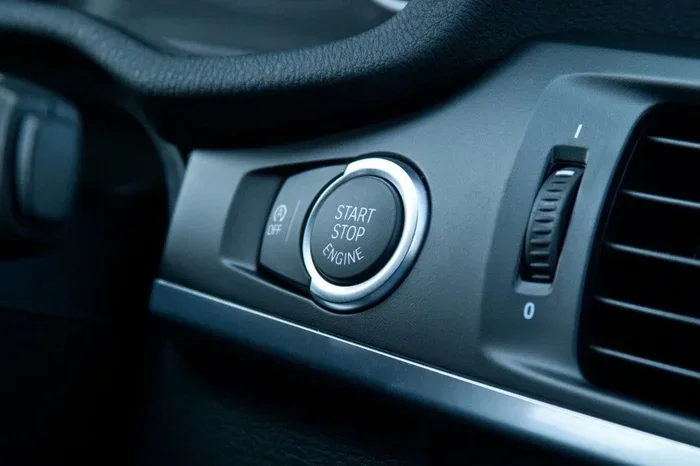
Push button start, also called keyless ignition, is an electronic system that lets you start your car without inserting a physical key. Instead, you carry a smart key fob, and the car detects when it is nearby. Once the fob is inside the vehicle, you press the start button, and the engine fires up.
The Technology Behind Keyless Ignition
The smart key fob sends a low-frequency signal to the car. The vehicle’s computer recognizes this signal and verifies the fob is authentic. Once verified, the system allows you to start the engine. All of this happens in seconds. You do not need to fumble with a key or insert it into a slot.
Most push button start systems also support keyless entry. This means you can unlock the doors just by touching the handle. The car senses the fob in your pocket or bag and unlocks automatically. It feels seamless and modern.
The system relies on a transponder inside the key fob. This transponder communicates with the car’s immobilizer. The immobilizer prevents the engine from starting if the correct fob is not detected. This adds a strong layer of vehicle security that traditional keys cannot always match.
How Traditional Key Ignition Works
Traditional key ignition has been around since the early days of automobiles. You insert a physical key into the ignition switch and turn it. The key activates the starter motor, which cranks the engine. It is a simple, mechanical process that has proven reliable for over a century.
Modern traditional keys still include a transponder chip. This chip communicates with the car’s immobilizer to prevent theft. Without the correct chip, the engine will not start, even if someone tries to hot-wire the car. So traditional keys are not as insecure as some people think.
The key ignition system is straightforward. There are fewer electronic components to fail. This simplicity is one of the main reasons many drivers still prefer it. You do not need to worry about a dead fob battery or a faulty sensor.
Push Button Start vs Key Ignition: Key Differences
Now that we understand how both systems work, let us look at the real-world differences. These are the things that affect your daily driving experience.
Convenience and Ease of Use
Push button start wins clearly on convenience. You never need to dig for a key in your bag or pocket. Just walk up to the car, touch the door handle, and press the start button. The entire process takes less than a second.
With traditional key ignition, you must locate the key, insert it into the ignition, and turn it. In cold weather, this can be frustrating, especially if your keys are buried in a deep pocket. Push button start eliminates this hassle entirely.
Here are some everyday convenience wins of push button start:
- Hands-free operation: Keep your keys in your pocket at all times.
- Quick engine start: One button press replaces the turning motion.
- Remote start capability: Many push button start systems let you start the car from a distance using a remote app.
- Multiple driver profiles: The car can remember your seat position, mirrors, and settings based on the detected fob.
Security Features Compared
Both systems offer solid security, but they use different methods. Push button start uses encrypted rolling codes. These codes change every time you use the fob, making it very difficult for thieves to clone the signal. The immobilizer system adds another protective layer.
Traditional key ignition relies on the physical shape of the key and the transponder chip. While these are effective, skilled thieves can sometimes copy traditional keys more easily than electronic fobs. However, modern transponder keys are quite hard to duplicate without proper equipment.
Overall, push button start offers a slight edge in security. The encrypted communication between the fob and the car is harder to hack than a physical key. But the difference is small, and both systems keep your vehicle well protected.
Pros and Cons of Push Button Start
Like any technology, push button start comes with its own set of advantages and drawbacks. Let us look at both sides honestly.
Advantages of Push Button Start
The biggest advantage of push button start is convenience. It makes your daily routine smoother and faster. You do not waste time looking for keys or fumbling with locks. This small convenience adds up over months and years of driving.
Another major benefit is the modern feel. Push button start makes your car feel premium and up-to-date. It is a feature that impresses passengers and guests. For many buyers, this is a big selling point when choosing a new vehicle.
Remote start is also a game changer. With push button start, you can warm up or cool down your car before you get in. This is especially valuable in extreme weather. You can start the engine from your driveway or even from a distance using your phone.
Some additional advantages include:
- Reduced wear on the ignition switch: There is no mechanical key to wear out over time.
- Easy integration with smart features: Push button start pairs well with keyless entry, auto-lock, and proximity alerts.
- Better anti-theft protection: Encrypted fob signals are hard to replicate.
- Smooth user experience: The process feels intuitive, even for first-time users.
Disadvantages to Consider
Push button start is not perfect. One common complaint is the risk of walking away with the fob still inside the car. Because there is no key to remove, some drivers forget the fob is in the vehicle. This can lead to locked keys inside the car, which is an expensive and stressful situation.
Another concern is the cost of replacement. If you lose your smart key fob, replacing it can cost anywhere from $200 to $500 or more. Traditional keys are much cheaper to replace, often costing under $10. The electronic components inside a push button start fob drive up the price significantly.
There is also the issue of battery dependency. The key fob needs a battery to transmit its signal. If the battery dies, you may not be able to start the car. Most vehicles have a backup method, such as placing the fob against a specific spot on the steering column. But this is an extra step that traditional key users never need to take.
Other disadvantages include:
- Higher repair costs: Electronic ignition systems are more expensive to fix than mechanical ones.
- Battery drain risk: The car’s computer stays active waiting for the fob signal, which can drain the 12-volt battery over time.
- Technology failures: Sensors, antennas, and control modules can malfunction, causing starting problems.
- Not ideal for older cars: Retrofitting push button start into an older vehicle is costly and complicated.
Pros and Cons of Traditional Key Ignition
Traditional key ignition may feel old-fashioned, but it still has a lot going for it. Let us explore why many drivers remain loyal to this system.
Why Some Drivers Still Prefer Keys
The biggest reason drivers prefer traditional keys is reliability. A mechanical key ignition does not depend on batteries, sensors, or software. As long as the key is physically intact, it will work. You do not need to worry about a dead fob battery or a faulty electronic module.
Cost is another major factor. Traditional keys are cheap to replace and easy to duplicate. You can get a new key cut at almost any locksmith or hardware store for a few dollars. Push button start fobs cost many times more and often require dealership programming.
Some drivers also appreciate the tactile feedback of turning a key. It feels deliberate and satisfying. There is a physical connection to the car that push button start cannot replicate. For many, this simple action is part of the driving experience.
Additional benefits of traditional key ignition include:
- Lower repair costs: Ignition switches are simple mechanical parts that are inexpensive to replace.
- No battery dependency: The key itself does not need a battery to start the car.
- Widely understood: Every driver knows how to use a traditional key.
- Works in all conditions: Extreme cold, heat, or moisture does not affect a physical key.
Limitations of Key-Based Systems
Traditional keys are not without their downsides. The most obvious limitation is inconvenience. You must always carry the key and remember to insert it. In rush hour or bad weather, this small inconvenience can become annoying.
Key-based systems also lack advanced features like remote start and smart integration. You cannot start your car from a distance or set personalized profiles with a traditional key. These features are increasingly expected by modern car buyers.
Security is another area where traditional keys fall behind. While transponder keys are effective, they do not offer the same level of encryption as push button start fobs. A determined thief with the right tools can sometimes bypass traditional key security more easily.
Which System Is Right for You?
Choosing between push button start and traditional key ignition depends on your personal needs and driving habits. There is no one-size-fits-all answer. Let us look at some factors that can help you decide.
Consider Your Driving Habits
How often do you drive? If you use your car every day for a long commute, push button start can save you time and frustration. The hands-free operation adds up over hundreds of trips per year. You will appreciate not having to fumble with keys in the rain or cold.
On the other hand, if you drive infrequently or own a classic car, traditional key ignition may be the better choice. Classic car enthusiasts value the authenticity and simplicity of a mechanical key. Pushing a button on a vintage car just does not feel right to many collectors.
Think about your lifestyle too. Do you often carry a lot of items and need both hands free? Push button start helps in these situations. Do you prefer simplicity and low maintenance? Traditional keys win here.
Budget and Vehicle Type
Your budget plays a big role in this decision. New cars with push button start cost more than older models with traditional keys. Even the cost of replacing a lost fob is significantly higher. If you are on a tight budget, a key ignition system is more economical.
The type of vehicle also matters. Luxury cars and modern sedans almost always come with push button start. Trucks and older vehicle models are more likely to use traditional keys. If you are buying a used car, check which system it has before making a decision.
Here is a quick comparison table to summarize:
Feature | Push Button Start | Traditional Key
Convenience | High | Moderate
Cost of Replacement | $200 – $500+ | Under $10
Security Level | High (encrypted) | Moderate (transponder)
Reliability | Good (battery dependent) | Excellent (mechanical)
Remote Start | Usually included | Rare
Repair Costs | Higher | Lower
Modern Feel | Premium | Classic
The Future of Car Ignition Systems
Push button start is not the end of the road for ignition technology. Car manufacturers are already exploring the next generation of vehicle access and starting systems. These innovations promise to make push button start look outdated.
What’s Next After Push Button Start
One exciting development is digital key technology. Using your smartphone as a car key is becoming a reality. Apple, Google, and major car brands are all working on phone-based ignition systems. You will be able to unlock and start your car with a tap of your phone. No fob, no key, no button.
Biometric authentication is another trend. Some luxury brands are testing fingerprint and facial recognition to start the car. This would eliminate the need for a key fob entirely. The car would recognize you and start only when the authorized driver is present.
These advances point toward a future where traditional keys and even push button start fobs may become obsolete. However, for now, push button start remains the most popular modern alternative to traditional key ignition.
As technology evolves, the line between convenience and security will continue to blur. Car makers will find new ways to make starting your vehicle faster, safer, and more intuitive. The push button start era is just the beginning.
Final Thoughts
So, is push button start better than key ignition? The honest answer is: it depends on what you value most. If convenience, modern features, and a premium feel matter to you, push button start is the clear winner. If reliability, low cost, and simplicity are your priorities, traditional key ignition still holds strong.
Both systems have earned their place in the automotive world. Push button start brings the future to your driveway. Traditional keys bring timeless reliability to your garage. The best choice is the one that fits your life, your budget, and your driving style.
Take time to evaluate your needs. Think about how you use your car every day. Consider the long-term costs of ownership. And remember, whichever system you choose, both will get you where you need to go safely and reliably.
Frequently Asked Questions
Can I add push button start to a car that has traditional key ignition?
Yes, it is possible, but it can be expensive and complex. You would need to install a retrofit kit that includes a control module, antenna, and compatible key fob. It is best to consult a professional installer to determine if your vehicle is compatible with a push button start conversion.
What happens if my push button start key fob battery dies?
Most vehicles have a backup starting method. You can usually place the fob against a specific spot on the steering column or center console. The car will read the fob through contact and allow you to start the engine. Always keep a spare fob battery on hand to avoid this situation.
Is push button start more secure than traditional key ignition?
Generally, yes. Push button start uses encrypted rolling codes that change with every use, making them harder to hack. Traditional keys use transponder chips, which are effective but less advanced. However, both systems offer strong protection against theft when used properly.
Does push button start drain the car battery faster?
It can, slightly. The car’s computer stays active and continuously searches for the key fob signal. This can put a small drain on the 12-volt battery over time. If you leave your car unused for extended periods, this drain can become a problem. Regular driving helps keep the battery charged.
Are push button start cars more expensive to insure?
Not necessarily. Insurance rates depend on many factors, including the car model, your driving record, and your location. While the cost of replacing a push button start fob is higher, this rarely affects your insurance premium significantly. Check with your provider for specific details.
Can I still use a traditional key if my push button start fob fails?
Many push button start vehicles include a hidden mechanical key inside the fob. You can use this traditional key to unlock the door and sometimes to start the car in emergencies. Check your owner’s manual to find where the backup key is stored and how to use it.
=== CONCLUSION ===
Push button start and traditional key ignition each have their strengths. Push button start delivers unmatched convenience and a modern driving experience. Traditional key ignition offers reliability, simplicity, and lower costs. The best choice comes down to your personal preferences and driving needs.
If you are buying a new car today, push button start is likely already included or available as an option. It is a feature that makes daily driving more enjoyable and efficient. If you own an older vehicle or a classic car, sticking with traditional key ignition is a perfectly smart decision.
Whichever system you use, understanding how it works helps you get the most out of it. Keep your fob battery charged, maintain your ignition system, and always have a backup plan. With the right knowledge, your ignition system will serve you well for years to come.