Why Cant I Release My Parking Brake And How To Fix It
A stuck parking brake is one of the most frustrating problems drivers face. It can happen for many reasons, from a simple cable adjustment to a more serious brake system issue. This guide walks you through every common cause and shows you exactly how to fix it yourself or know when to call a professional. You will learn how to diagnose the problem, what tools you need, and how to prevent it from happening again.
Key Takeaways
- Common Cause: A stuck parking brake is usually caused by a corroded or stretched cable, worn brake pads, or a faulty lever mechanism.
- DIY Fix Possible: Many parking brake issues can be resolved at home with basic tools like a jack, wrench, and penetrating oil.
- Safety First: Never drive with a stuck parking brake for long distances, as it can damage your rear brakes and tires.
- Cost Range: Repair costs vary widely, from free (adjusting the cable) to several hundred dollars (replacing a caliper or cable).
- Prevention Matters: Regular maintenance and avoiding moisture exposure can significantly extend the life of your parking brake system.
- Know When to Call a Pro: If simple fixes don’t work, a certified mechanic can diagnose electronic or hydraulic issues safely.
📑 Table of Contents
- Why Cant I Release My Parking Brake And How To Fix It
- Common Reasons Your Parking Brake Won’t Release
- How To Release a Stuck Parking Brake: Step-by-Step
- Parking Brake Repair Costs: What to Expect
- How To Prevent Your Parking Brake from Sticking
- When To See a Professional Mechanic
- Expert Insights on Parking Brake Maintenance
- Key Takeaways
Why Cant I Release My Parking Brake And How To Fix It
You hop in your car. You press the release button. Nothing happens. The parking brake stays engaged, and you are stuck. This is a problem almost every driver faces at some point. It is annoying, inconvenient, and sometimes a little scary.
The good news is that a stuck parking brake is often a simple fix. In most cases, you can solve it yourself without visiting a mechanic. This guide will show you exactly why your parking brake gets stuck, what is happening inside your braking system, and how to release it step by step.
We will cover everything from basic cable adjustments to more complex electronic issues. Whether you drive a Toyota, a Honda, or any other vehicle, the principles are the same. Let us get into it and get you back on the road.
Before we dive into the fixes, it helps to understand what the parking brake actually does. Also known as the emergency brake, this system locks your rear wheels in place when you park. It keeps your car from rolling downhill or moving unexpectedly. When it works, you barely think about it. When it fails, it becomes the only thing you think about.
Common Reasons Your Parking Brake Won’t Release
Understanding the root cause is the first step to fixing the problem. Several things can prevent your parking brake from releasing properly. Here are the most common culprits.
1. Corroded or Rusted Brake Cable
This is the number one reason parking brakes get stuck. The cable connects your lever or pedal to the rear brake mechanism. Over time, moisture, road salt, and dirt build up on the cable. This causes rust and corrosion, which makes the cable stiff or completely frozen.
If you live in a coastal area or a place with harsh winters, this problem hits even harder. Salt and moisture eat away at the cable housing. The cable loses its ability to slide freely, and the brake stays engaged even when you release it.
You might notice a grinding or sticking sound when you try to pull the lever. Or the lever might feel unusually tight or loose. Either way, a corroded cable is a very common reason your parking brake release will not work.
2. Stretched or Worn Brake Cable
Cables stretch over time. This is normal wear and tear. As the cable stretches, it loses tension. A loose cable might not engage the brake properly, but it can also get stuck in a partially engaged position. The result is a parking brake that won’t fully release.
Older vehicles with high mileage are especially prone to this issue. If you have driven more than 100,000 miles, the cable may simply need replacement. This is a common maintenance item that many people overlook until it becomes a real problem.
3. Stuck or Worn Brake Pads
Your parking brake applies pressure directly to the rear brake pads or shoes. When the pads wear down unevenly or get stuck in the caliper, the brake can lock up. This means even when you release the parking brake, the pads stay pressed against the rotor or drum.
This often happens when a car sits unused for a long time. The pads rust or corrode to the rotor surface. When you try to drive, the brake drags, and you might notice a burning smell or reduced fuel economy. If you suspect this is the issue, it is worth checking your brake pads before attempting any release maneuvers.
4. Faulty Parking Brake Lever or Pedal Mechanism
Sometimes the problem is not the cable or the pads at all. It is the lever or pedal itself. The mechanism that releases the cable can wear out, break, or get stuck. This is especially common in vehicles where the parking brake lever sees a lot of use or gets accidentally kicked or bumped.
A broken release spring or a worn pawl can prevent the lever from returning to its normal position. When this happens, the cable stays taut, and the brake remains engaged. This type of issue usually requires a closer inspection under the vehicle.
5. Electronic Parking Brake Malfunction
Many modern vehicles come with electronic parking brakes. These use a motor and sensor system instead of a traditional cable. When the electronic system fails, it can prevent the brake from releasing. Common causes include a faulty switch, a dead motor, or a wiring issue.
If your dashboard shows a parking brake light that won’t go off, the electronic system may be the culprit. These systems are more complex than manual ones, and diagnosing them often requires specialized tools. We will cover what to do about electronic parking brakes in a later section.
6. Frozen Caliper or Slide Pins
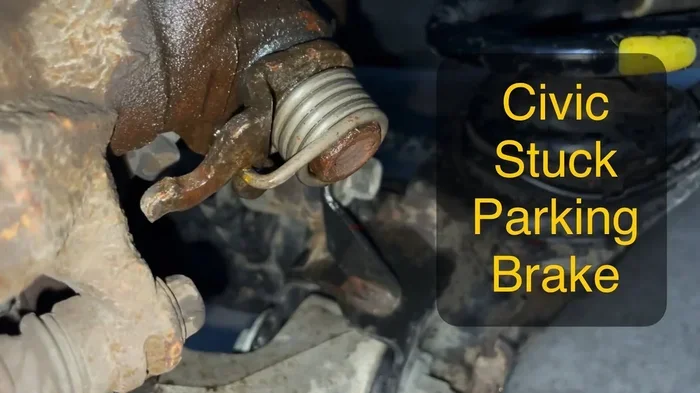
The brake caliper slides on pins to allow the pads to grip and release the rotor. When these pins get corroded or dirty, the caliper can seize up. A seized caliper keeps constant pressure on the brake, which means the parking brake effectively stays on even when released.
This is a more serious issue that often follows a brake pad replacement gone wrong or long periods of neglect. If you recently had brake work done and the parking brake started sticking, check the caliper slide pins first.
How To Release a Stuck Parking Brake: Step-by-Step
Now that you know the common causes, let us walk through the solutions. Start with the simplest fix and work your way down the list. Most of the time, the problem resolves early on.
Step 1: Try the Release Lever Multiple Times
Before you do anything else, try releasing the parking brake several times. Sometimes the cable just needs a little movement to break free. Pull the lever up fully, press the release button, and let it drop back down. Repeat this five to ten times.
This simple motion can work free minor corrosion or a slightly stretched cable. It costs nothing and takes only a few seconds. Many drivers skip this step and jump to more complicated fixes unnecessarily.
Step 2: Apply Penetrating Oil to the Cable
If repeated releases do not work, the cable is likely corroded. Grab a can of penetrating oil, such as WD-40 or PB Blaster. Spray it directly onto the cable where it enters the housing. Let it sit for at least 15 to 20 minutes.
The penetrating oil works its way into the corroded areas and breaks down rust. After waiting, try releasing the parking brake again. You may need to repeat this process a few times for stubborn corrosion. This method works surprisingly well for cables that are only lightly rusted.
Step 3: Rock the Vehicle Back and Forth
Sometimes the brake pads are just stuck to the rotor from sitting. Put the vehicle in drive (or reverse for manual transmissions) and gently rock it back and forth. Apply light throttle and let the movement break the pads free from the rotor surface.
This technique works best when the pads are slightly rusted from sitting overnight. It is especially helpful for vehicles that have been parked for weeks or months. Be gentle with the throttle and avoid jerky movements.
Step 4: Adjust the Parking Brake Cable
If the cable has stretched, adjusting it can restore proper tension. Most vehicles have an adjustment point under the rear bumper or behind the center console. The adjustment is usually a nut that tightens or loosens the cable.
Loosen the lock nut, adjust the cable to the correct length, and retighten. You want the cable snug but not overly tight. After adjusting, test the parking brake by pulling the lever up a few clicks and trying to release it. If it still sticks, the cable may need replacement instead.
For detailed instructions on your specific vehicle, you can check resources like Does It Really Matter What Oil I Put In My Car for general maintenance guidance, or consult your owner’s manual for exact adjustment procedures.
Step 5: Replace the Brake Cable
If none of the above steps work, the cable is likely too damaged to save. Replacing the parking brake cable is a moderate DIY job. You will need a jack, jack stands, a wrench set, and a new cable specific to your vehicle model.
Start by loosening the cable at both ends. Remove the old cable from the housing and lever. Install the new cable in reverse order. Make sure to adjust the tension properly after installation. If you are not comfortable working under the vehicle, this is a good job for a professional mechanic.
Step 6: Address Electronic Parking Brake Issues
For vehicles with electronic parking brakes, the approach is different. First, try restarting the vehicle. Sometimes a simple reset clears the error. Turn the ignition off, wait 30 seconds, and restart. Try releasing the parking brake again.
If the restart does not work, check the fuse box. A blown fuse in the parking brake circuit can prevent the system from operating. Replace the fuse with the correct amperage and test again. If the problem persists, you likely need a diagnostic scan tool to read the error codes. At this point, a trip to the mechanic is the best course of action.
Parking Brake Repair Costs: What to Expect
Wondering how much it will cost to fix your stuck parking brake? The answer depends entirely on the cause. Here is a breakdown of typical costs.
| Repair | Cost Range | Difficulty |
|---|---|---|
| Cable adjustment | Free (DIY) | Easy |
| Penetrating oil treatment | Free to $10 | Easy |
| Brake cable replacement | $50 to $150 | Moderate |
| Brake pad replacement | $100 to $300 | Moderate |
| Caliper slide pin service | $100 to $250 | Moderate |
| Electronic parking brake module | $300 to $800 | Hard |
| Full brake caliper replacement | $200 to $500 | Hard |
As you can see, the cost varies a lot. Simple fixes like cable adjustment cost nothing. More involved repairs like caliper replacement can get expensive. The key takeaway is to address the problem early. Ignoring a stuck parking brake can lead to further damage and higher repair bills.
If you are dealing with a stuck parking brake and also need to handle other vehicle matters, check out Can I Take A Loan Against My Car for information on vehicle financing options, or Can I Fix My Own Tire Pressure Sensor for more DIY car repair tips.
How To Prevent Your Parking Brake from Sticking
Prevention is always better than repair. A few simple habits can keep your parking brake working smoothly for years. Here is what you should do.
- Use the parking brake regularly. Even if you park on flat ground, engage and release it frequently. This keeps the cable moving and prevents corrosion.
- Avoid parking in wet or salty areas. Moisture is the enemy of brake cables. If you can, park in a garage or covered area.
- Apply a cable lubricant. Spray the cable housing with a silicone-based lubricant every few months. This creates a barrier against moisture and rust.
- Do not leave the parking brake engaged for months. If you store a vehicle for a long time, use a wheel chock instead. This prevents the cable from stretching and the pads from sticking.
- Get regular brake inspections. Have a mechanic check your brake system at every oil change. Catching small issues early saves you from bigger problems later.
These habits take very little time but pay off significantly. A well-maintained parking brake is reliable, safe, and stress-free.
When To See a Professional Mechanic
There are times when DIY fixes are not enough. If you have tried the steps above and the parking brake still will not release, it is time to call in the experts. Here are the signs that you need professional help.
- The cable is visibly broken or frayed. A damaged cable will not work no matter what you do. Replacement by a professional is the safest option.
- The parking brake light stays on. A persistent warning light often indicates a sensor or electronic issue that requires diagnostic equipment.
- You hear grinding or scraping noises. These sounds suggest the brake pads are damaged or the caliper is severely seized. Driving in this condition is unsafe.
- The vehicle pulls to one side when driving. A stuck parking brake can cause uneven tire wear and pulling. This is a sign of significant brake damage that needs immediate attention.
- You smell burning from the wheels. A burning smell means the brakes are overheating. Stop driving immediately and have the vehicle towed to a shop.
A professional mechanic has the tools and expertise to diagnose issues safely. They can also perform hydraulic system checks and electronic diagnostics that are beyond most DIY capabilities. Do not hesitate to seek help when the problem feels too complex.
For related vehicle maintenance advice, you might also find Can I Use 2 Year Old Brake Fluid helpful for understanding brake fluid maintenance and its role in your overall braking system health.
Expert Insights on Parking Brake Maintenance
Experienced mechanics agree on a few key points about parking brake care. First, never force a stuck lever or pedal. Excessive force can break the cable, damage the pawl mechanism, or warp the rear rotors. Gentle, patient troubleshooting is always the best approach.
Second, pay attention to warning signs. If your parking brake feels different than usual, take action immediately. A slightly sticky lever today can become a fully stuck brake tomorrow. Early intervention prevents costly repairs.
Third, understand your vehicle. Read the owner’s manual and learn how your specific parking brake system works. Whether it is a traditional cable system or an electronic setup, knowing the basics helps you troubleshoot effectively and communicate better with your mechanic.
Key Takeaways
- Corroded cables are the most common cause: Penetrating oil and regular use can often resolve this.
- Try simple fixes first: Rocking the vehicle and adjusting the cable solve many problems without any cost.
- Know your repair costs: From free DIY adjustments to several hundred dollars for electronic issues, costs vary widely.
- Preventive maintenance works: Regular lubrication and use of the parking brake prevents most sticking issues.
- Safety comes first: If you cannot release the parking brake safely, do not drive the vehicle. Call for a tow.
Dealing with a stuck parking brake is never fun, but it is almost always fixable. Whether the cause is a simple cable issue or a more complex electronic problem, the steps in this guide give you a clear path to resolution. Start with the basics, work your way up, and do not be afraid to call a professional when needed.
Your parking brake is a critical safety feature. Keeping it in good working order protects you, your passengers, and your vehicle. Now that you know how to diagnose and fix the problem, you are better equipped to handle it the next time it happens. Stay safe, stay informed, and keep your brakes in top shape.
Frequently Asked Questions
Can I drive with a stuck parking brake?
You should not drive with a stuck parking brake for long distances. It causes damage to your rear brake pads, rotors, and tires. If you must move the vehicle a short distance, drive very slowly and stop frequently to let the brakes cool. However, getting the parking brake released properly should always be your first priority.
How much does it cost to fix a stuck parking brake?
Costs range from free for a simple cable adjustment to several hundred dollars for more complex repairs like caliper or electronic module replacement. Most common fixes, like cable lubrication or adjustment, cost little to nothing if you do it yourself.
What causes a parking brake cable to rust?
Moisture, road salt, and lack of use are the primary causes of cable rust. Vehicles parked outdoors in humid or coastal environments are especially vulnerable. Regular use and lubrication of the cable housing can prevent rust buildup.
Can I fix a stuck parking brake myself?
Yes, in most cases you can fix a stuck parking brake yourself. Simple solutions like applying penetrating oil, adjusting the cable, or rocking the vehicle often resolve the issue. Only move to professional help if these methods fail or if you suspect a more serious brake system problem.
How do I know if my parking brake cable needs replacement?
Signs include a loose or sagging lever, the parking brake not holding the vehicle, visible fraying on the cable, or the brake not releasing at all. If you inspect the cable and see rust, kinks, or damage, replacement is the safest option.
Why does my parking brake light stay on even after I release it?
A persistent parking brake light usually means the system still detects engagement. This could be due to a low brake fluid level, a faulty switch, an electronic sensor issue, or a cable that is not fully releasing. Check your brake fluid level first, and if that is fine, have the system diagnosed by a mechanic.