Exactly How Many Gallons Does a Toyota Tacoma Hold
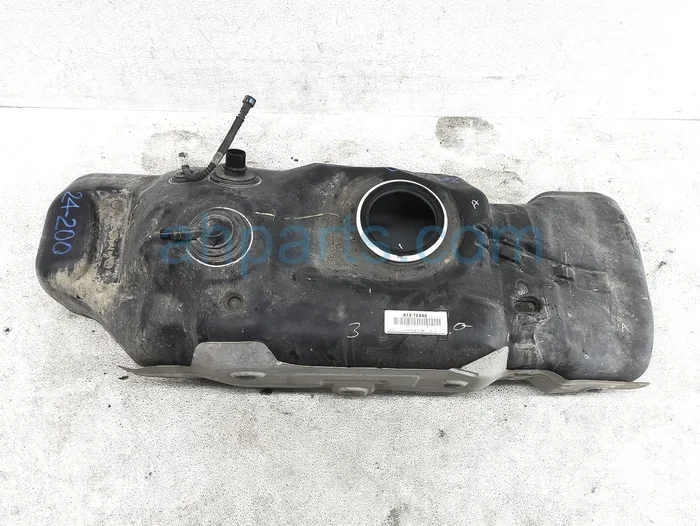
The Toyota Tacoma holds between 16 and 21.1 gallons depending on the model year and trim. The standard fuel tank capacity across most Tacoma generations sits around 16 to 20 gallons, while the newer 2024 and later models with the larger tank option offer up to 21.1 gallons. Understanding your Tacoma’s fuel capacity helps you plan road trips, estimate costs, and avoid running low on gas.
The Toyota Tacoma has been one of the most popular midsize trucks on the road for decades. People love it for its reliability, off-road capability, and everyday usefulness. But one question comes up again and again: how many gallons does a Toyota Tacoma hold? The answer depends on the model year, the trim level, and the engine configuration. In this guide, we break down everything you need to know about your Tacoma’s fuel tank.
Whether you are planning a road trip, calculating your budget, or just curious about your truck, this article covers it all. We will look at every generation, compare trims, and give you practical tips for getting the most out of every gallon. Let’s dive right in.
Key Takeaways
- Standard Tacoma tanks range from 16 to 20 gallons depending on the generation and trim level.
- The 2024+ Tacoma offers a 21.1-gallon tank as the largest factory option available.
- Fuel economy varies by engine type, with the 4-cylinder and V6 delivering different MPG ratings.
- Towing and hauling reduce your actual range significantly compared to EPA estimates.
- Knowing your tank size helps estimate fill-up costs and plan long-distance travel with confidence.
- Aftermarket options like auxiliary tanks can extend your Tacoma’s range even further.
- Always check your specific model year because tank sizes changed across Tacoma generations.
📑 Table of Contents
- Toyota Tacoma Fuel Tank Capacity By Generation
- Fuel Economy and Real-World Range
- Why Fuel Tank Size Matters for Tacoma Owners
- Tips to Maximize Your Tacoma’s Fuel Efficiency
- Common Mistakes That Waste Fuel in a Tacoma
- How to Check Your Tacoma’s Exact Fuel Capacity
- Final Thoughts on Toyota Tacoma Fuel Capacity
Toyota Tacoma Fuel Tank Capacity By Generation
The Tacoma has gone through several generations since it first launched in 1995. Each generation brought changes to the fuel tank size, engine options, and overall design. Here is a breakdown of the tank capacity across the major generations.
First Generation (1995-2004)
The original Toyota Tacoma came with a relatively modest fuel tank. Most first-generation models held 16 gallons of fuel. This was standard across the base cab and extended cab configurations. The short bed and long bed versions both shared the same tank size. At the time, 16 gallons was plenty for daily driving and moderate hauling. The Tacoma’s fuel economy was decent for a truck of this size, especially with the 2.4-liter 4-cylinder engine that was available early on.
Second Generation (2005-2015)
Toyota upgraded the fuel tank for the second-generation Tacoma. Most models from this era came with a 20-gallon fuel tank, which was a significant increase. This gave drivers more range between fill-ups and made the truck better suited for longer trips. The 20-gallon tank became the standard across most trims and bed configurations. Some special editions or limited trims may have had slight variations, but 20 gallons was the norm. This generation also introduced the more powerful V6 engine, which changed the fuel economy equation quite a bit.
Third Generation (2016-2023)
The third-generation Tacoma kept the 20-gallon tank as the standard across most trims. Toyota did not make major changes to the fuel tank size during this production run. However, the introduction of the 2.7-liter 4-cylinder and the 3.5-liter V6 meant that fuel economy varied quite a bit between engines. The V6 models used more fuel but delivered much more power, especially when towing. The TRD Off-Road and TRD Pro trims also carried the 20-gallon tank, keeping things consistent across the lineup.
Fourth Generation (2024 and Newer)
The all-new 2024 Tacoma brought some exciting changes. One of the most notable updates is the available 21.1-gallon fuel tank. This larger tank gives the newest Tacoma the longest range of any generation. It pairs especially well with the new hybrid powertrain that Toyota introduced for this generation. The 21.1-gallon option is available on select trims and configurations, making it a great choice for anyone who wants maximum range on the road or trail.
Fuel Economy and Real-World Range
Knowing your tank size is only half the battle. Understanding how far you can actually go on a full tank is what really matters. Let us look at the numbers.
EPA Ratings vs. Real-World Performance
The EPA estimates fuel economy for every vehicle sold in the United States. For the Toyota Tacoma, the EPA ratings vary based on engine type, drivetrain, and configuration. The 2.7-liter 4-cylinder engine typically delivers around 20 mpg in the city and 24 mpg on the highway. The 3.5-liter V6 engine usually gets around 19 mpg in the city and 24 mpg on the highway.
However, real-world performance often differs from these numbers. Driving habits, road conditions, tire pressure, and cargo weight all play a role. If you are towing a trailer, your fuel economy will drop. A loaded Tacoma climbing mountain passes will use more gas than a lightly loaded one cruising on flat interstate.
Calculating Your Actual Range
Here is a simple way to estimate your range. Take your tank size and multiply it by your average MPG. For example, a 2024 Tacoma with the 21.1-gallon tank and an average of 22 mpg gives you roughly 464 miles of range on a full tank. A second-generation Tacoma with a 20-gallon tank at 20 mpg gives you about 400 miles.
Of course, these are estimates. Your actual range will vary. The best way to know your personal range is to track your own fill-ups over time. Keep a log of miles driven and gallons added. After a few tanks, you will have a very accurate picture of what your Tacoma can do.
How Far Can You Drive on a Full Tank?
If you are wondering how far you can push a full tank, the answer depends on several factors. Highway driving at steady speeds will give you the best range. Stop-and-go city driving burns more fuel. If you want to maximize your distance, drive at a steady pace, keep your speed under 70 mph, and avoid aggressive acceleration.
For more information on how far you can travel on different fuel amounts, check out our guide on how many miles 12 gallons of gas will take you. It is a helpful reference for planning trips when you are not starting with a full tank.
Why Fuel Tank Size Matters for Tacoma Owners
The size of your fuel tank affects more than just how often you stop for gas. It impacts your overall ownership experience in several important ways.
Road Trip Planning
If you love taking your Tacoma on adventures, tank size matters a lot. A larger tank means fewer stops and more time on the road. When you are heading into remote areas or running through stretches of desert with no gas stations for miles, extra fuel capacity becomes a real safety feature.
Towing and Hauling
The Tacoma is a capable tow truck. But towing a trailer, boat, or camper significantly increases fuel consumption. A bigger tank helps offset this by giving you more total range. When you are hauling a heavy load, you will burn through fuel faster. Starting with a full tank and knowing your range helps you plan your route and fuel stops more effectively.
Fuel Cost Budgeting
Understanding your tank size also helps you budget for fuel costs. A full tank of 21.1 gallons at $3.50 per gallon costs about $74. At $4.00 per gallon, that same fill-up costs around $84. If you fill up once a week, that adds up quickly. Knowing your tank capacity lets you calculate monthly fuel expenses more accurately.
Comparing Tacoma to Other Midsize Trucks
How does the Tacoma’s fuel capacity stack up against competitors? The Ford Ranger typically offers a 18-gallon tank. The Chevrolet Colorado comes in around 16 to 20 gallons depending on the configuration. The Honda Ridgeline holds about 18.5 gallons. In this comparison, the Tacoma holds its own quite well, especially with the newer 21.1-gallon option. For a deeper look at how different trucks compare in terms of fuel range, you might find our article on how much mileage a Fortuner gives interesting, as it explores fuel economy across popular SUV and truck models.
Tips to Maximize Your Tacoma’s Fuel Efficiency
Everyone wants to get more miles per gallon from their truck. Here are some practical tips to help you squeeze every bit of efficiency out of your Tacoma.
Keep Your Tires Properly Inflated
Underinflated tires create rolling resistance, which forces your engine to work harder. Check your tire pressure at least once a month. The recommended pressure for the Tacoma is usually listed on the driver’s side door jamb. Keeping tires at the right pressure can improve your fuel economy by up to 3 percent.
Remove Unnecessary Weight
Extra weight in your truck burns more fuel. If you carry tools, equipment, or gear in your bed or cab that you do not need every day, remove it. Every extra 100 pounds can reduce your fuel economy by about 1 percent. Keep only what you actually use.
Use Cruise Control on Highways
Maintaining a steady speed on the highway helps your engine run more efficiently. Cruise control is a simple way to achieve this. Just be mindful of hilly terrain, where cruise control may cause the transmission to downshift and use more fuel.
Warm Up Your Engine Properly
Modern Tacomas do not need long warm-up periods. A brief 30-second idle is usually enough before you start driving. Driving gently for the first few minutes helps the engine reach operating temperature faster, which improves fuel economy.
Keep Up with Maintenance
Regular oil changes, air filter replacements, and spark plug maintenance all contribute to better fuel efficiency. A well-maintained engine runs cleaner and more efficiently. Follow the maintenance schedule in your owner’s manual to keep your Tacoma running at its best.
Common Mistakes That Waste Fuel in a Tacoma
Avoiding these common mistakes can save you money at the pump and extend your range.
- Aggressive acceleration and braking: Hard starts and sudden stops burn fuel unnecessarily. Smooth driving saves gas.
- Excessive idling: Letting your truck idle for long periods wastes fuel. Turn off the engine if you will be stopped for more than a minute.
- Ignoring the check engine light: A faulty oxygen sensor or misfiring spark plug can significantly reduce fuel economy. Address warning lights promptly.
- Running on empty too often: Driving with a very low tank can damage the fuel pump over time and leaves you vulnerable to running out of gas.
- Using the wrong octane fuel: The Tacoma recommends regular unleaded fuel. Using premium fuel does not improve performance or economy.
How to Check Your Tacoma’s Exact Fuel Capacity
If you are not sure what your specific Tacoma holds, there are a few ways to find out.
- Check your owner’s manual: The fuel tank specifications are listed in the vehicle specifications section. This is the most accurate source for your exact model and year.
- Look at the door jamb sticker: Many Tacomas have a sticker on the driver’s side door jamb that lists the fuel tank capacity along with other vehicle specifications.
- Contact a Toyota dealer: A dealer can look up your specific VIN and confirm the exact tank size and configuration.
- Check online resources: Toyota’s official website and various automotive databases list fuel tank specifications by model year and trim.
Knowing your exact fuel capacity is important for planning and budgeting. Do not rely on general estimates when you need precise information for your specific truck.
Final Thoughts on Toyota Tacoma Fuel Capacity
The Toyota Tacoma is a versatile and capable truck that has earned its place as one of the best-selling midsize pickups in America. Whether you have a first-generation model with a 16-gallon tank or the latest 2024 Tacoma with a 21.1-gallon tank, understanding your fuel capacity helps you make the most of every drive.
Your Tacoma’s fuel tank size directly impacts your range, your budget, and your confidence on the road. By following the tips in this guide, you can maximize your fuel efficiency and plan your trips with ease. Keep your tank maintained, drive smart, and enjoy every mile in your Tacoma.
For answers to common questions about Tacoma fuel and maintenance, keep reading through our FAQ section below.
Frequently Asked Questions
How many gallons does a 2024 Toyota Tacoma hold?
The 2024 Toyota Tacoma offers a 21.1-gallon fuel tank on select trims. This is the largest factory tank available in any Tacoma generation. The exact capacity depends on your specific configuration and trim level.
What is the fuel tank size on a 2010 Toyota Tacoma?
A 2010 Toyota Tacoma typically comes with a 20-gallon fuel tank. This was the standard capacity across most trims and configurations during the second and third generations of the Tacoma.
Does the Tacoma V6 have a different tank size than the 4-cylinder?
No, the fuel tank size remains the same regardless of engine type. Both the 4-cylinder and V6 Tacoma models share the same tank capacity within each generation. The difference lies in fuel economy, not tank size.
How far can a Toyota Tacoma go on a full tank?
On a full tank, a Tacoma can typically travel between 350 and 500 miles depending on the model year, engine, and driving conditions. The 2024 model with the 21.1-gallon tank and good fuel economy can reach the higher end of that range.
Can you add an auxiliary fuel tank to a Toyota Tacoma?
Yes, aftermarket auxiliary fuel tanks are available for the Toyota Tacoma. These can add between 5 and 20 extra gallons of capacity. They are popular among overland travelers and those who frequently drive in remote areas with limited fuel access.
How often do you need to fill up a Toyota Tacoma?
Filling frequency depends on your driving habits and tank size. With a 20-gallon tank and average fuel economy of 20 mpg, you can expect to fill up roughly every 400 miles. The 21.1-gallon tank extends that range even further, especially for highway drivers.