Are Car Sun Visors Legal Here Is What You Need to Know
Car sun visors are legal in most cases, but the rules depend on your state, the type of visor, and how it is installed. Factory-installed OEM sun visors are universally accepted, while aftermarket and modified visors may face restrictions. Understanding sun visor laws helps you avoid fines and stay safe on the road.
When it comes to car sun visors legal status, most drivers assume their factory-installed visors are perfectly fine. The truth is that sun visor laws vary from state to state, and even small changes can lead to vehicle code violations. Whether you drive an older sedan or a new SUV, understanding the rules around sun glare protection and visor modifications matters. This guide breaks down everything you need to know about car sun visors legal requirements, from federal guidelines to state-specific rules. By the end, you will know exactly how to keep your visors compliant and your driving safe.
Most of us never think twice about the sun visor hanging over our windshield. It just sits there, doing its job of blocking glare. But have you ever wondered whether your aftermarket sun visors or any modifications you have made could actually put you on the wrong side of the law? The answer might surprise you. Car sun visors legal rules are not as straightforward as many drivers believe. While factory OEM sun visors are almost universally accepted, adding tinted covers, extenders, or mirrors can create gray areas. Understanding these rules helps you stay compliant and avoid unnecessary fines during vehicle inspection or routine traffic stops.
Key Takeaways
- Factory sun visors are legal everywhere: OEM visors that come with your car meet all federal and state safety standards.
- State laws vary widely: Some states have strict windshield obstruction rules while others are more lenient with visor modifications.
- Aftermarket visors can be risky: Tinted covers, extenders, and non-certified visors may violate state traffic laws or DOT regulations.
- Visibility is the key factor: Any modification that blocks your view of the road can result in a citation or failed inspection.
- Certification matters: Always look for DOT or FMVSS certification when buying replacement or aftermarket visors.
- Small accessories can cause big problems: Visor mirrors and extenders should never obstruct your forward line of sight.
- Know your local rules: Check your state’s vehicle code before making any visor modifications to stay fully compliant.
📑 Table of Contents
Are Car Sun Visors Legal? Understanding the Basics
So, are car sun visors legal? The short answer is yes, in most cases. Factory-installed sun visors come standard on every new vehicle sold in the United States. They are designed to meet DOT regulations and road safety regulations set by the National Highway Traffic Safety Administration (NHTSA).
However, the moment you start modifying, replacing, or adding accessories to your visors, the rules change. State traffic laws govern what is allowed inside your vehicle’s cabin, and these laws can differ significantly from one state to another. The key is understanding the difference between what is standard and what is a legal modification.
Federal vs State Regulations
At the federal level, there is no single law that directly addresses car sun visors legal status. The NHTSA sets broad vehicle safety standards that manufacturers must follow. These standards cover things like visor durability, mounting strength, and materials used. As long as your visor meets these baseline requirements, it is generally considered compliant.
Where things get more specific is at the state level. Individual states enforce their own windshield obstruction laws and front windshield obstruction rules. These laws focus on what can block a driver’s view through the windshield or side windows. A visor that hangs low or blocks your line of sight could technically violate these rules, even if the visor itself is not illegal.
The Role of DOT Regulations
The Department of Transportation (DOT) sets safety standards for vehicle components, including sun visors. These regulations ensure that visors do not become projectiles in a crash and that they hold securely in place. When you purchase OEM sun visors from the manufacturer, they have already been tested to meet these standards.
Aftermarket visors, on the other hand, may or may not meet DOT requirements. This is where car accessories compliance becomes important. If you are replacing a visor or adding an accessory, look for products that carry DOT certification or meet Federal Motor Vehicle Safety Standards (FMVSS). This small step can save you from headaches during a vehicle inspection or traffic stop.
State-by-State Sun Visor Laws You Should Know
Because there is no single federal law governing sun visors, each state has its own approach. Some states have clear rules, while others leave much to interpretation. Here is a closer look at how sun visor laws vary across the country.
States With Strict Sun Visor Rules
States like California, New York, and Texas have specific regulations regarding what can obstruct a driver’s view. In California, for example, windshield obstruction laws prohibit any object or material that blocks the driver’s clear view of the road. This includes visors that are modified with dark covers or extended too far.
New York takes a similar stance. The state’s vehicle code violations include provisions for anything that interferes with the driver’s vision. A tinted visor that reduces visibility could result in a citation, especially during traffic enforcement operations.
States With Lenient Sun Visor Laws
On the other hand, states like Florida and Arizona tend to have more relaxed rules when it comes to car sun visors legal status. These states focus more on driving safety and actual impairment rather than the visor itself. As long as your visor does not significantly block your view, you are likely in the clear.
However, even in lenient states, common sense applies. If a police officer determines that your visor is obstructing your view, you could still receive a citation. The best practice is to keep your visors in their original, unobstructed position whenever possible.
| State | Sun Visor Rules | Tinted Visors | Aftermarket Mods |
|---|---|---|---|
| California | Strict windshield obstruction laws | Not allowed if blocking view | Requires compliance with state codes |
| New York | Strict front windshield obstruction rules | Restricted | Must not obstruct driver view |
| Texas | Moderate; focuses on obstruction | Allowed if not tinted heavily | Generally permitted |
| Florida | Lenient; focus on actual impairment | Generally allowed | Mostly permitted |
| Arizona | Lenient; safety-focused | Allowed | Generally permitted |
Keep in mind that this table is a general guide. State traffic laws change, and local enforcement can vary. Always check your specific state’s vehicle code for the most current information.
Aftermarket and Modified Sun Visors: Legal or Not?
This is where things get tricky for many car owners. Aftermarket sun visors come in all shapes and sizes. From visor extenders to tinted visors to visors with built-in mirrors and LED lights, the options are nearly endless. But not all of these modifications are legal modifications.
Tinted and Darkened Visors
Tinted visors are popular among drivers who want extra sun glare protection. They work great on bright days, but they can also reduce your visibility at night or in tunnels. Many states treat tinted visors similarly to window tinting. If the tint is too dark, it can be considered a violation of window tint laws.
The general rule is that any modification that reduces your ability to see clearly through the windshield or side windows is likely illegal. If you want a tinted visor, choose one that is light enough to maintain clear visibility. Some states specifically prohibit visors that block more than a certain percentage of light.
Visor Extenders and Add-On Accessories
Visor extenders are another popular accessory. These clip-on additions give you extra coverage for taller windows or sunroofs. In most cases, visor extenders are perfectly legal as long as they do not obstruct your view. They are considered car accessories compliance items when they are properly installed and do not interfere with driving.
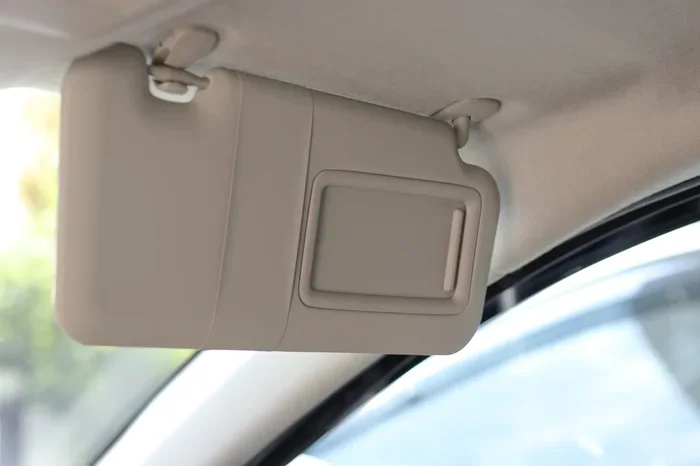
Visor mirrors are another common add-on. These small mirrors attach to the bottom of your visor and give you a view of what is behind you. They are generally legal, but they should be small and positioned so they do not block your forward view. A large mirror that sits in your line of sight could be considered a front windshield obstruction.
OEM vs Aftermarket: A Quick Comparison
| Feature | OEM Sun Visors | Aftermarket Sun Visors |
|---|---|---|
| DOT Compliance | Always compliant | Varies by manufacturer |
| Warranty | Included with vehicle | Varies by seller |
| Fit and Finish | Perfect factory fit | May require adjustment |
| Legal Risk | Minimal | Moderate if not certified |
| Sun Glare Protection | Standard protection | Often enhanced |
| Vehicle Inspection Readiness | Always passes | Depends on modification |
As you can see from the table above, sticking with OEM sun visors is the safest route for compliance. If you choose aftermarket options, make sure they are from reputable manufacturers and meet DOT regulations.
Common Mistakes Car Owners Make With Sun Visors
Even well-meaning car owners can run into trouble with their sun visors. Here are some of the most common mistakes that lead to vehicle code violations or safety issues.
Blocking the Windshield View
The single most common mistake is installing a visor or accessory that blocks your view of the road. This includes visors that hang too low, extend too far, or are fitted with large mirrors or storage pockets. Even a small obstruction in your line of sight can be cited under windshield obstruction laws.
Remember, the law cares about what affects your ability to drive safely. If a police officer can clearly see that your visor is limiting your view, you could be pulled over and cited.
Using Non-Certified Visors
Buying a cheap visor online without checking for certification is another common mistake. Non-certified visors may use flammable materials, weak mounting brackets, or dark tints that violate state traffic laws. During a vehicle inspection, these visors can fail and result in a failed inspection or citation.
Always look for visors that carry safety certifications. If a product does not list its compliance with DOT regulations, it is best to avoid it.
Ignoring State-Specific Rules
Just because your visor is legal in one state does not mean it is legal in another. Sun visor laws vary widely, and what is perfectly fine in Arizona might get you a ticket in California. If you move to a new state or frequently drive across state lines, take the time to learn the local road safety regulations.
How to Stay Compliant and Drive Safely
Staying on the right side of car sun visors legal rules does not have to be complicated. A little knowledge and common sense go a long way toward keeping you compliant and safe on the road.
Quick Tips for Legal Sun Visor Use
- Keep factory visors in their original position: This is the simplest way to stay compliant with sun visor laws in every state.
- Choose certified aftermarket products: Look for visors and accessories that carry DOT or FMVSS certification.
- Avoid dark tints on front visors: Light-colored or clear visors are the safest choice for maintaining visibility.
- Check your state’s vehicle code: A quick online search for your state’s vehicle code violations section can clarify the rules.
- Keep accessories small and unobtrusive: Mirrors, extenders, and storage pockets should never block your view of the road.
- Prepare for vehicle inspections: Remove any non-compliant visors or accessories before your annual or biannual inspection.
When to Replace Your Sun Visor
Visor replacement is a normal part of vehicle maintenance. Over time, the mounting brackets wear out, the swivel mechanism loosens, or the fabric fades. When your visor starts to sag or does not stay in position, it is time for a replacement.
When replacing your visor, choose a part that matches your vehicle’s make and model. OEM replacements are always the safest bet for compliance. If you opt for an aftermarket replacement, ensure it meets DOT regulations and does not add any tint or obstruction that could violate windshield obstruction laws.
Expert Insights
According to traffic safety experts, the most important thing to remember is that sun visors are safety devices, not just convenience accessories. A visor that is broken, improperly installed, or modified in a way that blocks your view can actually increase your risk of an accident. Always prioritize function over style when choosing or modifying your sun visors.
Expert Tips for Choosing the Right Sun Visor
Not all sun visors are created equal. Whether you are replacing a worn-out visor or upgrading for better sun glare protection, choosing the right one matters for both safety and compliance.
Start by checking your vehicle’s owner manual. Most manufacturers specify the exact visor model that fits your car. This ensures a proper fit and maintains your car accessories compliance status. If you are considering an upgrade, look for visors that are specifically designed for your vehicle year and model.
For drivers who spend a lot of time on the road, consider visors with built-in sun glare protection features. These often include extendable panels or adjustable angles that let you block the sun without fully extending the visor. Just make sure any added features do not obstruct your view or violate state traffic laws.
Finally, if you are planning to sell your vehicle or undergo a vehicle inspection, remove any non-standard visors or accessories. Having OEM sun visors in place ensures a smooth inspection and avoids any questions from the inspector about legal modifications.
Understanding car sun visors legal rules is simpler than most drivers think. Factory-installed visors are safe and compliant in every state. The real questions arise when you start customizing or upgrading with aftermarket sun visors, tinted covers, or add-on accessories.
The key takeaway is to always prioritize visibility and safety. If a modification blocks your view, it is likely not worth the risk. Stick with certified products, know your state traffic laws, and remember that sun visor laws exist to protect you and everyone else on the road.
Whether you are preparing for a vehicle inspection, replacing a worn visor, or simply curious about the rules, this guide gives you the foundation you need. Stay informed, stay compliant, and enjoy the drive with confidence that your car sun visors legal setup is up to standard.
Frequently Asked Questions
Can I install a tinted sun visor in my car?
It depends on your state and how dark the tint is. Many states treat tinted visors like window tint and prohibit them if they reduce visibility. Light tints are generally safer, but always check your local sun visor laws before installing one.
Are visor extenders legal in all states?
Most states allow visor extenders as long as they do not obstruct your view of the road. However, some states with strict windshield obstruction laws may restrict extenders that hang too low or block side windows. Always verify with your state’s vehicle code.
What happens if my sun visor blocks my view while driving?
If a police officer determines that your visor is obstructing your line of sight, you can be cited for a vehicle code violation. This falls under front windshield obstruction laws in most states. Keeping your visor in a proper position helps you avoid this issue entirely.
Do I need to remove aftermarket visors for vehicle inspection?
This depends on your state’s vehicle inspection requirements. In states with strict safety checks, non-certified or heavily modified visors can cause you to fail. Stick with OEM sun visors or certified aftermarket products to ensure a smooth inspection every time.
Are sun visor mirrors legal?
Small visor mirrors are generally legal in most states. The key is that they should not be large enough to block your forward view. If a mirror sits in your line of sight, it could be considered a front windshield obstruction and lead to a citation.
Can I get a ticket for an illegal sun visor modification?
Yes, you can. If your visor modification violates state traffic laws or windshield obstruction laws, a police officer can pull you over and issue a citation. This is especially common with dark tinted visors or visors that significantly reduce your visibility while driving.