Can a Wrapped Car Go Through a Car Wash Without Damage
Can a wrapped car go through a car wash without damage? Yes, it can, but you need to choose the right wash type and follow a few simple steps. Touchless and hand washes are the safest options for vinyl wraps, while brush washes can cause scratches and peeling. Taking proper care of your wrap before and after each wash will help it last for years.
Can a wrapped car go through a car wash without causing harm? This is one of the most common questions car owners ask after investing in a vinyl wrap. The short answer is yes, but with some important caveats. Not all car washes are safe for every type of wrap, and the method you choose matters a lot. In this guide, we will walk you through everything you need to know about car wash safety for wrapped vehicles and how to keep your investment looking great.
Getting a car wrap is a big decision. You spend money to protect your paint or change your look. So it makes sense to worry about what happens next. Many owners wonder whether their wrapped vehicle can handle a regular trip through the car wash. The truth is that modern vinyl wraps are built to last. They can handle water, soap, and even some friction. But not every wash type treats your wrap the same way. Understanding the differences will help you keep your wrap looking sharp for years.
Whether you have a full vinyl wrap or a partial paint protection film, knowing how to clean it properly is essential. The wrong wash method can lead to car wrap damage, fading, or premature peeling. The right method keeps your wrapped car care routine simple and effective. Let us dive into the details and help you make smart choices for your vehicle.
Key Takeaways
- Touchless car washes are the safest choice for wrapped cars because they use high-pressure water and soap without physical contact.
- Brush car washes pose the biggest risk to vinyl wraps, as the rotating brushes can scratch, lift, and peel the adhesive vinyl.
- Proper wrap prep makes a big difference before entering any car wash, including checking edges and applying wrap sealant.
- Hand washing is the gentlest method and gives you full control over water pressure and cleaning products used on your wrapped vehicle.
- Regular wrap maintenance extends lifespan and keeps your car wrap looking fresh, vibrant, and protected from daily wear and tear.
- Small damages should be fixed quickly to prevent moisture from getting under the vinyl and causing bigger problems down the road.
- Professional wrap installers offer the best advice for maintaining your specific wrap type and ensuring long-lasting durability.
📑 Table of Contents
- Can a Wrapped Car Go Through a Car Wash Safely?
- Types of Car Washes and What They Do to Your Wrap
- How to Protect Your Vinyl Wrap at the Car Wash
- Common Mistakes People Make With Wrapped Cars
- How Long Does a Car Wrap Last With Regular Washing?
- Expert Advice From Professional Wrap Installers
- Final Thoughts on Washing Your Wrapped Car
Can a Wrapped Car Go Through a Car Wash Safely?
The answer depends on the type of car wash you use. A touchless car wash is generally the safest option for wrapped cars. These washes use high-pressure water jets and soap without any physical contact. There are no brushes or rotating pads touching your vinyl wrap. This means there is very little risk of scratching or lifting the edges of your wrap.
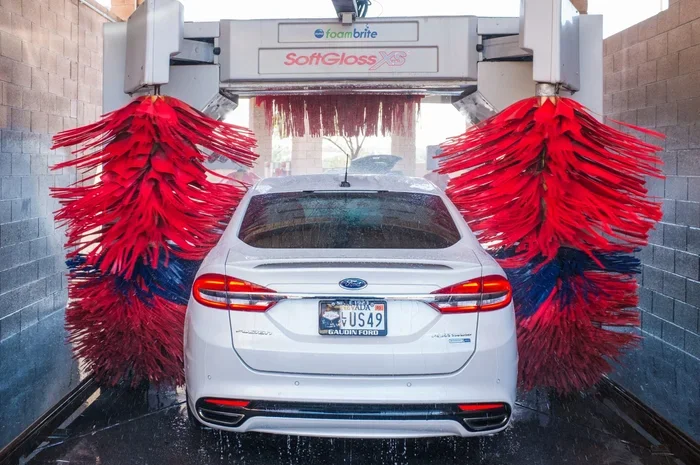
On the other hand, a brush car wash can be risky. The soft or hard brushes rotate against your car’s surface. For a wrapped vehicle, this friction can cause the adhesive vinyl to peel or lift at the corners. Over time, repeated brush washing can wear down the clear coat that protects your wrap. This leads to dullness and reduced car wrap durability.
How Automatic Car Washes Affect Vinyl Wraps
Automatic car washes use different methods to clean your car. Each method has a different impact on your vinyl wrap. The two main types are touchless washes and friction washes. Touchless washes rely on water pressure and chemicals. Friction washes use brushes, cloths, or pads to scrub the surface. For your paint protection film or adhesive vinyl, touchless is always the better choice.
Friction washes may feel gentler than they are. The cloths used in some modern systems are softer than old brushes. But even soft cloths create friction over time. This friction can cause micro-scratches on your wrap. These scratches build up and make your wrap look dull. They can also weaken the adhesive bond holding the wrap in place.
The Difference Between Touchless and Brush Washes
Understanding the difference between these two wash types is key. A touchless car wash uses sensors to detect your car’s shape. It then sprays high-pressure water and soap from multiple angles. The water pressure cleans the surface without touching it. This is ideal for wrapped car care because there is zero physical contact.
A brush car wash uses rotating brushes or cloth strips that physically touch your car. Even though modern brushes are softer than older versions, they still create friction. For a vinyl wrap, this friction can cause the edges to lift. It can also push dirt and grime into the wrap surface. This trapped dirt can slowly damage the adhesive vinyl underneath.
| Wash Type | Safe for Wraps? | Risk Level | Best For |
|---|---|---|---|
| Touchless Car Wash | Yes | Low | All wrapped vehicles |
| Brush Car Wash | Not Recommended | High | Unwrapped painted cars only |
| Hand Wash | Yes | Very Low | Gentle cleaning and maintenance |
| Pressure Wash (Touchless) | Yes, with care | Low to Medium | Quick rinses and spot cleaning |
| Self-Service Bay | Yes | Low | Controlled cleaning with your own products |
Types of Car Washes and What They Do to Your Wrap
Not all car washes are created equal. The type of wash you choose has a direct impact on your car wrap lifespan. Let us break down each type and explain how it affects your wrapped vehicle. This will help you make the best decision every time you need to clean your car.
Touchless Car Wash: The Safest Option
A touchless car wash is the gold standard for wrapped cars. It uses high-pressure water sprays and specialized soap solutions. There are no rotating brushes or physical contact with your car. The water pressure lifts dirt and grime away from the vinyl wrap surface. This method keeps your wrap safe from scratches, peeling, and edge lifting.
Most touchless washes also have a wax or sealant cycle. This adds a protective layer on top of your wrap. The sealant helps repel water and dirt. It also makes your wrap look shinier and more vibrant. Always choose the touchless setting when using a self-service car wash bay. Avoid the brush or friction options entirely.
Brush Car Wash: What You Need to Know
Brush car washes use rotating bristles or soft cloth strips to scrub your car. While they do a good job on regular paint, they are not ideal for vinyl wraps. The rotating motion creates friction against the wrap surface. Over time, this friction can cause several problems. Edges can lift, the wrap can scratch, and the adhesive can weaken.
If you have ever seen a wrapped car after multiple brush washes, you may notice faded edges. The corners of the wrap may start to curl upward. This happens because the brush pressure slowly breaks down the adhesive bond. Once the edges lift, moisture can get underneath. This leads to bubbling, peeling, and eventually the need for a full wrap replacement.
Hand Wash vs. Machine Wash
A hand wash gives you the most control over how your wrapped vehicle is cleaned. You choose the water pressure, the soap, and the cloth or sponge you use. This hands-on approach is the gentlest way to wash a vinyl wrap. You can avoid high-pressure spots and focus on gentle, thorough cleaning.
A machine wash, whether touchless or brush, is faster and more convenient. But convenience comes with trade-offs. You cannot control the water pressure or the type of soap used. Some machine washes use harsh chemicals that can dull your wrap. If you must use a machine wash, always pick the touchless option. And avoid any wash that uses brushes or physical contact.
How to Protect Your Vinyl Wrap at the Car Wash
Protecting your vinyl wrap at the car wash is easier than you think. A few simple steps before and after washing can make a huge difference. These steps will help you avoid car wrap damage and keep your wrap looking fresh for years to come.
Prep Your Wrap Before Washing
Before you drive your wrapped car through any wash, take a few minutes to prep it. Start by walking around your vehicle and checking all the edges. Look for any areas where the wrap is already lifting or peeling. If you find any issues, address them before washing. Driving through a car wash with lifted edges can make the problem worse.
Next, close all doors, windows, and trunks tightly. Make sure all seals are secure. This prevents water from seeping under the wrap during the wash. If your wrap has any exposed edges, consider applying a thin line of wrap sealant along them. This creates an extra barrier against moisture and helps maintain car wrap durability.
Use Wrap-Safe Products
The soap and chemicals used in car washes matter a lot. Harsh chemicals can break down the adhesive vinyl and dull the finish of your wrap. Always use pH-neutral car wash soaps that are safe for vinyl wraps. Avoid household cleaners, dish soap, or any product with abrasive ingredients.
If you are washing your car by hand, use a soft microfiber cloth or a plush sponge. Never use rough brushes or abrasive pads on your wrapped vehicle. These can create micro-scratches that dull the wrap over time. After washing, dry your car with a clean, soft towel. This prevents water spots from settling into the wrap surface.
Quick Tips for Car Wash Safety
- Always choose the touchless setting at automatic car washes.
- Avoid brush or friction wash options completely for wrapped cars.
- Use pH-neutral soap designed for vinyl wraps and paint protection film.
- Dry your car gently after washing to prevent water spots.
- Apply wrap sealant every few months to boost car wrap durability.
- Check edges regularly for any lifting or peeling after washing.
- Keep your wrap clean between washes to prevent dirt buildup.
Common Mistakes People Make With Wrapped Cars
Even with the best intentions, car owners sometimes make mistakes when washing their wrapped vehicle. These mistakes can lead to premature wear, damage, and costly repairs. Knowing what to avoid is just as important as knowing what to do. Let us look at the most common errors and how to prevent them.
Skipping Wrap Maintenance
One of the biggest mistakes is skipping regular car wrap maintenance. Some owners think that because the wrap is “waterproof,” they do not need to wash it often. This is not true. Dirt, bird droppings, tree sap, and road grime can all damage a vinyl wrap if left too long. Regular washing keeps your wrap clean and prevents buildup that can eat into the material over time.
Set a schedule for washing your wrapped car. Every one to two weeks is a good routine. If your car is exposed to harsh weather or road conditions, wash it more often. Consistent wrapped car care keeps your wrap looking vibrant and extends its lifespan significantly.
Using Harsh Chemicals
Another common mistake is using the wrong cleaning products. Strong solvents, acetone-based cleaners, and abrasive sprays can dissolve the adhesive vinyl and damage the clear coat on your wrap. Always read the label before using any product on your wrapped car. Look for products that are specifically labeled as safe for vinyl wraps and paint protection film.
If you are unsure about a product, test it on a small hidden area first. Wait 24 hours and check for any discoloration or damage. This simple step can save you from a costly mistake. When in doubt, stick with gentle, pH-neutral cleaners made for car wraps.
Ignoring Small Damages
Small damages like tiny scratches or edge lifts might seem harmless at first. But they can grow into bigger problems fast. Moisture can enter through even the smallest gap in your vinyl wrap. Once water gets under the wrap, it can cause bubbling, mold, and adhesive failure. This leads to areas of the wrap peeling away from the car surface.
Make it a habit to inspect your wrap after every wash. Look for scratches, lifted edges, or areas where the wrap looks dull or faded. If you spot any issues, address them right away. Small repairs are much cheaper and easier than replacing a large section of your car wrap. A vehicle wrap installer can fix minor damages quickly and affordably.
How Long Does a Car Wrap Last With Regular Washing?
The car wrap lifespan depends on several factors. The type of wrap, the quality of the installation, and how well you care for it all play a role. With proper care and safe washing habits, a vinyl wrap can last anywhere from five to seven years. Some high-quality wraps can even last longer with excellent maintenance.
Average Car Wrap Lifespan
On average, a well-maintained car wrap lasts between five and seven years. This timeline assumes regular washing with safe methods and proper storage when parked. Wraps that are washed with brush car washes or harsh chemicals may only last three to four years. The difference comes down to how you care for the wrap over time.
The paint protection film used as an underlayment also affects lifespan. High-quality paint protection film adds an extra layer of defense against UV rays, road debris, and chemical exposure. This protective layer helps the vinyl wrap above it stay intact and looking new for longer.
Factors That Affect Wrap Durability
Several factors influence how long your car wrap durability will last. The quality of the vinyl material is the first factor. Premium wraps from trusted brands last longer than budget options. The skill of the vehicle wrap installer also matters. A properly installed wrap with smooth edges and secure adhesion will outlast a poorly installed one.
Your washing habits are another major factor. Using touchless washes and gentle hand washing extends your wrap life significantly. Parking your car in a garage or shaded area also helps. UV rays from direct sunlight can fade and weaken a vinyl wrap over time. Regular application of wrap sealant adds UV protection and boosts overall durability.
Expert Advice From Professional Wrap Installers
Professional vehicle wrap installers see the results of good and bad wash habits every day. Their advice is based on years of experience working with vinyl wraps of all types. Here is what the experts recommend for keeping your wrapped car clean and protected.
Tips From Vehicle Wrap Installers
Top installers agree that the touchless car wash is the best choice for most wrapped vehicles. They also recommend hand washing as the gold standard for wrapped car care. When washing by hand, use a two-bucket method. One bucket has soapy water, and the other has clean rinse water. This prevents dirt from being dragged across the wrap surface.
Installers also suggest avoiding high-pressure washers directly on the wrap edges. While touchless car washes are safe, directing a pressure washer at the edges of your adhesive vinyl can force water under the wrap. This can weaken the adhesive bond over time. Always aim the pressure washer at the center panels and let the edges air dry or gently pat them dry.
When to Replace or Repair Your Wrap
Even with the best care, your car wrap will eventually need attention. Signs that it is time for a repair or replacement include fading, peeling edges, bubbling, and visible scratches that go through the clear coat. If you notice any of these issues, consult a professional vehicle wrap installer right away.
Small repairs like edge reapplication or spot fixes are often affordable and quick. A skilled installer can fix minor damages in just a few hours. But if more than 20 to 30 percent of your wrap is damaged, a full replacement may be the better choice. Your installer can assess the damage and give you honest advice on the best path forward.
Final Thoughts on Washing Your Wrapped Car
Can a wrapped car go through a car wash without damage? The answer is a confident yes, as long as you choose the right method. Stick with touchless car washes and gentle hand washing to keep your vinyl wrap in top shape. Avoid brush washes and harsh chemicals that can shorten your car wrap lifespan and cause car wrap damage.
Taking a few extra minutes to care for your wrap pays off big time. Your wrapped vehicle will look great, stay protected, and last for years. Follow the tips in this guide, and you will enjoy a stunning wrap that turns heads wherever you go. Remember, wrapped car care is simple when you know what to do and what to avoid.
Frequently Asked Questions
Is it safe to take a wrapped car through an automatic car wash?
Yes, it is safe as long as you choose the touchless option. Automatic brush car washes can damage your vinyl wrap by causing scratches, edge lifting, and adhesive weakening. Always select the touchless or high-pressure water-only setting when using an automatic wash for your wrapped vehicle.
What type of car wash is best for a wrapped car?
A touchless car wash is the best option for wrapped cars. It uses high-pressure water and soap without any physical contact. Hand washing with gentle soap and a soft microfiber cloth is the second-best choice. Both methods keep your vinyl wrap safe from scratches and peeling.
How often can you wash a wrapped car?
You can wash a wrapped car every one to two weeks. Regular washing prevents dirt, bird droppings, and tree sap from building up and damaging the adhesive vinyl. Just make sure to use pH-neutral soap and avoid harsh chemicals or abrasive tools during the wash.
Will a car wash peel off my vinyl wrap?
A touchless car wash will not peel off your vinyl wrap. However, a brush car wash can cause edges to lift and the wrap to peel over time. The friction from rotating brushes weakens the adhesive bond. To prevent peeling, always choose touchless or hand wash methods for your wrapped car care routine.
Can you pressure wash a wrapped car?
Yes, but with caution. A gentle pressure wash is safe for most vinyl wraps. Avoid directing the pressure washer at the wrap edges, as this can force water under the vinyl and weaken the adhesive. Use low to medium pressure and keep the nozzle at least 12 inches from the wrap surface.
How do you maintain a wrapped car after a car wash?
After washing, dry your wrapped vehicle with a soft microfiber towel to prevent water spots. Inspect the wrap edges for any lifting or debris. Apply a quality wrap sealant every few months to boost car wrap durability and UV protection. Regular maintenance keeps your wrap looking fresh and extends its lifespan significantly.