What Happens When a Vehicle Has a High Center of Gravity
When a vehicle has a high center of gravity, it faces serious risks like rollover accidents, poor handling, and unstable cornering. Understanding center of gravity height helps drivers make smarter choices about load distribution and driving habits. This guide covers everything from vehicle dynamics to practical tips for staying safe on the road.
Every vehicle has a point where its weight balances out. That point is called the center of gravity. When that point sits high up, the whole vehicle feels less stable. You might notice it when a large SUV leans into a turn or when a loaded truck feels wobbly on the highway.
A high center of gravity is not just a technical detail. It affects how a vehicle handles, how safe it is, and how confident you feel behind the wheel. Many drivers don’t think about this until something goes wrong. By understanding what happens when a vehicle has a high center of gravity, you can drive smarter and stay safer.
This article breaks down the science in plain language. You will learn about rollover risks, handling problems, and what you can do about them. Whether you drive a truck, an SUV, or a van, this guide has something valuable for you.
Key Takeaways
- Rollover Risk Increases: A high center of gravity makes vehicles far more prone to tipping over during sharp turns or sudden maneuvers.
- Weight Distribution Matters: How you load your vehicle directly impacts its stability and overall handling on the road.
- Suspension Design Plays a Key Role: The suspension system helps manage weight transfer and keeps the vehicle grounded.
- Electronic Stability Control Saves Lives: Modern stability control systems can significantly reduce rollover risk in top-heavy vehicles.
- Simple Adjustments Help: Lowering springs and proper tire pressure are easy ways to improve vehicle stability.
- Speed Amplifies Danger: Higher speeds dramatically increase the forces acting on a vehicle with a tall profile.
- Know Your Vehicle: Understanding your vehicle’s limits is the first step toward safer driving.
📑 Table of Contents
- What Is Center of Gravity and Why Does It Matter?
- The Rollover Danger: What Happens During a Sharp Turn
- Handling and Stability: How a High Center of Gravity Affects Driving
- Vehicle Design Factors That Influence Center of Gravity
- How to Improve Stability in a High-Center-of-Gravity Vehicle
- The Role of Modern Safety Technology
- Key Takeaways
- Conclusion
What Is Center of Gravity and Why Does It Matter?
The center of gravity is the exact point where all of a vehicle’s weight is balanced. Think of it as the spot where the vehicle would balance perfectly if you could hold it up. In a low-slung sports car, this point sits close to the ground. In a tall truck or SUV, it sits much higher up.
Why does this matter so much? Because gravity pulls everything down. When the center of gravity is high, there is more leverage working against the vehicle during turns and sudden moves. The higher that point sits, the more force pushes the vehicle sideways when you take a curve.
Here are the key factors that determine center of gravity height:
- Vehicle design: SUVs, trucks, and vans naturally sit taller than sedans and coupes.
- Load placement: Heavy cargo on the roof raises the center of gravity even more.
- Suspension type: Some suspension setups keep the vehicle lower to the ground.
- Passenger weight: More people in the vehicle shift the balance point upward.
When you understand these factors, it becomes clear why vehicle stability depends so heavily on how the weight is distributed. A small change in load can make a big difference in how the vehicle behaves on the road.
The Rollover Danger: What Happens During a Sharp Turn
The biggest fear with a top-heavy vehicle is rollover. A rollover happens when the forces acting on the vehicle exceed the grip of the tires on the road. The vehicle tips onto its side or even flips completely. This is one of the most dangerous events that can occur while driving.
How Rollover Accidents Happen
When you turn a corner, your vehicle experiences lateral force. That force pushes the vehicle sideways. In a low center of gravity car, the tires handle this force easily. In a tall vehicle, the same force creates a much bigger problem.
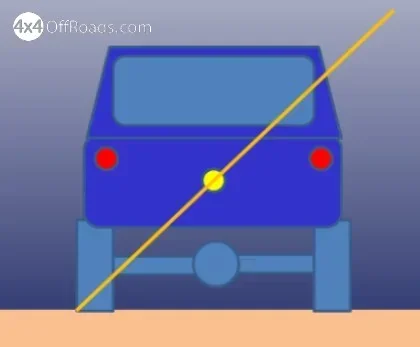
The physics are straightforward. Gravity pulls down on the weight of the vehicle. When you turn, that weight shifts to the outside wheels. If the center of gravity is high enough, the weight shifts so far that the inside wheels lift off the ground. Once that happens, the vehicle starts to roll.
Here is what makes rollover risk worse:
- Sharp steering inputs: Jerking the wheel at high speed creates sudden force spikes.
- Speed: Faster speeds mean more lateral force during a turn.
- Uneven load: Cargo stacked on one side creates an imbalance.
- Soft suspension: Excessive body roll shifts weight more dramatically.
- Underinflated tires: Worn or soft tires reduce grip and make tipping easier.
According to crash data, SUVs and pickups are involved in rollover accidents at much higher rates than passenger sedans. This is not a coincidence. The vehicle design of these taller vehicles inherently creates more risk. But that does not mean you should avoid them. It means you need to understand the risks and drive accordingly.
Real-World Examples of Rollover Scenarios
Imagine driving a fully loaded SUV on a mountain road. The vehicle is tall, heavy, and carrying weight on the roof rack. You approach a sharp curve at 45 mph. You turn the wheel to navigate the curve. The weight transfer shifts hard to the outside wheels. The inside wheels lose contact with the road. The vehicle begins to tip.
Now imagine the same SUV but with a lower load and proper tire pressure. The same curve at the same speed might feel perfectly fine. This shows you how much load capacity and setup matter.
Handling and Stability: How a High Center of Gravity Affects Driving
Rollover is the extreme danger. But even before a rollover occurs, a high center of gravity affects how the vehicle handles every day. You might notice these issues during normal driving, not just in emergencies.
Body Roll and Cornering Stability
Body roll is when the vehicle leans to the outside during a turn. All vehicles experience some body roll. But in a high center of gravity vehicle, the lean is much more pronounced. You feel it in your body. You see it in the way the vehicle tilts.
Excessive body roll causes several problems:
- Passengers feel uncomfortable and nauseous.
- Tire grip decreases on the inside wheels.
- Steering response becomes vague and delayed.
- The driver loses confidence in the vehicle.
- Braking distance increases during turns.
When the vehicle leans heavily, the tires cannot maintain optimal contact with the road. This reduces your ability to steer precisely. The vehicle dynamics change in ways that make the car feel sluggish or unpredictable.
Weight Transfer During Braking and Acceleration
Weight transfer does not only happen during turns. When you brake hard, weight shifts forward. When you accelerate, weight shifts rearward. In a tall vehicle, these shifts are more dramatic because the center of gravity is farther from the ground.
This means:
- The front nose dives more during hard braking.
- The rear squats more during hard acceleration.
- Traction can be lost at either end more easily.
- The vehicle feels less balanced overall.
Understanding weight distribution helps you anticipate these issues. Smooth, gradual inputs are always better than sudden ones in a tall vehicle.
Vehicle Design Factors That Influence Center of Gravity
Not all vehicles are created equal. Manufacturers design some vehicles to sit lower and others to sit taller. Understanding these design choices helps you pick the right vehicle for your needs.
SUVs and Trucks vs. Passenger Cars
SUVs and trucks sit higher for a reason. They need ground clearance for off-road driving, towing capacity, and cargo space. But this design choice comes with a trade-off. The tipping point is reached sooner in these vehicles compared to a low-slung sedan.
Passenger cars benefit from a lower center of gravity in several ways:
- Better cornering grip and stability.
- Shorter braking distances.
- More predictable handling in emergency situations.
- Greater confidence during highway driving.
This does not mean passenger cars are always safer. They have their own limitations. But when it comes to rollover resistance, the physics favor the lower vehicles.
How Suspension Geometry Affects Stability
The suspension system plays a huge role in managing center of gravity effects. Suspension geometry determines how the wheels respond to road inputs and how weight shifts during driving.
Key suspension elements include:
- Anti-roll bars: These reduce body roll during turns by connecting opposite wheels.
- Spring rate: Stiffer springs resist body movement better.
- Damping: Proper damping controls how fast the suspension compresses and rebounds.
- Ride height: A lower ride height means a lower center of gravity.
Manufacturers tune these components to balance comfort and stability. In a tall vehicle, engineers work harder to compensate for the inherent instability. Stability control systems have become essential in modern tall vehicles for this reason.
How to Improve Stability in a High-Center-of-Gravity Vehicle
The good news is that you are not stuck with whatever your vehicle comes with. There are practical steps you can take to improve stability and reduce rollover risk. These tips apply to trucks, SUVs, vans, and any vehicle that sits tall.
Manage Your Load Properly
How you load your vehicle matters more than most people realize. Here are some quick tips for better load management:
- Keep heavy items low and close to the center of the vehicle.
- Avoid placing heavy cargo on the roof whenever possible.
- Do not exceed the vehicle’s gross vehicle weight rating.
- Distribute weight evenly between the left and right sides.
- Secure all cargo so it cannot shift during driving.
Even moving a heavy item from the roof rack to the trunk can significantly lower the center of gravity. The difference in stability can be felt immediately during your next drive.
Upgrade Your Suspension
If you want to go beyond stock setup, consider suspension upgrades. Lowering springs are one of the most effective ways to reduce center of gravity height. They bring the vehicle closer to the ground, which improves cornering stability and reduces body roll.
Other upgrades to consider:
- Adjustable coilovers for fine-tuning ride height and damping.
- Upgraded anti-roll bars for reduced lean during turns.
- Stiffer shock absorbers for better weight transfer control.
- Heavy-duty springs if you regularly carry heavy loads.
These upgrades work together to create a more balanced and predictable driving experience. Just make sure any modifications stay within safe limits and legal requirements.
Maintain Your Tires
Tires are the only contact point between your vehicle and the road. In a tall vehicle, tire condition becomes even more critical. Common mistakes include driving on underinflated tires, ignoring tread depth, and using the wrong tire type for the vehicle.
Follow these tire maintenance practices:
- Check tire pressure at least once a month.
- Keep pressure at the manufacturer’s recommended level.
- Replace tires when tread depth drops below 4/32 of an inch.
- Use tires rated for your vehicle’s weight and size.
- Rotate tires regularly for even wear.
Good tires give you more grip, which directly reduces rollover risk. It is one of the simplest and most affordable upgrades you can make.
Drive with Smooth Inputs
Smooth driving is the easiest way to stay safe in a tall vehicle. Avoid jerky steering, hard braking, and sudden acceleration. These abrupt inputs create the exact forces that lead to instability.
Expert insights from driving instructors emphasize one key principle: gentle and predictable inputs. When you turn a corner, do it smoothly and gradually. When you brake, apply pressure evenly. When you accelerate, do so progressively.
This approach gives the suspension time to manage weight transfer. It keeps the tires in optimal contact with the road. And it gives you more time to react if something unexpected happens.
The Role of Modern Safety Technology
Today’s vehicles come packed with technology designed to compensate for a high center of gravity. These systems do not eliminate the risks, but they significantly reduce the chances of an accident.
Electronic Stability Control
Electronic stability control (ESC) is arguably the most important safety feature in modern vehicles. It monitors steering input, vehicle speed, and yaw rate. When it detects that the vehicle is starting to slide or roll, it applies brakes to individual wheels and reduces engine power.
ESC has been proven to reduce fatal rollover crashes by up to 80 percent. This technology is especially critical for SUV rollover prevention. If your vehicle does not have ESC, consider this a priority when shopping for a used car.
Rollover Sensing and Warning Systems
Some vehicles feature advanced sensors that detect impending rollover conditions. These systems warn the driver and can take corrective action before a rollover occurs. They work alongside ESC to provide a layered safety approach.
While these technologies are impressive, they are not a substitute for safe driving habits. Technology can help, but it cannot override the laws of physics. A top-heavy vehicle driven recklessly can still roll over, even with the best safety systems.
Key Takeaways
- Center of gravity height directly affects vehicle stability: The higher the point, the greater the rollover risk and handling challenges.
- Rollover accidents are the primary danger: Sharp turns at speed are the most common trigger for a rollover in tall vehicles.
- Load management is critical: Where and how you place cargo changes the vehicle’s balance and tipping point.
- Suspension upgrades can help: Lowering springs, better anti-roll bars, and quality tires improve stability significantly.
- Electronic stability control is a must-have: This technology dramatically reduces fatal rollover crashes in high-riding vehicles.
- Smooth driving saves lives: Gentle inputs give the vehicle time to handle weight transfer safely.
- Know your vehicle’s limits: Understanding what your specific vehicle can and cannot handle keeps you confident and safe.
Conclusion
Understanding what happens when a vehicle has a high center of gravity empowers you as a driver. You now know that the risks are real but manageable. Rollover danger, poor handling, and unstable cornering are all consequences of a tall vehicle design. But none of these dangers are inevitable.
With proper load management, smart suspension choices, good tire maintenance, and smooth driving habits, you can significantly reduce the risks. Modern safety technology like stability control adds another layer of protection that was not available even ten years ago.
The key is awareness. When you understand your vehicle’s vehicle dynamics, you drive with more confidence and caution. You make better decisions about speed, loading, and driving conditions. That awareness is what separates a safe driver from an unsafe one.
Take what you have learned here and apply it on your next drive. Check your tire pressure. Secure your cargo. Drive smoothly through corners. These small habits add up to a much safer driving experience. Your vehicle can be tall and capable without being dangerous. You just need to respect the physics and drive accordingly.
Stay informed, stay alert, and stay safe on the road. Knowledge about your vehicle’s center of gravity is one of the most valuable tools you can carry as a driver.
Frequently Asked Questions
Can a high center of gravity cause a vehicle to flip on a highway?
Yes, a high center of gravity significantly increases the chance of a rollover on highways. When a tall vehicle takes a curve at high speed, the lateral force can push the center of gravity beyond the tipping point. This is why SUVs and trucks are more prone to highway rollover accidents than low-profile passenger cars.
How does roof cargo affect a vehicle’s center of gravity?
Roof cargo raises the center of gravity dramatically because it places weight high above the vehicle’s natural balance point. Even a small amount of weight on the roof rack can increase rollover risk and make the vehicle feel unstable during turns. Always remove roof cargo when it is not needed.
Are electronic stability control systems effective for top-heavy vehicles?
Yes, electronic stability control is highly effective for top-heavy vehicles. Studies show that ESC can reduce fatal rollover crashes by up to 80 percent. The system detects loss of traction and applies individual brakes to help keep the vehicle on its intended path.
What is the tipping point in a vehicle with a high center of gravity?
The tipping point is the angle at which the vehicle’s center of gravity shifts beyond its base of support. Once the weight shifts past this point, the vehicle starts to roll over. Taller vehicles reach this tipping point at smaller lean angles compared to low-slung vehicles.
Do lowering springs really improve stability?
Yes, lowering springs reduce the distance between the vehicle’s center of gravity and the ground. This smaller distance means less leverage during turns and less body roll. Many drivers notice a significant improvement in cornering stability and overall handling after installing quality lowering springs.
What should I do if my vehicle starts to roll over?
If you feel your vehicle starting to tip, do not jerk the steering wheel. Ease off the accelerator gently and steer smoothly in the direction you want to go. Avoid braking hard, as sudden braking can worsen the weight shift. Modern stability control systems will try to help, but your calm and smooth inputs give them the best chance to work effectively.
=== SEO TITLE ===
What Happens When a Vehicle Has a High Center of Gravity
=== META TITLE ===
What Happens When a Vehicle Has a High Center of Gravity
=== URL SLUG ===
high-center-of-gravity-vehicle-effects