How to Remove a Nissan Transmission Dipstick the Easy Way
Removing a Nissan transmission dipstick is simpler than most people think. This guide walks you through every step with clear instructions, helpful tips, and safety precautions. You will learn what tools you need, where the dipstick is located, and how to avoid common mistakes that could damage your Nissan.
Have you ever needed to check or remove your Nissan transmission dipstick and felt completely lost? You are not alone. Many car owners find themselves staring under the hood, wondering where the heck that little stick is supposed to be. The good news is that removing a Nissan transmission dipstick does not require a mechanic degree or a garage full of expensive tools. With the right guidance, you can handle this job in under fifteen minutes.
This guide is designed for anyone who drives a Nissan. Whether you own a Sentra, an Altima, a Rogue, or another model, the process is quite similar. We will walk you through each step clearly and simply. You will learn what tools you need, where to find the dipstick, how to remove it safely, and what to do afterward. Let us get into it.
## Why You Might Need to Remove the Nissan Transmission Dipstick
Before we dive into the how-to, let us talk about why you would even need to remove this thing in the first place. There are several perfectly good reasons.
First, you might need to check your transmission fluid level. Over time, fluid can get low, especially if you drive a lot or tow heavy loads. A dirty or low fluid level can cause rough shifting, strange noises, or even transmission damage.
Second, you may need to change the fluid entirely. Some Nissan models do not have a transmission fluid drain plug, so removing the dipstick tube is one way to access the fluid for a change.
Third, the dipstick itself might be damaged, stuck, or missing. If someone previously worked on the car and forgot to reinstall it, or if the handle broke off, you need to know how to deal with the remaining tube.
No matter your reason, understanding the process makes the job much less intimidating.
## Tools You Will Need
One of the best things about this job is that you do not need fancy equipment. Here is a simple list of what to grab before you start:
– Socket wrench set (usually 1/2 inch or 3/8 inch drive)
– The correct socket size for your dipstick tube (typically 1/2 inch or 8mm)
– Clean rags or paper towels
– Nitrile or rubber gloves
– A flashlight or phone light
– Jack and jack stands (if the dipstick is hard to reach from above)
– New transmission fluid (check your owner’s manual for the right type)
– Drain pan (if you are also changing fluid)
Having everything ready before you start will make the process smooth and frustration-free. Trust me, nothing kills your momentum faster than stopping to hunt for a socket.
## Step-by-Step Guide to Removing the Nissan Transmission Dipstick
Now let us get into the actual work. Follow these steps carefully, and you will have that dipstick out in no time.
### Step 1: Park on a Level Surface and Let the Engine Cool
This is step one for a reason. Safety matters. Park your Nissan on a flat surface and turn off the engine. Wait at least ten to fifteen minutes if the engine was running. Hot transmission fluid can burn you, and a hot engine bay is uncomfortable to work in.
If you want an accurate fluid reading later, run the engine for a few minutes first, then let it idle for a moment before checking. But for removal purposes, a cool engine is perfectly fine.
### Step 2: Open the Hood and Locate the Dipstick
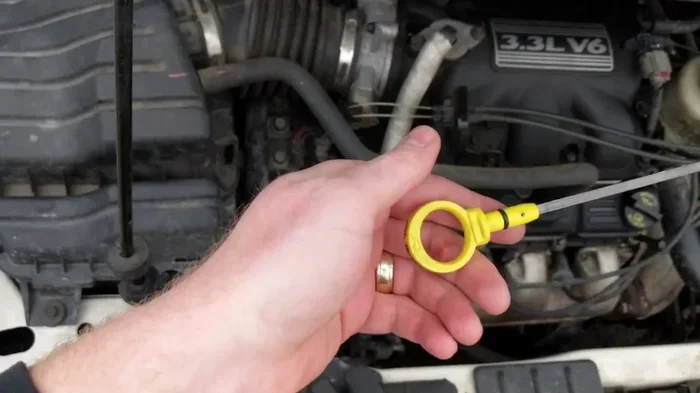
Pop the hood and secure it with the prop rod. Now look toward the back of the engine bay, near the firewall. The Nissan transmission dipstick is typically located on the passenger side of the engine compartment in most models.
It usually has a yellow or orange handle, but this can vary by model year. If you are having trouble finding it, look for a small tube with a loop or T-shaped handle sticking up. Compare it to the oil dipstick, which is usually on the front or side of the engine.
If you are unsure whether your specific Nissan model even has a transmission dipstick, check out our article on does every transmission have a dipstick for helpful guidance.
### Step 3: Clean Around the Dipstick
Before you pull anything, take a clean rag and wipe around the base of the dipstick tube. Dirt, debris, and old fluid can get in there, and you do not want any of that falling into the transmission tube when you remove the dipstick.
This is a small step that makes a big difference. It keeps contaminants out of your transmission and gives you a cleaner workspace.
### Step 4: Grip and Pull the Dipstick Straight Up
Place your fingers around the dipstick handle. Pull straight up with a steady, firm motion. Do not yank to the side or twist aggressively. The dipstick slides into a tube, and pulling at an angle can cause it to bend or get stuck.
If the dipstick is stuck, try rocking it gently side to side while pulling. Sometimes old fluid residue creates a slight suction effect. A little patience goes a long way here.
### Step 5: Inspect the Dipstick and Fluid
Once the dipstick is out, take a good look at it. Check the fluid color. Healthy transmission fluid is usually reddish-pink and transparent. If it looks dark brown, black, or smells burnt, it is time for a fluid change.
Also check the fluid level against the markings on the dipstick. The markings may be dots, lines, or a crosshatch pattern depending on your model. If the level is low, that could explain shifting issues you have been experiencing.
### Step 6: Remove the Dipstick Tube (If Needed)
If you need to remove the entire tube rather than just the dipstick, you will need a socket wrench. Look at the base of the tube where it enters the transmission housing. You will see a bolt or nut securing it.
Place the correct socket on your wrench and turn counterclockwise. Go slowly. These bolts can be tight due to heat exposure and age. If the tube does not want to budge, a penetrating oil spray can help loosen it. Give it a few minutes to work before trying again.
### Step 7: Reinstall or Replace
If you are putting the dipstick back in, simply slide it straight down into the tube until it clicks or seats fully. Do not force it. If it does not go in easily, check for bends or debris on the tube opening.
If you are installing a new dipstick, make sure it matches your Nissan model and year. Aftermarket dipsticks are available, but OEM parts from a Nissan dealership or authorized parts source will give you the best fit and accuracy.
## Common Mistakes to Avoid
Even simple jobs can go wrong if you are not careful. Here are some mistakes to watch out for:
– Pulling the dipstick at an angle. This can bend the tube or damage the O-ring seal. Always pull straight up.
– Forgetting to check the fluid type. Not all transmission fluids are the same. Using the wrong fluid can cause serious damage to your Nissan transmission. Check your owner’s manual or ask at your local parts store.
– Ignoring a stuck dipstick. If it will not budge, do not use excessive force. Apply penetrating oil and wait. Forcing it can break the tube or damage the transmission housing.
– Not reinstalling the dipstick properly. A loose or missing dipstick can allow fluid to leak and contaminants to enter the transmission.
– Skipping the clean-up step. Dirty fluid around the dipstick tube can fall into the transmission and cause problems over time.
Avoiding these mistakes will save you time, money, and headaches.
## How This Relates to Overall Nissan Transmission Maintenance
Removing the dipstick is just one part of keeping your Nissan transmission healthy. Regular maintenance goes a long way toward preventing expensive repairs down the road.
For example, checking your transmission fluid level every few months is a great habit. Most manufacturers recommend checking it with the engine warm and the car on a level surface. If you notice the fluid is low or dirty, a fluid change can make a huge difference in how smoothly your transmission shifts.
If you are dealing with a check engine light that might be related to your transmission, you can learn more about clearing related codes in our guide on how to clear a check engine code. Sometimes a simple reset after maintenance can turn off warning lights.
Also, understanding your specific Nissan model’s needs is important. Some newer Nissans use CVT transmissions, which have different maintenance requirements than traditional automatics. If you have ever wondered about CVT transmission rebuilds or maintenance, knowing your dipstick location and condition is the first step.
## When to Seek Professional Help
Most car owners can handle dipstick removal without any issues. However, there are times when it is smart to call in a professional.
If the dipstick tube is severely corroded or stripped, a mechanic will have the tools to extract it safely. If you notice transmission fluid leaking from the base of the tube after reinstallation, this could indicate a damaged O-ring or seal that needs replacement.
Additionally, if your Nissan is still under warranty, it is worth checking with your dealer before performing DIY maintenance. Some warranty work needs to be done at an authorized service center to keep your coverage intact.
For general questions about Nissan service and what is covered, visiting a Nissan dealership service center can give you peace of mind and professional guidance.
## Quick Tips for a Smooth Experience
Here are some quick tips to make your dipstick removal go even more smoothly:
– Take a photo of the dipstick before removing it. This helps you remember exactly how it looked and where it was positioned.
– Use a magnetic flashlight to illuminate the tube opening. This makes it easier to see any debris or obstructions.
– Keep a small container handy for any fluid that drips out during the process.
– Label your tools if you are working on multiple cars. Mixing up sockets can lead to mistakes.
– Always refer to your Nissan owner’s manual for model-specific instructions and torque specifications.
These small habits can save you from big headaches later on.
## Frequently Asked Questions
Can I remove the Nissan transmission dipstick while the engine is running?
It is not recommended. Always turn off the engine and let it cool for at least ten minutes before removing the dipstick. Working on a hot engine increases the risk of burns and can give you an inaccurate fluid reading. If you want to check fluid level, run the engine for a few minutes first, then turn it off and wait briefly.
What should I do if the dipstick is stuck and will not come out?
Do not force it. Apply a penetrating oil like WD-40 around the base of the dipstick tube and wait ten to fifteen minutes. Then try gently rocking the dipstick side to side while pulling upward. If it still will not budge, visit a mechanic who has the right tools to extract it safely without causing damage.
How often should I check my Nissan transmission fluid?
Most Nissan owners should check their transmission fluid every 3,000 to 5,000 miles, or at least once every six months. If you drive in stop-and-go traffic, tow heavy loads, or drive in extreme heat, you may want to check it more frequently. Regular checks help catch low fluid levels early before they cause shifting problems.
Do all Nissan models have a transmission dipstick?
No, not all of them. Some newer Nissan models, especially those with CVT transmissions, may not have a traditional dipstick. Instead, they use a fill plug or a sealed transmission that requires a professional check. If you are unsure whether your model has one, consult your owner’s manual or visit our guide on whether every transmission has a dipstick.
Can I use any transmission fluid for my Nissan?
No, you should always use the transmission fluid specified in your Nissan owner’s manual. Different models and transmission types require specific fluid formulations. Using the wrong fluid can lead to poor shifting, increased wear, and potentially costly transmission repairs. When in doubt, check with your local Nissan dealership or parts supplier.
Is removing the transmission dipstick the same as changing the transmission fluid?
No, they are different tasks. Removing the dipstick allows you to check the fluid level and condition. Changing the transmission fluid involves draining the old fluid and refilling with fresh fluid. Some owners remove the dipstick tube as part of a fluid change process, but the two tasks are not the same. Always follow the proper procedure for whichever job you are doing.
## Final Thoughts
Removing a Nissan transmission dipstick is a straightforward task that most car owners can handle on their own. With the right tools, a little patience, and the steps outlined in this guide, you can complete the job quickly and safely. Remember to work on a cool engine, pull straight up, and take your time with any stubborn parts.
Regular maintenance like checking your transmission fluid keeps your Nissan running smoothly for years to come. It is one of those small habits that pays off big over time. Whether you are a seasoned DIYer or just getting started with car maintenance, this is a great skill to have in your toolkit.
If you found this guide helpful, share it with a fellow Nissan owner who might benefit from it. And always refer to your vehicle’s owner manual for model-specific details and specifications. Happy wrenching.
Key Takeaways
- Know Your Dipstick Location: The Nissan transmission dipstick is usually found near the rear of the engine bay, close to the firewall.
- Gather the Right Tools: You only need a few basic tools like a socket wrench, clean rag, and gloves.
- Safety First: Always let the engine cool and the car sit on a level surface before starting.
- Avoid Cross-Threading: Be gentle when removing the dipstick tube to prevent damage to the threads.
- Check Fluid While Warm: For the most accurate reading, check your transmission fluid when the engine is warm.
- Reinstall Carefully: Reinsert the dipstick slowly and ensure it clicks into place fully.
- Related Maintenance Matters: If your dipstick is missing or damaged, not every transmission has one — check your model first.
Frequently Asked Questions
What is How to Remove a Nissan Transmission Dipstick?
How to Remove a Nissan Transmission Dipstick is an important topic with many practical applications.