How to Open a Nissan Altima Hood With a Dead Battery
Opening a Nissan Altima hood with a dead battery is easier than you think. You can use the emergency hood release lever inside the cabin, access the latch from under the front grille, or use a manual override tool. This guide walks you through every method safely and quickly.
There is nothing worse than standing in front of your car on a cold morning, ready to head out, and realizing the battery is dead. And if you need to check something under the hood, you are stuck — unless you know the trick. Opening a Nissan Altima hood with a dead battery is a simple process once you know where to look. This guide will walk you through every method, so you are never stranded again.
Whether your battery died from leaving the lights on, from freezing weather, or just old age, you still have full access to the engine compartment. You do not need a working key fob or a powered electrical system. The Nissan Altima has been designed with multiple backup release mechanisms that work completely manually. Let us break down each method so you can get under the hood in minutes.
Knowing how to handle this situation saves time and money. You avoid calling a tow truck for something you can fix yourself. It also gives you confidence as a car owner. So let us dive into the different ways to open the hood of a Nissan Altima when the battery has no charge left.
Key Takeaways
- Interior Release Lever: The primary method uses a lever located under the dashboard on the driver’s side.
- Emergency Cable Access: A secondary cable can be pulled from under the front bumper if the interior lever fails.
- Safety First: Always secure the hood with a prop rod before working inside the engine compartment.
- Cold Weather Impact: Low temperatures commonly cause battery failure, making this a frequent roadside issue.
- Preventive Tips: Regular battery checks help avoid this situation entirely.
📑 Table of Contents
- Understanding the Nissan Altima Hood Release System
- Method 1: Using the Interior Hood Release Lever
- Method 2: Accessing the Emergency Hood Release from Under the Front Bumper
- What to Do If Both Release Methods Fail
- Tools You May Need for Hood Access
- Common Mistakes to Avoid
- Expert Insight: Why Nissan Altima Hoods Are Easy to Open Manually
- Key Takeaways
- Conclusion
Understanding the Nissan Altima Hood Release System
The Nissan Altima uses a two-stage hood latch system. This means there are two separate locks holding the hood closed. The first lock is the primary release, which you operate from inside the cabin. The second lock is a safety latch that keeps the hood securely shut while driving. Both of these systems work mechanically, meaning they do not need any electrical power to function.
How the Primary Hood Release Works
The primary release is the lever you pull inside the car. On the Nissan Altima, this lever is located on the lower left side of the dashboard, near the driver’s door. When you pull this lever, it releases the first latch. You will hear a click, and the hood will pop up slightly. This is the same mechanism whether your battery is alive or completely dead.
This cable-connected system has been a standard in Nissan vehicles for decades. The cable runs from the lever under the dashboard to the latch mechanism near the front of the car. Since it is a pure mechanical connection, a dead battery has zero effect on it. That is the beauty of this design.
How the Secondary Safety Latch Works
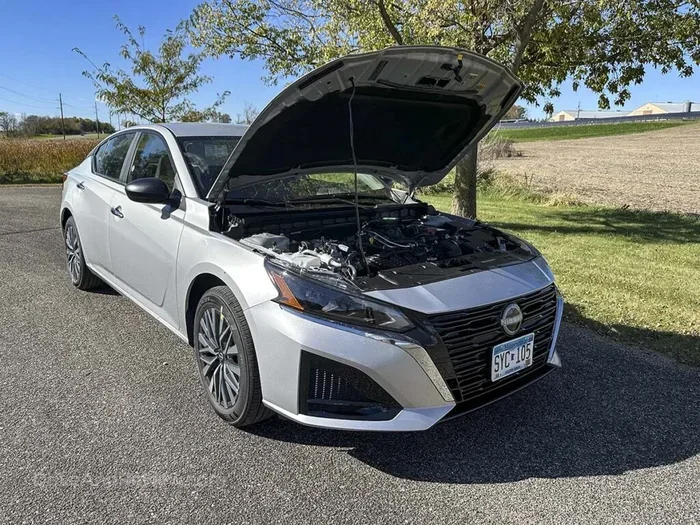
Once the hood pops up from the primary release, you need to release the secondary latch. This is the safety latch that prevents the hood from flying open while driving. On the Nissan Altima, you will feel a second latch near the front edge of the hood. You need to reach under the hood, push this latch to the side, and then lift the hood the rest of the way.
The secondary latch is also fully mechanical. It does not rely on any electrical components. This is why you can always access the engine compartment, even with a completely dead battery.
Method 1: Using the Interior Hood Release Lever
This is the most common and straightforward method. Every Nissan Altima comes equipped with an interior hood release lever. Here is exactly how to use it step by step.
Step 1: Sit in the driver’s seat. Make sure the car is parked on a flat surface and the parking brake is engaged.
Step 2: Look down on the lower left side of the dashboard. You will see a lever with a hood icon on it. It is usually near the steering column or the left side of the instrument panel.
Step 3: Pull the lever toward you. You should feel a distinct click. The hood will pop up slightly, creating a gap between the hood and the front of the car.
Step 4: Walk to the front of the car. Run your hand under the front edge of the hood. Feel for the secondary safety latch. Push it to the left or right, depending on your model year.
Step 5: Lift the hood fully and secure it with the prop rod. The prop rod is usually attached to the underside of the hood or the front fender area.
This method works 100% of the time on a Nissan Altima, regardless of battery condition. If you find that the lever feels stiff or does not click, the cable may need adjustment. But in most cases, the interior release works perfectly even with a dead battery.
Method 2: Accessing the Emergency Hood Release from Under the Front Bumper
What if the interior release lever is broken or stuck? Nissan has accounted for this scenario. The Altima has an emergency release mechanism that can be accessed from under the front bumper. This is a hidden cable that you can pull manually.
Step 1: Lie down on your stomach in front of the car. Look under the front bumper on the driver’s side.
Step 2: You will see a small plastic cover or an exposed cable end. On some model years, there is a small rubber flap that hides the emergency release cable.
Step 3: Grab the cable end with your fingers or use a pair of needle-nose pliers. Pull the cable toward the driver’s side of the car.
Step 4: You will feel the same click as the interior lever. The first hood latch will release.
Step 5: Reach up under the hood and release the secondary safety latch. Lift the hood and secure it with the prop rod.
This method is especially useful if someone parked the car and the interior lever is damaged. It is also helpful if you have pets or children who accidentally broke the interior release. Knowing this backup method gives you real peace of mind.
Tips for Cold Weather Situations
Dead batteries happen most often in cold weather. If you are dealing with a freezing morning, your hands may be stiff and gloved. Take your time with the emergency cable pull. Use a tool like a screwdriver or pliers if your fingers cannot grip the cable easily. Also, check how long a car can sit in cold weather without further battery damage.
What to Do If Both Release Methods Fail
In rare cases, both the interior lever and the emergency cable may not work. This usually happens when the hood latch mechanism itself is seized or corroded. Here is what you can do in that situation.
Try Jiggling the Hood: Sometimes the latch is just stuck. Have a helper pull the interior lever while you gently tap on the hood with a rubber mallet. The vibration can free a stuck latch.
Use a Slim Tool: If the secondary latch is stuck, you can try inserting a flathead screwdriver or a thin piece of metal between the hood and the front grille. Push the latch mechanism to the side manually.
Call for Professional Help: If none of these methods work, it is time to call a mechanic or a roadside assistance service. A seized latch may need lubrication or replacement. This is not something you want to force, as it can damage the hood or the latch assembly.
Also, if your battery is dead and you need to jump-start the car, you will want to access the engine compartment to locate the battery terminals. On the Nissan Altima, the battery is typically located in the engine bay on the driver’s side. Once the hood is open, you can see it clearly.
Preventing a Dead Battery in the First Place
The best way to deal with a dead battery is to prevent it from happening. Here are a few simple habits that keep your Nissan Altima battery healthy.
- Turn off all lights and accessories before shutting off the engine.
- Have your battery tested every year, especially before winter. You can learn how in our guide on how to check your car battery.
- Drive the car regularly. A car that sits for weeks without starting can develop a dead battery.
- Replace your battery every 3 to 5 years. Even if it seems fine, age reduces battery capacity.
- Check for corroded terminals. Clean any white or green buildup on the battery posts.
Tools You May Need for Hood Access
While you do not need many tools to open the hood with a dead battery, having a few basics in your trunk can make the process smoother. Here is a quick list of helpful items.
| Tool | Purpose |
|---|---|
| Needle-nose pliers | Grip and pull the emergency release cable |
| Flathead screwdriver | Help release a stuck secondary latch |
| Rubber mallet | Gently tap the hood to free a stuck latch |
| Flashlight | See under the hood or under the bumper in low light |
| Work gloves | Keep your hands warm and protected in cold weather |
Keeping these items in your trunk means you are always prepared. A dead battery is inconvenient, but it does not have to be a crisis. With the right tools and knowledge, you can handle it calmly and quickly.
Common Mistakes to Avoid
When you are frustrated because your battery is dead, it is easy to make mistakes. Here are some common errors people make when trying to open the hood.
Forcing the Hood Open: Never try to pry the hood open with brute force. The Nissan Altima hood is designed to release through specific latches. Forcing it can bend the hood, damage the latch, or crack the front grille. Always work through the release mechanism properly.
Forgetting the Safety Latch: Many people pull the interior lever, see the hood pop up, and assume it is fully open. It is not. You must release the secondary safety latch before lifting the hood all the way. Skipping this step can cause the hood to fall back down unexpectedly.
Not Securing the Hood: Once the hood is open, always use the prop rod to hold it up. A hood that falls while you are working in the engine compartment can cause serious injury or damage to the vehicle.
Ignoring the Root Cause: Opening the hood is just the first step. Once you are in there, take a moment to inspect the battery terminals, check for corrosion, and assess whether the battery needs replacement. If you are unsure, refer to our article on how long a car can sit in cold weather for additional context on battery health in different seasons.
Expert Insight: Why Nissan Altima Hoods Are Easy to Open Manually
Nissan engineers have always prioritized reliability and simplicity in their hood latch designs. The Altima, in particular, uses a purely mechanical release system that has remained largely unchanged across many generations. This means that whether you have a 2007 Altima or a 2023 model, the process is essentially the same.
The reason for this design philosophy is straightforward. Cars break down. Batteries die. Electronics fail. A mechanical hood release ensures that the driver always has access to the engine compartment, no matter what else is wrong with the vehicle. It is a simple but brilliant design choice that Nissan has stuck with for years.
If you have ever wondered about how reliable NADA values are for assessing your Altima’s worth, knowing that the hood mechanism is simple and durable adds to the overall reliability picture of the vehicle. The Altima is a car built to be practical and user-friendly, even in emergency situations.
Key Takeaways
- Interior Release Lever: The primary method uses a lever located under the dashboard on the driver’s side. It works mechanically, so a dead battery does not affect it.
- Emergency Cable Release: A secondary cable under the front bumper provides a backup release option if the interior lever fails or is inaccessible.
- Secondary Safety Latch: Always release the safety latch under the hood edge before fully lifting the hood.
- Cold Weather Preparation: Dead batteries are most common in freezing temperatures. Keep emergency tools in your trunk year-round.
- Preventive Maintenance: Regular battery checks and timely replacements prevent most dead battery situations.
- No Electrical Power Needed: Both the primary and secondary release mechanisms are fully mechanical and independent of the car’s electrical system.
Conclusion
Opening a Nissan Altima hood with a dead battery is a straightforward process that every Altima owner should know. The interior release lever, the emergency cable under the bumper, and the secondary safety latch all work without any electrical power. You are never truly locked out of your own engine compartment.
Keep the tools we recommended in your trunk. Familiarize yourself with the release locations before you actually need them. And take steps to prevent a dead battery through regular maintenance and smart driving habits. A little preparation goes a long way toward avoiding frustration on the roadside.
The Nissan Altima is a dependable vehicle, and its simple, mechanical hood release system reflects that dependability. Now that you know exactly how to access the hood in any situation, you can drive with confidence knowing you are prepared for whatever comes your way.
Frequently Asked Questions
Can I open the Nissan Altima hood if the key fob battery is dead?
Yes, the hood release lever inside the cabin works independently of the key fob. You do not need a working key fob or powered electrical system to open the hood. Simply pull the lever under the dashboard and release the secondary latch.
What should I do if the hood release cable is broken?
If the cable is broken, you can still access the emergency release under the front bumper. Locate the cable end beneath the driver’s side of the front bumper and pull it manually. If that also fails, you may need to visit a mechanic to free a seized latch.
Does a dead battery mean I cannot open the hood at all?
No. The Nissan Altima hood release system is entirely mechanical. Neither the primary release lever nor the secondary safety latch requires electrical power. A dead battery will not prevent you from opening the hood.
How do I know if my battery is dead or just weak?
If the dashboard lights come on but the engine does not crank, the battery is likely weak. If nothing happens at all when you turn the key, the battery may be completely dead. You can confirm by checking the battery voltage with a multimeter or by visiting a service center.
Can cold weather cause my Altima battery to die suddenly?
Yes, cold weather is one of the most common causes of dead batteries. Low temperatures reduce the battery’s ability to hold a charge and can cause a sudden failure. This is especially true for older batteries that are already weakened.
Is it safe to work in the engine compartment with a dead battery?
Yes, it is perfectly safe. A dead battery poses no electrical hazard. However, always wear work gloves and make sure the hood is securely propped open with the prop rod before reaching into the engine compartment.