How Much Does It Cost to Fix a Stuck Parking Brake
The cost to fix a stuck parking brake typically ranges from $100 to $450, depending on the cause and your vehicle type. Common reasons include worn brake cables, seized calipers, and corroded components. This guide covers every cost factor so you can budget with confidence.
Dealing with a stuck parking brake is frustrating. You go to drive your car, and the brake light is on. The dashboard tells you something is wrong. Maybe the lever or pedal feels stiff. Or perhaps the brake just will not release at all. Whatever the symptom, one question dominates your mind: how much does it cost to fix a stuck parking brake?
The good news is that most parking brake repairs are affordable. You are not looking at a five-figure bill. In most cases, the fix costs between $100 and $450. But the exact price depends on several factors. What caused the problem? What kind of car do you drive? Are you doing the work yourself or paying a mechanic? This guide answers all of those questions and more. You will learn about the common causes, the repair process, and how to keep your parking brake working smoothly for years to come.
Let us break down everything you need to know about parking brake repair cost. By the end of this article, you will feel confident making the right decision for your vehicle and your budget.
Key Takeaways
- Average Repair Cost: Most drivers pay between $100 and $450 for a stuck parking brake fix.
- Cable Replacement: The most common fix, costing $80 to $250 for parts and labor.
- Caliper Issues: A seized caliper can push costs to $200-$450 or more.
- DIY Option: Simple adjustments can save you $100 or more if you are handy.
- Cold Weather Factor: Freezing temperatures can temporarily stick your parking brake, which may not require a repair visit.
- Preventive Maintenance: Regular inspections can help you avoid costly parking brake repairs down the road.
📑 Table of Contents
What Causes a Stuck Parking Brake?
Before you can understand the cost, you need to know what is causing the problem. A stuck parking brake does not happen by accident. Something is forcing the system to stay engaged. Here are the most common culprits.
Worn or Stretched Brake Cable
The brake cable is the most common cause. Over time, the cable that connects your lever or pedal to the rear brakes stretches out. It can also rust and corrode, especially if you drive in wet or salty conditions. When the cable seizes up, the parking brake gets stuck. This is a simple and affordable fix in most cases.
Seized Brake Caliper
Your caliper squeezes the brake pads against the rotor. If the caliper gets stuck, it can lock up the brake entirely. This happens more often in older vehicles or cars that sit for long periods. A seized caliper needs more work than a cable replacement, so the cost goes up.
Corroded or Rusted Components
Rust loves to build up on brake parts. If you live in a cold climate or near the coast, corrosion is a real threat. Rust can freeze the cable, the caliper piston, or the brake shoes inside the drum. Cold weather makes this worse because moisture inside the brake system freezes and locks everything up. If you have noticed your brake acting up in winter, cold weather parking brake issues are a common reason for this.
Broken or Damaged Parking Brake Lever
The lever or pedal mechanism itself can break. Plastic clips, springs, and linkage parts wear out over time. When these components fail, the parking brake cannot release properly. This type of problem usually requires a mechanic to inspect the full mechanism.
Worn Brake Shoes or Pads
Worn brake shoes inside a drum brake system can cause the parking brake to stick. The shoes expand as they wear, and they can get jammed against the drum. This is more common in older vehicles that still use drum brakes on the rear wheels.
How Much Does It Cost to Fix a Stuck Parking Brake?
The stuck parking brake cost varies widely depending on what needs to be fixed. Here is a detailed breakdown of the most common repair scenarios.
Parking Brake Cable Replacement
Replacing a stuck or broken brake cable is the most common repair. The cable itself costs between $15 and $40. Labor adds another $50 to $150 depending on your location and the mechanic’s hourly rate. For most drivers, the total comes to around $80 to $250. This is the best-case scenario and the most affordable fix.
Brake Caliper Repair or Replacement
If the caliper is seized, you have two options. You can rebuild the caliper, or you can replace it entirely. A caliper rebuild kit costs $30 to $80 for parts. A new caliper runs $80 to $200 for parts alone. With labor, you are looking at $150 to $450 per caliper. Rear calipers on vehicles with rear disc brakes tend to cost more.
Brake Drum and Shoe Replacement
For vehicles with rear drum brakes, a full drum and shoe replacement is sometimes needed. Parts run $40 to $120 per wheel. Labor adds $80 to $150 per wheel. If both rear wheels need work, the total can reach $240 to $540. This is on the higher end of the cost spectrum.
Full Brake System Inspection
Sometimes the cause is not obvious. A mechanic may need to inspect the entire brake system to find the problem. Diagnostic fees typically run $50 to $100. This cost is often waived if you proceed with the repair. Always ask the shop about their diagnostic fee policy before they start work.
Cost Comparison Table
| Repair Type | Parts Cost | Labor Cost | Total Range |
|---|---|---|---|
| Cable Replacement | $15 – $40 | $50 – $150 | $80 – $250 |
| Caliper Rebuild | $30 – $80 | $80 – $150 | $150 – $250 |
| Caliper Replacement | $80 – $200 | $80 – $150 | $150 – $450 |
| Drum & Shoe Replacement | $80 – $240 | $160 – $300 | $240 – $540 |
| Full System Inspection | N/A | $50 – $100 | $50 – $100 |
These numbers are averages. Your actual cost depends on your vehicle make and model, your location, and the shop you choose. Luxury vehicles and European cars often cost more for parts and labor. A parking brake repair cost for a Toyota Camry will be lower than one for a BMW or Mercedes.
DIY vs. Professional Repair
Can you fix a stuck parking brake yourself? The answer depends on your skill level and the root cause. Some repairs are straightforward. Others require specialized tools and expertise.
Repairs You Can Do at Home
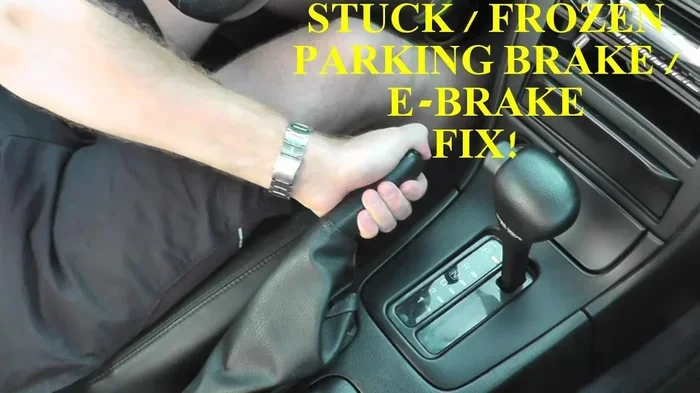
Adjusting the parking brake cable is the easiest DIY fix. Most vehicles have an adjustment point under the car or behind the rear seats. You can also lubricate the cable housing with a silicone-based lubricant. This often frees up a sticky cable without replacing it. If you are comfortable getting under your car, these tasks are very doable.
Replacing a brake cable is also possible at home if you have basic tools. You will need a jack, jack stands, wrenches, and the replacement cable. The job takes about one to two hours. DIY cable replacement can save you $50 to $100 in labor costs.
Repairs That Need a Professional
Caliper work is best left to a professional. Rebuilding or replacing a caliper requires bleeding the brake system. This is a safety-critical task. If you do not get the air out of the lines properly, your brakes can fail. A seized caliper also often signals deeper problems with the brake system. A professional mechanic can spot these issues during the repair.
Drum brake work is also complex. Adjusting the shoes, removing the drum, and replacing worn components requires experience. If you make a mistake, your braking performance suffers. For these jobs, pay the professional. Your safety is worth more than the savings.
How to Prevent a Stuck Parking Brake
Prevention is always cheaper than repair. A few simple habits can keep your parking brake working smoothly and help you avoid a costly visit to the shop.
Use It Regularly
Do not leave your parking brake disengaged all the time. Regular use keeps the cable tensioned and prevents the cable from seizing up. Make it a habit to engage and release the parking brake every time you park.
Keep Your Car Garaged or Covered
Exposure to rain, snow, and road salt accelerates corrosion. Parking your car in a garage or using a car cover reduces moisture exposure. This is especially important in winter months when road salt is common. If you live in a place where parking conditions vary, understanding how parking environments affect your vehicle can help you make better choices about where you leave your car.
Lubricate the Cable Annually
Spray the parking brake cable with a silicone lubricant once a year. This prevents rust and keeps the cable sliding freely. It is a five-minute job that can add years to the life of your parking brake system.
Get Regular Brake Inspections
Have a mechanic check your brake system at every oil change. They can spot early signs of cable stretch, caliper wear, or corrosion before they become serious problems. Catching issues early saves you money and keeps you safe on the road.
Avoid Leaving Your Car Sitting for Long Periods
Vehicles that sit for weeks or months are more prone to stuck parking brakes. Moisture builds up, cables corrode, and calipers seize. If you must store your car for a long time, use a wheel chock instead of the parking brake. This prevents the system from locking up during storage.
When to Replace Instead of Repair
Sometimes the repair cost does not make sense. If your car is older and has high mileage, replacing worn brake components might be the smarter choice. Here are some signs that replacement makes more sense than repair.
- Multiple components are worn: If the cable, caliper, and shoes are all old, replacing everything at once is more efficient.
- Repeated repairs: If you have already repaired the parking brake once and it is stuck again, a full replacement of the affected parts is the better long-term solution.
- Safety concerns: If the parking brake feels unreliable or does not hold the car securely, do not keep patching it. Replace the components to ensure your safety.
- Cost approaches replacement value: If the repair cost exceeds 50% of your car’s value, consider whether the money is better spent elsewhere.
Always get a second opinion if a mechanic recommends a very expensive repair. Ask for a detailed breakdown of the costs. Understand exactly what needs to be replaced and why. A trustworthy shop will explain everything clearly and give you options.
Expert Tips for Saving Money on Parking Brake Repairs
Nobody wants to overpay for a brake repair. Here are some expert tips to keep your costs down.
- Get three quotes. Always compare prices from at least three shops. Labor rates vary widely by location.
- Ask about warranty. A good shop warranties their parts and labor for at least 12 months or 12,000 miles.
- Check for recalls or TSBs. Some vehicles have known parking brake issues covered by recalls or technical service bulletins. This could save you the entire cost.
- Buy your own parts. If your mechanic agrees, purchasing the replacement cable or caliper yourself can save you markup costs.
- Do not delay the repair. A stuck parking brake puts extra strain on your transmission and drivetrain. Ignoring the problem can lead to much more expensive repairs down the road.
Extreme heat can also affect your brake system in surprising ways. Parking in direct sunlight for long periods causes brake components to expand and degrade faster. If you live in a hot climate, understanding how heat impacts your vehicle can help you take preventive steps. For more on this, check out our article on how hot a car can get in the sun and its effects on your brake system.
Key Takeaways
- Average Cost: Most parking brake repairs cost between $100 and $450.
- Cable Replacement: The most common and affordable fix at $80 to $250.
- Caliper Problems: Seized calipers cost $150 to $450 to repair or replace.
- DIY Saves Money: Cable adjustment and lubrication are easy DIY tasks.
- Prevention Works: Regular use, lubrication, and inspections prevent most problems.
- Do Not Delay: Ignoring a stuck parking brake can cause more expensive damage.
Conclusion
The cost to fix a stuck parking brake is manageable for most drivers. Whether it is a simple cable replacement or a more complex caliper repair, the price typically falls in the $100 to $450 range. Understanding the root cause helps you budget accurately and avoid surprises at the repair shop.
Take care of your parking brake before it becomes a bigger problem. Regular maintenance, smart parking habits, and prompt repairs keep your brakes working safely. Do not ignore the warning signs. A stuck parking brake is not just an inconvenience. It is a safety issue that deserves your attention.
Now that you know what to expect, you can approach the repair with confidence. Get your quotes, ask the right questions, and choose the option that fits your budget and your vehicle. Your parking brake will thank you.
Frequently Asked Questions
Can I drive my car with a stuck parking brake?
You should not drive your car with a stuck parking brake for long distances. It causes extra wear on your brakes and transmission. Short drives to the mechanic are okay, but get it fixed as soon as possible.
How do I know if my parking brake cable needs replacement?
If the cable does not retract fully or feels loose even after adjustment, it needs replacing. You may also hear clicking sounds or notice the brake light staying on. A mechanic can confirm the issue with a quick inspection.
Is a stuck parking brake covered by warranty?
It depends on your vehicle and warranty type. Some newer cars have bumper-to-bumper coverage that includes brake components. Check your warranty paperwork or ask your dealer. Wear items like cables and shoes are usually not covered.
Can cold weather cause a parking brake to stick?
Yes, cold weather is a common cause of a stuck parking brake. Moisture inside the cable or caliper freezes and locks the components. If the problem goes away after warming up, cold weather is likely the culprit. For more on this, read our guide on how long a car can sit in cold weather and its effects on brake systems.
How long does a parking brake cable last?
A parking brake cable typically lasts 50,000 to 100,000 miles. However, driving conditions matter a lot. Cars driven in salty, wet, or snowy environments may need cable replacement sooner. Regular lubrication extends the life of the cable significantly.
What happens if I ignore a stuck parking brake?
Ignoring a stuck parking brake can damage your rear brakes, transmission, and drivetrain. The constant drag creates extra heat and wear. Over time, this leads to much more expensive repairs. Always address a stuck parking brake promptly to protect your vehicle and your safety.