How Much Does a Toyota Sienna Weight in Tons and Pounds
The Toyota Sienna weight varies by generation, trim, and drivetrain. Most model years fall between 4,300 and 5,000 pounds, which is roughly 2.2 to 2.5 tons. Knowing your specific Toyota Sienna weight helps with towing, payload planning, and fuel efficiency decisions.
Key Takeaways
- Toyota Sienna weight ranges from about 4,300 to 5,000 pounds depending on the generation and trim level.
- Curb weight and GVWR are two different numbers that every Sienna owner should understand.
- AWD models weigh more than FWD versions by roughly 100 to 200 pounds.
- The Sienna hybrid adds a bit of weight due to its battery pack and electric motor components.
- Payload and towing limits depend directly on your Sienna’s weight and configuration.
- Checking your owner’s manual or door jamb sticker gives you the most accurate weight data for your specific vehicle.
- Overloading a Sienna is dangerous and can damage brakes, suspension, and tires.
📑 Table of Contents
Toyota Sienna Weight by Generation and Year
The Toyota Sienna weight changes quite a bit across its life span. Toyota has sold four main generations of the Sienna since 1998. Each generation brought new materials, new tech, and new weight numbers. Let us break this down generation by generation so you know exactly what to expect.
If you are shopping for a used Sienna or just curious about your current minivan, understanding the weight by generation is the first step. The Toyota Sienna weight in tons and pounds gives you a quick reference point for towing, cargo planning, and even fuel economy estimates.
First Generation Sienna (1998–2003)
The original Sienna weighed in at around 4,300 to 4,500 pounds. That is roughly 2.15 to 2.25 tons. These early models used a 3.0-liter V6 engine and came with either front-wheel drive or all-wheel drive. The AWD versions tipped the scales a bit higher, closer to 4,600 pounds. Back then, the minivan weight was still fairly light compared to today’s standards.
Second Generation Sienna (2004–2010)
Toyota redesigned the Sienna for the 2004 model year. The second generation Sienna weight increased slightly to around 4,400 to 4,700 pounds. This generation introduced the 3.5-liter V6 engine, which added some heft. The XLE and XSE trims also added comfort features that contributed to a higher vehicle weight in pounds. Still, these models remained manageable for most drivers.
Third Generation Sienna (2011–2020)
The third generation brought a major overhaul. Toyota switched to a 3.5-liter V6 with a six-speed automatic transmission. The third generation Sienna weight ranged from about 4,500 to 4,800 pounds. The addition of features like power sliding doors, upgraded infotainment, and reinforced body panels added to the overall curb weight of the Sienna. This generation also saw the introduction of the Sienna Limited and Sienna SE trims, each with slightly different weight profiles.
Fourth Generation Sienna (2021–Present)
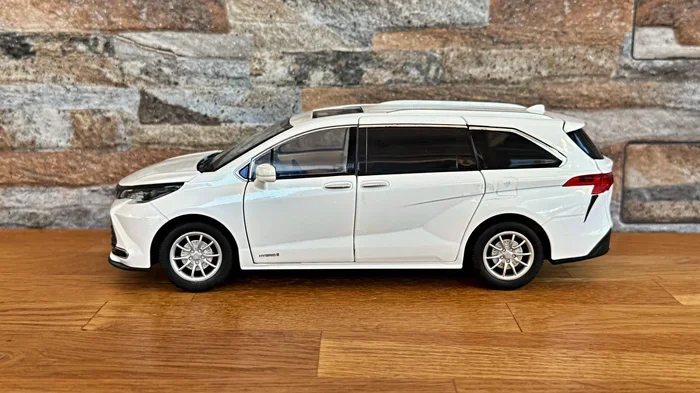
The newest Sienna is a hybrid-only model, and that changes the Toyota Sienna weight equation. The 2021 and newer Siennas weigh between 4,800 and 5,000 pounds, or about 2.4 to 2.5 tons. The hybrid powertrain adds weight from the battery pack and electric motors. However, Toyota also used lighter materials in the body and frame to keep the Sienna hybrid weight from climbing too high. The result is a minivan that feels modern, efficient, and still easy to handle.
Curb Weight vs Gross Vehicle Weight Rating
Two numbers matter most when you talk about Toyota Sienna weight: curb weight and GVWR. These terms sound similar, but they mean very different things. Understanding both helps you make smarter decisions about loading, towing, and safety.
What Is Curb Weight?
Curb weight is the weight of your Sienna with a full tank of gas and all standard equipment. It does not include passengers, cargo, or any aftermarket additions. For most Sienna models, the curb weight sits between 4,300 and 5,000 pounds. This is the baseline number you will see on the manufacturer spec sheet.
Think of curb weight as the “empty” weight of the vehicle. When you are comparing Sienna trim levels weight across different model years, curb weight gives you the most consistent baseline. It tells you how much the vehicle itself weighs before you load it up for a road trip.
What Is Gross Vehicle Weight Rating (GVWR)?
GVWR stands for Gross Vehicle Weight Rating. This is the maximum safe weight your Sienna can carry, including the vehicle itself, passengers, cargo, and any trailer tongue weight. For the Sienna, the GVWR typically falls between 6,000 and 6,600 pounds depending on the model year and trim.
The difference between curb weight and GVWR tells you your available payload capacity. If your Sienna has a curb weight of 4,800 pounds and a GVWR of 6,400 pounds, you have about 1,600 pounds of capacity for passengers and cargo. This is a crucial number for anyone who regularly hauls gear, passengers, or tows a trailer.
Gross Axle Weight Rating
Gross axle weight rating (GAWR) is another important spec. It tells you the maximum weight each axle can handle. The front and rear axles on a Sienna have different ratings. Knowing your axle weight limits helps you distribute cargo properly and avoid overloading one end of the vehicle.
Sienna Weight by Trim Level and Configuration
Not all Siennas weigh the same. The trim level you choose and the drivetrain configuration both affect the final Toyota Sienna weight. Here is how the different options stack up.
LE vs XLE vs XSE vs TRD Off-Road
The base LE trim is usually the lightest Sienna. It comes with essential features and fewer comfort upgrades, which keeps the minivan weight lower. The XLE adds more comfort and convenience features, which can add 50 to 100 pounds. The XSE goes a step further with sportier styling and upgraded components. The TRD Off-Road trim includes unique suspension parts and alloy wheels that can push the weight a bit higher.
When you compare Sienna trim levels weight, the differences are not dramatic. You are usually looking at a 100 to 200 pound spread between the lightest and heaviest trims. Still, every pound counts when you are near your payload or towing limits.
FWD vs AWD Weight Differences
Front-wheel drive Siennas are lighter than their all-wheel drive counterparts. The AWD system adds a transfer case, rear driveshaft, and additional drivetrain components. On average, an AWD Sienna weighs about 100 to 200 pounds more than an equivalent FWD model. This difference is consistent across most generations.
If you live in a warm climate and do not need AWD, the FWD version will give you a slightly lighter vehicle weight in pounds. That can translate to a small improvement in fuel economy and a bit more payload capacity. However, if you need AWD for snow or rough roads, the extra weight is a worthwhile trade-off.
Hybrid vs Gas-Only Weight
The fourth generation Sienna is hybrid-only, so there is no gas-only option to compare. But it is worth noting that the hybrid system adds weight. The battery pack and electric motor components add roughly 100 to 150 pounds compared to a conventional powertrain. Toyota offset this with lighter body materials and a more efficient design. The result is a Sienna hybrid weight that feels competitive for a modern minivan.
Towing Capacity and Payload Limits
The Toyota Sienna weight directly affects how much you can tow and how much cargo you can carry. Understanding these limits keeps you safe and prevents costly damage to your vehicle.
How Much Can a Sienna Tow?
Most Sienna models can tow between 3,500 and 5,000 pounds when properly equipped. The exact towing capacity depends on your drivetrain, engine, and whether you have a tow hitch installed. For example, a 2023 Sienna XLE with AWD and the tow package can tow up to 5,000 pounds.
Before you install a hitch, it is a good idea to check your specific model’s capabilities. You can learn more about adding a hitch to your Sienna in our guide on Can I Add a Tow Hitch to My Toyota Sienna. Always make sure your hitch matches your Sienna’s towing specifications.
Understanding Payload Capacity
Payload capacity is the maximum weight of passengers and cargo your Sienna can safely carry. You calculate it by subtracting the curb weight from the GVWR. For most Sienna models, payload capacity falls between 1,200 and 1,600 pounds.
This means you can comfortably fit a family of five with moderate luggage. But if you are planning a camping trip with lots of gear, you need to be mindful of the total load. Curious about how much stuff you can actually fit? Check out our article on how much stuff you can put in your car for practical tips on maximizing cargo space without exceeding weight limits.
Seating Capacity and Weight Impact
The Sienna seats up to eight passengers in its standard configuration. Each passenger averages about 150 to 200 pounds, so a full load of eight adults can add 1,200 to 1,600 pounds to your vehicle weight in pounds. If you want to know whether 8 people can actually fit comfortably, we cover that in detail in our article on Can 8 People Fit in a Toyota Sienna.
Why Knowing Your Sienna Weight Matters
Some drivers overlook vehicle weight until something goes wrong. But understanding your Toyota Sienna weight has real-world benefits that affect daily driving, safety, and long-term ownership costs.
Fuel Economy and Weight
Heavier vehicles use more fuel. A Sienna that weighs 5,000 pounds will generally get slightly lower gas mileage than one that weighs 4,500 pounds. The difference is not huge, but it adds up over thousands of miles. If you are comparing FWD versus AWD models, the lighter FWD version will typically deliver better fuel economy.
For the hybrid fourth generation Sienna, the weight penalty from the hybrid system is offset by the electric motor’s efficiency gains. This is why the hybrid Sienna remains one of the most fuel-efficient minivans on the road despite its relatively high minivan weight.
Safety and Handling
Overloading your Sienna affects braking distance, handling, and stability. A vehicle that exceeds its GVWR is harder to stop and more prone to swaying in crosswinds. It also puts extra stress on tires, brakes, and suspension components. Understanding your Toyota Sienna weight and staying within limits is one of the simplest ways to keep your family safe on the road.
Insurance and Registration
In some states, vehicle weight affects registration fees and insurance rates. Heavier vehicles may cost more to insure in certain categories. Knowing your Sienna’s exact weight helps you budget for these ongoing costs and avoid surprises at registration time.
Quick Tips and Common Mistakes
Managing your Sienna’s weight does not have to be complicated. A few simple habits can make a big difference in safety, performance, and longevity.
Quick Tips for Managing Sienna Weight
- Check your door jamb sticker for the exact GVWR and curb weight of your specific Sienna model.
- Weigh your cargo before long trips using a simple bathroom scale for boxes and bags.
- Distribute weight evenly between the front and rear axles for the best handling and braking.
- Remove unused roof racks or cargo carriers when they are not in use to reduce wind drag and unnecessary weight.
- Keep your owner’s manual handy for the exact towing and payload specifications for your model year.
Common Mistakes to Avoid
One of the biggest mistakes Sienna owners make is assuming the vehicle can handle any load. The truth is that every Sienna has a finite payload capacity, and exceeding it can cause serious problems. Another common error is forgetting to account for trailer tongue weight when calculating total load.
It is also easy to overlook the weight of aftermarket accessories. Roof racks, running boards, upgraded wheels, and extra sound systems all add pounds. Before adding any aftermarket parts, consider how they affect your Toyota Sienna weight and whether you are still within safe limits. To learn more about recognizing when a vehicle is carrying too much, read our guide on how to tell if a van is overloaded.
Finally, do not confuse curb weight with dry weight. Dry weight does not include fluids like oil, coolant, or gasoline. Curb weight is the more realistic number for everyday driving because it reflects the vehicle as it actually sits on the road, ready to go.
Conclusion
The Toyota Sienna weight is a key piece of information every Sienna owner should know. Whether you are looking at a first generation model from the early 2000s or a brand new hybrid Sienna, the numbers range from about 4,300 to 5,000 pounds, or roughly 2.2 to 2.5 tons. Your specific Toyota Sienna weight depends on the generation, trim level, drivetrain, and any additional equipment you have added.
Understanding curb weight, GVWR, payload capacity, and towing limits helps you make safer, smarter decisions every time you hit the road. Keep your load within limits, distribute weight properly, and your Sienna will serve you well for years to come. Take a moment to check your door jamb sticker or owner’s manual today. Knowing your exact Toyota Sienna weight in tons and pounds puts you in control of your vehicle and your peace of mind.
Frequently Asked Questions
What is the curb weight of a Toyota Sienna in pounds?
The curb weight of a Toyota Sienna ranges from about 4,300 to 5,000 pounds depending on the model year, trim, and drivetrain. The most recent hybrid models from 2021 onward typically weigh around 4,800 to 5,000 pounds. Always check your specific model’s door jamb sticker for the exact number.
How much does a Toyota Sienna weigh in tons?
A Toyota Sienna weighs approximately 2.2 to 2.5 tons. This translates to about 4,300 to 5,000 pounds. The exact tonnage depends on the generation, trim level, and whether your Sienna is front-wheel drive or all-wheel drive.
Does the Toyota Sienna hybrid weigh more than the gas-only models?
Yes, the hybrid system adds roughly 100 to 150 pounds compared to a conventional powertrain. However, Toyota used lighter materials in the fourth generation Sienna to offset this added weight. The result is a competitive Sienna hybrid weight that does not feel excessively heavy.
What is the towing capacity of a Toyota Sienna?
Most Sienna models can tow between 3,500 and 5,000 pounds when equipped with the proper towing package. The exact towing capacity depends on your drivetrain, engine, and model year. Always refer to your owner’s manual for the specific towing limits of your vehicle.
How does AWD affect the Toyota Sienna weight?
All-wheel drive adds approximately 100 to 200 pounds compared to front-wheel drive. The AWD system requires a transfer case, rear driveshaft, and additional components. If you do not need AWD for your driving conditions, choosing FWD keeps your Toyota Sienna weight lower and can slightly improve fuel economy.
Where can I find the exact weight of my Toyota Sienna?
The most accurate source is the tire and loading information sticker on your driver’s door jamb. This sticker lists your specific curb weight, GVWR, and payload capacity. You can also find these specs in your owner’s manual under the vehicle specifications section.