Can I Charge My Prius at Home Without Spending Much
Yes, you can charge your Prius at home without breaking the bank. Whether you drive a standard hybrid or a plug-in model like the Prius Prime, home charging is simple and affordable. You can use a regular household outlet for basic charging or invest in a Level 2 charger for faster results. Most owners spend little to nothing on home charging equipment and even less on electricity. This guide covers every option, cost, and tip you need to charge your Toyota Prius at home.
So you want to know if you can charge your Prius at home without spending much. The good news is that the answer is yes. Whether you own a standard Toyota Prius or the plug-in Prius Prime, you have options for charging right from your own garage or driveway. You do not need expensive equipment or a fancy electrical setup. Many Prius owners charge their cars overnight and wake up to a full battery every morning.
Home charging is one of the biggest perks of owning a hybrid or plug-in vehicle. You skip the gas station. You avoid public charging fees. You simply plug in when you get home and let your car do the rest. But how exactly does it work? What equipment do you need? And how much will it actually cost? Let us walk through everything you need to know about charging your Prius at home without spending a fortune.
The short answer is that standard Prius hybrids charge through regenerative braking and do not need a wall outlet. But plug-in models like the Prius Prime and the Toyota Prius Prime can be plugged in to recharge the battery from an external source. This opens up a world of convenience. You can charge at home, at work, or at public stations. But home charging remains the most practical and affordable choice for most owners.
Key Takeaways
- Standard Prius hybrids do not plug in: They charge through regenerative braking, not a wall outlet.
- Prius Prime owners can plug in: You can charge at home using a standard outlet or a dedicated charger.
- Level 1 charging costs almost nothing: You can use a regular 120-volt outlet that you already have.
- Level 2 charging is faster but costs more upfront: A home charger unit costs between $200 and $800.
- Charging at home saves money: It costs far less per mile than gasoline or public charging stations.
- Installation is simple: Most setups take less than an hour and need no professional help.
- Check your incentives: Tax credits and rebates can offset the cost of a home charger.
📑 Table of Contents
- What Kind of Prius Can You Charge at Home?
- Understanding Home Charging Options for Your Prius
- How Much Does It Cost to Charge a Prius at Home?
- Step-by-Step Guide to Setting Up Home Charging
- Common Mistakes to Avoid When Charging Your Prius at Home
- Expert Tips for Saving Money on Prius Charging at Home
- Frequently Asked Questions
- Conclusion
What Kind of Prius Can You Charge at Home?
Not all Prius models are the same when it comes to charging. This is an important distinction that many new buyers miss. Let us break down the different types and what each one means for your home charging setup.
Standard Hybrid Prius Models
The regular Toyota Prius is a full hybrid vehicle. It has a small battery pack that works alongside a gasoline engine. These models do not have a charging port. You cannot plug them into a wall outlet. Instead, the battery charges itself through regenerative braking. When you slow down or hit the brakes, the electric motor captures energy and stores it in the battery. This process happens automatically while you drive. You never need to think about plugging in. The car handles everything on its own.
This is great news if you want a low-maintenance vehicle. You never need to worry about charging cables or home charging equipment. But it also means you cannot benefit from plug-in charging. The battery is small, usually around 1.3 to 1.8 kilowatt-hours. It provides a small electric-only range, typically one to two miles at low speeds.
Plug-In Hybrid Prius Prime
The Prius Prime is a different story entirely. This is a plug-in hybrid electric vehicle, often called a PHEV. It has a much larger battery, around 8.8 to 13.6 kilowatt-hours depending on the model year. This bigger battery means you can drive on electric power alone for a meaningful distance. The Prime can travel up to 25 to 44 miles on electricity, depending on the year and trim level.
Because it plugs in, the Prius Prime gives you the option to charge at home. You can use a standard household outlet or upgrade to a faster Level 2 charger. This makes the Prime a great choice for people who want the electric driving experience without the full commitment of a battery electric vehicle. You get the best of both worlds: electric driving for daily commutes and a gas engine for longer trips.
Comparing Standard Hybrid vs. Plug-In Hybrid
Here is a quick comparison to help you understand the difference:
- Standard Prius Hybrid: No plug. Charges through regenerative braking. Small battery. No home charging needed.
- Prius Prime (PHEV): Has a plug port. Can charge from an external source. Larger battery. Home charging is possible and recommended.
If you want to charge at home, you need a plug-in model. The standard Prius simply does not have the capability. Make sure you know which version you have before investing in any charging equipment.
Understanding Home Charging Options for Your Prius
Once you know your Prius model supports plug-in charging, the next step is understanding your options. There are two main levels of home charging. Each has its own benefits, costs, and charging speeds. Let us look at them in detail.
Level 1 Charging: The Simplest Option
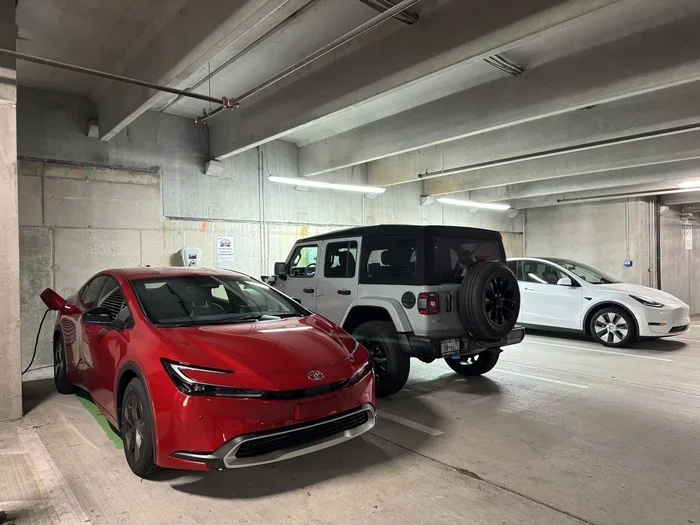
Level 1 charging is the most basic and affordable option. It uses a standard 120-volt household outlet, the same type you use for your phone charger or lamp. Every Prius Prime comes with a Level 1 charging cable in the trunk. You simply plug it into any regular wall outlet and your car starts charging.
The biggest advantage of Level 1 charging is the cost. You do not need to buy any special equipment. You do not need an electrician. You do not need to install a dedicated circuit. It costs you nothing extra to start charging at home. For many owners, this is all they will ever need.
However, Level 1 charging is slow. It adds about 3 to 5 miles of electric range per hour of charging. If you drive 25 miles a day, you need roughly 5 to 8 hours to fully recharge. This works well if you plug in overnight. Most people plug in when they get home from work and wake up to a full battery in the morning.
Level 2 Charging: Faster and More Convenient
Level 2 charging uses a 240-volt outlet, similar to what a clothes dryer or oven uses. This is the same type of outlet found at most public EV charging stations. Level 2 charging is significantly faster than Level 1. It can add 12 to 30 miles of electric range per hour, depending on the charger and vehicle.
To use Level 2 charging at home, you need two things. First, a Level 2 charger unit, also called an EVSE (Electric Vehicle Supply Equipment). Second, a 240-volt outlet installed by a licensed electrician. Some homeowners already have a 240-volt outlet in their garage for an electric dryer or welder. If you do, you can connect a Level 2 charger directly.
The cost of a Level 2 charger unit ranges from about $200 to $800 for the equipment itself. Installation by an electrician typically adds $200 to $1,000 depending on your electrical panel and wiring needs. While this is more than Level 1, it is still much cheaper than buying a dedicated charging station or using public chargers regularly.
Portable Charger vs. Wall-Mounted Charger
You have two physical options for your home charging setup. The first is the portable charger that comes with your Prius Prime. This is a compact unit you can store in the trunk and use at any 120-volt outlet. It is perfect for travel or for people who do not want to install anything permanent.
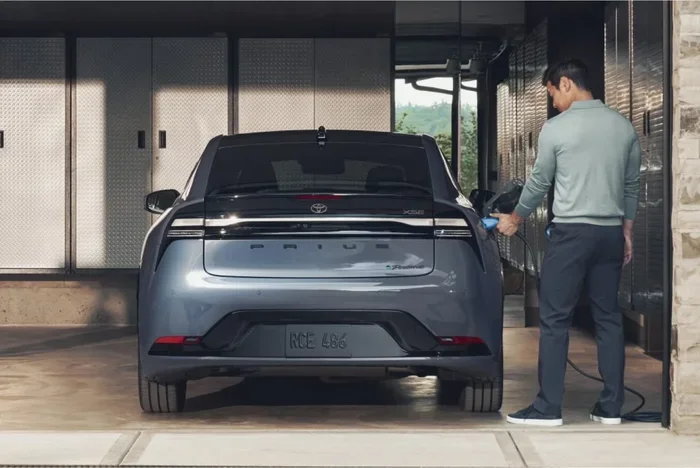
The second option is a wall-mounted charging station. These are sleek, compact units that mount on your garage wall. They charge faster than the portable option. They are more convenient because you do not need to drag a cable across your driveway every day. Some popular brands include JuiceBox, ChargePoint, and the Toyota Wall Connector.
For most Prius Prime owners, a wall-mounted Level 2 charger is the best long-term choice. It is convenient, reliable, and keeps your charging experience simple. But if you want zero upfront cost, the portable Level 1 charger works just fine.
How Much Does It Cost to Charge a Prius at Home?
One of the biggest reasons people want to charge at home is to save money. And the good news is that home charging costs are very low. Let us look at the numbers so you can see exactly what to expect.
Electricity Costs for Charging
The average cost of electricity in the United States is around $0.13 to $0.16 per kilowatt-hour. The Prius Prime has an 8.8-kilowatt-hour battery. To fully charge from empty to full, you would use about 8.8 kWh of electricity. At an average rate of $0.14 per kWh, that costs roughly $1.23 for a full charge.
Now think about what that gets you. A full charge gives you up to 25 to 44 miles of electric-only driving. That means your cost per mile is about $0.03 to $0.05. Compare that to gasoline. At $3.50 per gallon and 45 miles per gallon, a gas-only car costs about $0.08 per mile. Charging your Prius Prime at home cuts your per-mile fuel cost in half or more.
Over a year, the savings add up quickly. If you drive 10,000 miles and half are on electric power, you save hundreds of dollars compared to a traditional gasoline car. And that does not even include lower maintenance costs, since electric motors have far fewer moving parts than gasoline engines.
Does Charging at Home Increase Your Electricity Bill?
Yes, your electricity bill will go up slightly. But it will still be much cheaper than filling up a gas tank. Most owners report an increase of $30 to $60 per month on their electricity bill when they charge regularly. This is a small price to pay for the convenience and savings. Plus, many utility companies offer time-of-use rates that make nighttime charging even cheaper. You can set your car to charge during off-peak hours and save even more.
Cost Comparison Table
Here is a simple comparison of charging costs at home versus other options:
- Home Level 1 Charging: $0 equipment cost. $1 to $1.50 per full charge. Very slow but simplest.
- Home Level 2 Charging: $200 to $800 for charger. $1 to $1.50 per full charge. Fast and convenient.
- Public Charging Stations: $0 equipment cost. $2 to $6 per full charge. Fast but expensive over time.
As you can see, home charging is by far the cheapest option. You pay a small upfront cost if you choose Level 2, but the per-charge cost remains the same as Level 1. Over months and years, the savings are significant.
Step-by-Step Guide to Setting Up Home Charging
Setting up home charging for your Prius is easier than you might think. Here is a simple step-by-step guide to get you started.
Step 1: Check Your Outlet
First, find an outlet near where you park your car. A standard 120-volt outlet works for Level 1 charging. Make sure the outlet is in good condition and not controlled by a switch that could turn it off accidentally. If you want faster charging, check if you have a 240-volt outlet available. Many older homes do not have one in the garage.
Step 2: Decide on Your Charging Level
Think about your daily driving habits. If you drive less than 25 miles a day, Level 1 charging is probably fine. You plug in at night and have enough charge by morning. If you drive more than that or want faster turnaround, consider a Level 2 charger. The decision depends on your budget, driving needs, and how much patience you have for slower charging.
Step 3: Get the Right Equipment
For Level 1, you already have everything you need. Your Prius Prime comes with a portable charger. Just unroll it, plug it in, and you are good to go. For Level 2, you need to purchase a charger unit. Look for one that is SAE J1772 compatible, which is the standard plug for Toyota plug-in hybrids. Popular options include the JuiceBox 32, the ChargePoint Home Flex, and the Toyota Wall Connector.
Step 4: Install a 240-Volt Outlet (If Needed)
If you do not already have a 240-volt outlet, hire a licensed electrician. The installation typically takes two to four hours. The electrician will run a dedicated circuit from your electrical panel to your garage or parking area. Make sure to get a permit if your local building codes require one. This ensures everything is safe and up to code.
Step 5: Mount and Connect Your Charger
Once the outlet is ready, mount your charger on the wall. Most Level 2 chargers come with a mounting bracket and all necessary hardware. Connect the charger to the outlet, plug the cable into your Prius, and you are all set. The whole process is straightforward and does not require any technical expertise beyond basic setup.
Step 6: Start Charging and Track Your Savings
Now just plug in every time you park at home. Set a charging schedule if your charger supports it. Many smart chargers let you program charging for off-peak hours. This maximizes your savings. Over time, you will notice the difference in your fuel costs. Keep track of your electricity usage and compare it to what you used to spend on gas. The results are often very satisfying.
Common Mistakes to Avoid When Charging Your Prius at Home
Even though home charging is simple, there are a few mistakes that trip up many owners. Avoiding these will save you time, money, and frustration.
Using an Extension Cord
One of the most common mistakes is using an extension cord with the charging cable. This is a safety hazard. Extension cords can overheat, especially with the prolonged draw of an EV charger. They can also cause voltage drops that slow charging or damage the car’s charging system. Always plug the charger directly into a wall outlet. If the cord is too short, have an electrician install an outlet closer to your parking spot.
Ignoring Electrical Panel Capacity
Before installing a Level 2 charger, check your electrical panel. Older homes may have a 100-amp panel that cannot support a 240-volt charger. A licensed electrician can assess your panel and recommend upgrades if needed. Skipping this step can lead to circuit breaker trips or, worse, electrical fires. Do not take shortcuts with electrical work.
Not Taking Advantage of Off-Peak Rates
Many utility companies offer lower electricity rates during off-peak hours, typically late at night and early morning. If you charge your Prius during peak hours, you pay more. Set your charger to a timer or use a smart charger that schedules charging automatically. This small change can save you $10 to $20 per month on your electricity bill.
Forgetting to Plug In Regularly
It sounds obvious, but many people forget to plug in their car consistently. The whole point of home charging is convenience. Make plugging in a habit, like locking your front door. Some owners set a reminder on their phone until the habit sticks. Once it becomes routine, you will never forget again.
Buying the Wrong Charger
Not all EV chargers are compatible with the Prius Prime. Make sure any charger you buy supports the SAE J1772 connector. Also, check the charger’s amperage rating. A 32-amp charger works well with the Prime and provides a good balance of speed and cost. Going with a 40-amp or higher charger will not charge the car any faster because the car’s onboard charger limits the input.
Expert Tips for Saving Money on Prius Charging at Home
Want to get the most out of your home charging setup? Here are some expert-backed tips that real Prius owners swear by.
Use Solar Panels if Possible
If you have a south-facing roof and enough space, consider installing solar panels. Solar energy can offset your charging costs dramatically. Some owners report that their solar panels cover 100% of their Prius charging needs. Even a small solar setup can reduce your electricity costs for charging to nearly zero. The upfront investment pays for itself over time through energy savings.
Charge During Off-Peak Hours
As mentioned earlier, off-peak electricity rates are significantly lower. Most utilities offer rates that are 30% to 50% cheaper during nighttime hours. Program your charger to start at 10 PM or midnight and finish by morning. You get a full battery and the lowest possible electricity cost.
Keep Your Battery Between 20% and 80%
For optimal battery health, try to keep your Prius Prime battery between 20% and 80% charge. Constantly charging to 100% or draining to 0% can reduce battery lifespan over time. Most experts recommend setting a charge limit on your car if it supports that feature. This simple habit can extend your battery life by thousands of miles.
Join a Community of Prius Owners
There are many online forums and local groups for Prius owners. Joining one gives you access to real-world charging tips, charger recommendations, and money-saving strategies. Other owners share their experiences with different home charging setups and can help you avoid costly mistakes. Communities like PriusChat and Toyota forums are great starting points.
Keep Your Charging Cable Clean and Dry
It sounds minor, but keeping your charging cable in good condition matters. Wipe it down regularly and store it properly when not in use. Avoid leaving it in extreme heat or cold for extended periods. A well-maintained cable charges faster and lasts longer. Replace it immediately if you notice any fraying or damage.
Frequently Asked Questions
Can I charge my Prius at home if I have a standard outlet?
Yes, if you own a plug-in model like the Prius Prime, you can charge it using a standard 120-volt outlet. This is called Level 1 charging and it costs you nothing extra. The car comes with a portable charger in the trunk. Just plug it in and your battery starts charging. However, Level 1 charging is slow, adding only a few miles of range per hour.
How long does it take to charge a Prius Prime at home?
With a standard 120-volt outlet, a full charge takes about 5 to 6 hours. With a 240-volt Level 2 charger, it takes roughly 2 to 2.5 hours. The actual time depends on your battery level when you start charging and the amperage of your charger. Most owners plug in overnight and wake up to a full battery in the morning.
Does charging my Prius at home increase my electricity bill a lot?
Not much. A full charge on a Prius Prime costs about $1 to $1.50 in electricity. If you charge every night, expect a modest increase of $30 to $60 on your monthly electricity bill. This is still far less than what you would spend on gasoline. Many owners report saving $50 to $100 per month compared to driving a traditional gas car.
Do I need an electrician to install a home charger for my Prius?
For Level 1 charging, no electrician is needed. You just plug into a standard outlet. For Level 2 charging, you do need a licensed electrician to install a 240-volt outlet and dedicated circuit. The installation is straightforward and typically takes a few hours. Always hire a licensed professional to ensure safety and code compliance.
Can I use any EV charger with my Prius Prime?
Most Level 2 chargers work with the Prius Prime as long as they use the SAE J1772 connector. This is the standard plug for all non-Tesla EVs in North America. You can use chargers from brands like ChargePoint, JuiceBox, or the Toyota Wall Connector. Just make sure the charger is rated for the amperage your car can accept.
Is it cheaper to charge my Prius at home or use public charging stations?
Charging at home is almost always cheaper. Public charging stations charge higher rates per kWh, and some also add session fees. Home charging gives you a consistent, low cost per mile. Over time, the savings of home charging versus public charging can be hundreds or even thousands of dollars per year.
Conclusion
Charging your Prius at home is simple, affordable, and incredibly convenient. Whether you drive a standard hybrid or a plug-in Prime, you have options that fit your budget and lifestyle. Standard Prius owners never need to plug in at all. But Prime owners can enjoy the freedom of home charging with minimal upfront cost. You can start with a standard outlet for Level 1 charging or invest in a Level 2 setup for faster results.
The costs are low. The savings are real. And the convenience is hard to beat. You wake up every morning with a full battery and zero trips to the gas station. Over time, the money you save on fuel more than covers any equipment or installation costs. Home charging turns your Prius into an even smarter, more efficient vehicle.
So yes, you absolutely can charge your Prius at home without spending much. Start with what you have, upgrade when it makes sense, and enjoy the benefits of affordable, convenient charging every single day. Your wallet and the environment will both thank you.