How Much Can a Subaru Forester Tow and Haul Heavy Loads
The Subaru Forester has a towing capacity that varies by model year and trim, typically ranging from 1,500 to 2,000 pounds. Understanding your towing weight limit is essential for safe hauling. This guide covers everything you need to know about Subaru Forester towing specs, including payload, hitch requirements, and practical tips.
Have you ever wondered how much a Subaru Forester can tow? Maybe you are planning a camping trip with a small trailer or need to haul some equipment. Whatever your reason, knowing your vehicle’s towing limits is incredibly important. The Subaru Forester towing capacity is not as high as bigger trucks or large SUVs, but it can still handle a decent amount of weight. In this guide, we will break down everything you need to know about towing with a Forester.
Whether you drive a 2015 model or the latest 2024 version, the numbers matter. You do not want to overload your vehicle. Doing so can cause serious damage to your engine, transmission, and brakes. It can also create dangerous driving conditions. So let us dive into the details and answer the question once and for all: how much can a Subaru Forester tow and haul heavy loads?
Key Takeaways
- Towing Capacity Range: Most Subaru Forester models can tow between 1,500 and 2,000 pounds depending on the year and trim.
- Payload Matters: Your towing capability depends on the combined weight of passengers, cargo, and the trailer itself.
- Tow Hitch Installation: A proper towing hitch is essential for safely pulling a trailer with your Forester.
- Safety First: Always stay within the manufacturer’s recommended towing limits to avoid damage or accidents.
- Model Year Differences: Newer Forester models may have different towing specs than older ones, so always check your specific year.
- Comparison Context: The Forester’s towing ability is modest compared to larger SUVs but works well for light trailers and small campers.
📑 Table of Contents
- Understanding Subaru Forester Towing Capacity
- Subaru Forester Towing Specs by Model Year
- How Much Weight Can a Subaru Forester Carry?
- Towing Equipment You Need for a Subaru Forester
- Tips for Towing Safely with a Subaru Forester
- Common Mistakes People Make When Towing with a Forester
- How Does the Subaru Forester Compare to Other SUVs for Towing?
- Expert Tips for Maximizing Your Forester’s Towing Potential
- Final Thoughts on Subaru Forester Towing
Understanding Subaru Forester Towing Capacity
The towing capacity of a Subaru Forester depends on several factors. These include the model year, engine type, trim level, and any towing packages installed. Most Forester models come with a maximum towing weight of around 1,500 to 2,000 pounds. This is enough to pull a small boat, a lightweight camper, or a utility trailer loaded with yard supplies.
What Does Towing Capacity Mean?
Towing capacity is the maximum weight your vehicle can safely pull behind it using a trailer. This number includes the weight of the trailer itself plus everything inside it. It is not just about the cargo. The trailer’s own weight counts too. For example, if your trailer weighs 500 pounds empty and you load it with 1,000 pounds of gear, the total towing load is 1,500 pounds.
This is different from payload capacity. Payload refers to the weight your vehicle can carry inside itself. That includes passengers, luggage, and any gear in the cabin or cargo area. Both towing and payload matter when you are hauling heavy loads.
How Towing Capacity Is Measured
Manufacturers measure towing capacity under controlled conditions. They test the vehicle with a fully loaded trailer on various road types. The number they publish accounts for safe operation. It includes a safety margin to protect your vehicle from wear and tear. Always trust the manufacturer’s number over any online estimate.
For the Subaru Forester, the towing capacity is listed in the owner’s manual. You can also find it on a sticker inside the driver’s door frame. This sticker shows your vehicle’s Gross Vehicle Weight Rating (GVWR). From that number, you can calculate your safe towing limits.
Subaru Forester Towing Specs by Model Year
Not all Subaru Foresters are created equal when it comes to towing. The towing specs change from one generation to the next. Let us look at what you can expect across different model years.
Older Forester Models (2009-2012)
Earlier Forester models typically had a towing capacity of around 1,500 pounds. These vehicles came with smaller engines and simpler drivetrains. If you own one of these older models, keep your towing load on the lighter side. A small pop-up camper or a motorcycle trailer would work well within this limit.
Mid-Range Forester Models (2013-2018)
The mid-range Forester models saw some improvements. Towing capacity increased slightly to around 1,500 to 2,000 pounds. These models came with more refined engines and better cooling systems. They handled towing duties more comfortably than their predecessors.
Latest Forester Models (2019-Present)
The newest Subaru Forester models maintain a towing capacity of approximately 1,500 pounds for the base engine. Some trims and configurations may support up to 2,000 pounds. Always check the specific specs for your model year and trim. Subaru updates these numbers with each new generation.
How Much Weight Can a Subaru Forester Carry?
Towing is only one part of the equation. You also need to understand how much weight your Forester can carry in total. The payload capacity includes the weight of passengers, cargo, and any fluids in the vehicle. When you add a trailer, the tongue weight of the trailer also counts toward your payload.
For most Subaru Forester models, the payload capacity sits around 1,100 to 1,200 pounds. This means you can carry about 1,100 pounds in the vehicle itself. If you have four passengers averaging 150 pounds each, that is 600 pounds. Add your luggage and gear, and you are already at 800 pounds or more.
Now factor in the tongue weight of your trailer. Tongue weight is the downward force the trailer puts on your hitch. It typically ranges from 10 to 15 percent of the total trailer weight. So a 1,500-pound trailer would put 150 to 225 pounds of tongue weight on your Forester. This all adds up quickly.
Understanding how much weight a regular car can carry helps you make smarter towing decisions. The total weight your vehicle handles includes the vehicle itself, passengers, cargo, and the trailer’s tongue weight. Stay within these limits and you will have a safe, smooth towing experience.
Towing Equipment You Need for a Subaru Forester
Towing safely with a Forester requires the right equipment. You cannot just attach a trailer and go. Let us walk through the essential gear you need.
Tow Hitch Selection
The first thing you need is a tow hitch rated for your vehicle’s capacity. For the Subaru Forester, a Class I hitch is usually sufficient. Class I hitches are designed for lighter towing loads, typically up to 2,000 pounds. They are affordable and easy to install. You can find a Class I towing hitch at most auto parts stores or through a mechanic.
Make sure the hitch matches your Forester’s frame and electrical system. You will also need a wiring harness to connect your trailer’s lights. This ensures your brake lights and turn signals work properly when towing.
Trailer Types That Work with a Forester
Not all trailers are created equal. Here are some trailer types that work well within the Subaru Forester towing capacity:
- Small Utility Trailers: Great for hauling lawn equipment, bicycles, or small furniture. These typically weigh 300 to 800 pounds empty.
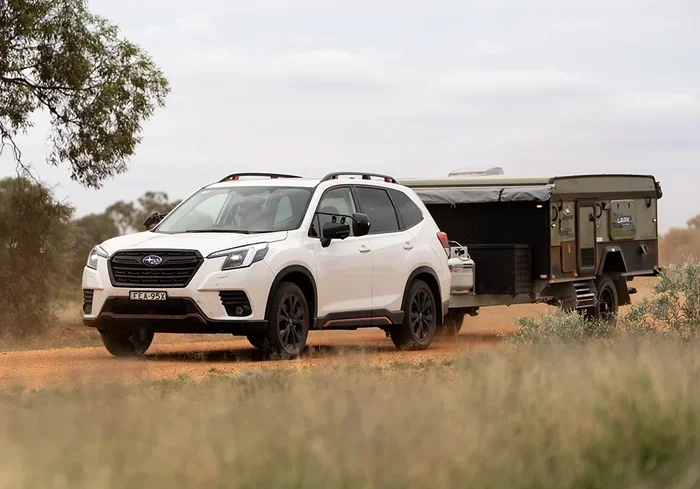
- Lightweight Campers: Small pop-up campers or tent trailers under 1,500 pounds total weight work well.
- Motorcycle Trailers: Perfect for transporting a motorcycle or ATV to the trails.
- Boat Trailers: Small aluminum boats can work, but check the total weight carefully.
If you are considering a Subaru Crosstrek for towing, keep in mind its capabilities are similar to the Forester. Both are compact SUVs designed for light-duty hauling.
Safety Gear for Towing
Safety should always come first when towing. Here is a quick checklist of gear you should have:
- Properly rated tow hitch and ball mount
- Trailer wiring harness with working lights
- Safety chains crossed under the trailer tongue
- Tire pressure gauge for both the vehicle and trailer
- Mirrors that give you a clear view of the trailer
- A weight distribution hitch for heavier loads
Tips for Towing Safely with a Subaru Forester
Towing a trailer changes how your vehicle drives. The extra weight affects braking, handling, and fuel economy. Here are some practical tips to keep you safe on the road.
Distribute Weight Evenly
Load your trailer so the weight is balanced. About 60 percent of the cargo should be in the front half of the trailer. This prevents the trailer from swaying. Uneven loading is one of the leading causes of trailer accidents.
Check Your Tire Pressure
Before every trip, check the tire pressure on both your Forester and your trailer. Under-inflated tires can overheat and fail, especially when carrying heavy loads. Over-inflated tires reduce traction and make for a rough ride. Follow the pressure recommendations in your owner’s manual.
Brake Earlier and Softer
When you are towing, your stopping distance increases. The extra weight on the trailer adds momentum. Brake gently and start slowing down earlier than you normally would. This gives you more time to stop safely and reduces wear on your brakes.
Watch Your Speed
Driving too fast with a trailer is dangerous. The Subaru Forester is a compact SUV, not a heavy-duty truck. Keep your speed moderate, especially on highways. Most experts recommend staying under 55 to 60 miles per hour when towing. This improves fuel economy and keeps your vehicle more stable.
Take Breaks on Long Trips
Towing puts extra stress on your engine and brakes. Take regular breaks on long trips to let everything cool down. This is especially important in hot weather or on hilly terrain. A 15-minute break every couple of hours can make a big difference.
Common Mistakes People Make When Towing with a Forester
Even experienced drivers make towing mistakes. Here are some common errors to avoid when hauling with your Subaru Forester.
Overloading the Trailer
This is the number one mistake. It is tempting to fill up every inch of your trailer. But exceeding the towing weight limit is dangerous. It can cause your vehicle to lose control, damage your transmission, and wear out your brakes prematurely. Always stay under the rated capacity.
Ignoring Tongue Weight
Tongue weight is the downward force the trailer puts on your hitch. Too much tongue weight can make your rear end sag. Too little can cause the trailer to sway. Aim for 10 to 15 percent of the total trailer weight as tongue weight.
Skipping the Safety Chains
Some people skip safety chains to save time. This is a big mistake. Safety chains are your backup if the trailer ever disconnects from the hitch. Always cross them under the trailer tongue and attach them securely to your vehicle.
Not Checking the Trailer Brakes
If your trailer is over 1,000 pounds, it should have its own brakes. Make sure these brakes are in good working order before every trip. Test them on a quiet road to confirm they engage properly.
How Does the Subaru Forester Compare to Other SUVs for Towing?
The Subaru Forester is a compact SUV, and its towing capacity reflects that. Let us compare it to a few other popular SUVs to give you context.
| Vehicle | Towing Capacity | Best For |
|---|---|---|
| Subaru Forester | 1,500 – 2,000 lbs | Small trailers, utility hauling |
| Subaru Outback | 2,700 lbs | Lighter boats, small campers |
| Subaru Crosstrek | 2,000 lbs | Light trailers, outdoor gear |
| Honda CR-V | 1,500 lbs | Small utility trailers |
| Toyota RAV4 | 1,500 lbs | Light towing and hauling |
| Ford Explorer | 5,300 lbs | Larger trailers, boats |
As you can see, the Subaru Forester sits in the lower range of SUV towing capacity. It is not designed for heavy-duty towing. But for its size, it handles light hauling duties well. If you need more towing power, you might consider a larger Subaru like the Subaru Outback, which can tow up to 2,700 pounds.
The Forester excels at versatility. It is a great daily driver that can also handle occasional towing. For many families, this balance is exactly what they need. You do not need a massive truck to pull a small camper or haul yard equipment.
Expert Tips for Maximizing Your Forester’s Towing Potential
Want to get the most out of your Subaru Forester when towing? Here are some expert tips that make a real difference.
Keep Your Vehicle Well-Maintained. Regular oil changes, brake inspections, and tire rotations are even more important when you tow. The extra weight puts additional stress on every component of your vehicle. Staying on top of maintenance helps prevent breakdowns and extends the life of your Forester.
Use the Right Gear. When towing uphill, use a lower gear to reduce strain on your engine. On flat roads, overdrive can help with fuel economy. Always consult your owner’s manual for gear recommendations when towing.
Install a Transmission Cooler. Towing generates extra heat in your transmission. A transmission cooler helps manage this heat, especially on long trips or in hot weather. This simple upgrade can prevent costly transmission repairs down the road.
Plan Your Route Carefully. Avoid steep mountain passes and rough roads when possible. Plan routes with gentle grades and smooth surfaces. This reduces stress on your vehicle and makes the towing experience much more enjoyable.
Know Your Local Towing Regulations. Different states and regions have different rules about towing. Some require additional mirrors, brake controllers, or speed limits for tow vehicles. Check your local regulations before heading out on a trip.
Final Thoughts on Subaru Forester Towing
The Subaru Forester is a capable compact SUV that can handle light towing and hauling jobs with ease. Its towing capacity of 1,500 to 2,000 pounds makes it suitable for small trailers, utility loads, and weekend camping gear. Understanding your vehicle’s limits and equipping it properly are the keys to safe and successful towing.
Always respect the towing weight limit published by Subaru for your specific model year. Do not overload your vehicle, and invest in quality towing equipment. With the right setup and a careful approach, your Forester will serve you well as a reliable towing machine for years to come.
If you are exploring other Subaru models for towing, consider checking out Can A Subaru Forester Tow A Camper for more specific guidance on camping setups. You can also learn about how much weight a regular car can carry to better understand your vehicle’s overall limits.
Towing safely means knowing your vehicle, preparing properly, and driving with care. The Subaru Forester may not be a towing powerhouse, but it gets the job done for everyday hauling needs. Stay within the limits, maintain your vehicle, and enjoy the freedom of having your own towing capability right from your driveway.
Frequently Asked Questions
Can a Subaru Forester tow a camper?
Yes, a Subaru Forester can tow a small camper. The towing capacity ranges from 1,500 to 2,000 pounds depending on the model year. Make sure the total weight of the camper, including all gear inside, stays within this limit. Always check the specific specs for your Forester before towing.
What is the maximum towing capacity of a Subaru Forester?
The maximum towing capacity for most Subaru Forester models is around 2,000 pounds. However, some older or base models may be rated at 1,500 pounds. Always refer to your owner’s manual or the door frame sticker for your exact vehicle’s towing rating.
Do I need a special hitch to tow with a Subaru Forester?
Yes, you need a properly rated tow hitch. A Class I hitch is typically sufficient for the Forester’s towing capacity. Make sure the hitch is installed correctly and rated for at least the weight you plan to tow. A wiring harness for trailer lights is also essential.
Can I tow a boat with a Subaru Forester?
You can tow a small boat with a Forester if the total weight is within the towing capacity. The boat, trailer, and all gear must stay under 1,500 to 2,000 pounds. Larger boats will exceed the Forester’s towing limits and are not recommended.
Is it safe to tow at highway speeds with a Subaru Forester?
Yes, it is generally safe to tow at highway speeds with a Forester, provided you stay within the towing capacity. Most experts recommend keeping your speed between 55 and 60 miles per hour when towing. This improves stability and reduces strain on your vehicle.
How does towing affect my Subaru Forester’s fuel economy?
Towing significantly reduces fuel economy. The extra weight and drag from the trailer cause your engine to work harder. Expect a noticeable drop in miles per gallon when towing compared to driving without a load. Planning efficient routes and maintaining steady speeds can help minimize fuel loss.