Can a Subaru Forester Tow a Camper Trailer Heres How
Yes, a Subaru Forester can tow a camper trailer, but the answer depends on your model year, engine, and the camper weight. Most Forester models have a towing capacity between 1,500 and 2,000 pounds when properly equipped. This guide covers everything you need to know about Subaru Forester towing capacity, hitch options, safety tips, and which campers work best with this popular SUV.
If you own a Subaru Forester and love camping, you have probably wondered whether your vehicle can handle a camper trailer. The good news is that the Forester is a capable little SUV with solid towing credentials. But the real question is, what kind of camper can it actually pull, and how do you do it safely?
This guide walks you through everything you need to know about Subaru Forester towing. From towing capacity numbers to hitch setups, safety tips, and real-world experiences, we have got you covered. Whether you are planning a weekend trip or a cross-country adventure, this article will help you make the right call.
The Subaru Forester has been a favorite among outdoor enthusiasts for years. Its boxy shape, raised ground clearance, and all-wheel drive make it a great platform for camping trips. But towing a camper is a different beast than hauling gear on a roof rack. You need the right setup, the right camper, and the right knowledge.
Key Takeaways
- Towing Capacity Varies by Model: Most Subaru Foresters can tow between 1,500 and 2,000 pounds when equipped with the proper towing package.
- Engine and Drivetrain Matter: The 2.5-liter engine and symmetrical AWD system give the Forester solid towing stability for small to medium campers.
- Proper Hitch Installation Is Essential: A Class I or Class II receiver hitch is typically all you need for most camper trailers.
- Safety Should Come First: Always check tongue weight, use towing mirrors, and practice braking before hitting the road.
- Small Campers Work Best: Pop-up campers, teardrop trailers, and small travel trailers are ideal matches for the Forester.
- Model Year Changes Everything: Towing limits differ across generations, so always check your specific year and trim.
- Regular Maintenance Helps: Keep your brakes, tires, and suspension in top shape for safe towing experiences.
📑 Table of Contents
- Understanding the Subaru Forester Towing Capacity
- What Kind of Camper Can a Subaru Forester Tow?
- Towing Equipment You Will Need
- Safety Tips for Towing with a Forester
- Real-World Towing Experiences
- Common Mistakes to Avoid When Towing a Camper with a Forester
- Final Verdict: Is the Subaru Forester Good for Towing a Camper?
Understanding the Subaru Forester Towing Capacity
The first thing you need to know is your Forester’s towing capacity. This number tells you the maximum weight your vehicle can safely pull. Exceeding it can damage your engine, transmission, and brakes. It can also make the road dangerously unsafe.
Towing Capacity by Model Year
Different Forester generations have different towing limits. Here is a quick breakdown:
- 2019 and Newer (5th Generation): Towing capacity of 1,500 pounds with the 2.5-liter engine. Some trims with the tow package can reach up to 2,000 pounds.
- 2014 to 2018 (4th Generation): Towing capacity of 1,500 pounds for most trims. The 2.5-liter engine provides enough power for light towing.
- 2009 to 2013 (3rd Generation): Towing capacity of 1,500 pounds. These models also use the 2.5-liter engine and can handle small trailers.
- Older Models (Pre-2009): Towing capacity varies widely. Some models can tow up to 2,000 pounds, while others are limited to 1,500 pounds.
Always check your owner’s manual for the exact towing capacity of your specific Forester. The number on the door jamb sticker and the manual should match. If they do not, contact your local Subaru dealer for clarification.
What Affects Towing Capacity?
Several factors influence how much your Forester can safely tow. Understanding these helps you make better decisions.
- Engine Size: The 2.5-liter flat-four engine is the standard in most Foresters. It produces around 182 horsepower, which is enough for light to moderate towing.
- Drivetrain: The symmetrical all-wheel drive system gives the Forester excellent traction. This is a big advantage when towing on wet or uneven roads.
- Transmission: The CVT (Continuously Variable Transmission) in newer models handles towing well. It keeps the engine in the right power range without overworking.
- Payload Capacity: Towing capacity is not the same as payload capacity. Payload is the weight your vehicle carries itself, including passengers and gear. Both numbers matter when planning a trip.
- Tow Package: Some Forester trims come with a factory tow package. This includes a hitch receiver, wiring harness, and cooling upgrades. If your Forester does not have a tow package, you can often add one aftermarket.
What Kind of Camper Can a Subaru Forester Tow?
Now that you know the towing numbers, let us talk about campers. Not all trailers are created equal, and the Forester works best with certain types of campers.
Pop-Up Campers
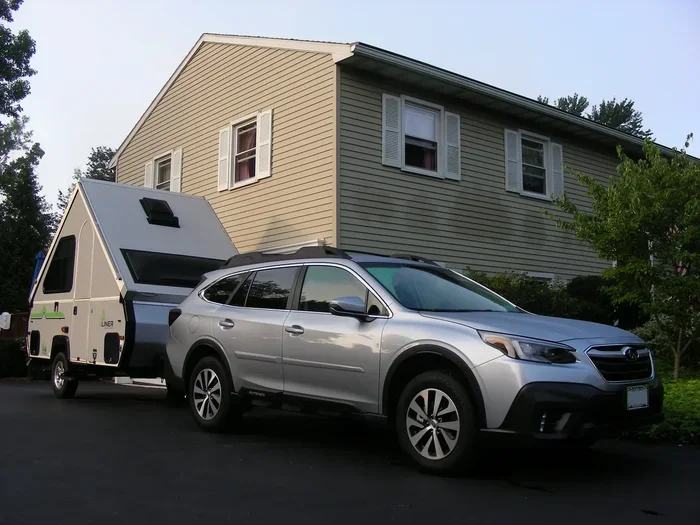
Pop-up campers are a natural match for the Subaru Forester. These lightweight trailers typically weigh between 600 and 1,200 pounds. They expand once you arrive at your campsite, giving you sleeping space and room to move around. Many Forester owners love pop-up campers because they are easy to set up and easy to tow.
Teardrop Trailers
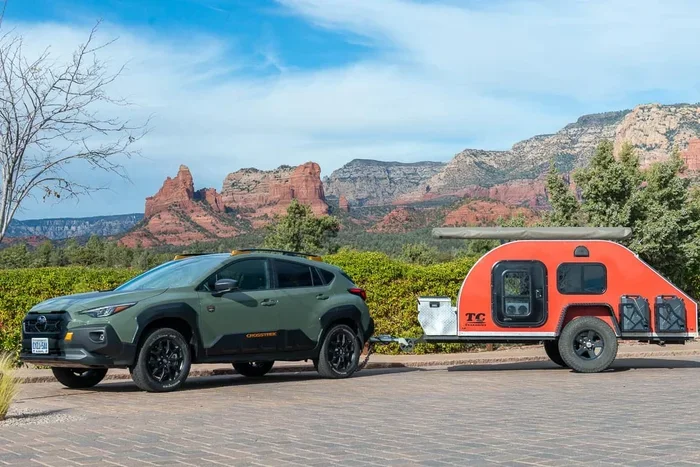
Teardrop trailers are another great option. These compact, aerodynamic trailers usually weigh between 1,000 and 2,000 pounds. They have a small sleeping area in the back and often include a kitchen galley at the rear. Their low profile makes them easy to tow, and they look sleek behind a Forester.
Small Travel Trailers
Small travel trailers under 1,500 pounds can work with a Forester. Look for models designed for fuel-efficient vehicles. Brands like Little Guy, Escapes, and Lance make lightweight trailers that pair well with the Forester’s towing capacity. However, you need to be careful not to exceed the 1,500 to 2,000-pound limit.
Campers to Avoid
Some campers are simply too heavy for a Forester. Large travel trailers, fifth-wheel trailers, and heavy-duty toy haulers are out of the question. These can weigh 3,000 pounds or more. Trying to tow them with a Forester is dangerous and can cause serious mechanical damage.
Towing Equipment You Will Need
Towing a camper safely requires the right equipment. The Subaru Forester is capable, but you still need to invest in the proper gear.
Hitch and Receiver
Most Foresters use a Class I or Class II trailer hitch. A Class I hitch is rated for up to 2,000 pounds of towing capacity. A Class II hitch can handle up to 3,500 pounds. For a Forester, a Class I hitch is usually sufficient. Make sure the hitch is properly installed and rated for your specific Forester model.
You will also need a hitch ball. Most Forester setups use a 1-1/4 inch ball hitch. Some aftermarket hitches come with a 2-inch ball, but check your camper’s coupler size before buying.
Wiring Harness and Lights
A wiring harness connects your Forester’s taillights and brake lights to the trailer. This is essential for safety and is required by law in most states. The harness plug is usually located behind the rear bumper. If your Forester does not have a factory wiring harness, you can install one easily with a universal plug-and-play kit.
Towing Mirrors
When towing a camper, your side mirrors may not give you enough visibility. Towing mirrors extend outward and give you a clear view of the trailer and the road behind you. They are inexpensive and easy to install. I strongly recommend them for any Forester towing setup.
Weight Distribution Hitch
For heavier campers close to your Forester’s towing limit, a weight distribution hitch can help. It spreads the tongue weight more evenly across all four wheels. This improves handling and prevents the front of the Forester from lifting. However, for most Forester setups, a standard hitch is enough.
Braking Systems
Some states require trailer brakes if the trailer weighs over a certain amount. Check your local laws. If your camper is over 1,500 pounds, consider a trailer with its own braking system. Electric trailer brakes are common and affordable. They connect to a controller in your Forester’s cabin.
Safety Tips for Towing with a Forester
Towing a camper changes how your vehicle drives on the road. It is important to adjust your driving habits and take extra precautions.
Check Your Load Before Every Trip
Before you hit the road, do a quick safety check. Make sure the camper is securely attached to the hitch. Check that all lights work. Verify the tire pressure on both the Forester and the trailer. Loose connections and underinflated tires are common causes of towing accidents.
Understand Tongue Weight
Tongue weight is the downward force the trailer puts on the hitch. It should be about 10 to 15 percent of the total trailer weight. Too little tongue weight causes swaying. Too much tongue weight lifts the front of your Forester and reduces steering control. Use a tongue weight scale to check this before every trip.
Practice in a Safe Area
If you are new to towing, practice in an empty parking lot before hitting the highway. Get a feel for how the Forester handles with the extra weight. Practice turning, braking, and reversing. This builds confidence and helps you avoid mistakes on busy roads.
Drive at Safe Speeds
The Forester is not a heavy-duty truck. Do not push it to its limits on the highway. Keep your speed moderate, especially on inclines and windy roads. Towing a camper increases wind resistance, which can affect fuel economy and stability.
Use Proper Braking Technique
Brake early and gently when towing a camper. The extra weight means it takes longer to stop. Do not brake suddenly or slam on the brakes. This can cause the trailer to jackknife or push the Forester from behind. Smooth, gradual braking keeps everyone safe.
Monitor Your Temperature
Towing puts extra strain on your engine. Keep an eye on the temperature gauge, especially on hot days or steep mountain roads. If the engine starts to overheat, pull over safely and let it cool down. The Forester’s cooling system is designed for normal driving, but towing adds extra demand.
Real-World Towing Experiences
Many Subaru Forester owners tow campers regularly and share their experiences online. Here are some common themes from real-world towing.
What Forester Owners Say
Most Forester owners report a positive towing experience with lightweight campers. The symmetrical all-wheel drive system provides excellent stability on the highway. Owners who tow pop-up campers and small teardrop trailers say the Forester handles the load with ease. Fuel economy drops slightly when towing, but most owners find it acceptable for weekend trips.
Some owners have noted that the CVT transmission can feel strained when climbing steep hills with a heavy load. This is normal and not a sign of a problem. The transmission is simply working hard to keep the engine in the right power range.
Common Modifications for Towing
Forester owners who tow frequently often make a few upgrades. These include installing a better hitch, adding towing mirrors, and upgrading the trailer braking controller. Some owners also install a transmission cooler for extra protection during long towing trips. These modifications are not required for light towing, but they can extend the life of your vehicle.
Fuel Economy While Towing
Towing a camper affects fuel economy. Most Forester owners see a drop of 3 to 5 miles per gallon when towing a lightweight trailer. The EPA-rated fuel economy for the Forester is around 26 to 33 mpg combined. When towing, expect closer to 20 to 25 mpg depending on the camper weight and driving conditions.
Common Mistakes to Avoid When Towing a Camper with a Forester
Avoiding common mistakes keeps you safe and protects your vehicle. Here are the top mistakes Forester owners make when towing.
Exceeding Towing Capacity
This is the most dangerous mistake you can make. Never exceed the towing capacity listed in your owner’s manual. The number is not a suggestion. It is a hard limit based on your vehicle’s engineering. Going over it risks engine failure, brake damage, and loss of vehicle control.
Ignoring Tongue Weight
Many people forget to check tongue weight. An improperly loaded trailer can sway dangerously at highway speeds. Always distribute weight evenly in the camper and check the tongue weight with a scale.
Skipping the Hitch Check
A loose hitch is a serious safety hazard. Before every trip, check that the hitch pin is secure and the coupler is latched properly. Do not assume it is fine just because you installed it last month.
Not Using Towing Mirrors
Without proper mirrors, you cannot see the trailer or the cars behind you. This is dangerous and illegal in many states. Towing mirrors are a small investment that pays off in safety and peace of mind.
Neglecting Trailer Maintenance
Your trailer needs maintenance too. Check the tire pressure, wheel bearings, and lights regularly. A flat tire or broken axle on the trailer can ruin your trip and create a dangerous situation on the road.
Overloading the Camper
It is tempting to pack everything you own into a camper. But overloading the trailer increases the weight beyond safe limits. Stick to the weight ratings and pack smart. Bring what you need and leave the rest at home.
Final Verdict: Is the Subaru Forester Good for Towing a Camper?
The short answer is yes. The Subaru Forester is a solid choice for towing a small to medium camper trailer. Its 1,500 to 2,000-pound towing capacity handles pop-up campers, teardrop trailers, and small travel trailers with ease. The all-wheel drive system, reliable engine, and comfortable ride make it a great towing vehicle for camping enthusiasts.
However, the Forester is not a heavy-duty towing machine. It is best suited for lightweight campers and short to medium-length trips. If you plan to tow a large travel trailer or fifth-wheel camper, you need a bigger vehicle like a truck or a full-size SUV.
If you already own a Forester and want to start camping with a trailer, you are in good shape. Invest in the right hitch, practice safe towing habits, and choose a camper within your vehicle’s limits. The Subaru Forester will reward you with a reliable, enjoyable towing experience for many camping trips to come.
Take the time to understand your vehicle’s capabilities. Read the owner’s manual. Talk to other Forester owners. And most importantly, prioritize safety on every trip. With the right setup and the right mindset, your Forester and your camper trailer will make a great team out on the open road.
Happy towing and happy camping. The Subaru Forester is ready for the adventure, and now you are too.
Frequently Asked Questions
Can a Subaru Forester tow a 2000 pound camper?
Yes, most Subaru Forester models can tow up to 2,000 pounds when equipped with the proper tow package. However, always check your specific model year and trim, as towing limits vary. Stay within the rated capacity for safe and reliable towing.
Do I need a special hitch for my Subaru Forester?
You need a Class I or Class II trailer hitch rated for your Forester’s towing capacity. Most Foresters use a 1-1/4 inch ball hitch. Make sure the hitch is compatible with your specific model year and installed by a professional or following the manufacturer’s guidelines.
What is the best camper size for a Subaru Forester?
The best camper size for a Forester is a pop-up camper, teardrop trailer, or small travel trailer under 1,500 to 2,000 pounds. These lightweight options match the Forester’s towing capacity and provide a comfortable camping experience without overloading the vehicle.
Does towing a camper affect Subaru Forester fuel economy?
Yes, towing a camper reduces fuel economy. Most Forester owners see a drop of 3 to 5 miles per gallon when towing. The exact impact depends on the camper weight, driving speed, and road conditions. Plan for fewer miles per gallon on your camping trips.
Can I tow a camper with a Subaru Forester CVT transmission?
Yes, the CVT transmission in modern Subaru Foresters handles towing well. The transmission adjusts smoothly to the extra load. However, avoid sustained towing on steep inclines, as this can cause the transmission to overheat. Take breaks on long climbs to let the system cool down.
Is it safe to tow a camper with a Subaru Forester on the highway?
It is safe as long as you stay within the towing capacity and follow safety guidelines. Use towing mirrors, check tongue weight, drive at moderate speeds, and brake gently. The Forester’s all-wheel drive system provides excellent stability on the highway when towing a properly loaded camper.
=== CONCLUSION ===
The Subaru Forester is a versatile and reliable SUV that can tow a camper trailer with confidence. With a towing capacity of 1,500 to 2,000 pounds, it handles pop-up campers, teardrop trailers, and small travel trailers beautifully. By choosing the right camper, installing the proper towing equipment, and following safety best practices, you can enjoy many memorable camping trips with your Forester.
Remember to always check your specific model’s towing limits, invest in quality towing gear, and prioritize safety on every journey. The Subaru Forester is built to handle the adventure, and with the right setup, your camping trips will be nothing short of excellent.