How Many Cylinders Are in a Toyota Camry V6 Engine
The Toyota Camry V6 engine has been a popular choice for decades, offering powerful performance and smooth driving. Most modern Toyota Camry models come with a V6 configuration, while older and some newer versions use a four-cylinder engine. Understanding the cylinder count helps you pick the right Camry trim for your needs.
When you think about buying a Toyota Camry, one of the first questions that comes to mind is how many cylinders are in a Toyota Camry. The answer depends on the model year, trim level, and engine option you choose. The Toyota Camry has been one of the most popular sedans in America for decades, and part of the reason is its strong engine options.
The Toyota Camry V6 engine has been a favorite among drivers who want more power and a smoother ride. But not every Camry comes with a V6. Many models offer a four-cylinder engine that delivers excellent fuel economy and everyday reliability. Whether you are shopping for a used Camry or looking at the latest model, understanding the cylinder count helps you make a smarter choice.
In this guide, we will cover everything you need to know about Toyota Camry engine configurations. We will look at the different generations, engine specs, and what each option means for your driving experience. By the end, you will know exactly which Camry engine is right for you.
Key Takeaways
- V6 Engine: The Toyota Camry V6 engine typically features a V6 cylinder configuration with strong horsepower and torque.
- Four-Cylinder Option: Many Camry generations also offer a reliable four-cylinder engine for better fuel economy.
- Engine Specs Matter: Displacement, horsepower, and torque vary by generation and trim level.
- Maintenance Is Key: Keeping up with engine maintenance helps your Camry engine last for hundreds of thousands of miles.
- Hybrid Options Exist: Toyota also offers hybrid Camry models with different cylinder setups for maximum efficiency.
- Trim Choice Matters: Different Camry trims come with different engine options, so choose wisely.
- Reliability Is Proven: Toyota Camry engines are known for long-lasting performance and dependability.
📑 Table of Contents
- Understanding Engine Cylinders in the Toyota Camry
- Toyota Camry V6 Engine Specs Across the Years
- Comparing Four-Cylinder vs. V6 in the Toyota Camry
- Which Toyota Camry Generations Offered the V6 Engine?
- Common Myths About the Toyota Camry V6 Engine
- How to Choose the Right Camry Engine for You
- Maintenance Tips for Keeping Your Camry Engine Running Strong
- Final Thoughts on the Toyota Camry V6 Engine
Understanding Engine Cylinders in the Toyota Camry
Before we dive into the specifics, let us talk about what cylinders are and why they matter. An engine cylinder is the chamber where fuel and air mix and ignite to create power. The more cylinders an engine has, the smoother it runs and the more power it can produce. But more cylinders also usually means more fuel consumption.
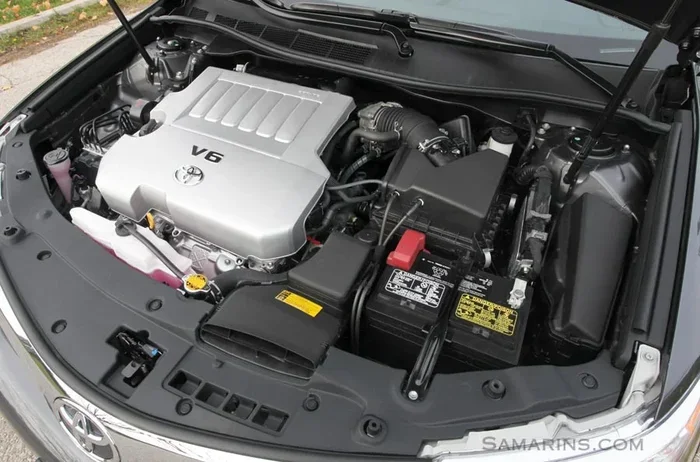
The Toyota Camry has been offered with both four-cylinder and V6 engines over the years. The four-cylinder engine is a straight-line setup where all cylinders are lined up in a row. This design is simple, lightweight, and efficient. The V6 engine has two banks of three cylinders arranged in a V shape. This configuration gives a smoother ride and more power output.
What Does V6 Mean?
V6 stands for a six-cylinder engine arranged in a V configuration. Each bank has three cylinders, and they work together to turn the crankshaft. The Toyota Camry V6 engine has been a staple in many generations of the Camry lineup. It offers a great balance between performance and daily driving comfort.
When you hear someone talk about a V6 powertrain, they are referring to this six-cylinder setup. The V6 engine in the Camry has gone through many changes over the years. Early versions were naturally aspirated, while newer ones use advanced technology like variable valve timing and direct injection.
What About the Four-Cylinder Engine?
The four-cylinder engine is the most common option in the Camry lineup. It is the go-to choice for most buyers because it offers great fuel economy and solid performance for daily commuting. The modern four-cylinder Camry engines are turbocharged in some trims, which means they pack a lot of power for their size.
Many people choose the four-cylinder Camry because it is more affordable than the V6 version. The engine displacement is usually smaller, which means less fuel is burned per cycle. This makes the four-cylinder Camry a smart choice for those who want to save money at the pump.
Toyota Camry V6 Engine Specs Across the Years
The Toyota Camry V6 engine has evolved a lot over the years. Each generation brought improvements in power, efficiency, and technology. Let us take a closer look at how the engine specs have changed over time.
Early V6 Engines (1990s to Early 2000s)
The first V6 engines in the Camry appeared in the early 1990s. These early versions had a displacement of around 3.0 liters and produced around 185 to 200 horsepower. They were reliable and smooth, but not as powerful as modern engines.
By the late 1990s and early 2000s, Toyota increased the displacement to 3.3 liters. This gave the Camry V6 more torque and better acceleration. The engine performance improved significantly, making the Camry a more compelling choice for buyers who wanted a bit more power.
Mid-2000s to 2010s V6 Engines
The mid-2000s brought a 3.5-liter V6 engine to the Camry. This engine produced around 268 to 280 horsepower, depending on the model year. It was a significant upgrade and made the Camry V6 one of the more powerful sedans in its class.
During this period, Toyota also introduced variable valve timing technology. This allowed the engine to adjust the timing of the intake and exhaust valves, which improved both power and fuel economy. The 2.5 liter engine four-cylinder option also became available, giving buyers more choices.
Recent V6 and Hybrid Engines (2018 and Newer)
In recent years, Toyota has shifted its focus toward hybrid engines. The latest Camry models offer a hybrid powertrain that combines a four-cylinder engine with an electric motor. This setup delivers excellent fuel economy without sacrificing much performance.
The V6 engine is still available in some Camry trims, but it is less common than it used to be. The 2024 Toyota Camry offers a 2.5-liter four-cylinder engine as the standard option, with a hybrid version that delivers even better mileage. If you want a V6, you may need to look at older model years or specific trims.
Comparing Four-Cylinder vs. V6 in the Toyota Camry
Choosing between a four-cylinder and a V6 engine in the Toyota Camry depends on your priorities. Both options have their strengths and weaknesses. Let us break down the key differences.
Power and Performance
The V6 engine in the Camry delivers more horsepower and torque than the four-cylinder. This means faster acceleration, better passing power, and a more engaging driving experience. If you enjoy spirited driving or frequently carry heavy loads, the V6 is the better choice.
The four-cylinder engine, especially the turbocharged versions, still offers strong performance for most driving situations. It may not match the V6 in raw power, but it is more than enough for daily commuting and highway driving.
Fuel Economy
Fuel economy is where the four-cylinder engine shines. A four-cylinder Camry can deliver 28 to 32 miles per gallon in combined driving, depending on the trim and engine option. The V6 Camry typically gets around 22 to 26 miles per gallon, which is still good for a V6 sedan but not as impressive.
If you drive a lot of miles each year, the fuel savings from a four-cylinder engine can add up quickly. Over time, the lower fuel costs can offset the lower purchase price of the four-cylinder model.
Cost and Maintenance
The V6 Camry usually costs more to buy than the four-cylinder version. The engine is more complex, which means parts and repairs can also be more expensive. That said, Toyota engines are known for their durability, so maintenance costs are generally reasonable for both engine types.
One thing to keep in mind is that the timing belt on V6 engines needs to be replaced at regular intervals. Checking when to replace the timing belt on your specific Camry model is important for avoiding costly engine damage. Regular oil changes and maintenance go a long way in keeping any Camry engine running strong.
Which Toyota Camry Generations Offered the V6 Engine?
Not every Camry generation came with a V6 engine. Toyota introduced the V6 option in certain years and trims to give buyers more choices. Here is a quick overview of the Camry generations that offered the V6 engine.
The third-generation Camry (1992 to 1996) was one of the first to offer a V6 engine in the United States. The fourth and fifth generations (1997 to 2006) continued to offer the V6, and it became a popular option. The sixth and seventh generations (2007 to 2017) also included V6 trims, though Toyota started shifting focus toward hybrid and four-cylinder engines.
If you are shopping for a used Camry with a V6, models from the 1990s through the mid-2010s are your best bet. You can also check if you can order a 2024 Toyota Camry with a V6, but most new Camrys are now four-cylinder or hybrid models.
Common Myths About the Toyota Camry V6 Engine
There are several myths and misconceptions about the Toyota Camry V6 engine. Let us clear up a few of the most common ones.
Myth 1: The V6 Camry Is Not Reliable
Some people believe that the V6 Camry is less reliable than the four-cylinder version. This is simply not true. Toyota builds its engines to last, and the V6 Camry has a strong track record of reliability. With proper maintenance, a V6 Camry engine can easily last over 200,000 miles.
In fact, Toyota Camry reliability is one of the main reasons these cars remain so popular on the used market. Both the four-cylinder and V6 versions are known for their durability and low cost of ownership.
Myth 2: V6 Camrys Are Always Expensive to Maintain
While the V6 engine does have more components than a four-cylinder, the maintenance costs are not drastically higher. Toyota parts are widely available and affordable. Routine maintenance like oil changes, spark plug replacements, and brake jobs cost about the same for both engine types.
The main difference in cost comes from more major repairs, such as replacing the timing belt or dealing with transmission issues. Staying on top of regular maintenance helps prevent these costly repairs.
Myth 3: The V6 Camry Is Too Powerful for Daily Driving
Some buyers worry that the V6 Camry is overpowered for everyday driving. In reality, the V6 engine is a great choice for daily use. The extra power makes highway merging and passing easier, and the smooth delivery makes long trips more comfortable.
Many families and commuters prefer the V6 Camry because it offers a refined driving experience without being overly sporty. It is the best of both worlds: enough power when you need it and a comfortable ride every day.
How to Choose the Right Camry Engine for You
Now that you know the differences between the four-cylinder and V6 engines, how do you decide which one is right for you? Here are some factors to consider.
Consider Your Driving Habits
If you mostly drive in the city and commute short distances, the four-cylinder engine is the smarter choice. It offers better fuel economy and lower running costs. If you frequently drive on highways or need extra power for towing or carrying passengers, the V6 engine is worth the investment.
Think About Your Budget
The V6 Camry costs more upfront than the four-cylinder version. But if you plan to keep the car for a long time, the V6 may hold its value better. Used V6 Camrys are also popular on the resale market, so you may get more of your money back when it is time to sell.
Check the Model Year and Trim
Not every Camry trim comes with a V6 engine. The XSE and XLE trims in certain years offered the V6 as an option, while base trims came with the four-cylinder. Before you buy, make sure to check the specific trim and engine option for the model year you are interested in.
Think About the Future
Toyota is moving toward hybrid and electric powertrains. If you want a Camry with a V6, you may want to act sooner rather than later. The hybrid Camry offers a great alternative, combining a four-cylinder engine with an electric motor for excellent efficiency and performance.
Also, if you are considering a used Camry, it is always a good idea to check for any recalls on older models. For example, if you are looking at a 2007 Camry, you should check are there any recalls on a 2007 Toyota Camry before making a purchase. Staying informed helps you avoid potential problems.
Maintenance Tips for Keeping Your Camry Engine Running Strong
No matter which engine you choose, proper maintenance is the key to a long-lasting Toyota Camry. Here are some tips to keep your engine in top shape.
- Change your oil regularly: Stick to the manufacturer-recommended oil change interval, which is usually every 5,000 to 7,500 miles.
- Use the right oil: Make sure to use the recommended oil weight for your Camry. If you are unsure, check whether you can use 5W-30 instead of 5W-20 in my Toyota Camry by consulting the owner manual or a trusted mechanic.
- Replace the timing belt on schedule: The timing belt is a critical component. Know at what mileage the timing belt should be replaced on a Toyota Camry to avoid engine failure.
- Check fluid levels: Regularly check your coolant, transmission fluid, and brake fluid to keep everything running smoothly.
- Listen for unusual noises: Strange sounds from the engine compartment can be early warning signs of problems. Address them quickly to prevent costly repairs.
Taking care of your Camry engine is one of the best things you can do to ensure it lasts for many years. Toyota engines are built to be durable, but they still need regular attention to perform at their best.
Final Thoughts on the Toyota Camry V6 Engine
The Toyota Camry V6 engine has been a beloved option for car buyers who want a blend of power, comfort, and reliability. Whether you are looking at an older model with a V6 or considering the latest hybrid Camry, understanding the cylinder count and engine options helps you make the best decision.
The four-cylinder Camry is perfect for those who prioritize fuel economy and affordability. The V6 Camry is ideal for drivers who want more power and a smoother ride. Both options are backed by Toyota’s reputation for building some of the most reliable cars on the road.
If you are still deciding, take some time to test drive both engine options. The difference in power and feel is noticeable, and you will quickly discover which one suits your driving style. The Toyota Camry continues to be one of the best sedans in its class, and the engine choice is a big part of what makes it so appealing.
No matter which engine you choose, you are getting a car that is built to last. Toyota Camrys are known for their longevity and low cost of ownership. With proper care and maintenance, your Camry engine will keep running strong for years to come. And if you are looking for a reliable daily driver, you can always trust in the proven Toyota Camry reliability that millions of drivers around the world already count on.
So the next time someone asks you how many cylinders are in a Toyota Camry, you will have all the answers. Whether it is a four-cylinder or a V6, the Camry delivers a driving experience that is hard to beat in the midsize sedan segment.
Frequently Asked Questions
How many cylinders does a Toyota Camry V6 engine have?
A Toyota Camry V6 engine has six cylinders arranged in a V configuration. This setup provides more power and smoother operation than a four-cylinder engine. The V6 has been a popular option in many Camry generations.
Does every Toyota Camry come with a V6 engine?
No, not every Camry comes with a V6. Many models offer a four-cylinder engine, which is more fuel-efficient and affordable. The V6 is available in certain trims and model years, so check the specific vehicle before buying.
Is the Toyota Camry V6 engine reliable?
Yes, the Toyota Camry V6 engine is known for its reliability. With regular maintenance, it can last well over 200,000 miles. Toyota engines are built with durability in mind, and the V6 is no exception.
What is the difference between the four-cylinder and V6 Camry?
The main difference is the number of cylinders and the power output. The four-cylinder engine offers better fuel economy and lower costs, while the V6 provides more horsepower and a smoother ride. Your choice depends on your driving needs and budget.
Can I use 5W-30 oil instead of 5W-20 in my Toyota Camry?
It depends on your specific Camry model and engine type. Always check the owner manual for the recommended oil weight. Using the wrong oil can affect engine performance and longevity, so it is best to follow Toyota’s guidelines.
Are Toyota Camrys good for high mileage driving?
Yes, Toyota Camrys are excellent for high mileage driving. They are known for their durability and low maintenance costs. Many Camry owners regularly exceed 200,000 miles with proper care and routine maintenance.
=== CONCLUSION ===
The Toyota Camry V6 engine remains a fantastic choice for buyers who want a blend of power, comfort, and reliability. Whether you prefer the efficiency of a four-cylinder or the extra punch of a V6, the Camry delivers in every way. Understanding the cylinder count and engine options helps you make an informed decision that fits your lifestyle and budget.
With proper maintenance and care, any Camry engine will keep you cruising for years to come. The Camry continues to prove why it is one of the most trusted sedans on the road today. Choose the engine that fits your needs, and you will enjoy many miles of trouble-free driving in one of the best cars Toyota has ever built.