Car Buffing Machine Pads Make Your Ride Shine Bright
Car buffing machine pads are the secret to a flawless, mirror-like finish on any vehicle. Whether you’re a weekend warrior or a detail pro, choosing the right pad can transform your paint correction game. This guide breaks down everything you need to know about car buffing machine pads, from foam and wool types to practical tips for stunning results.
If you want your car to look like it just rolled off the lot, car buffing machine pads are your best friend. These simple accessories attach to your buffer or polisher and do the heavy lifting of removing scratches, swirl marks, and oxidation. With the right pad, you can bring back that deep, mirror-like shine that turns heads. But not all pads are created equal, and picking the wrong one can leave your paint worse off.
Whether you are a DIY enthusiast or a professional detailer, understanding the different types of car buffing machine pads makes a huge difference. Each pad material, density, and design serves a specific purpose in the paint correction process. This guide will walk you through everything you need to know, from choosing the right pad to using it safely and effectively.
Let’s dive into the world of buffing pads and discover how a small change can transform your entire detailing routine. You will learn about foam, wool, and microfiber options, plus practical tips that save time and protect your paint.
Key Takeaways
- Pad material matters: Foam, wool, and microfiber pads each serve a unique purpose in paint correction.
- Cutting vs. polishing pads: Cutting pads remove defects, while polishing pads refine the finish.
- Backing plate compatibility: Ensure your pads fit your buffer or polisher’s size and hook-and-loop system.
- Speed and pressure control: Using the right settings prevents burning and holograms.
- Maintenance extends pad life: Clean pads after each use and store them properly.
- Beginner-friendly options exist: Soft finishing pads are forgiving and great for learning.
📑 Table of Contents
Understanding Car Buffing Machine Pads
A car buffing machine pad is a soft or abrasive disc that fits onto the backing plate of your rotary or dual-action polisher. The pad spins at high speed and works with compounds or polishes to level the paint surface. Think of it like sandpaper, but much gentler and more controlled.
These pads come in different shapes, sizes, and materials. The most common shapes are circle, oval, and triangle. Circle pads are the standard and fit most machines. The material you choose determines how much paint you remove and what kind of finish you get.
What Exactly Is a Buffing Pad?
At its core, a buffing pad is a consumable tool. You use it once or many times, then replace it. The pad connects to your machine through a hook-and-loop system or a snap-on plate. The hook-and-loop design makes swapping pads quick and easy. This is especially helpful when you switch between a cutting step and a polishing step.
The pad’s surface texture does the work. Some pads are smooth and soft, perfect for applying wax. Others are aggressive and cut through defects. The backing plate’s rigidity also matters. A firm backing plate gives more cutting power, while a soft one conforms to curved panels.
Why Pad Choice Affects Your Results
Choosing the wrong pad can cause holograms, burns, or swirl marks. A cutting pad used on clear coat without proper technique will leave deep scratches. On the other hand, a finishing pad won’t remove a deep scratch at all. Matching the pad to the task is the single most important decision in paint correction.
Also, your machine’s speed and the amount of pressure you apply interact with the pad. A soft pad on high speed with heavy pressure will overheat the paint. Understanding this relationship helps you achieve a flawless finish every time.
Key Takeaways
- Car buffing machine pads are consumable discs that attach to your polisher.
- Material and density determine how much paint you remove.
- Hook-and-loop mounting makes pad changes fast.
- Backing plate stiffness affects how the pad interacts with curved surfaces.
Types of Car Buffing Machine Pads
Not all pads are the same. The three main categories are foam, wool, and microfiber. Each has a role in the detailing process. Let’s break them down so you can pick with confidence.
Foam Pads: The All-Rounder
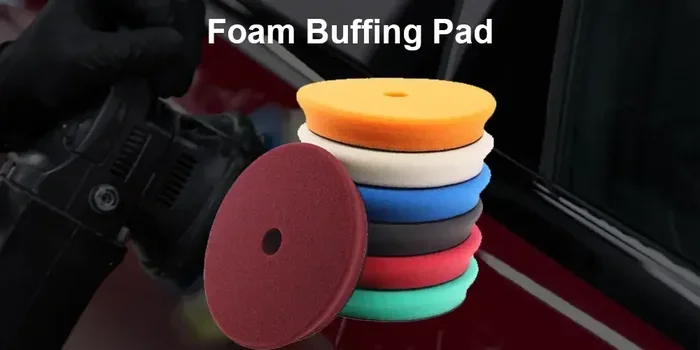
Foam pads are the most popular choice for car buffing machine pads. They come in a wide range of densities and grades. You can get a soft foam pad for applying wax or a firm foam pad for heavy cutting. Foam pads work well with both compound and polish.
The closed-cell foam pads do not absorb liquid, which means your product stays on the paint. Open-cell foam pads are softer and leave a smoother finish. Most detailers keep a mix of both. For beginners, a medium-density foam cutting pad is a great starting point.
Foam pads are easy to clean. A quick rinse and they are ready for the next job. They also dry fast, which prevents mold and odor. This makes them a low-maintenance option for regular use.
Wool Pads for Heavy Cutting
Wool pads are aggressive and cut fast. They are ideal for removing deep scratches, oxidation, and heavy defects. If your car has been neglected and needs serious correction, wool pads are your go-to tool.
However, wool pads leave a lot of haze. You must follow up with a polishing step and a finer pad. Wool is also more abrasive, so it can burn paint if you linger too long. Use light pressure and keep the machine moving.
Wool pads are not for everyone. They require experience and a good eye for the paint. If you are new to detailing, start with foam pads and save wool for the tough jobs.
Microfiber and Synthetic Pads
Microfiber pads are soft and gentle. They are perfect for the final polishing stage and for applying wax or sealant. These pads do not cut paint, but they can remove light swirl marks and enhance gloss.
Some synthetic pads blend the properties of foam and microfiber. They offer a smooth finish with moderate cutting ability. These are great for paint that is already in good shape and just needs a refinement step.
When shopping for car buffing machine pads, look for pads labeled “finishing” or “polishing.” These are your microfiber and soft foam options. They deliver a high-gloss shine without removing clear coat.
Comparison Table: Foam vs. Wool vs. Microfiber
| Pad Type | Cutting Ability | Finish Quality | Best For | Skill Level |
|---|---|---|---|---|
| Foam (cutting) | Medium to High | Good | Removing swirls and light scratches | Beginner to Intermediate |
| Foam (finishing) | Low | Excellent | Polishing and wax application | Beginner |
| Wool | Very High | Moderate (needs follow-up) | Heavy defect removal and oxidation | Advanced |
| Microfiber | Very Low | High Gloss | Final polish and wax/sealant | Beginner to Advanced |
This table helps you see the big picture. You will rarely use just one pad type in a full correction. Most paint correction jobs use a progression from cutting to polishing to finishing.
Quick Tips for Choosing Pads
- Always start with the least aggressive pad that can do the job.
- Match the pad size to your machine’s backing plate (usually 5-inch, 6-inch, or 7-inch).
- Buy pads in sets to have options for each step.
- Check the pad’s recommended speed range on the packaging.
How to Choose the Right Car Buffing Machine Pad
Picking the right pad can feel overwhelming with so many options. But it becomes simple when you focus on three factors: the defect you need to remove, your machine’s specifications, and your experience level.
Match the Pad to the Task
Ask yourself what you want to achieve. Are you removing a deep scratch? Then you need a cutting pad, likely foam or wool. Are you just adding a layer of wax? Then a soft microfiber finishing pad is perfect.
For car buffing machine pads, the general rule is: aggressive pad for aggressive work, gentle pad for gentle work. If you use a cutting pad for final polishing, you will leave swirl marks. If you use a finishing pad to cut, you will never remove the defect.
Consider Your Machine’s Backing Plate
Your buffer or polisher has a specific backing plate size. Common sizes are 5 inches, 5.5 inches, 6 inches, and 7 inches. The pad must fit this plate. Most pads come in standard sizes and use a hook-and-loop attachment. Check your machine’s manual to confirm the size.
Some machines use a specific drive system, like a bungee cord or a geared system. The pad’s backing plate must match the drive system’s motion. A pad that is too stiff for a dual-action polisher can cause hopping and uneven results.
Skill Level and Pad Firmness
If you are a beginner, choose soft or medium pads. They are more forgiving and less likely to cause damage. Firm cutting pads require more skill to control. They can easily burn the paint if you stay in one spot too long.
As you gain experience, you can experiment with harder pads and higher speeds. But always prioritize paint safety over speed. A slow, careful pass with the right car buffing machine pad will always beat a fast, careless pass with the wrong pad.
Expert Insights
Professional detailers often say, “The pad is only as good as the technique.” Even the best car buffing machine pads cannot fix a sloppy technique. Keep your machine moving, use light to medium pressure, and let the pad do the work. Overlapping your passes by about 50% ensures no missed spots.
Key Takeaways
- Match pad aggressiveness to the defect severity.
- Check backing plate size before buying pads.
- Beginners should start with soft pads to avoid paint damage.
- Expert technique matters more than the pad brand.
Using Your Buffing Machine Pads Like a Pro
Now that you have the right pads, it is time to use them correctly. Proper technique makes the difference between a show-car finish and a frustrating mess. Follow these steps for consistent results.
Step-by-Step Process for Paint Correction
- Wash and decontaminate the paint. Remove all dirt and grime. Any particles left on the surface will act like sandpaper and create new scratches.
- Apply a small amount of compound to the cutting pad. Do not flood the paint. A few drops spread evenly are enough.
- Set your machine to the recommended speed. For cutting foam pads, start around 1500-2000 RPM. For wool pads, you may go higher. For polishing pads, stay below 1200 RPM.
- Work in small sections (about 2×2 feet). Keep the pad flat and move it slowly. Overlap each pass by half.
- Wipe away residue with a clean microfiber towel. Check the area for remaining defects.
- Switch to a polishing pad and a finer polish. Repeat the process to refine the finish.
- Finish with a soft microfiber pad and a glaze or wax for protection and shine.
Following this sequence ensures you remove defects without damaging the clear coat. Rushing the process is the most common mistake.
Quick Tips for Better Results
- Keep the pad cool. If the pad gets hot, stop and let it air cool. Heat breaks down the pad’s structure and can burn the paint.
- Use a spray bottle with quick detailer. A light mist keeps the pad lubricated and reduces friction.
- Clean pads between steps. Residue from a cutting compound can contaminate your polishing pad. Rinse or use a pad cleaner.
- Do not press too hard. Let the machine’s weight and speed do the work. Extra pressure just causes heat and swirls.
Common Mistakes to Avoid
Even experienced users make slip-ups. Here are the most common errors with car buffing machine pads and how to avoid them.
- Using a dirty pad. Pads trap debris. A dirty pad scratches the paint. Rinse or replace pads often.
- Skipping the prep step. Never apply compound to a dirty panel. Always wash first.
- Applying too much product. Excess compound flings everywhere and wastes product. Less is more.
- Staying in one spot. This causes heat buildup and holograms. Keep the machine moving at all times.
Expert Insights
Professional detailers often say that the most important tool is not the pad but the technique. A cheap foam pad used with proper method will outperform an expensive wool pad used carelessly. Invest time in learning the right motions and speeds before splurging on premium pads.
Key Takeaways
- Follow a step-by-step process for consistent paint correction.
- Quick tips like keeping the pad cool and using a spray bottle improve results.
- Avoid common mistakes such as applying too much pressure or using dirty pads.
Common Mistakes That Ruin Your Pads and Paint
Knowing what not to do is just as important as knowing the right steps. These mistakes can ruin your pads, damage your paint, and waste hours of work.
Applying Too Much Pressure
Many beginners think pressing harder makes the pad work faster. It does not. Excessive pressure causes friction, heat, and swirl marks. The pad should glide gently over the paint. If you feel resistance, slow down or use a finer compound.
Using the Wrong Pad for the Job
Using a finishing pad to cut deep scratches is like using a butter knife to chop wood. It will not work and will just frustrate you. Always match the pad’s aggressiveness to the defect. If you are unsure, start with a medium cutting pad and work up or down.
Skipping Pad Cleaning
After each use, paint residue and compound build up in the pad’s fibers. This contaminated pad will scratch your paint the next time you use it. Clean your pads with a dedicated pad cleaner or mild soap and water. Let them dry completely before storing.
Ignoring Pad Wear
Pads wear out over time. The fibers break down and lose their cutting ability. A worn-out pad will not remove defects and will just smear compound around. Inspect your pads regularly and replace them when the surface looks glazed or smooth.
Expert Insights
Professional detailers recommend keeping a log of which pads you used and on which panels. This helps you track what works and what does not. Over time, you will build a personal knowledge base that makes every job faster and better.
Maintenance Tips to Extend Pad Life
Good pads are an investment. With proper care, they can last through dozens of jobs. Follow these simple steps to get the most out of your car buffing machine pads.
Cleaning After Each Use
Rinse the pad thoroughly with water after every session. Use your fingers to work out any compound residue. For stubborn buildup, soak the pad in a pad cleaning solution. Avoid harsh chemicals that degrade the foam or microfiber fibers.
Storage and Drying
Never store wet pads. Moisture leads to mold and bad smells. Lay pads flat on a towel and let them air dry completely. Once dry, store them in a cool, dry place away from direct sunlight. UV rays can break down the pad material over time.
When to Replace Your Pad
Even with perfect care, pads eventually wear out. Signs that it is time to replace include: the pad no longer cuts, it leaves a hazy finish, or the edges are frayed. A worn pad will not perform consistently. Replace it to maintain quality results.
Key Takeaways
- Clean pads after every use to prevent contamination.
- Store pads dry and away from sunlight.
- Replace pads when they lose their edge or become glazed.
- Proper maintenance saves money and delivers better results.
Conclusion
Car buffing machine pads are the unsung heroes of any paint correction job. They transform dull, scratched paint into a deep, reflective shine. By choosing the right pad, using proper technique, and maintaining your tools, you can achieve professional results at home.
Remember to start with the least aggressive pad and work your way up. Clean your pads after each use, and never skip the prep work. With a little practice and the right car buffing machine pads, your car will turn heads everywhere you go.
Now grab your buffer, pick the perfect pad, and make your ride shine bright. The journey to a flawless finish starts with the right tool.
Frequently Asked Questions
Can I use the same car buffing machine pad for cutting and polishing?
It is not recommended. Cutting pads are designed to remove material aggressively, while polishing pads are softer and refine the finish. Using the same pad for both steps can leave swirl marks or fail to remove defects. Keep separate pads for each stage of your paint correction process.
How often should I replace my buffing pads?
Replace pads when they show signs of wear, such as a glazed surface, frayed edges, or reduced cutting ability. A well-maintained foam pad can last 10 to 20 uses. Wool pads wear out faster due to their aggressive nature. Inspect them regularly and replace them for consistent results.
What size car buffing machine pad do I need?
The pad size must match your machine’s backing plate. Common sizes are 5 inches, 5.5 inches, 6 inches, and 7 inches. Check your polisher or buffer manual for the correct size. Using the wrong size can cause the pad to fly off or not make proper contact with the paint.
Are microfiber pads better than foam pads for car buffing?
Neither is universally better; they serve different purposes. Microfiber pads are soft and ideal for the final polish and wax application. Foam pads offer varying levels of cutting and are more versatile for the correction process. Many detailers use both in a single job for the best outcome.
How do I clean my car buffing machine pads?
Rinse pads with water after each use to remove compound residue. For a deeper clean, soak them in a dedicated pad cleaner or mild soap solution. Gently squeeze out excess water and let them air dry completely before storing. Never use a dryer or direct heat, as this can damage the pad material.
Can I use a car buffing machine pad with a hand drill?
It is not safe or effective. Hand drills lack the speed control and backing plate stability needed for buffing. Use a proper rotary or dual-action polisher designed for paint correction. These machines provide the consistent speed and pad motion required for a safe, flawless finish.