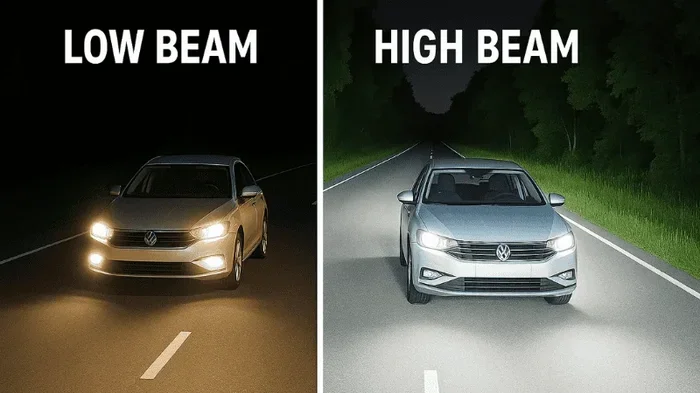
Can You Drive With Your High Beams On All The Time
Driving with your high beams on constantly is illegal in most areas and extremely dangerous. High beam headlights are designed for short bursts on dark, empty roads to improve visibility. Leaving them on all the time creates blinding glare for other drivers and reduces your own safety. Can You Drive With Your High Beams On All The Time? The clear answer is no, and this guide explains why, when to use them, and how modern automatic systems help.
Have you ever wondered if you can just leave your high beams on all the time? Maybe you drive a lot at night and love the extra brightness. Or perhaps you just forget to switch back after passing a car. The question Can You Drive With Your High Beams On All The Time comes up often, and the short answer is no. High beam headlights are powerful tools, but they are not meant for constant use. They are designed for brief moments when you need maximum road illumination on dark, empty streets. Using them all the time creates dangerous glare for other drivers and can actually reduce your own visibility. In this guide, we will break down the legal rules, safety risks, and proper high beam usage so you can drive safely every night.
Headlights are not just accessories. They are essential safety equipment. Every driver needs to understand how beam patterns work and when to switch between low beams and high beams. This article covers everything from basic headlight laws to modern automatic high beam technology. You will learn why leaving your brights on harms everyone on the road, and you will get practical tips to improve your nighttime driving safety.
Key Takeaways
- High beams are for temporary use only: They should be switched off when other vehicles are present.
- Leaving them on is illegal: Most states and countries have headlight laws that prohibit constant high beam use.
- Glare causes serious accidents: Blinding oncoming drivers reduces their reaction time and increases crash risk.
- Automatic high beam systems exist: Modern vehicles can detect traffic and dim your lights for you.
- Proper beam selection improves safety: Using the right beam pattern at the right time makes night driving safer for everyone.
- Maintenance matters: Clean, properly aligned headlights ensure you get the best road illumination without dazzling others.
📑 Table of Contents
- What Are High Beams and Why Do They Exist?
- Can You Drive With Your High Beams On All The Time? Legal Rules
- The Hidden Dangers of Leaving High Beams On Constantly
- When It’s Appropriate to Use High Beams
- Automatic High Beam Technology: A Game Changer
- Best Practices for Headlight Use Every Driver Should Follow
What Are High Beams and Why Do They Exist?
High beam headlights point straight ahead and slightly upward. They throw a wide, powerful beam of light far down the road. This gives drivers a longer view of the path, especially on unlit highways. Low beams, on the other hand, angle downward to light the road without shining directly into the eyes of other drivers. The difference is not just brightness. It is about control and courtesy.
How High Beams Differ from Low Beams
The beam pattern of high beams is much wider and longer than low beams. A typical low beam illuminates about 150 to 250 feet ahead. A high beam can reach 350 to 500 feet or more. This extra range helps you spot hazards like animals, debris, or curves in the road much earlier. However, that same intensity becomes a problem when it hits another driver’s eyes. The dazzle effect can temporarily blind someone, making it impossible for them to see lane markings or pedestrians.
The Purpose of High Beam Headlights
High beams exist to give you the best possible view when no other traffic is around. Think of isolated rural roads, dark back streets, or open highways with no oncoming cars. In these situations, you want maximum visibility range without blinding anyone. The key word is “without blinding anyone.” High beams are a tool for specific moments, not a permanent setting. Using them constantly defeats their purpose and creates a serious safety hazard.
| Feature | Low Beams | High Beams |
|---|---|---|
| Beam Angle | Downward, focused on the road | Straight and upward, long range |
| Visibility Range | 150–250 feet | 350–500+ feet |
| Use Case | City driving, traffic, rain | Dark rural roads, no traffic |
| Glare Risk | Low | High if misused |
| Legal Status | Always allowed | Only when safe and legal |
Can You Drive With Your High Beams On All The Time? Legal Rules
The direct answer to Can You Drive With Your High Beams On All The Time is a firm no in nearly every jurisdiction. Headlight laws exist to protect all road users. These rules are not suggestions. They are enforceable regulations with real penalties. Let us look at the legal landscape for high beam usage and why you can just leave them on.
State and Local Headlight Laws
Every U.S. state has vehicle codes that address improper headlight use. Most laws require drivers to dim their high beams when following another vehicle or when approaching oncoming traffic. The typical rule is to switch to low beams within 500 feet of a vehicle you are following or within 300 to 500 feet of an oncoming car. Some states specify exact distances, while others use the general phrase “when approaching.” Violating these laws can result in a traffic citation and a fine. In some cases, repeated offenses can lead to points on your driving record or even license suspension.
When High Beams Are Illegal
Even on a completely empty road, leaving high beams on can be illegal in certain contexts. For example, many municipalities have local ordinances that prohibit any driving light that causes excessive glare. Additionally, if your headlight regulations require specific beam patterns and your high beams are not properly aligned, you can be cited for equipment violations. The law assumes that you will use good judgment. If your high beams are blinding others, you are breaking the law, regardless of whether a police officer is present.
The Hidden Dangers of Leaving High Beams On Constantly
It is easy to think that more light always means safer driving. That is not true. Leaving your high beams on all the time creates a cascade of dangers. These risks affect you, the drivers around you, and pedestrians. Understanding these dangers is the first step toward better driving safety.
Glare and Blindness Risks
When high beams hit another driver’s eyes, the glare can cause temporary blindness. It takes several seconds for your vision to recover fully. In those seconds, you cannot see the road, lane lines, or potential hazards. This is especially dangerous on curvy roads or in bad weather. A driver who is blinded might swerve into oncoming traffic or off the road. The dazzle effect is a leading cause of nighttime accidents, and constant high beam use is a major contributor.
Reduced Visibility for You
Here is a counterintuitive fact: using high beams all the time can actually reduce your own visibility. When you shine bright light into fog, rain, or snow, the light reflects back at you. This creates a wall of glare that makes it harder to see the road ahead. Low beams are designed to cut through precipitation and direct light downward where you need it. In clear conditions, high beams are great. In anything less than perfect weather, they become a liability.
Eye Strain and Fatigue
Constant exposure to bright lights can cause eye strain for you and other drivers. When other drivers flash their lights or wave at you, it is a sign that your high beams are bothering them. Ignoring these cues leads to fatigue. Tired drivers make mistakes. Nighttime driving already demands more alertness. Adding avoidable visual stress makes the road less safe for everyone.
When It’s Appropriate to Use High Beams
High beams are not the enemy. They are a valuable feature when used correctly. The key is knowing exactly when to switch them on and when to switch them off. Proper use of high beam headlights shows courtesy and improves your road illumination.
Nighttime Driving on Dark Roads
The best time to use high beams is on dark, rural roads with no streetlights and no other vehicles in sight. If you are driving on a highway with no oncoming traffic and no cars ahead of you, your high beams give you the longest possible view of the road. This extra reaction time can save lives. Just remember to switch back to low beams as soon as you see any headlights in the distance, whether they are coming toward you or following you.
Flash-to-Pass Courtesy
Many drivers use a quick flash of their high beams to signal that it is safe to merge or to alert a slow driver ahead. This is a common and accepted practice known as a courtesy flash or flash-to-pass. It should be a brief, single flash, not a sustained blast. This small gesture improves communication on the road and helps everyone move smoothly. It is a simple way to use your driving lights responsibly.
Avoiding High Beams in Specific Situations
There are clear situations where you must never use high beams. These include:
- When following another vehicle within 500 feet
- When approaching oncoming traffic within 300 to 500 feet
- In fog, heavy rain, sleet, or snow
- In well-lit urban areas with streetlights
- When parked on the side of the road (to avoid blinding other drivers)
Automatic High Beam Technology: A Game Changer
Modern vehicles are solving the high beam dilemma with smart technology. Automatic high beam systems use sensors and cameras to detect surrounding traffic. They automatically switch between high and low beams for you. This technology takes the guesswork out of headlight usage and makes nighttime driving safer and more convenient.
How Automatic Systems Work
These systems typically use a camera mounted near the rearview mirror. The camera scans for headlights of other vehicles ahead and behind. When the system detects no traffic, it keeps your high beams on. When it spots oncoming or leading vehicles, it dims your lights automatically. The transition is seamless and happens in a fraction of a second. You do not have to remember to flip a switch.
Pros and Cons of Automatic High Beams
Automatic systems are excellent, but they are not perfect. Here is a quick look at the advantages and disadvantages:
- Pros: Consistent proper beam selection, reduced driver distraction, improved safety, and convenience on long drives.
- Cons: Sensors can be blocked by dirt or snow, the system may not detect motorcycles or bicycles, and it can fail in heavy rain or fog.
Even with automatic high beam technology, you still need to pay attention. The system is an assistant, not a replacement for your own judgment. Keep your sensors clean and understand the limitations of your vehicle’s equipment.
Best Practices for Headlight Use Every Driver Should Follow
Good headlight habits go beyond just switching between high and low beams. They include maintenance, alignment, and awareness. Following these best practices ensures your headlight performance is optimal and you are not blinding others.
Quick Tips for Proper Headlight Etiquette
- Check your headlights before every night drive. Make sure both high and low beams work.
- Dim your high beams when you see any other vehicle ahead, even if it is far away.
- Use your low beams in fog, rain, and snow. The downward angle cuts through precipitation better.
- Clean your headlights regularly. Dirty lenses can scatter light and create extra glare.
- Never use only one high beam. Always use both to maintain balanced road illumination.
- If you are being flashed by an oncoming driver, check your high beams immediately.
Common Mistakes to Avoid
Many drivers make avoidable mistakes with their headlights. Here are the most common ones:
- Leaving high beams on in the city: Streetlights make high beams unnecessary and dangerous.
- Using mismatched bulbs: Mixing halogen and LED bulbs can create uneven beam patterns and blind other drivers.
- Ignoring misaligned headlights: A headlight pointed too high will blind oncoming traffic even on low beams.
- Relying solely on daytime running lights: These are not the same as headlights. They do not activate your tail lights or provide full road illumination at night.
Expert Insight: Headlight Maintenance
According to automotive safety experts, properly maintained headlights are just as important as knowing when to use them. Over time, headlight lenses can become cloudy or yellowed, reducing light output by up to 80 percent. Replacing old bulbs and restoring cloudy lenses can dramatically improve your visibility range without increasing glare. If you frequently drive at night, consider upgrading to LED headlights or xenon HID bulbs that provide whiter, brighter light with better energy efficiency. Always have a professional check the alignment after any bulb change or suspension work.
Understanding Can You Drive With Your High Beams On All The Time comes down to a simple principle: high beams are for moments of need, not for constant use. They give you a powerful advantage on dark roads, but only when used responsibly. Leaving them on all the time creates glare, breaks the law, and puts everyone at risk. Use low beams in traffic, in cities, and in bad weather. Use high beams on empty dark roads, and switch back as soon as you see another vehicle. Take advantage of automatic high beam systems if your vehicle has them, but stay aware. Proper headlight use is a small habit that makes a big difference in driving safety. Keep your lights clean, aligned, and used correctly, and you will see better and be seen by others. Drive safely, and let your headlights do their job the right way.
Frequently Asked Questions
Is it illegal to drive with high beams on all the time?
Yes, in most states and countries it is illegal. Headlight laws require you to dim high beams when approaching or following other vehicles. Constant use can result in a traffic citation and fine.
What happens if you leave your high beams on?
Leaving high beams on blinds oncoming drivers and the driver ahead of you. This reduces their reaction time and greatly increases the risk of a nighttime accident. You may also receive a ticket for improper light use.
Can high beams damage your own vision?
While high beams do not cause permanent damage, they can cause temporary blindness for you if you are driving in fog or rain. The reflected light creates a glare wall that makes it harder to see the road ahead.
How far should high beams illuminate the road?
High beams typically illuminate the road for 350 to 500 feet or more. This gives you extra reaction time compared to low beams, which reach about 150 to 250 feet. The exact distance depends on your bulb type and headlight alignment.
Do automatic high beam systems work in all weather?
Automatic high beam systems can struggle in heavy rain, fog, or snow. The sensors may not detect oncoming traffic properly, and the system might keep high beams on when they should be dimmed. Always be ready to override the system manually if needed.
What is the difference between a courtesy flash and leaving high beams on?
A courtesy flash is a brief, single click of the high beams to signal another driver. Leaving high beams on means keeping them activated continuously. The flash is safe and legal; constant use is dangerous and usually illegal.