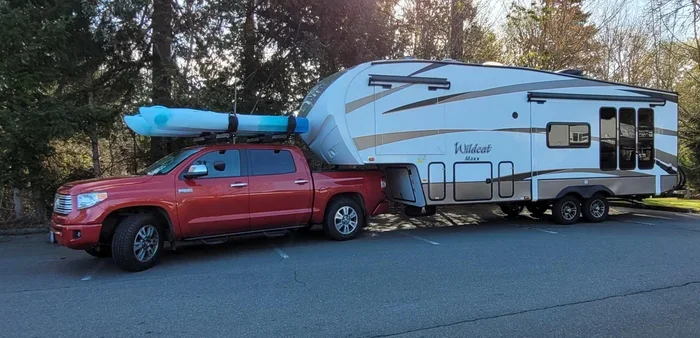
Can a Toyota Tundra Pull a Fifth Wheel Without Any Trouble
Yes, a Toyota Tundra can pull a fifth wheel trailer, and it does so quite well. With the right towing package and hitch setup, the Tundra handles fifth wheel loads with confidence. This guide covers everything you need to know about towing capacity, hitch types, and safety tips for your Tundra.
If you own a Toyota Tundra or you are thinking about buying one, you might be wondering whether this truck can handle a fifth wheel trailer. The short answer is yes. A Toyota Tundra can pull a fifth wheel without a lot of trouble, but there are a few things you need to know first.
Towing a fifth wheel is not the same as towing a regular trailer. The weight distribution is different. The hitch setup is different. And the driving experience feels completely different too. That is why it is so important to understand your truck’s limits and what you need to do to set things up the right way.
In this article, we will walk you through everything you need to know about Toyota Tundra towing capacity with a fifth wheel. We will cover hitch types, weight limits, safety tips, and common mistakes to avoid. Whether you are a first-time tower or a seasoned pro, this guide has something useful for you.
Key Takeaways
- Towing Capacity: A Toyota Tundra can tow between 8,000 and 10,200 pounds depending on the trim and engine.
- Fifth Wheel Hitches: You need a proper fifth wheel hitch installed in the truck bed for safe towing.
- Payload Matters: The payload rating of your Tundra affects how much weight you can safely tow.
- Towing Package: Toyota offers an optional towing package that enhances towing performance and safety.
- Safety First: Always check hitch weight, trailer brakes, and weight distribution before hitting the road.
- Regular Maintenance: Towing puts extra stress on your truck, so regular maintenance is essential.
📑 Table of Contents
- Understanding Toyota Tundra Towing Capacity
- What Is a Fifth Wheel and Why Does It Matter?
- How to Set Up Your Tundra for Fifth Wheel Towing
- Common Mistakes When Towing a Fifth Wheel with a Tundra
- Maintenance Tips for Towing with Your Tundra
- Expert Tips for a Smooth Fifth Wheel Towing Experience
- Is a Toyota Tundra the Right Truck for Fifth Wheel Towing?
Understanding Toyota Tundra Towing Capacity
The towing capacity of your Toyota Tundra depends on several factors. The trim level, the engine, the transmission, and whether you have the towing package all play a role. Let us break this down so you know exactly what your truck can handle.
What Affects Towing Capacity?
Not all Toyota Tundra models are created equal when it comes to towing. Here are the main factors that affect how much weight your truck can pull:
- Engine Type: The Tundra comes with a powerful V8 engine. Different model years may have slightly different engine outputs, which affects towing power.
- Transmission: An automatic transmission with towing mode helps manage gear shifts under heavy load.
- Axle Ratio: A higher axle ratio gives you more pulling power but may affect fuel economy.
- Towing Package: Toyota offers an optional towing package that includes a heavier-duty radiator, transmission cooler, and wiring harness.
- Payload Rating: This is the weight your truck can carry in the bed and on the hitch combined. It is just as important as towing capacity.
Towing Numbers by Trim
Here is a general look at what different Tundra trims can tow. Keep in mind that these numbers can vary slightly by model year:
- Base Models: Can tow around 8,000 to 8,500 pounds.
- Mid-Range Trims: Can tow between 9,000 and 9,500 pounds.
- Higher Trims with Towing Package: Can tow up to 10,200 pounds in some configurations.
These numbers matter because a typical fifth wheel trailer can weigh anywhere from 6,000 to 12,000 pounds. So you need to match your Tundra’s capacity to the weight of your specific trailer. Always check your owner’s manual for the exact numbers for your model year.
What Is a Fifth Wheel and Why Does It Matter?
A fifth wheel trailer connects to your truck using a special hitch that sits in the bed of the pickup truck. Unlike a standard trailer hitch that attaches under the bumper, a fifth wheel hitch sits between the cab and the bed. This design offers several advantages for truck towing and RV towing.
How a Fifth Wheel Hitch Works
The fifth wheel hitch uses a horseshoe-shaped coupling that locks onto a kingpin on the front of the trailer. This connection point is much more stable than a traditional ball hitch. It reduces sway and gives you better control while driving. That is why fifth wheels are so popular for large campers and horse trailers.
Fifth Wheel vs. Gooseneck
You might also hear about gooseneck hitches. Both fifth wheel and gooseneck hitches sit in the truck bed, but they connect differently. A gooseneck uses a ball and coupler, while a fifth wheel uses the kingpin system. For most RV owners, a fifth wheel provides a smoother ride and more stability. If you are comparing options, the Toyota Tundra towing setup works well with both, but the fifth wheel is the more common choice for campers.
Can a Regular Car Tow a Fifth Wheel?
If you are wondering whether other trucks or cars can handle a fifth wheel, the answer is usually no. Most regular cars and small SUVs do not have the payload or the bed space needed. For comparison, a vehicle like a Honda Civic or a Subaru Crosstrek simply does not have the towing ability for this kind of load. You really need a full-size pickup truck like the Tundra for the job.
Also, if you are curious about how much weight a regular car can carry in general, you can check out our article on how much weight a regular car can carry. It gives you a good baseline for understanding vehicle limits.
How to Set Up Your Tundra for Fifth Wheel Towing
Setting up your Toyota Tundra for fifth wheel towing is not just about bolting on a hitch. There are several steps you need to follow to make sure everything is safe and road-ready.
Step 1: Choose the Right Fifth Wheel Hitch
Not all fifth wheel hitches are the same. You need one that fits your Tundra’s bed and matches the weight of your trailer. Here are the main types:
- Fixed-Mount Hitches: These stay in the truck bed all the time. They are sturdy and simple but reduce bed space.
- Sliding Hitches: These slide forward and backward, giving you more bed flexibility. Great if you also use the bed for other things.
- Gooseneck-Compatible Hitches: Some hitches work with both fifth wheel and gooseneck setups. This gives you more versatility.
Step 2: Install a Weight Distribution System
A weight distribution system helps spread the trailer weight evenly across all four axles of your truck. This improves handling and reduces the risk of swaying. When you are towing a heavy fifth wheel, this is not optional. It is a must-have.
Step 3: Wire Up Your Trailer Lights
Your fifth wheel trailer needs working brake lights, turn signals, and running lights. Make sure you have a proper wiring harness connected to your Tundra. This is both a safety requirement and a legal requirement in most states.
Step 4: Check Your Tire Pressure
Towing adds a lot of weight to your truck. Before every trip, check your tire pressure, including the spare. Underinflated tires can overheat and fail when towing heavy loads. This is one of the most overlooked towing safety tips, but it is incredibly important.
Step 5: Test Your Setup Before the Trip
Before you hit the highway, do a test drive around your neighborhood. Check for any unusual noises, vibrations, or handling issues. Make sure the hitch is secure and the trailer is level. This simple step can prevent big problems on the road.
Common Mistakes When Towing a Fifth Wheel with a Tundra
Even experienced towers make mistakes. Here are the most common ones to avoid when towing a fifth wheel with your Toyota Tundra.
Overloading the Truck
This is the biggest mistake people make. Just because your Tundra can tow a certain weight does not mean you should max it out every time. You also need to account for the weight of passengers, gear, and fuel. Stay well within the payload rating to avoid strain on the engine, brakes, and suspension.
Ignoring Hitch Weight
The hitch weight is the downward force the trailer puts on the hitch. If this is too heavy, it can make the truck feel unstable. A good rule of thumb is to keep the hitch weight at about 15 to 25 percent of the total trailer weight.
Skipping the Break-in Period
If you have a new Tundra, follow the break-in period guidelines in your owner’s manual. Towing heavy loads during the break-in period can cause premature wear on the engine and transmission.
Not Checking the Trailer Brakes
Most fifth wheel trailers over a certain weight require their own brake system. Make sure your trailer brakes are working properly before every trip. This is not just about stopping power. It is about protecting your Tundra’s brakes from extra wear.
Forgetting About Wind Resistance
A large fifth wheel trailer catches a lot of wind. This can affect your fuel economy and make your truck harder to control in crosswinds. Reduce your speed in windy conditions and give yourself extra stopping distance.
If you are also interested in how other trucks compare when it comes to towing, you might find it interesting to compare with vehicles like the Subaru Crosstrek or Honda Civic, which have very different towing abilities. You can read more about what a Subaru Crosstrek can pull in our article on whether a Subaru Crosstrek can pull a trailer.
Maintenance Tips for Towing with Your Tundra
Towing puts extra stress on your Toyota Tundra. Regular maintenance becomes even more important when you are pulling a fifth wheel. Here are some tips to keep your truck in great shape.
Check the Fluids More Often
Towing heats up your engine and transmission faster than normal driving. Check your engine oil, transmission fluid, and coolant more frequently, especially during heavy towing seasons.
Inspect the Brakes Regularly
Your brakes work harder when you are towing a heavy load. Have them inspected at every service interval. Look for signs of wear like squealing or reduced stopping power.
Keep the Hitch Clean and Lubricated
Your fifth wheel hitch gets a lot of use and exposure to the elements. Clean it after every trip and lubricate the moving parts regularly. This prevents rust and ensures smooth operation.
Monitor Tire Wear
Towing causes uneven tire wear. Check your tire tread depth and alignment regularly. Replace tires that show signs of uneven wear or cracking.
Follow the Maintenance Schedule
Stick to the recommended maintenance schedule in your owner’s manual. If you tow frequently, you might need to service your truck more often than the standard intervals suggest.
Taking care of your Tundra is especially important if you plan to keep it for a long time. If you are curious about how many miles a Tundra can last, check out our article on whether 000 miles is a lot for a Toyota Tundra. It covers longevity and what to expect from this tough truck.
Expert Tips for a Smooth Fifth Wheel Towing Experience
Here are some expert tips that can make your towing experience safer and more enjoyable:
- Practice Backing Up: Backing up a fifth wheel takes practice. Find an empty parking lot and get comfortable with the turning radius before you hit a campsite.
- Use a Spotter: When backing up, always use a spotter. It makes a huge difference in avoiding obstacles and aligning the trailer.
- Plan Your Route: Avoid steep grades and tight turns when possible. Plan your route around roads that are towing-friendly.
- Drive Slower Than Normal: Towing a fifth wheel affects your stopping distance. Drive slower and leave more space between you and the vehicle ahead.
- Use Cruise Control Carefully: Do not use cruise control on hilly or winding roads when towing. It can cause speed fluctuations that are dangerous with a heavy load.
- Check Your Mirrors: Make sure you have good visibility of the trailer. Consider adding extended side mirrors if your current ones do not cover the full width of the trailer.
These tips might seem simple, but they make a big difference. Many towing problems come from inexperience, not equipment failure. The more prepared you are, the safer and more confident you will feel on the road.
Is a Toyota Tundra the Right Truck for Fifth Wheel Towing?
So, can a Toyota Tundra pull a fifth wheel? Absolutely. The Tundra is a capable full-size pickup truck that handles fifth wheel trailers well. It has the engine power, the payload capacity, and the bed space needed for a proper hitch setup.
That said, the Tundra is not the only option out there. If you are shopping around, you might also consider other trucks. For instance, a Nissan truck can also work well for towing, and you can read about whether a Nissan dealership services other brands like Infiniti in our article on whether a Nissan dealership can service Infiniti vehicles.
But if you are already a Toyota owner or you are looking for reliability and resale value, the Tundra is a strong choice. Just make sure you get the right trim, the towing package, and the proper fifth wheel hitch setup. Do your homework on the weight of your trailer, and you will be in great shape.
Towing a fifth wheel with a Tundra is a rewarding experience. It opens up the possibility of comfortable RV travel, hauling horse trailers, and carrying heavy equipment. With the right preparation and respect for your truck’s limits, you and your Tundra can handle it all.
Remember to always prioritize safety. Check your setup before every trip. Stay within your weight limits. Keep up with maintenance. And most importantly, enjoy the ride. A well-set-up Tundra and fifth wheel combo makes for some of the best adventures on the road.
Frequently Asked Questions
Can a Toyota Tundra pull a fifth wheel camper?
Yes, a Toyota Tundra can pull a fifth wheel camper as long as the camper weight is within the truck’s towing capacity. Most Tundra models can tow between 8,000 and 10,200 pounds, which covers many popular fifth wheel campers. Always check the specific weight of your camper against your Tundra’s towing specs.
Do I need a special hitch to tow a fifth wheel with a Tundra?
Yes, you need a fifth wheel hitch specifically designed for your Tundra. This hitch installs in the truck bed and connects to the kingpin on the front of the fifth wheel trailer. Make sure the hitch is rated for the weight of your trailer and is compatible with your Tundra’s bed size.
What is the maximum towing capacity of a Toyota Tundra?
The maximum towing capacity varies by model year and trim. Most recent Tundra models can tow up to 10,200 pounds when equipped with the towing package. Always refer to your owner’s manual or the door jamb sticker for the exact towing specs of your specific truck.
Can I tow a fifth wheel with a Tundra that does not have the towing package?
You can, but it is not recommended. The towing package includes a heavier-duty cooling system, transmission cooler, and wiring harness that make towing safer and more reliable. Without it, your Tundra may experience overheating or transmission strain under heavy loads.
How do I know if my trailer is too heavy for my Tundra?
Compare the total weight of your loaded trailer to your Tundra’s towing capacity and payload rating. If the trailer weight exceeds either number, it is too heavy. Also check the hitch weight to make sure it stays within the recommended 15 to 25 percent of the trailer’s total weight.
Is towing a fifth wheel with a Tundra safe for everyday use?
Yes, towing a fifth wheel with a Tundra is safe when done correctly. Make sure you have the right hitch, weight distribution system, and trailer brakes. Follow all safety guidelines, do not overload the truck, and keep up with regular maintenance. The Tundra is built to handle towing duties reliably.
=== CONCLUSION ===
A Toyota Tundra can absolutely pull a fifth wheel trailer without any trouble, provided you set things up correctly and stay within your truck’s limits. From choosing the right fifth wheel hitch to following proper maintenance practices, every step matters when it comes to safe and enjoyable towing.
Remember to always check your towing capacity, install a quality hitch, and follow the safety tips we covered in this guide. The Toyota Tundra is a strong, reliable truck that is well suited for fifth wheel towing. With the right preparation, you and your Tundra will be ready for many great adventures on the road.