Is VSC the Same as Traction Control on Your Daily Drive
VSC and traction control are not the same thing. They are two separate safety systems that work together to keep your car stable on the road. Traction control prevents wheel spin when you accelerate, while VSC (Vehicle Stability Control) helps you steer and stay on course. Understanding the difference can make you a smarter, safer driver every single day.
Have you ever wondered if VSC and traction control mean the same thing? Many drivers assume they are one and the same. After all, both systems deal with keeping your car under control. But here is the truth. Is VSC the same as traction control? No, they are not. They are two different systems with different jobs. Yet they work hand in hand to keep you safe on the road.
Understanding this difference matters more than you might think. Whether you drive a sedan, an SUV, or a truck, these systems affect how your car behaves. They kick in when you least expect it. On wet roads. On icy patches. When you hit a patch of gravel unexpectedly. Knowing how each one works helps you drive smarter and react better when things get tricky.
In this guide, we will break everything down in simple terms. You will learn what each system does, how they differ, and why both matter for your daily driving safety. We will also cover when to turn them off, what the warning lights mean, and common mistakes drivers make. By the end, you will know more about your car than most people do.
Key Takeaways
- VSC and traction control are different systems: each serves a unique purpose in keeping your vehicle safe.
- Traction control focuses on acceleration: it stops wheels from spinning when road grip is low.
- VSC works on both speed and direction: it uses sensors to keep your car on the path you want.
- Both systems rely on ABS sensors: they share components but apply them in different ways.
- You can turn traction control off: but VSC usually stays active unless manually disabled.
- Daily driving benefits from both: even on dry roads, these systems add a layer of safety.
- Warning lights mean something: knowing what each light indicates helps you respond quickly.
📑 Table of Contents
- What Is VSC and How Does It Work?
- What Is Traction Control and What Does It Do?
- Key Differences Between VSC and Traction Control
- How VSC and Traction Control Work Together
- Common Mistakes Drivers Make With These Systems
- What the Warning Lights Mean and When to Worry
- Expert Tips for Getting the Most From Your Stability and Traction Systems
- Key Takeaways
- Conclusion
What Is VSC and How Does It Work?
VSC stands for Vehicle Stability Control. It is an advanced safety system designed to help you keep your car on the right path. When you turn a steering wheel, you expect the car to follow. But sometimes, the back end slides out. Or the front wheels lose grip. That is when VSC steps in.
Here is how it works in simple terms. Your car has sensors that watch your steering angle, yaw rate, and wheel speed. Yaw rate is just a fancy word for how much your car rotates. If the sensors detect that your car is not going where you are pointing the steering wheel, VSC kicks in.
The Role of Sensors in VSC
VSC uses multiple sensors to monitor your vehicle at all times. These sensors include:
- Steering angle sensor — tracks where you are pointing the wheel.
- Yaw rate sensor — measures how your car rotates around its center.
- Wheel speed sensors — checks how fast each wheel is spinning.
- Lateral accelerometer — detects side-to-side movement of the car.
When VSC detects a mismatch between where you want to go and where the car is actually going, it takes action. It applies the brakes to individual wheels. It may also reduce engine power. This helps correct the slide and brings the car back in line with your steering input.
VSC in Everyday Driving
You might think VSC only matters on icy roads. But it helps in many everyday situations. Taking a sharp turn too fast? VSC can save you. Swerving to avoid a pothole? VSC helps keep the car stable. Even on a dry highway, sudden lane changes benefit from this system.
Most modern vehicles come with VSC as a standard feature. Toyota calls it VSC. Honda uses the term Electronic Stability Control or ESC. But the core idea is the same. The car watches your inputs and corrects problems before you even notice them.
What Is Traction Control and What Does It Do?
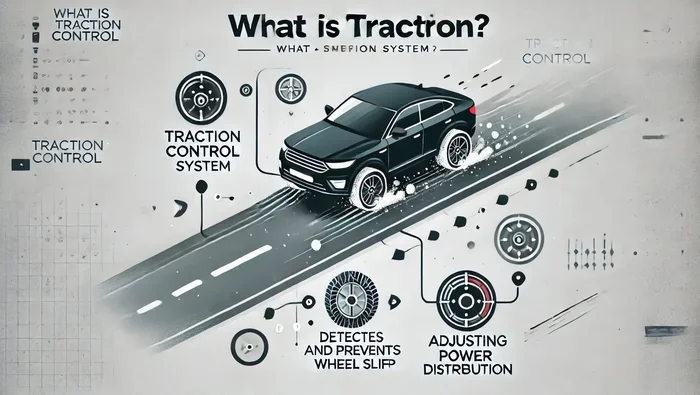
Traction control is a system that prevents your wheels from spinning when you accelerate. Think about hitting the gas on a wet road. The wheels might spin uselessly. Traction control steps in to stop that spinning. It does this by reducing engine power or applying the brakes to the spinning wheel.
The main goal of traction control is simple. It keeps the tires gripping the road when you press the accelerator. Without it, your wheels would just spin in place on ice or loose gravel. With it, you get better forward motion even in low-grip situations.
How Traction Control Works Under the Hood
Traction control shares some components with your Anti-lock Braking System, also known as ABS. Here is what happens step by step:
- The wheel speed sensors detect that one wheel is spinning faster than the others.
- The traction control module receives this data and decides a response is needed.
- The system either reduces fuel supply to the engine or applies the brake to the spinning wheel.
- The wheel slows down and regains grip on the road surface.
That process happens in milliseconds. You barely notice it. But the effect is real. Your car stays planted instead of fishtailing or spinning out.
When Traction Control Helps the Most
Traction control shines in specific situations. Here are some common ones:
- Driving on wet or icy roads — prevents wheel spin during acceleration.
- Starting on gravel or dirt — keeps the car from digging in and spinning.
- Quick launches from a stoplight — stops the tires from burning rubber unnecessarily.
- Driving on loose surfaces like sand or snow — maintains forward momentum without losing grip.
Most cars allow you to turn traction control off if needed. For example, if you are stuck in snow and need to rock the car back and forth, disabling traction control can help. But for 95% of driving, keeping it on is the smart choice.
Key Differences Between VSC and Traction Control
Now that you know what each system does, let us look at how they differ. The answer to is VSC the same as traction control becomes clear once you compare them side by side.
Scope of Control
Traction control focuses on one thing. It stops wheels from spinning when you accelerate. That is its job and it does it well. VSC takes a much broader approach. It watches your entire vehicle movement — speed, direction, rotation — and makes corrections as needed.
When Each System Activates
Here is a simple breakdown of when each system kicks in:
- Traction control activates when a wheel spins during acceleration.
- VSC activates when the car starts to slide or rotate beyond your intended path.
- Traction control works during acceleration only.
- VSC works during acceleration, braking, and turning.
Braking vs. Engine Control
Both systems can apply brakes. But they also differ in how they manage engine power. Traction control mainly reduces engine power to stop wheel spin. VSC uses brakes on specific wheels to correct the car’s direction. Sometimes VSC also reduces engine power, but that is just one of its many tools.
Comparison Table: VSC vs Traction Control
Here is a quick side-by-side comparison to make things crystal clear:
- Purpose: Traction control prevents wheel spin during acceleration. VSC keeps the car on your intended path.
- Sensors used: Both use wheel speed sensors. VSC adds steering angle, yaw rate, and lateral acceleration sensors.
- When active: Traction control works during acceleration. VSC works during acceleration, braking, and cornering.
- Corrective action: Traction control reduces throttle or brakes spinning wheels. VSC brakes individual wheels and may reduce throttle.
- Can you turn it off: Traction control can usually be turned off. VSC can also be disabled but often defaults back on.
- Primary benefit: Traction control gives better acceleration grip. VSC gives overall vehicle stability.
How VSC and Traction Control Work Together
Even though they are different systems, VSC and traction control work as a team. Think of traction control as a helper that focuses on the wheels. Think of VSC as the bigger picture system that watches the whole car.
When you accelerate on a slippery road, traction control stops the wheels from spinning. At the same time, VSC watches to make sure the car is not sliding sideways. If it detects a slide, it applies brakes to specific wheels to correct the path.
This teamwork is especially important in all-wheel drive vehicles. AWD systems send power to multiple wheels, but that does not mean you have infinite grip. VSC and traction control manage that power carefully. They ensure each wheel gets just the right amount of force to maintain control.
Rear-Wheel Drive and Front-Wheel Drive Considerations
The type of drivetrain your car has also affects how these systems work. Rear-wheel drive cars tend to have more oversteer, which means the back end wants to swing out. VSC is especially helpful here because it can brake the inner rear wheel to straighten the car.
Front-wheel drive cars are more prone to understeer, where the front pushes wide. Traction control helps here by keeping the front wheels from spinning and losing their grip. Both systems complement the drivetrain they are paired with.
Hill Descent and Slippery Road Conditions
Some vehicles add another layer of safety called hill descent control. This system works alongside VSC and traction control. It automatically applies the brakes when you are driving downhill on steep, slippery surfaces. You do not even need to touch the brake pedal. The car manages the speed for you.
On icy mountain roads or steep gravel hills, this combination of systems is a lifesaver. It keeps the car moving at a safe, controlled speed without you having to pump the brakes constantly.
Common Mistakes Drivers Make With These Systems
Even though VSC and traction control are designed to help, some drivers make mistakes that reduce their effectiveness. Here are a few to watch out for.
Turning Both Systems Off and Forgetting
Some drivers turn off traction control and VSC when they get stuck in snow or mud. That is fine. But the mistake is forgetting to turn them back on. Driving with both systems disabled on a wet highway is dangerous. You lose a major layer of protection every time you drive this way.
Relying Too Much on the Systems
VSC and traction control are not magic. They cannot defy the laws of physics. If you take a turn way too fast, no system can save you from a crash. These systems give you a safety buffer. They do not replace good driving habits. Always slow down for road conditions and never treat these systems as a reason to drive recklessly.
Ignoring the Dashboard Warning Lights
Your car has a traction control warning light and often a separate VSC warning light. If either one stays on, do not ignore it. A steady light usually means the system has detected a problem. A flashing light might mean the system is actively working to correct your vehicle’s path. Either way, get the system checked by a mechanic.
Driving on Wrong Tires With Active Safety Systems
Here is something many people overlook. VSC and traction control work best with properly maintained tires. Worn-out tires or mismatched tire sizes reduce the effectiveness of both systems. The sensors rely on consistent wheel speed data. If your tires are bald or unevenly worn, the readings become unreliable. Always keep your tires in good condition.
What the Warning Lights Mean and When to Worry
Your dashboard has a few lights related to these systems. Knowing what they mean can save you from a scary situation on the road.
The traction control light usually looks like a car with squiggly lines behind it. It may stay on if the system is turned off manually. It may also flash when the system is actively working to regain traction. If the light stays on constantly and you did not turn the system off, there could be a sensor issue or a module problem.
The VSC warning light often looks like a car with an arrow pointing down and squiggly lines around it. This light tells you that the stability control system is active or has a malfunction. If this light comes on suddenly while driving, pull over safely and restart the engine. If it stays on, visit a service center to get it diagnosed.
Sometimes both lights come on at the same time. This usually points to a shared component issue. Since both systems rely on wheel speed sensors, a faulty sensor can trigger both lights. A quick scan with an OBD2 scanner can often reveal the exact problem.
Expert Tips for Getting the Most From Your Stability and Traction Systems
Want to make the most of what your car offers? Here are some practical tips from the pros.
Keep Your Tires Maintained
Good tires are the foundation of every stability system. Check your tire pressure at least once a month. Rotate your tires every 5,000 to 7,000 miles. Replace tires when the tread wears down below 4/32 of an inch. This simple habit makes your VSC and traction control far more effective.
Drive Smooth and Predictable
These systems work best when your inputs are smooth. Avoid jerky steering, sudden hard braking, and aggressive throttle bursts. The smoother you drive, the less the systems need to intervene. And the smoother you drive, the safer everyone on the road is.
Know When to Turn Systems Off
There are a few situations where turning off traction control makes sense. Being stuck in deep snow or mud is the most common one. In those cases, wheel spin actually helps you gain momentum. Once you are free, turn the system back on immediately.
For VSC, the general rule is simple. Keep it on at all times unless your owner’s manual says otherwise. Some track-day enthusiasts turn it off for performance driving. But for daily commuting and road trips, VSC should always be active.
Read Your Owner’s Manual
Every car is a little different. Your owner’s manual explains exactly how the systems in your specific vehicle work. It tells you where the buttons are, what each light means, and what to do if a warning appears. Taking 20 minutes to read the relevant section is time well spent.
Key Takeaways
- VSC and traction control are different systems: each serves a unique purpose in keeping your vehicle safe.
- Traction control focuses on acceleration: it stops wheels from spinning when road grip is low.
- VSC works on both speed and direction: it uses sensors to keep your car on the path you want.
- Both systems rely on ABS sensors: they share components but apply them in different ways.
- You can turn traction control off: but VSC usually stays active unless manually disabled.
- Daily driving benefits from both: even on dry roads, these systems add a layer of safety.
- Warning lights mean something: knowing what each light indicates helps you respond quickly.
Conclusion
So, is VSC the same as traction control? The answer is a clear no. They are two distinct systems that each play a vital role in your vehicle’s safety. Traction control keeps your wheels from spinning when you accelerate. VSC keeps your car on track when your path starts to drift. Together, they form a powerful safety net that works quietly behind the scenes every time you drive.
Understanding how these systems work makes you a more confident driver. You will know when they are helping you and when to be cautious yourself. You will also know what those dashboard lights mean and when to get help.
The next time you get behind the wheel, remember that your car has your back. The VSC and traction control systems are always watching, always ready to act. Trust them. Respect them. And drive with the knowledge that you are safer on the road because of them.
Take a few minutes today to check your tire pressure and learn where the system controls are in your vehicle. Small steps like these add up to a much safer driving experience for you and everyone around you.
Frequently Asked Questions
Can you drive safely with VSC and traction control turned off?
You can drive with both systems off, but it is not recommended for everyday use. These systems provide critical stability and grip assistance, especially on slippery roads. Only turn them off in specific situations like being stuck in snow or mud, and turn them back on as soon as you are free.
What causes the VSC and traction control lights to come on at the same time?
When both lights appear together, it often points to a shared component issue. Faulty wheel speed sensors are the most common culprit since both systems rely on them. A malfunction in the ABS module or low brake fluid can also trigger both lights simultaneously.
Does turning off traction control help on icy roads?
In most cases, keeping traction control on helps even on icy roads. However, if your wheels are stuck and need to spin to gain momentum, turning it off temporarily can help. This is useful when trying to get unstuck from snow or ice. Once you are moving, turn it back on right away.
Is VSC the same as electronic stability control?
Yes, VSC and Electronic Stability Control (ESC) are essentially the same thing. Different car manufacturers use different names for the same technology. Toyota uses VSC, while other brands call it ESC or ESP. The function and purpose are identical across all these names.
Do all new cars come with VSC and traction control?
Most modern vehicles come with both systems as standard features. In the United States, the government requires ESC on all new passenger vehicles. Traction control is typically bundled with ESC and ABS as part of the car’s overall safety package.
Can bad tires affect VSC and traction control performance?
Absolutely. Worn or improperly inflated tires reduce the effectiveness of both systems. These systems rely on consistent wheel speed data from your tires. If your tires are bald, unevenly worn, or mismatched, the sensors cannot provide accurate readings. Always maintain your tires for optimal system performance.