Can I Change My ECU Myself Everything You Should Know
You can change your ECU yourself, but it comes with risks and challenges. This guide covers everything from understanding what an ECU does to step-by-step replacement instructions. Whether you are a DIY enthusiast or just curious, you will find practical advice, common mistakes, and expert tips to help you decide if this is the right project for you.
Your car’s engine control unit is the brain behind everything. It controls fuel injection, ignition timing, and emissions. When it starts to fail, your car may run poorly or not start at all. Many car owners wonder, can I change my ECU myself? The short answer is yes. But the full answer involves a lot of details you need to understand first.
This guide walks you through every step of the process. You will learn what an ECU does, how to tell when it needs replacing, and whether you should tackle the job yourself. We also cover programming, common mistakes, and when to call in a pro. By the end, you will feel confident in your decision.
Changing your ECU is not like swapping out a spark plug. It involves software, wiring, and compatibility checks. But with patience and the right guidance, it is absolutely doable. Let us dive in.
Key Takeaways
- It is possible to change your ECU yourself: With the right tools and knowledge, many car owners handle ECU swaps at home.
- ECU compatibility matters a lot: Not every ECU works with every vehicle. You must match the part number and software.
- Programming and coding are essential steps: A new ECU needs to be programmed to your specific car before it will run properly.
- Common mistakes can cause serious damage: Wrong wiring, incompatible software, and skipping the immobilizer pairing are frequent errors.
- You need specific tools: An OBD2 scanner, diagnostic software, and basic hand tools are must-haves for this job.
- Know when to call a professional: If you feel unsure at any point, a qualified mechanic can save you time and money.
📑 Table of Contents
- What Is an ECU and Why Does It Matter?
- Signs Your ECU Needs Replacement
- Can You Actually Change Your ECU Yourself?
- Step-by-Step Guide to Changing Your ECU
- ECU Replacement: DIY vs Professional
- Common Mistakes to Avoid When Changing Your ECU
- When Should You Call a Professional?
- ECU Programming and Coding After Replacement
- After Changing Your ECU: What to Expect
- Cost of Changing Your ECU
- Final Thoughts on Changing Your ECU Yourself
What Is an ECU and Why Does It Matter?
The engine control unit is often called the car’s computer. It manages hundreds of functions every second. Without a working ECU, your engine simply will not run correctly.
How the ECU Controls Your Engine
The ECU reads data from sensors all over your engine. It uses this data to decide how much fuel to inject and when to fire the spark plugs. Here are some key tasks the ECU handles:
- Fuel injection timing: It controls exactly when fuel enters the engine.
- Ignition timing: It decides when the spark plug fires.
- Idle speed control: It keeps your engine running smoothly at a stop.
- Emissions management: It monitors and reduces harmful exhaust gases.
- Boost pressure: In turbocharged engines, it controls how much boost the turbo produces.
Modern cars have multiple control modules. But the main ECU is the most critical. When it fails, you may notice rough idling, poor fuel economy, or a check engine light. In severe cases, the car will not start at all.
Why ECU Failure Happens
ECUs do not fail every day. But when they do, it is often due to one of these causes:
- Water damage: Moisture getting into the unit can short out circuits.
- Heat stress: Prolonged exposure to high engine temperatures can wear out components.
- Voltage spikes: Jump-starting a car incorrectly can fry the ECU.
- Age and wear: After many years, internal capacitors and circuits degrade.
- Power supply issues: A weak battery or bad alternator can cause voltage irregularities.
Understanding why your ECU failed helps you choose the right replacement. It also helps you prevent the same problem from happening again.
Signs Your ECU Needs Replacement
How do you know if your ECU is the real problem? Many ECU symptoms mimic other issues. That is why proper diagnosis is so important.
Common Symptoms of a Failing ECU
Watch for these warning signs. If you notice several of them together, your ECU may be failing:
- The check engine light stays on even after resetting it.
- The car stalls randomly, especially at idle or under load.
- The engine cranks but will not start.
- Fuel economy drops significantly without any obvious reason.
- The car runs rough or misfires frequently.
- You experience sudden loss of power while driving.
- The transmission shifts erratically or into limp mode.
If you see these symptoms, do not jump to conclusions. Have a mechanic run a diagnostic scan first. The error codes can point you toward the real cause. Sometimes a simple sensor failure mimics ECU problems.
How to Confirm It Is the ECU
Before you buy a new ECU, make sure it is actually the problem. Here is what you should do:
- Check all the sensors and wiring first.
- Look for corroded connectors or damaged wires.
- Run a full diagnostic scan with an OBD2 scanner.
- Check for error codes related to the ECU itself.
- Have a professional verify the diagnosis if you are unsure.
Skipping this step can lead you to buy a new ECU you do not need. Save your money and be thorough.
Can You Actually Change Your ECU Yourself?
This is the big question. And the honest answer is: it depends. Many car owners successfully swap their own ECU. But the job requires some technical knowledge and the right tools.
What Skills Do You Need?
You do not need to be a professional mechanic. But you should be comfortable with the following tasks:
- Basic engine bay work, like removing covers and disconnecting batteries.
- Reading a wiring diagram to identify the correct plugs.
- Using an OBD2 scanner to clear codes and program the new unit.
- Following detailed instructions from a service manual.
- Troubleshooting basic electrical issues.
If you have done even simple repairs like changing a battery or replacing a sensor, you probably have enough skill. The key is patience and attention to detail.
What Tools Will You Need?
Here is a list of tools and equipment you will need for an ECU swap:
- OBD2 scanner: A quality scanner that supports ECU programming. Brands like Autel and Launch are popular choices.
- Basic hand tools: Socket set, screwdrivers, and pliers.
- Multimeter: To test voltage and check connections.
- Service manual: Your specific car’s manual with wiring diagrams.
- Anti-static wrist strap: To protect sensitive electronics from static damage.
- Dielectric grease: To protect connectors from moisture and corrosion.
Having the right tools makes the job much easier. It also reduces the risk of mistakes.
Can I Change My ECU Myself? The Real Answer
So, can I change my ECU myself? Yes, you can. But you need to be realistic about the challenges. The physical swap is usually straightforward. The real difficulty comes in programming and coding the new unit to match your car.
If you buy a used or aftermarket ECU, it will need to be flashed with the correct software. This process requires specialized equipment and knowledge. Some ECUs come pre-programmed for your vehicle, which makes the job much easier.
For most DIYers, the physical installation takes about one to two hours. The programming step can take longer, especially if you are doing it for the first time.
Step-by-Step Guide to Changing Your ECU
Ready to try it yourself? Here is a detailed walkthrough of the ECU replacement process.
Step 1: Gather Your Information
Before you touch anything, gather the right information. You need to know:
- The exact part number of your current ECU.
- The correct replacement ECU for your vehicle year, make, and model.
- Any software or firmware requirements for the new unit.
- Your vehicle identification number (VIN), which you will need for programming.
Write all of this down. It will save you a lot of confusion later.
Step 2: Disconnect the Battery
Safety first. Always disconnect the negative battery terminal before working on any electrical component. This prevents short circuits and protects both you and your car’s electronics.
Wait at least five minutes after disconnecting. This allows the capacitors in the ECU to fully discharge.
Step 3: Locate and Remove the Old ECU
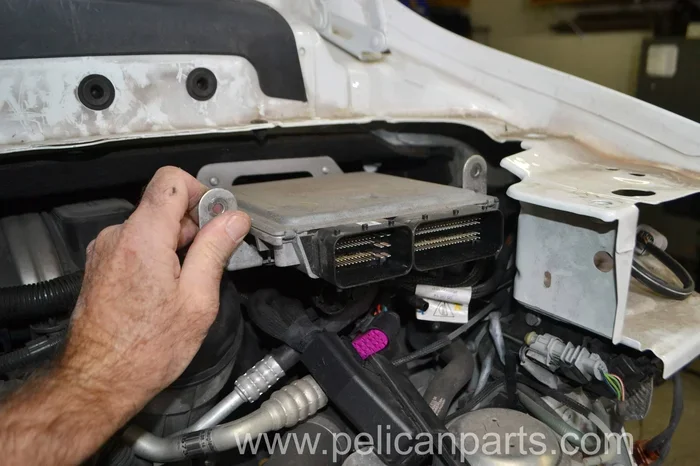
Find the ECU in your engine bay. It is usually mounted near the firewall or behind the battery. Consult your service manual for the exact location.
Carefully disconnect the wiring harness from the ECU. Take note of how each connector is seated. Some connectors have locking clips that need to be pressed before pulling them out.
Remove any mounting bolts or brackets holding the ECU in place. Gently pull the unit out and set it aside.
Step 4: Install the New ECU
Place the new ECU in the same position as the old one. Secure it with the mounting brackets and bolts.
Reconnect all the wiring harnesses carefully. Make sure each connector clicks into place fully. Double-check your work before moving on.
Reconnect the battery and turn the ignition to the “on” position without starting the engine. Listen for any unusual sounds. Check that the dashboard lights come on normally.
Step 5: Program and Code the New ECU
This is the most critical step. The new ECU needs to be programmed to your specific vehicle. Here is what you need to do:
- Connect your OBD2 scanner to the diagnostic port.
- Enter the vehicle information and VIN into the scanner software.
- Follow the on-screen instructions to flash the new ECU.
- Clear any error codes that appear after programming.
- Start the engine and let it idle for a few minutes.
- Take a short test drive and monitor for any issues.
If you do not have access to programming software, you can take the new ECU to a local auto parts store or mechanic. Many shops will program it for a small fee.
ECU Replacement: DIY vs Professional
Not sure if you should do it yourself or pay someone else? Let us compare the two options.
| Factor | DIY Replacement | Professional Replacement |
|---|---|---|
| Cost | Lower (no labor charges) | Higher (includes labor) |
| Time | 2-4 hours | 1-2 hours |
| Skill Required | Intermediate | None needed |
| Risk of Error | Higher if inexperienced | Low |
| Programming | You handle it yourself | Shop handles it |
| Warranty | Varies by parts supplier | Usually includes a guarantee |
| Learning Experience | High | None |
As you can see, DIY saves money but requires more effort and skill. Professional service is faster and safer but costs more. Choose the option that fits your comfort level and budget.
Common Mistakes to Avoid When Changing Your ECU
Even experienced DIYers make mistakes. Here are the most common errors and how to avoid them.
Skipping the Immobilizer Pairing
Many modern vehicles have an immobilizer system. This security feature prevents the engine from starting unless the ECU recognizes the key’s transponder. If you do not pair the new ECU with your key, the car will not start.
Some ECUs require a dealer-level tool to re-program the immobilizer. Always check for this requirement before you begin.
Using an Incompatible ECU
Not all ECUs are interchangeable. Even ECUs from the same vehicle model year can differ based on engine type and trim level. Always verify the part number matches your car exactly.
Buying a used ECU from a junkyard can be risky. You have no way of knowing what software it contains. A new or refurbished unit with the correct software is always the safer choice.
Forgetting to Reset Adaptation Values
After installing a new ECU, the adaptation values need to be reset. These are learned values that the ECU stores over time, like idle speed and fuel trim. Without resetting them, the engine may run poorly until the ECU relearns these values.
Not Clearing Error Codes After Installation
After programming the new ECU, always clear the error codes. Old codes from the previous ECU can linger and cause confusion during troubleshooting.
When Should You Call a Professional?
There is no shame in calling a professional. In fact, knowing when to ask for help is a sign of smart decision-making. Here are situations where you should definitely seek expert help:
- The ECU programming requires dealer-level software or tools.
- Your vehicle has a complex immobilizer system that is difficult to pair.
- You have tried everything and the car still will not start.
- You are not comfortable working with electrical components.
- The replacement ECU does not work after following all the steps correctly.
A professional mechanic has the experience and tools to handle tricky situations. They can also diagnose problems you might miss. Sometimes paying a little extra saves you from costly mistakes.
ECU Programming and Coding After Replacement
Programming the new ECU is the step that separates a simple swap from a complex repair. Here is what you need to know about this process.
What Does ECU Programming Involve?
Programming means loading the correct software onto the new ECU. This software tells the ECU how to communicate with your specific vehicle. It includes settings for your engine size, transmission type, and emissions equipment.
The process typically involves:
- Connecting the OBD2 port with a compatible scanner.
- Entering the VIN and vehicle details.
- Downloading the correct software file to the ECU.
- Verifying the programming was successful.
- Testing the vehicle to ensure everything works properly.
Can You Program an ECU at Home?
Yes, if you have the right equipment. An advanced OBD2 scanner with ECU programming capabilities is essential. Devices from brands like Autel MaxiSys and Launch X431 can handle most programming tasks.
However, some vehicles require proprietary software that is only available to dealers. In those cases, you will need to visit a dealership or a specialized shop.
How Long Does Programming Take?
Programming typically takes 30 minutes to two hours. The time depends on your vehicle make and model. Some European cars take longer due to their complex systems.
Do not rush this step. A failed programming attempt can leave you with a non-functional ECU and a car that will not start.
After Changing Your ECU: What to Expect
Once the new ECU is installed and programmed, what should you expect? Here is a quick rundown of what happens after the swap.
- The engine may idle slightly rough for the first 20-30 minutes as the ECU relearns adaptation values.
- You may need to reset your radio presets, clock, and power window calibration.
- The check engine light may turn on briefly. This is normal if you cleared the codes during installation.
- Fuel economy may improve if the old ECU was malfunctioning.
- Drive carefully for the first few miles and monitor for any warning lights.
Give your car some time to adjust. Most issues resolve themselves within a few days of driving.
Cost of Changing Your ECU
Understanding the costs helps you budget for this project. Here is a breakdown of what to expect.
Replacement ECU unit: $150 to $1,200 depending on the vehicle. Used ECUs are cheaper but may not come with a warranty. New OEM units are more expensive but offer reliability.
Programming costs: If you do it yourself, there is no extra cost. If you pay a shop, expect $50 to $200 for programming services.
Total DIY cost: $150 to $1,200 for the ECU alone.
Total professional cost: $200 to $1,400 including parts and labor.
Doing it yourself can save you $50 to $200 or more. But only if you are confident in your abilities and have the right tools.
Final Thoughts on Changing Your ECU Yourself
So, can I change my ECU myself? Yes, you absolutely can. This is a project that many car owners complete successfully every year. But it is not without its challenges.
The physical installation is straightforward and well within the reach of most DIYers. The programming and coding step is where things get tricky. If you are not comfortable with that part, there is no harm in getting professional help for just that step.
Take your time, follow the instructions carefully, and do not skip any steps. A rushed ECU replacement can lead to more problems and higher costs in the long run.
Whether you choose to do it yourself or hire a professional, the most important thing is that your car gets the care it needs. A properly functioning ECU means better performance, improved fuel economy, and a more reliable driving experience.
Now that you have all the information you need, you can make an informed decision. Good luck with your project, and drive safely!
Frequently Asked Questions
Is it hard to change an ECU yourself?
The physical swap is not very difficult. It usually takes one to two hours and requires basic tools. The programming step is more challenging and requires an OBD2 scanner with ECU flashing capability. If you are comfortable with basic car repairs, you can likely handle the swap.
Do I need to program a new ECU after installation?
Yes, almost always. A new ECU needs to be programmed with the correct software for your specific vehicle. Without programming, the car will not start or will run very poorly. Some ECUs come pre-programmed, but this is less common.
How much does it cost to replace an ECU?
The ECU unit itself costs between $150 and $1,200 depending on your vehicle. If you pay a shop for programming and installation, add $50 to $200 for labor. Doing it yourself saves the labor cost entirely.
Can a wrong ECU damage my car?
Using an incompatible ECU can cause serious issues. The engine may not start, or it could run poorly and damage other components over time. Always verify the part number and software compatibility before purchasing a replacement ECU.
How long does an ECU replacement take?
The physical installation takes about one to two hours. Programming the new ECU can add another 30 minutes to two hours. For a first-time DIYer, plan for a full day to be safe and avoid rushing.
Will I lose any settings after changing my ECU?
Yes, you may lose some settings like radio presets, clock, power window calibration, and adaptive driving data. Most of these reset automatically after driving for a short while. The check engine light may also come on briefly but should turn off after the new ECU is programmed.