Why Is My Tire Pressure Light On but Tires Are Fine
Your tire pressure light can turn on even when your tires are perfectly fine. The most common reasons include a TPMS sensor battery that needs replacing, cold weather causing temporary pressure drops, or a sensor malfunction. In most cases, you can reset the tire pressure light yourself and get back on the road safely.
h2 Why Is My Tire Pressure Light On but Tires Are Fine?
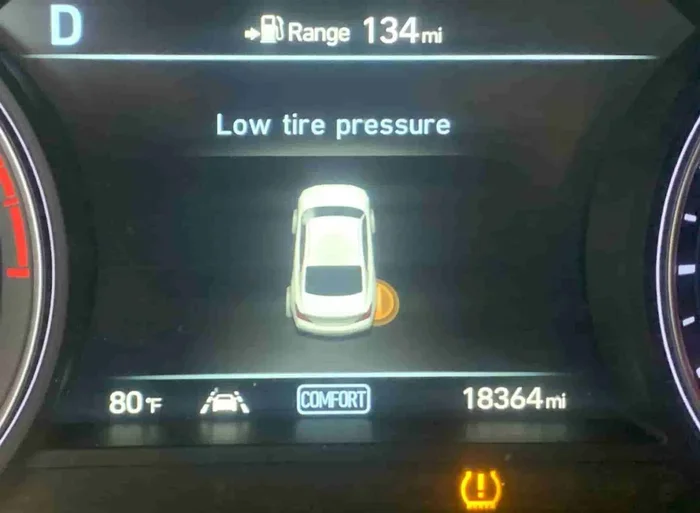
p You are driving down the road, minding your own business, when suddenly a yellow light pops up on your dashboard. It looks like a horseshoe with an exclamation point in the middle. You pull over, check your tires, and they look perfectly fine. So why is the tire pressure light on?
p This is one of the most common dashboard warning lights that drivers encounter. And the good news is that it is usually nothing to panic about. The tire pressure monitoring system, or TPMS, is designed to keep you safe. But sometimes it sends false signals.
p In this article, we will walk through every reason this happens. We will also show you how to fix it and when you should actually worry. By the end, you will know exactly what to do the next time that light comes on.
h2 What Is the Tire Pressure Monitoring System?
p Before we dive into the causes, let us quickly understand how the system works. Your vehicle has a TPMS built into it. This system uses sensors inside each tire to monitor the air pressure. If the pressure drops below a safe level, the light turns on.
p The TPMS sensor sits inside the tire, usually attached to the valve stem. It sends wireless readings to your car’s computer. If the readings fall outside the normal range, the tire pressure warning light activates on your dashboard.
h3 Direct Tire Pressure Sensor vs. Indirect System
p There are two types of systems in use today. The first is the direct TPMS. It uses a physical sensor inside each tire to measure pressure. This is the most common type in modern vehicles.
p The second is the indirect TPMS. This system does not use a physical sensor. Instead, it uses the wheel speed sensors from your anti-lock braking system. It compares how fast each wheel is spinning. If one wheel spins faster than the others, the system assumes that tire has low pressure.
p Both systems can trigger false alerts. Understanding which one your vehicle has helps you troubleshoot more effectively.
h2 Top Reasons the Tire Pressure Light Comes On When Tires Are Fine
p So what makes the light turn on even though your tires are in good shape? Let us go through the most common causes.
h3 Cold Weather and Temperature Drops
p This is the number one reason drivers see the tire pressure light come on unexpectedly. When the temperature drops, the air inside your tires contracts. This reduces the pressure. A drop of just 10 degrees Fahrenheit can lower your pressure by about one PSI.
p If the weather turns cold overnight, you might wake up to a glowing warning light. Your tires are not actually low on air. The pressure just dropped enough to trigger the sensor. This is very common in fall and winter months.
p Quick Tip: Check your tire pressure on a cool morning before you drive. Driving warms up the tires and can temporarily raise the pressure, giving you a false sense that everything is fine.
h3 TPMS Sensor Battery Is Dying
p Every TPMS sensor has a small battery inside it. These batteries typically last between five and ten years. Once the battery dies, the sensor cannot send accurate readings. When this happens, the tire pressure warning light turns on and stays on.
p You might notice the light flickering on and off before it stays on constantly. This usually means the sensor battery is running low. The only fix is to replace the sensor or its battery, depending on the design.
p Quick Tip: If your vehicle is more than seven years old and the light keeps coming back, a dying sensor battery is very likely the cause.
h3 Sensor Malfunction or Damage
p Sometimes the sensor itself fails. Road debris, potholes, and corrosion can damage the TPMS sensor. A damaged sensor sends incorrect data to your car’s computer. This results in a false alert.
p Valve stems can also crack or leak over time. Even a tiny leak in the valve stem can cause the sensor to report low pressure. The tire itself might be fine, but the sensor reading is wrong.
p If you recently had your tires rotated or changed, a sensor might have been bumped or damaged during service. Always ask your technician to check the sensors after tire work.
h3 Recent Temperature or Altitude Changes
p Did you just drive from a warm coastal area to a cold mountain town? Or did you fly to a different elevation? Changes in altitude and temperature can confuse your TPMS. The system recalibrates slowly, and the light might stay on for a while.
p This is perfectly normal and usually resolves on its own after a few miles of driving. If it does not, a simple reset usually fixes the problem.
h3 Incorrect Tire Pressure After Maintenance
p If you recently got your tires rotated, balanced, or replaced, the TPMS might need to be reset. Some tire shops remove the sensors and forget to recalibrate them. This causes the light to stay on even when the pressure is correct.
p Always ask your tire shop to perform a TPMS reset after any tire service. It takes just a few minutes and saves you from a glowing dashboard light for days.
h2 How to Check Your Actual Tire Pressure
p Before you do anything else, always verify the pressure with a tire pressure gauge. Do not trust the light alone. Here is how to do it the right way.
p First, find the recommended PSI for your vehicle. You can find this on a sticker inside the driver’s door frame. It is also listed in your owner’s manual. Do not use the number printed on the tire itself. That number is the maximum pressure, not the recommended pressure.
p Next, remove the valve cap from the tire. Press the gauge firmly onto the valve stem. Read the number on the gauge. Compare it to the recommended PSI. If the reading is within one PSI of the recommended number, your tire is fine.
p Quick Tip: Keep a portable tire pressure gauge in your glove box. Checking your pressure once a month takes only a few minutes and can prevent many issues.
h2 How to Reset the Tire Pressure Light
p Once you have confirmed that your tires are at the right pressure, you can reset the light. The process varies by vehicle, but here are the general steps.
p Start by turning the ignition to the “on” position. Do not start the engine. Look for the TPMS reset button. It is usually located under the steering column, near the dashboard. Some vehicles have it inside the glove box.
p Press and hold the reset button until the tire pressure warning light blinks three times. Release the button. Start the engine and let the car idle for about 20 minutes. The system should recalibrate.
p If your vehicle does not have a reset button, you can often reset the system through the infotainment screen. Go to the vehicle settings menu, find the TPMS option, and select “reset.”
p Quick Tip: Drive your vehicle at a steady speed of 50 miles per hour or higher for about 10 minutes after resetting. This helps the system relearn the correct pressure values.
p If the light comes back on after resetting, there may be a deeper issue. At that point, it is time to see a professional.
h2 When to See a Mechanic About the Tire Pressure Light
p Most of the time, a tire pressure light that stays on is an easy fix. But there are moments when you should not ignore it. Here are the signs that it is time to visit a mechanic.
ul>
p A mechanic can run a diagnostic scan to read the TPMS sensor codes. This tells you exactly which sensor is failing and whether it needs replacement.
p Quick Tip: If you are unsure, you can always stop by a tire shop or auto parts store. Many of them will check your TPMS sensors for free.
h2 Can You Check Tire Pressure on the Dashboard?
p Many modern vehicles now let you view your tire pressure readings directly on the dashboard or infotainment screen. This feature makes it much easier to monitor your tire health without pulling out a gauge.
p You can usually find this information in the vehicle settings menu. Look for a section labeled “Vehicle Status,” “Tire Pressure,” or “TPMS.” Some vehicles display real-time pressure readings for each tire individually.
p This is a great feature to use if you suspect a problem but are not sure. It gives you a more precise reading than just the warning light. However, keep in mind that the dashboard readings are only as accurate as the sensors themselves.
p If you want to learn more about checking tire pressure through your dashboard, you can read our guide on Can You Check Tire Pressure On The Dashboard. It covers the topic in detail.
h2 How to Prevent False Tire Pressure Alerts
p The best way to deal with a tire pressure light is to prevent false alerts from happening in the first place. Here are some simple steps you can take.
ol>
p These small habits go a long way in keeping your TPMS working correctly and your dashboard light off when your tires are fine.
h2 Expert Insights on TPMS Reliability
p Expert Insight: According to automotive technicians, the majority of false tire pressure light alerts are caused by temperature changes or aging sensor batteries. A TPMS sensor typically lasts about 10 years or 100,000 miles, whichever comes first. After that, the battery is almost certainly weak.
p Technicians also recommend not ignoring the light, even if the tires look fine. While a false alert is common, a real pressure issue can be dangerous. Low tire pressure leads to poor fuel economy, uneven tire wear, and in extreme cases, a blowout.
p If you are unsure whether the alert is real or false, it is always better to check. A few minutes with a tire pressure gauge can save you from a potential safety hazard.
h2 Key Takeaways
ul>
h2 Conclusion
p A tire pressure light on when your tires are fine can be frustrating. But it is usually not a sign of a serious problem. Most of the time, it is caused by cold weather, a dying TPMS sensor battery, or a simple need to reset the system.
p The key is to stay calm, check your actual tire pressure with a gauge, and reset the light if everything looks good. If the light keeps coming back, a mechanic can diagnose the TPMS sensor and recommend the right fix.
p Taking care of your tires is one of the easiest ways to keep your vehicle safe and running smoothly. And understanding your tire pressure monitoring system puts you ahead of most drivers. The next time that yellow light pops up, you will know exactly what to do.
p If you want to learn more about diagnosing tire and dashboard warning issues, you can also check out our article on Can I Fix My Own Tire Pressure Sensor for hands-on tips. And for more on dashboard indicators, our guide on Can I Drive With Maintenance Required Light On Toyota covers related warning light concerns.
Key Takeaways
- Temperature changes: Cold weather can temporarily lower tire pressure and trigger the light.
- TPMS sensor battery: The battery inside the sensor typically lasts 5-10 years and then needs replacement.
- Sensor malfunction: A faulty TPMS sensor can send false readings to your dashboard.
- Reset is simple: Most vehicles let you reset the tire pressure light with a few button presses.
- Check actual pressure: Always verify tire pressure with a tire pressure gauge before assuming there is a real problem.
- Know when to see a pro: If the light stays on after resetting, a mechanic should inspect the TPMS system.
Frequently Asked Questions
h3 Why Does My Tire Pressure Light Come On in Cold Weather?
Cold weather causes the air inside your tires to contract, which lowers the pressure. Even a small drop can trigger the TPMS sensor and light up your dashboard. Once the tires warm up from driving, the pressure rises and the light usually goes off on its own.
h3 How Do I Know if My TPMS Sensor Battery Needs Replacement?
Most TPMS sensor batteries last between five and ten years. If your tire pressure light keeps coming back and your tires are at the right pressure, the sensor battery is likely dying. A mechanic can run a diagnostic scan to confirm which sensor needs a new battery.
h3 Can I Drive with the Tire Pressure Light On?
It is generally safe to drive a short distance if your tires look and feel fine. However, the light means your vehicle thinks the pressure is low. You should check the pressure with a gauge as soon as possible and address the issue. Avoid long highway drives until you are sure the tires are properly inflated.
h3 How Much Does It Cost to Replace a TPMS Sensor?
Replacing a single TPMS sensor typically costs between 50 and 100 dollars per sensor, including parts and labor. The cost varies depending on your vehicle make and model. Some older vehicles have replaceable batteries inside the sensor, which is cheaper than replacing the whole unit.
h3 How Do I Reset My Tire Pressure Light After Checking the Tires?
Turn the ignition to the “on” position without starting the engine. Find the TPMS reset button, usually located under the steering column or inside the glove box. Press and hold it until the warning light blinks three times, then release. Start the engine and drive for about 20 minutes to let the system recalibrate.
h3 Is It Safe to Ignore a Flashing Tire Pressure Light?
No, a flashing tire pressure light is different from a solid light. A flashing light usually indicates a serious malfunction in the TPMS system itself. You should have the vehicle inspected by a mechanic as soon as possible to avoid potential safety risks.