What Is the Number One Most Depreciating Car Model
So, what is the number one most depreciating car? The answer might surprise you — certain luxury sedans and early electric vehicles top the list with staggering value loss. Understanding car depreciation rate helps you make smarter buying decisions and avoid financial pitfalls.
Let us talk about something that hits every car buyer hard — car depreciation. You buy a shiny new ride, and within months, it is worth thousands less. It is wild. But have you ever wondered which vehicle loses value the fastest? What is the number one most depreciating car model, and why does it happen?
The truth is, depreciation is the silent killer of your wallet. Most people focus on the sticker price, monthly payments, and fuel costs. But the real cost of owning a car comes down to how much value it sheds over time. Some cars hold their value like gold. Others? They plummet faster than you can say “used car market.”
In this deep dive, we will explore the fastest depreciating vehicles, break down the numbers, and share practical tips to help you avoid the worst depreciation traps. Whether you are buying your first car or shopping for a second ride, this guide has you covered.
Key Takeaways
- Luxury and EV models depreciate fastest: Cars like the BMW 7 Series and Nissan Leaf lose value rapidly in the first few years.
- Depreciation hits hardest in year one: A new car can lose 20% of its value the moment you drive it off the lot.
- Vehicle type matters: Sedans and sports cars depreciate faster than trucks and SUVs.
- You can minimize loss: Smart buying habits, proper maintenance, and timing your purchase reduce vehicle value loss significantly.
- Some cars hold value surprisingly well: Certain trucks and classic models defy the rapid depreciation trend.
- Check the data before you buy: Using a car depreciation calculator helps you understand long-term costs.
📑 Table of Contents
The Shocking Reality of Car Depreciation
Here is a number that might make you do a double take. The average new car loses about 20% to 30% of its value in the very first year. That means a $40,000 vehicle could be worth just $28,000 the moment you drive it off the dealer lot. Ouch.
But not all cars depreciate at the same speed. Some models lose value gradually over five or six years. Others crash in value like a stone dropped in water. Understanding the car depreciation rate for different models is the first step toward making a smart purchase.
So, what causes this massive new car value drop? It comes down to a mix of factors. Brand reputation, market demand, build quality, and even the type of fuel your car uses all play a role. Luxury brands tend to depreciate faster because their maintenance costs are high, and the market gets flooded with used models. Early electric vehicles faced a similar problem as battery technology evolved quickly.
The good news? You do not have to accept depreciation as an unavoidable cost. With the right knowledge, you can pick a car that loses less value and save thousands of dollars over time.
Why Depreciation Matters More Than You Think
Most buyers focus on the monthly payment. They forget to think about the total cost of ownership. But car ownership cost includes more than just gas and insurance. It includes the money you lose every year as your car becomes less valuable.
Think about it this way. You buy a car for $35,000. Five years later, it is worth $15,000. That is $20,000 in lost value. You did not “spend” that money in the traditional sense, but it is gone from your financial picture. That is the real cost of driving a rapidly depreciating vehicle.
Why Do Some Cars Lose Value So Fast?
Not every car depreciates at the same speed. Some models barely lose value over five years, while others shed half their worth in just two. So what separates the two? Let us break it down.
Brand Reputation and Market Perception
Brand image plays a huge role in resale value. When people think of reliable, well-built cars, certain names come to mind. When they think of cars that fall apart or become outdated fast, other names pop up. This perception directly affects how much buyers are willing to pay for a used model.
Luxury brands often suffer from this problem. Their cars are expensive to maintain, and the technology becomes outdated quickly. Buyers of used luxury cars want lower prices, which drives the vehicle value loss even higher.
Model Overproduction and Market Saturation
When a manufacturer produces too many units of a popular model, the used market gets flooded. Supply goes up, demand goes down, and prices crash. This is one of the biggest reasons certain cars experience rapid depreciation year after year.
Technology and Battery Advancements
This factor hits electric vehicles especially hard. As new EV models with better range and features hit the market, older versions suddenly feel outdated. The electric vehicle depreciation curve has been steep, though it is starting to stabilize as the market matures.
Fuel Type and Operating Costs
Cars that cost more to fuel or maintain tend to depreciate faster. High-performance sports cars, for example, are expensive to insure and repair. Buyers in the used market know this, so they offer less money. The same goes for vehicles with expensive parts or specialized maintenance needs.
The Most Depreciating Car Models on the Market
Now let us get to the heart of the matter. What is the number one most depreciating car model? The answer depends on the data source, the year, and the market conditions. But several models consistently appear at the top of car depreciation charts year after year.
Here are some of the biggest offenders when it comes to fastest depreciating vehicles.
Luxury Sedans: The Depreciation Champions
Large luxury sedans tend to depreciate faster than almost any other category. Models from BMW, Mercedes-Benz, and Audi regularly top the worst lists. The BMW 7 Series and Mercedes-Benz S-Class are prime examples. These cars are expensive new, and the used market is flooded with them.
Why do these models lose value so quickly? Three reasons. First, they are costly to maintain. Second, newer models introduce better technology every year. Third, buyers of used luxury cars expect significant discounts, which keeps prices low.
Electric Vehicles: The Early Depreciation Victims
The Nissan Leaf has been one of the most talked-about depreciating vehicles in recent years. As one of the first mass-market electric cars, it suffered from limited range and outdated tech compared to newer EVs. The electric vehicle depreciation for early models was staggering — some lost over 50% of their value within three years.
That said, the EV market has improved significantly. Newer models hold value much better. But the stigma of early EV depreciation still affects the resale market for older vehicles.
Luxury SUVs and Sports Cars
It is not just sedans. Luxury SUVs and sports cars also experience steep value drops. Models from Maserati, Jaguar, and certain BMW SUVs show up frequently on worst cars to buy lists when resale value is considered. These vehicles are thrilling to drive but brutal on your wallet when it comes time to sell.
The luxury sedan depreciation trend extends to SUVs as well. Big, expensive, and complex to repair — these are the three words that define rapid value loss in the SUV segment.
How Fast Does Car Depreciation Really Happen?
Let us put some numbers to this so you can see the full picture of depreciation per year.
The Typical Depreciation Timeline
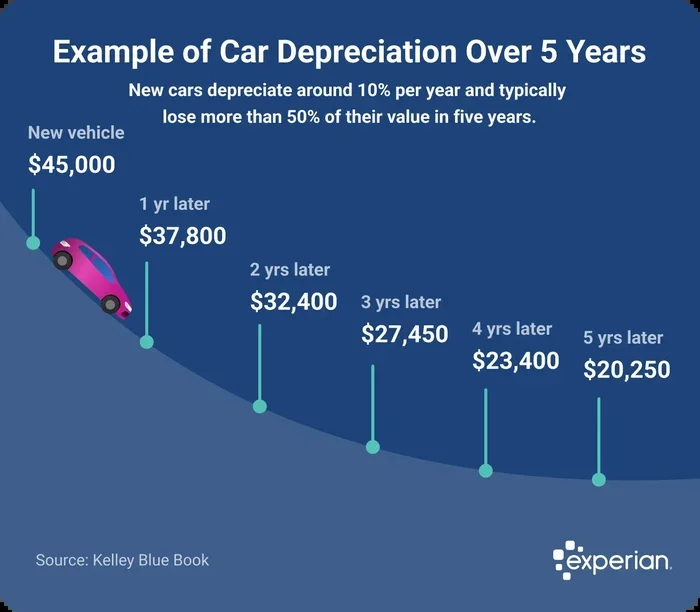
Here is a general breakdown of how most cars lose value over time:
- Year One: 20% to 30% loss. This is the steepest drop, especially in the first few months.
- Year Two: Another 15% to 20% loss. The rate slows slightly but still hurts.
- Year Three: About 10% to 15% more loss. Most cars have lost 40% to 50% of their original value by now.
- Years Four and Five: 5% to 10% per year. The decline steadies as the car ages.
But these are averages. The worst depreciating car models can lose far more than these numbers suggest. A luxury sedan might shed 50% of its value in just two years. A well-maintained truck might lose only 30% over five years.
Comparing Depreciation Across Vehicle Types
Not all vehicles are created equal when it comes to holding value. Here is a quick comparison of how different types of cars typically depreciate.
| Vehicle Type | 5-Year Value Retention | Depreciation Speed |
|---|---|---|
| Luxury Sedan | 35% to 45% | Very Fast |
| Electric Vehicle (Early Models) | 30% to 40% | Very Fast |
| Sports Car | 40% to 50% | Fast |
| Midsize SUV | 50% to 60% | Moderate |
| Full-Size Truck | 60% to 70% | Slow |
| Compact Truck (e.g., Toyota Tacoma) | 70% to 80% | Very Slow |
As you can see, trucks and practical vehicles tend to hold their value much better. This is one reason why best cars that hold value are often found in the truck and SUV segments.
Tips to Minimize Depreciation Loss
The good news is that you can take steps to reduce how much value your car loses. You cannot stop depreciation entirely, but you can slow it down significantly.
Buy Used Instead of New
The single best way to avoid the steepest depreciation hit is to buy a car that is one to three years old. The original owner already absorbed the 20% to 30% first-year loss. You get a nearly new car at a much lower price.
Choose Models Known for Holding Value
Do your research before you buy. Look up car resale value rankings and focus on models that consistently retain their worth. Brands like Toyota, Honda, and certain truck models are famous for their long-term value retention.
Keep Up with Maintenance
A well-maintained car always sells for more than a neglected one. Keep all service records, fix issues promptly, and keep the interior and exterior in great shape. These small efforts pay off big when it is time to sell.
Avoid Modifications
Custom wheels, aftermarket exhausts, and wild paint jobs might make your car look cool. But they can tank the resale value. Most buyers prefer stock, unmodified vehicles because they come with fewer risks.
Time Your Purchase Wisely
Buying at the right time can save you thousands. End of model year deals, mid-year inventory clearances, and seasonal dips in demand all work in your favor. Use a car depreciation calculator to estimate how much value a car will lose before you commit.
Drive Fewer Miles
Mileage is one of the biggest factors in resale value. A car with 30,000 miles on the odometer will always sell for more than one with 80,000 miles. If you can keep your annual mileage low, your car will hold its value longer.
Are There Cars That Hold Their Value Surprisingly Well?
Absolutely. While the focus of this article is on the most depreciating car models, it is worth highlighting the flip side. Some vehicles defy the odds and keep their value impressively well.
The Toyota Tacoma is a legendary example. These trucks have been known to hold 70% or more of their value after five years. The Jeep Wrangler, Toyota 4Runner, and certain Honda models also show up on lists of the best cars that hold value.
Even in the luxury segment, some models depreciate more slowly than others. The Porsche 911, for instance, has a reputation for being one of the best luxury cars for resale value. The key takeaway is that brand reputation, build quality, and market demand all work together to determine how fast a car loses value.
What to Look for When Buying to Minimize Loss
Next time you shop for a car, keep these factors in mind:
- Brand reliability ratings: Look for brands with strong track records.
- Model popularity: Popular models sell faster and hold value better.
- Fuel efficiency: Cars that cost less to run attract more buyers later.
- Crash test scores: Safety ratings influence used car demand.
- Availability of parts: Easy-to-find parts mean lower repair costs and better resale.
Using these criteria, you can find a vehicle that gives you great ownership experience and minimizes the financial hit of depreciation.
The Bottom Line on Depreciation
Car depreciation is something every buyer needs to understand. It is not just a number on a spreadsheet. It is real money leaving your pocket every single year. The number one most depreciating car varies depending on the model year, market conditions, and how well the vehicle was maintained. But luxury sedans, early electric vehicles, and overproduced models consistently rank at the top of the worst lists.
The smartest thing you can do is educate yourself before you buy. Check car depreciation charts, compare models, and think long-term. A car is not just a transportation tool. It is a financial decision. And the more you know about vehicle value loss, the better decisions you will make.
So the next time someone asks you, “What is the number one most depreciating car model?” you will have a clear, informed answer. More importantly, you will know how to avoid becoming a victim of rapid depreciation yourself.
Buy smart, maintain well, and drive knowing that your car is losing value as slowly as possible. That is the real win.
Frequently Asked Questions
What is the number one most depreciating car?
Luxury sedans and early electric vehicles tend to top the list of the most depreciating cars. Models like the BMW 7 Series, Nissan Leaf, and certain Maserati vehicles consistently show the steepest car depreciation rate compared to other segments. However, the exact ranking can vary by year and market conditions.
How much does a new car depreciate in the first year?
On average, a new car loses 20% to 30% of its value in the first year alone. This means a $40,000 vehicle could drop to around $28,000 to $32,000 almost immediately. This steep new car value drop is why many financial experts recommend buying used.
Which cars hold their value the best?
Trucks, compact SUVs, and reliable sedans from brands like Toyota and Honda tend to hold their value the best. The Toyota Tacoma, Jeep Wrangler, and Honda Civic are frequently cited as the best cars that hold value. These models have strong resale demand and proven reliability.
Can you slow down car depreciation?
Yes, you can slow it down significantly. Buying a slightly used car, keeping up with regular maintenance, avoiding excessive modifications, and driving fewer miles all help reduce vehicle value loss. Using a car depreciation calculator can also help you estimate future value before purchasing.
Why do electric vehicles depreciate faster than gas cars?
Early electric vehicles faced rapid electric vehicle depreciation due to limited range, outdated battery technology, and fast advancements in newer models. As the EV market matures and technology improves, the depreciation gap between EVs and gas cars is gradually narrowing.
Is depreciation considered a car buying cost?
Absolutely. Car ownership cost includes depreciation as one of the largest expenses. While gas, insurance, and repairs get most of the attention, the money lost through rapid depreciation often exceeds all other costs combined over the life of the vehicle.
=== CONCLUSION ===
The world of car depreciation is fascinating and frustrating at the same time. We have explored the number one most depreciating car model categories, looked at the data behind vehicle value loss, and shared practical strategies to protect your investment. The key message is simple: knowledge is power. The more you understand about how cars lose value, the better equipped you are to make a smart buying decision.
Whether you are eyeing a luxury sedan, considering an electric vehicle, or simply looking for a reliable daily driver, keep depreciation in your calculations. It is not just about what you pay upfront. It is about what your car is worth when you decide to move on. Choose wisely, maintain diligently, and your wallet will thank you for years to come.