What Is the Lifespan of an Air Filter and When to Replace It
The lifespan of an air filter depends on your vehicle, driving conditions, and filter type. Most engine air filters need replacement every 12,000 to 30,000 miles, while cabin air filters typically last 15,000 to 30,000 miles. Ignoring a dirty filter can hurt fuel efficiency, engine performance, and air quality inside your car.
This is a comprehensive guide about What Is the Lifespan of an Air Filter.
Key Takeaways
- Standard lifespan: Most air filters last between 12,000 and 30,000 miles under normal conditions.
- Driving conditions matter: Dusty roads, heavy traffic, and off-road driving shorten filter life significantly.
- Warning signs: Reduced fuel economy, strange engine sounds, and visible dirt are clear signals your filter needs attention.
- DIY replacement is easy: You can change your car air filter yourself in under 15 minutes with basic tools.
- Don’t clean and reuse: While some filters are washable, most paper filters should be replaced, not cleaned.
- Check your owner’s manual: Your vehicle manufacturer provides the best replacement interval for your specific model.
[FEATURED_IMAGE_PLACEHOLDER]
What Is the Lifespan of an Air Filter and Why Does It Matter?
Your car’s air filter works quietly behind the scenes. It catches dust, dirt, pollen, and other particles before they enter your engine or cabin. Over time, that filter gets clogged. When it does, it can no longer do its job properly.
So, what is the lifespan of an air filter? The answer depends on several factors. The type of filter you use, your driving habits, and the roads you travel on all play a role. Most drivers need a replacement somewhere between 12,000 and 30,000 miles. But some conditions push that number much lower.
Understanding your air filter lifespan helps you avoid costly repairs. A clogged filter restricts airflow to your engine. This means your engine works harder than it needs to. The result? Poor fuel efficiency, reduced engine performance, and even long-term damage. Keeping up with air filter maintenance is one of the simplest things you can do for your vehicle.
In this guide, we will walk through everything you need to know. We will cover how long different filters last, what signs to watch for, and how to get the most out of your engine air filter or cabin air filter. Let us dive in.
Types of Air Filters and Their Average Lifespan
Not all air filters are the same. The type you have determines how often you need to replace it. Let us look at the main options on the market today.
Engine Air Filters
The engine air filter sits in the engine bay. Its job is to clean the air that mixes with fuel before combustion. Most OEM air filters made by the vehicle manufacturer are paper-based and disposable. They work well for normal driving conditions.
On average, a standard paper engine air filter lasts about 15,000 to 30,000 miles. However, this number changes based on where and how you drive. If you frequently travel on gravel roads or through construction zones, your filter will clog faster.
Aftermarket filters come in different materials. Some use cotton gauze or foam. These are often reusable and designed for high-performance vehicles. They typically cost more upfront but can last longer with proper maintenance.
Cabin Air Filters
The cabin air filter cleans the air that enters your car’s interior. It removes pollen, dust, exhaust fumes, and other pollutants from the air you breathe. Many modern vehicles have one, but some older models do not.
The cabin air filter lifespan is generally between 15,000 and 30,000 miles. Some manufacturers recommend replacing it every 12 months, regardless of mileage. This is especially important for people with allergies or respiratory sensitivities.
A dirty cabin filter can reduce airflow from your vents. It may even cause unpleasant odors inside your car. If you notice weak airflow or musty smells, it might be time for a cabin air filter replacement.
Washable and Reusable Filters
Some aftermarket air filters are designed to be washed and reused. Brands like K&N use cotton gauze that you can clean with a special solution. These filters can last for the life of your vehicle with proper care.
The trade-off is upfront cost. A quality reusable filter can cost $40 to $100, compared to $10 to $30 for a disposable one. But over time, you save money because you do not keep buying replacements. Air filter maintenance for reusable types involves cleaning every 50,000 miles or so.
How Driving Conditions Affect Air Filter Lifespan
Where and how you drive has a huge impact on your air filter replacement schedule. A filter that lasts 30,000 miles in one situation might last only 10,000 miles in another. Here is what to consider.
Off-road and dirt roads: Driving on unpaved surfaces kicks up a lot of dust and debris. This clogs your engine air filter much faster. If you regularly drive on gravel or dirt paths, inspect your filter every 5,000 to 10,000 miles.
City driving and heavy traffic: Stop-and-go traffic exposes your filter to more exhaust fumes and urban pollutants. The particulate matter in city air settles into the filter quickly. If you spend a lot of time in traffic, plan for more frequent replacements.
High pollen or dusty areas: Living in a dry, dusty climate or an area with heavy tree pollen means your filter works harder. The same goes for construction zones or areas with ongoing road work. In these environments, shorten your replacement interval by about 25 to 30 percent.
Highway driving: If most of your driving is on clean highways, your filter will last longer. The steady airflow and lower pollution levels keep the filter cleaner for a more extended period.
Quick Tips for Harsh Conditions
- Inspect your engine air filter every 5,000 miles if you drive in tough conditions.
- Keep a spare filter in your trunk if you frequently travel dusty roads.
- Use a high-efficiency air filter rated for your specific driving environment.
- Do not wait for visible dirt. Check your filter regularly even if it looks clean.
Warning Signs Your Air Filter Needs Replacement
Your car gives you clues when the air filter replacement time is near. Catching these signs early can prevent bigger problems down the road. Here are the most common symptoms of a dirty air filter.
Reduced Fuel Efficiency
A clogged filter restricts airflow to your engine. Your engine compensates by burning more fuel to get the same power. If you notice your fuel efficiency dropping, a dirty engine air filter could be the culprit. This is one of the first and most noticeable signs.
Weak Acceleration and Poor Performance
When your engine cannot breathe properly, it struggles. You may feel hesitation or sluggishness when you press the gas pedal. This reduced engine performance happens because the engine is not getting enough clean air for combustion.
Black Soot or Dark Stains on the Filter
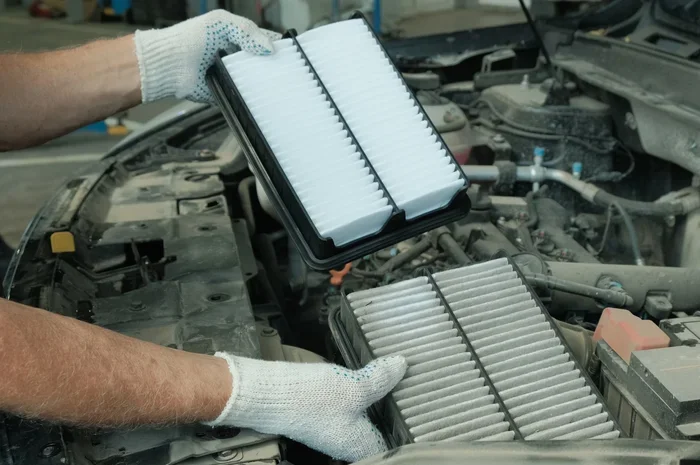
Pop the hood and take a look at your air filter. A clean filter looks white or light gray. If you see black soot, dark brown stains, or visible dirt buildup, it is time for a change. This is the most direct way to check your air filter condition.
Unusual Engine Sounds
A restricted airflow can cause your engine to run rough. You might hear popping, sputtering, or a rough idle. These sounds mean your engine is not getting the air-fuel mixture it needs. A dirty air filter is a common and often overlooked cause.
Check Engine Light
In some cases, a severely clogged filter triggers your check engine light. The engine control module detects incorrect air-to-fuel ratios and flags the issue. While many things can cause this light, a dirty air filter is an easy and cheap thing to rule out first.
Musty Smells or Reduced AC Performance
If your cabin air filter is clogged, you might notice musty or dusty smells coming from your vents. A dirty cabin filter can stop the AC from working properly because it restricts airflow through the system. If your air conditioning feels weak, check the cabin filter before assuming the compressor is the problem.
How to Replace Your Air Filter at Home
Replacing your engine air filter or cabin air filter is one of the easiest vehicle maintenance tasks you can do. You do not need a mechanic or expensive tools. Many drivers complete the job in under 15 minutes.
Replacing the Engine Air Filter
Start by locating your air filter box. It is usually a black plastic box near the top of your engine. Open the clips or screws that hold the lid in place. Pull out the old filter and note which way it sits. Insert the new filter in the same orientation and close the box. That is it.
If you want to do this yourself, check out our guide on how to change your car air filter yourself. It covers step-by-step instructions for most vehicle models.
Replacing the Cabin Air Filter
The cabin air filter is usually located behind the glove box or under the dashboard. You may need to remove a few screws or clips to access it. Slide out the old filter and slide the new one in, matching the airflow direction arrows. Reassemble the panels, and you are done.
When to Seek Professional Help
Most drivers can handle a simple air filter replacement at home. However, if your filter is in a hard-to-reach spot or if you are unsure, a quick visit to a shop like Jiffy Lube can take care of it for you. They can also inspect your filter and advise if a cleaning or full replacement is the right call.
Common Mistakes People Make With Air Filters
Even simple tasks come with common pitfalls. Avoiding these mistakes helps you get the most life and performance from your air filter.
Waiting too long to replace: Some drivers push their air filter replacement far past the recommended interval. A filter that is past its lifespan no longer filters properly. It lets debris into your engine, which causes wear and damage over time.
Cleaning a disposable filter: Paper filters are not meant to be cleaned. Trying to wash or blow them out damages the filter media. If you want a reusable option, invest in a proper washable air filter from the start.
Buying the wrong size: Air filters come in specific sizes for each vehicle model. Using the wrong size means poor filtration and airflow. Always check your owner’s manual or the old filter before purchasing a new one.
Ignoring the cabin filter: Many drivers forget about the cabin air filter entirely. They focus on the engine filter but ignore the one that affects the air quality inside their car. Both matter for a healthy, comfortable vehicle.
Choosing the cheapest option every time: The least expensive filter may not offer the best filtration efficiency. Spending a little more on a quality filter protects your engine and lasts longer. Think of it as an investment in your vehicle’s health.
How Often Should You Inspect Your Air Filter?
Even if you have not hit the recommended mileage, regular inspections are smart. A quick visual check takes only a few minutes and can save you from bigger problems.
We recommend inspecting your engine air filter every time you change your oil. This is an easy habit to build. For the cabin air filter, inspect it at least twice a year, especially before allergy season and before winter when you rely on your heating and defrost systems.
During inspection, hold the filter up to a light source. If light does not pass through easily, the filter is clogged and needs replacement. You can also tap it gently against a hard surface to release loose debris. If it still looks dirty after tapping, go ahead and replace it.
Keep in mind that air filter inspection is different from replacement. You can inspect as often as you like, but replacement should follow the manufacturer’s guidelines or be based on visible condition and driving environment.
How a Dirty Air Filter Affects Your Vehicle
A clogged air filter does more than just reduce airflow. It creates a chain of effects that can impact multiple systems in your vehicle. Understanding these effects reinforces why timely air filter maintenance matters.
Engine wear: When the filter fails, dust and particles enter the engine. These tiny particles act like sandpaper on cylinder walls and bearings. Over time, this causes premature wear and can lead to expensive repairs.
Increased emissions: An engine running rich (with too much fuel and not enough air) produces higher emissions. A dirty filter contributes to this imbalance. Keeping your filter clean helps your vehicle pass emissions tests and reduces pollution.
Spark plug fouling: Unfiltered particles can reach the combustion chamber and foul your spark plugs. This leads to misfires, rough idling, and further drops in fuel efficiency. A clean filter helps protect your entire ignition system.
Cost savings: A new engine air filter costs between $15 and $50 for most vehicles. Compare that to the cost of repairing engine damage caused by neglect. The savings from regular replacements are enormous.
Expert Insights on Air Filter Maintenance
Automotive experts agree on a few key points when it comes to air filter lifespan. First, there is no one-size-fits-all answer. Your driving conditions are the biggest variable. Second, regular inspection beats any fixed schedule. Third, quality filters make a real difference in long-term engine health.
Many mechanics recommend the 12-month or 15,000-mile rule as a safe baseline for most drivers. If you drive in cleaner conditions, you can stretch to 30,000 miles. If conditions are harsh, drop to 10,000 miles or less. The key is staying proactive rather than reactive.
Some newer vehicles come equipped with an air filter indicator or maintenance reminder system. These systems use sensors to monitor airflow restriction and alert you when replacement is needed. If your car has this feature, trust it. It takes the guesswork out of the equation.
For drivers considering high-performance air filters, experts suggest pairing them with regular cleaning schedules. A reusable filter that is never cleaned performs worse than a cheap disposable one. Maintenance is what makes premium filters worth the investment.
Conclusion
The lifespan of an air filter is not a fixed number. It ranges from about 12,000 to 30,000 miles for most vehicles, but your actual driving conditions are the deciding factor. Whether you have an engine air filter or a cabin air filter, staying on top of replacements keeps your car running smoothly, improves fuel efficiency, and protects your engine performance.
Watch for the warning signs we covered. Inspect your filter regularly. Replace it on schedule or when it looks dirty. And if you are comfortable doing it yourself, a home replacement is quick, easy, and inexpensive.
Take a few minutes today to check your air filter. It is one of the smallest parts in your car, but it plays a huge role in keeping everything else running right. A clean filter is a simple step that pays off in the long run.
FAQs
How do I know if my air filter needs replacing?
Look for reduced fuel efficiency, weak acceleration, a dirty-looking filter, or unusual engine sounds. You can also hold the filter up to light. If very little light passes through, it is time for a replacement. A visual inspection every few months helps you catch problems early.
Can I clean and reuse my engine air filter?
Only if you have a washable or reusable filter designed for that purpose. Standard paper filters cannot be cleaned effectively. Trying to reuse them reduces filtration quality and can damage your engine. Always check the filter type before attempting any cleaning.
What happens if I don’t replace my air filter?
A neglected filter gets clogged with dirt and debris. This restricts airflow to your engine, causing poor performance, lower fuel economy, and increased emissions. Over time, particles can enter the engine and cause internal wear. Eventually, this leads to costly repairs that could have been easily prevented.
How much does an air filter replacement cost?
A standard engine air filter costs between $15 and $50 for the part alone. Cabin filters run a similar price. If you have a mechanic do the job, add $20 to $50 for labor. Many drivers save money by replacing both filters themselves at home in minutes.
Does a dirty air filter affect my AC?
Yes, a dirty cabin air filter can reduce airflow from your AC vents and cause musty odors. In severe cases, it can even stop your air conditioning from working properly. If your AC feels weak, inspect the cabin filter before looking at more expensive components like the compressor.
Can I replace the air filter myself?
Absolutely. Both engine and cabin air filter replacements are straightforward DIY tasks. You typically need only a screwdriver and about 10 to 15 minutes. If you are new to car maintenance, this is a perfect starting project. It builds confidence and saves you money on labor costs.
Frequently Asked Questions
What is What Is the Lifespan of an Air Filter?
What Is the Lifespan of an Air Filter is an important topic with many practical applications.