What Causes BMW Footwell Module Failure and How to Fix It
The BMW footwell module controls critical electrical functions in your vehicle, and when it fails, it can cause a host of frustrating problems. Water damage, corroded connectors, and wiring harness wear are the leading culprits behind this common BMW issue. Understanding the causes and symptoms helps you catch the problem early and avoid costly repairs.
Your BMW is a machine built for performance and precision. But even the best-engineered vehicles run into electrical gremlins over time. One of the most common and frustrating problems BMW owners face is BMW footwell module failure. If you have noticed weird electrical behavior in your car — flickering lights, unresponsive power windows, or warning lights that come and go for no reason — the footwell module might be the culprit.
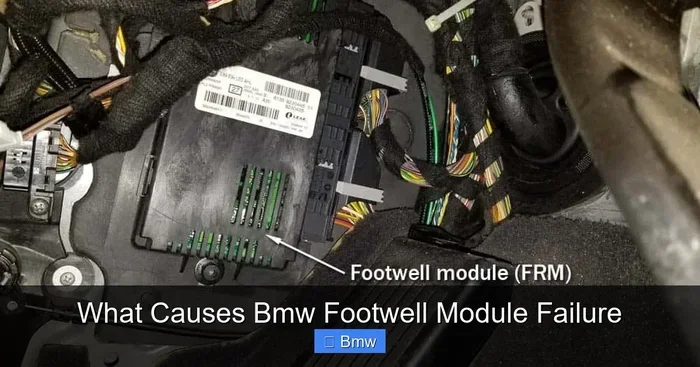
The footwell module, also known as the footwell control unit, sits beneath your dashboard and manages a surprising number of electrical functions. It controls your interior lighting, power window regulators, door lock actuators, and even some climate control components. When this small but mighty module starts to fail, it can turn a smooth driving experience into a headache.
In this article, we will break down exactly what causes BMW footwell module failure, how to spot the warning signs early, and what you can do to fix it. Whether you are a DIY mechanic or someone who just wants to understand what the shop is talking about, this guide has you covered.
Key Takeaways
- Water and moisture intrusion is the #1 cause of BMW footwell module failure, especially in older models.
- Corroded connectors and damaged wiring disrupt the electrical signals the module depends on to function.
- Early diagnosis saves money — recognizing symptoms like flickering lights or intermittent power windows can prevent total module breakdown.
- Replacement cost varies widely, but DIY repair is possible for those with basic automotive knowledge.
- Regular BMW maintenance and moisture protection go a long way in preventing future footwell module issues.
📑 Table of Contents
- What Is the BMW Footwell Module and Why Does It Matter?
- Common Symptoms of BMW Footwell Module Failure
- Top Causes of BMW Footwell Module Failure
- How to Diagnose a Faulty BMW Footwell Module
- How to Fix BMW Footwell Module Failure
- Preventing BMW Footwell Module Failure
- When to Seek Professional Help
- Key Takeaways
- Conclusion
What Is the BMW Footwell Module and Why Does It Matter?
The footwell module is a small electronic control unit tucked into the driver and passenger footwell area. Think of it as the brain behind several everyday convenience features in your BMW. It receives signals from switches and sensors, then sends commands to the corresponding components.
Here is a quick look at what the footwell module typically controls:
- Interior lighting — dome light, map lights, and ambient lighting
- Power windows — up, down, and auto-up/down functions
- Door lock systems — central locking and remote unlock
- Mirror adjustments — power mirror controls
- Windshield wiper and washer systems
- Some HVAC controls — blower motor and vent actuators
Because the footwell module handles so many functions, a failure in this unit can create a long list of seemingly unrelated problems. This is what makes BMW footwell module failure so tricky to diagnose. Many owners mistakenly think they have multiple separate electrical issues when, in reality, it is one failing module causing all the trouble.
Common Symptoms of BMW Footwell Module Failure
Recognizing the early signs of footwell module trouble can save you from a complete electrical breakdown. Here are the most common symptoms that point to a failing module:
Flickering or Dimming Interior Lights
If your dashboard lights or dome light start flickering without any obvious reason, the footwell module could be struggling to send consistent signals. This is often one of the first warning signs owners notice.
Power Windows Acting Up
Windows that respond slowly, get stuck halfway, or stop working entirely can trace back to a failing footwell module. The module sends the electrical commands that tell the window motors to move. When those signals get interrupted, the windows suffer.
Intermittent Door Lock Problems
Doors that lock and unlock randomly, or fail to respond to the remote fob, may have a connection to the footwell module. The module relays the lock commands from your key fob to the door actuators.
Random Warning Lights on the Dashboard
Multiple warning lights appearing and disappearing on their own can be a sign of erratic electrical signals from a failing module. These ghost warnings are confusing and frustrating but are a classic symptom of module degradation.
Unresponsive Controls
Mirror adjustments, interior lighting, and even some climate controls may stop responding or work only intermittently when the module is on the fritz.
If you are experiencing several of these symptoms at once, it is worth investigating the footwell module further. And if the electrical issues are so bad that your car not starting but battery is fine what to check, the footwell module could be part of the problem — though it is not the only possible cause.
Top Causes of BMW Footwell Module Failure
Understanding what leads to footwell module failure helps you take preventive action. Here are the most common causes, ranked by frequency and severity.
1. Water and Moisture Intrusion
This is the single biggest cause of footwell module failure in BMWs. The footwell area sits low in the dashboard, close to the floor. Over time, seals around the doors, windshield, and sunroof can degrade, allowing water to seep into the footwell cavity.
Once moisture reaches the module, it causes corrosion on the circuit board and connectors. Even a small amount of condensation can create short circuits or slowly eat away at the solder joints. BMWs that are older or have been driven in rainy or snowy climates are especially vulnerable.
Common entry points for water include:
- Worn door seals and weatherstripping
- Clogged drain tubes from the sunroof or cowl area
- Cracked windshield seals
- Damaged carpet or missing insulation pads
2. Corroded Connectors and Wiring
The footwell module connects to the rest of the car through a wiring harness and several electrical connectors. Over time, these connectors can corrode, especially in humid conditions or after exposure to moisture.
Corrosion creates resistance in the electrical connections, which means weaker signals and intermittent function. In severe cases, the corrosion completely breaks the connection, and the module stops working altogether. This is one reason why a simple cleaning of the connectors can sometimes bring a failing module back to life.
3. Wiring Harness Degradation
BMW wiring harnesses are well-built, but they are not immune to wear and tear. The wires that run through the footwell area are subject to constant movement, heat from the engine, and vibration from driving. Over thousands of miles, the insulation can crack and fray, exposing bare wires.
When wires rub against each other or against metal surfaces, they can short out or develop intermittent connections. This puts extra stress on the footwell module as it tries to push signals through damaged wiring.
4. Electrical Overload and Voltage Spikes
The BMW electrical system operates at a specific voltage, and sudden spikes can damage sensitive electronic components. Jump-starting the car incorrectly, using aftermarket electrical accessories without proper fusing, or a failing alternator can all send voltage spikes through the system.
The footwell module is particularly sensitive to these spikes because it handles low-voltage control signals. A single major voltage spike can fry the circuit board and render the module inoperable.
5. Heat and Poor Ventilation
The footwell area is not exactly a well-ventilated space. In summer, the temperature under the dashboard can climb significantly, especially in sunny climates. Prolonged exposure to high heat accelerates the aging of electronic components and solder joints.
BMW footwell module failure caused by heat is more common in vehicles that spend a lot of time parked in direct sunlight or in hot climates. The heat softens the solder joints over time, leading to hairline cracks that eventually cause intermittent or complete failure.
6. Age and General Wear
Like all electronic components, the footwell module has a finite lifespan. As BMWs age, the solder joints on the circuit board can develop micro-cracks. Capacitors and resistors can drift out of specification. General wear and tear on the module is a natural cause of failure, especially in vehicles with over 100,000 miles.
Regular BMW maintenance and electrical system checks can help extend the life of the module, but eventually, age will catch up with it.
How to Diagnose a Faulty BMW Footwell Module
Diagnosing a footwell module issue requires a systematic approach. You do not want to replace a perfectly good module when the real problem is a loose connector or a blown fuse. Here is how to narrow it down.
Step 1: Check for Error Codes with a Diagnostic Scanner
A BMW-specific diagnostic scanner or a quality OBD-II tool can pull error codes from the footwell module. These codes point directly to which circuits are malfunctioning and can confirm whether the module itself is the problem.
Look for codes related to the footwell module, body control module, or interior lighting circuits. If multiple unrelated systems are throwing codes, the footwell module is a likely common denominator.
Step 2: Inspect the Connectors and Wiring
Before you assume the module is dead, visually inspect all the connectors attached to it. Look for green or white corrosion, bent pins, or loose connections. Unplug the connectors, clean them with electrical contact cleaner, and re-seat them firmly.
In many cases, this simple step resolves the issue without any part replacement. It is worth doing before you spend any money.
Step 3: Test the Power and Ground Connections
Use a multimeter to check that the module is receiving the correct voltage. A weak or fluctuating power supply can cause all kinds of erratic behavior that mimics module failure.
Also check the ground connection. A bad ground is one of the most overlooked causes of electrical gremlins in any vehicle. Clean the ground point and make sure it is tight and free of corrosion.
Step 4: Perform a Module Reset
Sometimes the footwell module simply needs a reset. Disconnect the negative battery terminal for at least 15 minutes, then reconnect it. This clears any stored error codes and allows the module to reinitialize.
If the problems go away after a reset and do not return for a while, you may have caught the issue early enough to avoid a full replacement.
How to Fix BMW Footwell Module Failure
Once you have confirmed that the footwell module is indeed the problem, you have two main options: repair or replace.
Option 1: Professional Repair
A qualified BMW specialist can often repair a failed footwell module rather than replacing it entirely. The repair process typically involves:
- Opening the module casing
- Identifying damaged components on the circuit board
- Replacing faulty capacitors, resistors, or other small parts
- Cleaning and repairing corroded connectors
- Reflowing solder joints that have developed cracks
Professional repair is usually less expensive than a full replacement and can extend the life of your existing module significantly.
Option 2: Module Replacement
If the module is beyond repair, a full replacement is the way to go. Here is what the replacement process typically looks like:
- The technician removes the lower dashboard panels to access the module
- The old module is unplugged from the wiring harness
- The new module is connected and secured
- The module is programmed and coded to your specific BMW using diagnostic software
- All functions are tested to ensure proper operation
It is important to have the new module properly programmed. An unprogrammed module will not communicate correctly with the rest of the BMW systems. Some owners also wonder about does it really matter what oil I put in my car — while that is a separate topic, it highlights the importance of using the right parts and fluids for your BMW, just as you need the correct module for your specific model and year.
Replacement Cost Expectations
The cost to replace a BMW footwell module can vary depending on your model, year, and whether you go through a dealer or an independent shop. On average, expect to pay between $300 and $800 for the part and labor combined. Programming costs at a dealer may add another $100 to $200.
If you are handy with electronics and feel comfortable working on your car’s electrical system, you can save on labor by sourcing a used or refurbished module and doing the swap yourself. Just make sure to get the correct part number for your specific BMW model.
Preventing BMW Footwell Module Failure
The good news is that you can take steps to reduce the risk of footwell module failure or catch it before it becomes a serious problem.
Keep the Footwell Area Dry
Regularly inspect the seals around your doors, sunroof, and windshield. Replace any worn weatherstripping promptly. If you live in a rainy area, consider using a car cover or parking in a garage whenever possible.
Also check that the drain tubes under your car are clear. Clogged drains are a leading cause of water pooling in the footwell area.
Perform Regular Electrical System Checks
During routine BMW maintenance, ask your technician to inspect the footwell connectors and wiring. A quick visual check can catch corrosion or loose connections before they turn into a full module failure.
It is also smart to keep an eye on your at what percent oil life should you change oil and other maintenance intervals. A well-maintained BMW is less likely to develop cascading electrical problems.
Use Surge Protection
Consider using a battery maintainer or surge protector when your BMW is parked for extended periods. This helps protect sensitive electronic components from voltage spikes that can occur during jump-starts or electrical system fluctuations.
Address Small Electrical Issues Promptly
Do not ignore small electrical gremlins. A window that responds slowly today could be a sign of a connector that is corroding. Fixing small issues early prevents them from escalating into module failure.
Keep Your BMW Well-Ventilated
If you live in a hot climate, try to park in shaded areas or a garage. Reducing the heat exposure under the dashboard helps protect the footwell module and other electronic components from thermal degradation.
When to Seek Professional Help
While some footwell module issues can be resolved with simple cleaning and reset procedures, more serious failures require professional attention. If you have tried the basic troubleshooting steps and the problems persist, it is time to visit a qualified BMW technician.
Look for a shop or specialist that has experience with BMW electrical systems. General mechanics may not have the diagnostic equipment or the specialized knowledge needed to properly diagnose and repair footwell module issues. A BMW specialist will have access to factory-level diagnostic tools and software, which makes the process faster and more accurate.
Also, if your BMW is still under warranty, check with your dealer before paying for any repairs out of pocket. Footwell module failures that occur early in a vehicle’s life may be covered under the electrical components warranty.
Remember that electrical problems can sometimes cascade. A footwell module failure might be a symptom of a deeper issue in the electrical system, such as a failing alternator or a grounding problem. A thorough diagnostic workup ensures you address the root cause, not just the symptoms.
Key Takeaways
- BMW footwell module failure is a common issue caused primarily by water intrusion, corroded connectors, and wiring harness degradation.
- Early symptoms include flickering lights, unresponsive power windows, intermittent door lock problems, and random dashboard warning lights.
- Simple fixes like cleaning connectors, checking grounds, and performing a module reset can resolve minor issues without costly replacement.
- Replacement cost typically ranges from $300 to $800, with professional programming adding extra expense.
- Prevention is key — keeping the footwell dry, performing regular electrical checks, and addressing small issues early can extend module life significantly.
Conclusion
BMW footwell module failure is a frustrating but manageable problem. By understanding what causes it, how to recognize the symptoms, and what your options are for fixing it, you can take control of the situation before it spirals into a bigger headache. Whether the issue stems from moisture, corroded connectors, or simple age and wear, the key is to act quickly and not ignore the warning signs.
Regular BMW maintenance and a proactive approach to electrical care go a long way. Keep the footwell dry, inspect connectors periodically, and address small electrical quirks before they become big problems. Your BMW was engineered to perform at a high level, and with the right care, the footwell module can keep all those everyday convenience features working smoothly for years to come.
If you are dealing with electrical issues that go beyond the footwell module — such as starting problems or battery concerns — be sure to check out our guide on car not starting but battery is fine what to check for additional troubleshooting tips. And if you want to stay on top of your BMW’s overall health, understanding does it really matter what oil I put in my car is another essential piece of the maintenance puzzle.
Frequently Asked Questions
Can a BMW footwell module failure cause the car not to start?
In most cases, a footwell module failure will not prevent your BMW from starting, since it primarily controls interior electrical functions. However, in some models, a severe module failure can interfere with the body control system, which may cause starting issues. If your car is not starting and the battery checks out fine, the footwell module could be a contributing factor, but it is worth checking other electrical components as well.
How much does it cost to replace a BMW footwell module?
The total cost typically ranges from $300 to $800 for the part and labor. If you go through a BMW dealer, programming and coding fees may add another $100 to $200. Independent shops and refurbished modules can help reduce the overall cost significantly.
Can I drive my BMW with a failing footwell module?
Yes, you can generally still drive your BMW with a failing footwell module, but it is not recommended for extended periods. The module controls important safety and convenience features like power windows and interior lighting. Ignoring the problem can lead to worsening electrical issues and potentially more expensive repairs down the road.
Is BMW footwell module failure covered under warranty?
It depends on your vehicle’s warranty coverage and the age of the car. Newer BMWs may have electrical component warranties that cover the footwell module. Older vehicles will likely not be covered. Check with your dealer or review your warranty documentation to confirm.
Can I fix a BMW footwell module myself?
Simple fixes like cleaning corroded connectors or performing a module reset can be done at home with basic tools. However, full module replacement and programming require specialized diagnostic equipment and software. If you are not comfortable with automotive electronics, it is best to leave the replacement to a qualified BMW technician.
What is the average lifespan of a BMW footwell module?
With proper care and maintenance, a BMW footwell module can last well over 150,000 miles. However, factors like water exposure, extreme heat, and electrical surges can shorten its lifespan significantly. Regular maintenance and keeping the footwell area dry are the best ways to maximize module longevity.