What Are the Symptoms of a Dirty Throttle Body Today
A dirty throttle body can cause rough idle, poor acceleration, stalling, and reduced fuel economy. Recognizing these throttle body symptoms early helps you avoid costly repairs and keeps your car running at its best. This guide covers every sign of a clogged throttle body and gives you practical steps to fix it.
Have you ever noticed your car idling a little rough or hesitating when you hit the gas? These could be symptoms of a dirty throttle body, and they are more common than most drivers think. Your throttle body plays a big role in how much air reaches your engine, and when it gets dirty, everything from your idle quality to your fuel economy can suffer.
In this article, we will walk you through every dirty throttle body symptom you should know about. We will also cover how to clean it, when to call a mechanic, and simple tips to prevent the problem from coming back. Whether you are a DIY car person or just want to understand what your vehicle is telling you, this guide has you covered.
The throttle body is a small but important part of your engine’s air intake system. It sits between your air filter and intake manifold and controls how much air flows into the engine. When the throttle plate inside it gets coated with carbon gunk, it cannot open and close properly. This leads to a host of driving problems that can range from annoying to serious.
Key Takeaways
- Rough idle and stalling are the most common signs of a dirty throttle body that every driver should watch for.
- Poor acceleration and engine hesitation happen when carbon buildup restricts airflow through the throttle plate.
- Cleaning the throttle body is a straightforward fix that many car owners can do at home with basic tools.
- Ignoring throttle body symptoms can lead to bigger engine problems, including damage to the airflow sensor and fuel system.
- Regular maintenance and using quality fuel help prevent carbon buildup and keep your throttle body working properly.
- A check engine light may appear when the throttle body is dirty, signaling the need for immediate attention.
- Throttle body relearning is often required after cleaning to restore proper engine idle and performance.
📑 Table of Contents
What Is a Throttle Body and Why Does It Get Dirty?
To understand the symptoms, it helps to know what the throttle body does. Every time you press the gas pedal, the throttle body opens a plate to let more air into the engine. Your car’s computer, or ECU, uses this airflow to calculate the right amount of fuel to inject. The result is a smooth power delivery that keeps your car running steadily.
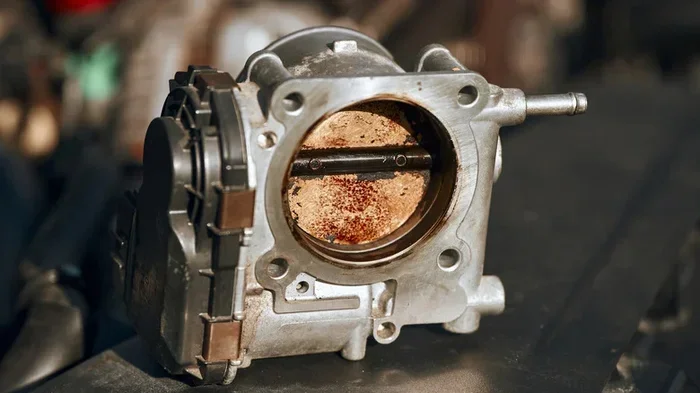
Over time, carbon deposits build up on the throttle plate and the walls of the throttle body. This happens because of the natural byproducts of combustion. Oil vapors, fuel residue, and dirt particles all stick to the inside of the throttle body. The result is a sticky, grimy buildup that restricts airflow and throws off the fuel-to-air ratio.
What Causes Carbon Buildup in the Throttle Body?
Several factors speed up carbon buildup in your throttle body. Short trips where the engine never fully warms up are a big culprit. Stop-and-go city driving also contributes because the engine does not get enough airflow to burn off deposits. Using low-quality fuel or oil can add more residue to the combustion chamber. Even driving habits like frequently letting the car idle for long periods can cause problems.
Older cars with cable-controlled throttle bodies tend to accumulate less buildup than modern vehicles with electronic throttle control. That is because older designs have a simpler airflow path. But regardless of your car’s age, a dirty throttle body is something every driver should keep on their radar.
How Often Should You Clean Your Throttle Body?
Most manufacturers recommend cleaning the throttle body every 30,000 to 50,000 miles. However, driving conditions play a big role. If you do a lot of short trips or drive in heavy traffic, you may need to clean it more often. Using a throttle body cleaner spray is the easiest way to maintain it at home. A quick cleaning every couple of years can keep symptoms at bay.
Common Symptoms of a Dirty Throttle Body
Now let us get into the heart of the matter. The symptoms of a dirty throttle body show up in several ways, and they can mimic other engine problems. Here are the most common signs to watch for.
Rough Idle or Erratic Idling
A rough idle is often the first sign that something is off with your throttle body. When you stop at a red light or sit in a parking lot, the engine may shake, vibrate, or sound uneven. The RPMs might fluctuate between high and low without you touching the gas pedal. This happens because the dirty throttle plate cannot regulate airflow precisely, which makes the engine idle unstable.
Rough idle is one of the most overlooked symptoms because it can feel minor at first. But over time, it gets worse and can lead to stalling. If your car shakes at idle, a dirty throttle body should be near the top of your diagnostic list.
Engine Stalling
Engine stalling is a more serious sign of a clogged throttle body. Your car may shut off unexpectedly while idling, at a stoplight, or even while driving slowly. This happens when the throttle plate gets stuck in a partially closed position and starves the engine of air.
Stalling can be dangerous, especially in traffic or at intersections. If your car stalls frequently, do not ignore it. A dirty throttle body is a common cause, but a mechanic should rule out other issues like a failing fuel pump or electrical problems.
Poor Acceleration and Engine Hesitation
When you press the gas pedal and your car feels sluggish or slow to respond, that is called engine hesitation. It is one of the most noticeable throttle body symptoms. The engine may sputter or lag for a second or two before picking up speed.
This happens because the carbon buildup on the throttle plate slows down its response. The ECU sends a signal to open the plate, but the gunk prevents it from moving freely. The result is a delay in airflow, which directly affects how quickly your car accelerates. You might feel this most when merging onto a highway or climbing a hill.
Check Engine Light
A glowing check engine light can mean dozens of things, and a dirty throttle body is one of them. When the airflow through the throttle body is inconsistent, the ECU detects the problem and stores a trouble code. Common codes related to a dirty throttle body include P0121, P0505, and P0171.
If your check engine light comes on and you also notice rough idle or poor acceleration, a dirty throttle body is a strong possibility. You can use an OBD2 scanner to read the codes yourself, or have a mechanic check it for you.
Reduced Fuel Economy
Have you noticed you are visiting the gas station more often? A dirty throttle body can mess up the fuel-to-air mixture, causing your engine to burn more fuel than it needs. When the airflow is restricted, the ECU often compensates by adding extra fuel. This rich mixture wastes gas and reduces your miles per gallon.
While many things can cause poor fuel economy, a clogged throttle body is an easy one to check. If you are filling up more than usual and have other symptoms on this list, it is worth investigating your throttle body.
Unstable or Erratic RPMs
Sometimes the RPM gauge on your dashboard acts like it has a mind of its own. The needle might jump up and down or bounce around while you are driving. This erratic RPM behavior is a direct result of the throttle body not controlling airflow consistently.
Erratic RPMs can be especially noticeable when you are at a standstill. The engine might surge forward and then drop back down. This not only feels weird to drive but can also put extra stress on your transmission and engine mounts over time.
Difficulty Starting the Engine
A heavily dirty throttle body can make starting your car a frustrating experience. The engine might crank for a few extra seconds before catching, or it might not start at all in severe cases. This happens because the restricted airflow creates an imbalanced fuel mixture that the engine cannot ignite easily.
If you find yourself turning the key multiple times, especially after the car has sat for a while, check your throttle body. Carbon buildup tends to worsen overnight when the engine is cool, making morning starts particularly tough.
How a Dirty Throttle Body Affects Your Engine Performance
A dirty throttle body does not just cause individual symptoms. It creates a ripple effect that impacts your entire driving experience and engine health. Understanding this connection helps you see why addressing the problem quickly matters.
When the throttle plate cannot open and close smoothly, the ECU struggles to maintain the correct air-to-fuel ratio. This imbalance affects combustion in every cylinder. Over time, the extra strain can lead to fouled spark plugs, clogged fuel injectors, and even damage to the mass airflow sensor. The longer you ignore the problem, the more expensive the repair becomes.
Another way a dirty throttle body affects performance is through the electronic throttle control system. Modern cars use electronic sensors to monitor throttle position and send signals to the ECU. Carbon buildup can interfere with these sensors, causing inaccurate readings and unpredictable engine behavior.
The Throttle Position Sensor and Its Role
The throttle position sensor tells the ECU exactly how far the throttle plate is open. When carbon builds up around the plate, the sensor readings become inconsistent. This can cause the engine to misfire, hesitate, or go into a limp mode where it limits power to protect itself.
Replacing a throttle position sensor can be costly. Cleaning the throttle body often fixes the sensor readings without needing a replacement. This is another reason to address throttle body symptoms early.
Impact on the Air Intake System
The throttle body is the gateway for all air entering your engine. When it is dirty, the entire air intake system suffers. The airflow sensor downstream has to work harder to compensate for the irregular airflow. This can lead to inaccurate fuel delivery and even trigger additional warning lights on your dashboard.
Keeping your throttle body clean also helps your cabin air filter and engine air filter work more efficiently. A clean air intake path means better combustion, more power, and fewer emissions.
Can You Clean a Dirty Throttle Body Yourself?
The good news is that cleaning a dirty throttle body is one of the easiest car maintenance tasks you can do at home. You do not need advanced mechanical skills or expensive tools. With a can of throttle body cleaner, some rags, and about 30 minutes, you can make a big difference.
What You Will Need
- Throttle body cleaner spray (a dedicated carburetor or throttle body cleaner works best)
- Clean lint-free rags or shop towels
- A small flathead screwdriver or throttle body tool
- Gloves and safety glasses
- A socket set (if you need to remove the throttle body)
Step-by-Step Cleaning Process
- Disconnect the battery negative terminal for safety. Wait a few minutes for the ECU to power down.
- Locate the throttle body on your engine. It is the component connected to the air intake tube, between the air filter and the intake manifold.
- Remove the air intake hose from the throttle body. You may need to loosen a clamp first.
- Spray throttle body cleaner onto the throttle plate and the walls of the throttle body. Let it sit for a minute or two to dissolve the carbon deposits.
- Wipe everything clean with a lint-free rag. Use a clean rag for each wipe to avoid spreading the gunk around.
- Repeat spraying and wiping until the rag comes away clean. Do not use abrasive tools that could damage the throttle plate.
- Reconnect the air intake hose and the battery. Start the engine and let it idle for a few minutes.
- Perform a throttle body relearn if your car requires it. This resets the ECU to recognize the clean throttle body. You can usually find the relearn procedure in your vehicle’s service manual or online.
Quick Tip: Never use a wire brush or abrasive pad inside the throttle body. The throttle plate has a delicate surface, and scratching it can cause air leaks that create new problems.
Common Mistakes to Avoid When Cleaning
- Using too much cleaner: A little goes a long way. Excess cleaner can leave residue that makes the problem worse.
- Forgetting to relearn the throttle body: After cleaning, the ECU needs to recalibrate. Skipping this step can leave idle problems unresolved.
- Not wearing gloves: Throttle body cleaner is a harsh chemical. Protect your skin and work in a well-ventilated area.
- Ignoring the throttle body gasket: Check the gasket for cracks or wear while you have the throttle body off. A leaking gasket causes many of the same symptoms as a dirty throttle body.
When to See a Mechanic for Throttle Body Issues
While cleaning the throttle body yourself is doable for most people, there are times when professional help is the right call. If you have cleaned the throttle body and the symptoms persist, something deeper may be going on. Here are situations where you should see a mechanic.
Symptoms Return Quickly After Cleaning
If your dirty throttle body symptoms come back within a few weeks of cleaning, the underlying cause may not be addressed. This could indicate a vacuum leak, a failing PCV valve, or worn piston rings that are producing excess oil vapor. A mechanic can run diagnostics to find the root cause.
Throttle Body Is Physically Damaged
Sometimes the throttle body itself is worn out or damaged beyond what cleaning can fix. Cracks in the housing, a warped throttle plate, or a broken throttle motor all require replacement. A throttle body replacement cost typically ranges from $200 to $600, including parts and labor, depending on your vehicle.
Check Engine Light Stays On After Cleaning
If the check engine light does not go off after you clean the throttle body and perform a relearn, there may be a stored trouble code that needs to be cleared manually. A mechanic can use professional-grade diagnostic tools to clear the codes and verify that the throttle body is working correctly.
Multiple Engine Symptoms at Once
When rough idle, stalling, poor acceleration, and a check engine light all appear together, the problem may extend beyond the throttle body. Your engine’s fuel system, ignition system, or sensors could all be involved. A professional inspection ensures you do not miss a bigger issue.
Preventing Throttle Body Problems Before They Start
Prevention is always easier and cheaper than repair. Keeping your throttle body clean starts with a few simple habits that you can build into your regular car maintenance routine.
Use Quality Fuel and Oil
Low-quality fuel contains more impurities that contribute to carbon buildup. Using top-tier gasoline and the recommended grade of engine oil can significantly reduce the amount of residue that enters your throttle body. It is a small change that pays off over thousands of miles.
Take Longer Drives When Possible
Short trips are the enemy of a clean throttle body. When the engine never reaches full operating temperature, it does not burn off carbon deposits efficiently. Whenever you can, take a longer drive to let the engine fully warm up and clear out residue.
Follow Your Maintenance Schedule
Stick to your vehicle’s recommended maintenance intervals. Regular oil changes, air filter replacements, and fuel system cleanings all help keep the entire air intake system clean. A well-maintained engine produces fewer deposits that end up in the throttle body.
Inspect the Throttle Body During Regular Service
Ask your mechanic to inspect the throttle body during every major service. Catching early carbon buildup before it causes symptoms makes the cleaning process much simpler and quicker. Many mechanics will check it for free if you ask.
Address Vacuum Leaks Promptly
Vacuum leaks can cause the same symptoms as a dirty throttle body. Unmetered air entering the engine through a cracked hose or loose connection tricks the ECU into adding too much or too little fuel. Fixing vacuum leaks quickly prevents additional strain on the throttle body and keeps your engine running smoothly.
Expert Insight: According to automotive technicians, the most common reason drivers come in with throttle body complaints is simply neglecting regular maintenance. A 15-minute inspection and cleaning every 30,000 miles can save hundreds of dollars in repairs and keep your car driving like new.
Comparison Table: Dirty vs. Clean Throttle Body
| Aspect | Dirty Throttle Body | Clean Throttle Body |
|---|---|---|
| Idle Quality | Rough, fluctuating RPMs | Smooth and steady idle |
| Acceleration | Hesitation and sluggish response | Immediate and responsive |
| Fuel Economy | Reduced MPG due to rich mixture | Optimal fuel efficiency |
| Starting | Extended cranking or hard starts | Quick and reliable starts |
| Check Engine Light | Often triggered | Stays off |
| Engine Longevity | Increased strain and wear | Reduced stress on engine components |
Key Takeaways
Keeping your throttle body clean is one of the simplest ways to maintain your car’s performance and reliability. The symptoms of a dirty throttle body are hard to ignore once you know what to look for. Rough idle, stalling, poor acceleration, and a check engine light are all clear signals that your throttle body needs attention.
Cleaning the throttle body yourself is a manageable task that saves money and builds your confidence as a car owner. But even if you prefer to leave it to a professional, knowing the symptoms helps you catch the problem early and avoid expensive repairs down the road.
Regular maintenance, quality fuel, and longer drives are your best defenses against carbon buildup. Make the throttle body part of your routine checkup, and your engine will thank you with smooth, reliable performance for years to come.
Remember, a dirty throttle body is not a life sentence for your car. With the right knowledge and a little effort, you can restore your engine’s performance and enjoy a better driving experience every time you hit the road.
Frequently Asked Questions
Can a dirty throttle body cause a car to shake at idle?
Yes, a dirty throttle body is one of the most common reasons a car shakes or vibrates at idle. The carbon buildup prevents the throttle plate from regulating airflow properly, which causes the engine to run unevenly. Cleaning the throttle body often resolves the shaking immediately.
How much does it cost to clean a throttle body at a shop?
A professional throttle body cleaning typically costs between $100 and $300, depending on your vehicle and location. The cost includes labor and any necessary cleaner. If the throttle body needs replacement instead of cleaning, the cost rises to $200-$600 for parts and labor.
Will cleaning the throttle body improve gas mileage?
Yes, cleaning a dirty throttle body can improve fuel economy. When the throttle plate is clean, it regulates airflow more precisely, which helps the ECU maintain the correct fuel-to-air ratio. A proper mixture means less wasted fuel and better miles per gallon over time.
How long does it take to clean a throttle body?
A DIY throttle body cleaning takes about 20 to 40 minutes from start to finish. If you also need to remove the throttle body for a more thorough cleaning, it may take an hour. Professional service usually takes less than an hour.
Can a dirty throttle body cause the check engine light to come on?
Yes, a dirty throttle body can trigger the check engine light. The ECU detects inconsistent airflow and stores a trouble code, which activates the warning light. Common codes include P0121 for throttle position sensor issues and P0505 for idle control problems.
Is it safe to drive with a dirty throttle body?
You can drive short distances with a dirty throttle body, but it is not recommended for extended periods. A dirty throttle body can cause stalling, poor acceleration, and unpredictable engine behavior, all of which create safety risks. Clean it as soon as you notice symptoms.
=== CONCLUSION ===
The symptoms of a dirty throttle body are clear, identifiable, and manageable once you know what to look for. From rough idle and engine stalling to poor acceleration and reduced fuel economy, your car gives you plenty of warning signs before the problem becomes serious. The key is to pay attention to those signals and act quickly.
Cleaning your throttle body is a straightforward fix that you can do yourself or have done professionally. Regular maintenance and good driving habits go a long way in preventing carbon buildup in the first place. A clean throttle body means a smoother ride, better fuel economy, and a healthier engine.
Do not wait until the symptoms become unbearable. Check your throttle body regularly, keep it clean, and enjoy the confidence that comes with knowing your car is running at its best. Your engine will reward you with reliable performance every time you turn the key.