What Are the 3 Points of a Forklift and Why They Matter
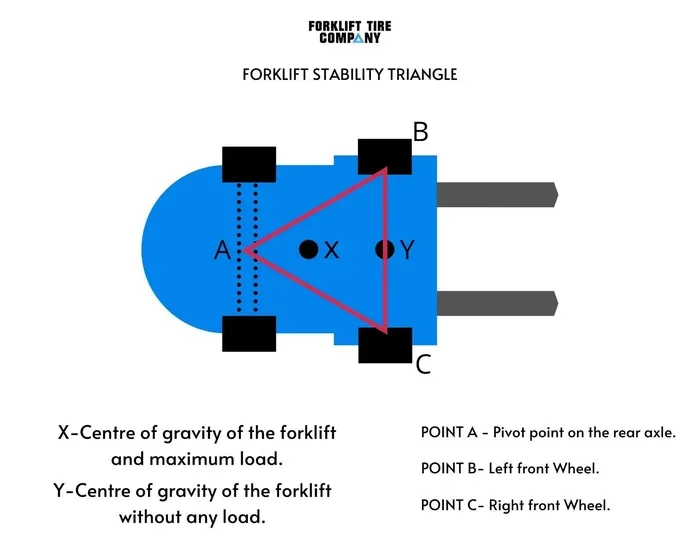
The 3 points of a forklift form the stability triangle, which is the foundation of safe forklift operation. These three contact points — the two front wheels and the rear axle — determine how a forklift handles loads, tilts, and turns. Understanding what are the 3 points of a forklift helps operators prevent tip-overs and maintain balance every single shift.
Every forklift operator, warehouse manager, and safety officer needs to understand what are the 3 points of a forklift. This knowledge is not just theory. It is the difference between a smooth, safe shift and a dangerous tip-over accident. The 3 points of a forklift create what experts call the stability triangle. This triangle controls everything about how a forklift moves, lifts, and carries loads.
When you grasp the concept of the 3 points of a forklift, you unlock a deeper understanding of forklift stability, load capacity, and forklift geometry. You stop guessing and start making informed decisions on the floor. This guide breaks down every aspect of the 3 points of a forklift in plain, practical language. Whether you are a new operator or a seasoned pro, these insights will sharpen your safety awareness and operational skill.
The 3 points of a forklift are not random parts of the machine. They are carefully positioned contact points that work together to keep the forklift balanced. Each point plays a specific role. Together, they form a triangle that shifts and changes as you lift, tilt, and drive. Let us dive into exactly what these points are and why they matter so much for forklift safety and everyday forklift operation.
Key Takeaways
- The 3 points of a forklift are the two front wheels and the rear axle, forming a stability triangle.
- The stability triangle is the core concept behind forklift geometry and safe load handling.
- Shifting the load center or adding a forklift attachment changes the load moment and affects balance.
- Exceeding rated capacity or lifting too high dramatically increases the tipping point risk.
- Proper stability control starts with understanding how counterweight and ground clearance work together.
- Common mistakes like diagonal loading and fast turning can break the three-point suspension balance.
- Regular training and forklift safety checks keep operations stable and accident-free.
📑 Table of Contents
- What Are the 3 Points of a Forklift?
- The Stability Triangle: How It Works in Practice
- Why Understanding Forklift Geometry Matters
- How Load Position Affects the 3 Points of a Forklift
- Common Mistakes That Compromise Forklift Balance
- Expert Tips for Safe and Stable Forklift Operation
- Key Takeaways
- Conclusion
What Are the 3 Points of a Forklift?
The 3 points of a forklift refer to the three contact points where the machine touches the ground. These points create the stability triangle, which is the foundation of how a forklift stays upright. Without this triangle, every forklift would be unstable and unsafe to operate.
The Front Axle Contact Point
The first point of the 3 points of a forklift is the front axle. This is where the two front wheels meet the ground. Even though there are two wheels, they act as a single contact point in the stability triangle. The front axle supports the entire load moment of the lifted cargo. It also carries the weight of the forklift mast, the tilt cylinder, and the forks themselves.
Think of the front axle as the front corner of the stability triangle. When you lift a heavy load center, the force pushes down through this point. The further out the load extends, the more stress this front point endures. This is why understanding what are the 3 points of a forklift starts with the front axle. It takes the biggest hit when loads are unbalanced or oversized.
The Rear Axle Contact Points
The second and third points of the 3 points of a forklift are the two rear wheels. These wheels sit on the rear axle and act as the back corners of the stability triangle. The counterweight sits behind the rear axle, which is essential for balancing the front load. Without this counterweight, the forklift would flip forward the moment you lifted anything.
The rear axle is also the pivot point for steering. When you turn the forklift, the rear wheels swing wide. This movement changes the shape of the stability triangle slightly, but the three points remain connected. The ground clearance at the rear affects how uneven surfaces impact the three-point suspension system. Low ground clearance can reduce the stability factor on ramps or slopes.
How the 3 Points Form the Stability Triangle
When you connect the front axle point to the two rear axle points, you get a triangle. This stability triangle is the invisible boundary that keeps the forklift upright. As long as the combined center of gravity stays inside this triangle, the forklift is stable. If the center of gravity shifts outside the triangle, the tipping point is reached and the forklift can overturn.
The stability triangle is not a fixed shape. It changes size and angle based on how the forklift is loaded, tilted, and driven. This is why what are the 3 points of a forklift is such a critical concept. The triangle adapts to every movement, and operators must respect its limits at all times.
The Stability Triangle: How It Works in Practice
The stability triangle is the practical application of the 3 points of a forklift. It is not just a diagram on a training poster. It is a living, breathing concept that affects every single forklift movement. When you understand how the triangle works, you can predict how the forklift will behave under different conditions.
Static Stability vs. Dynamic Stability
Static stability is when the forklift is standing still. The 3 points of a forklift hold the machine in place, and the stability triangle is at its strongest. The center of gravity sits safely inside the triangle. No forces are pushing the forklift sideways or forward.
Dynamic stability is when the forklift is moving. This is when things get tricky. Driving, turning, braking, and lifting all shift the center of gravity. The stability triangle effectively shrinks or stretches depending on the movement. A forklift that is stable when parked can become unstable the moment it starts moving with a raised load.
How the Load Moment Affects the Triangle
The load moment is the product of the load weight and the distance from the load center to the front axle. A larger load moment pushes the center of gravity forward and upward. This pushes the stability triangle toward its limits. The 3 points of a forklift must absorb this force without crossing the tipping point.
For example, a forklift rated for 5,000 pounds at a standard load center of 24 inches may only handle 3,000 pounds if the load extends to 36 inches. The load moment has increased, and the stability triangle is under more stress. This is a key reason why what are the 3 points of a forklift matters for every lift, not just heavy ones.
The Role of the Counterweight
The counterweight is the heavy mass at the back of the forklift. It anchors the rear axle points of the stability triangle. The counterweight prevents the forklift from tipping forward when you lift a load. The heavier the counterweight, the more front load the forklift can handle — but only up to the rated capacity.
Adding a forklift attachment like a side shifter, rotator, or fork extension changes the forklift geometry. These attachments shift the load center forward and reduce the effective rated capacity. The 3 points of a forklift do not change, but the balance within the stability triangle does. Always check the capacity plate when using any forklift attachment.
Why Understanding Forklift Geometry Matters
Forklift geometry is the science behind how a forklift is designed and how it behaves. The 3 points of a forklift are the backbone of this geometry. Every dimension, angle, and weight distribution in a forklift serves to keep the stability triangle intact during operation.
How Forklift Design Supports the 3 Points
Manufacturers engineer every forklift around the 3 points of a forklift concept. The forklift mast height, the tilt cylinder position, the rear axle width, and the counterweight mass are all calculated to maximize the stability triangle. When you respect the design limits, the forklift performs as intended.
The front axle is positioned to handle the downward force of lifted loads. The rear axle is spaced wide enough to provide a solid base for the stability triangle. Even the tire size and ground clearance play a role in how the 3 points of a forklift interact with the floor surface.
Load Center and Rated Capacity
The load center is the horizontal distance from the face of the forks to the center of gravity of the load. Standard load center is typically 24 inches. The rated capacity listed on the forklift nameplate assumes this standard load center.
If your load is longer or heavier on one side, the load center shifts. This shifts the center of gravity outside the safe zone of the stability triangle. The 3 points of a forklift cannot compensate for a shifted load center. You must reduce the load weight or reposition the cargo to stay within the stability triangle.
Forklift Attachments and Their Impact
Forklift attachments are tools added to the front of the forklift to handle specialized loads. Examples include clamp attachments, fork extensions, drum handlers, and side-shift units. Every attachment changes the forklift geometry and affects the 3 points of a forklift balance.
Attachments move the load center forward, which reduces the stability factor. The rated capacity must be derated when any attachment is in use. Always consult the manufacturer’s capacity chart. Ignoring this rule is one of the fastest ways to exceed the tipping point and lose stability control.
How Load Position Affects the 3 Points of a Forklift
Where you place the load on the forks has a direct impact on the stability triangle. The 3 points of a forklift do not change, but the forces acting on them do. Understanding this relationship is essential for every forklift operator.
Lifting Height and Stability
The higher you lift a load, the higher the center of gravity rises. A higher center of gravity makes the stability triangle more sensitive to side-to-side movements. Even a small turn at full fork height can push the center of gravity outside the triangle. This is why what are the 3 points of a forklift matters at every lift height, not just at ground level.
Always keep the load as low as possible while traveling. This keeps the load moment manageable and the stability factor high. Raising the forks only when you are in position to place the load is a simple habit that saves lives.
Diagonal Loading and Imbalance
Diagonal loading happens when the load is not centered on the forks. This creates an uneven force on the front axle and shifts the center of gravity sideways. The stability triangle is no longer balanced, and the tipping point is closer than you think.
Always center the load on the forks as much as possible. If the load is too wide, reduce the fork height and drive slowly. Never make sharp turns with an off-center load. The 3 points of a forklift can only handle balanced forces within the stability triangle.
Tilt Operations and the Tipping Point
The tilt cylinder allows the forklift mast to tilt the load backward or forward. Tilting the mast forward shifts the center of gravity toward the front of the stability triangle. Tilting backward pulls it toward the rear. Both movements change how the 3 points of a forklift share the load.
Never tilt forward while driving, especially with a raised load. Tilt the mast slightly backward during travel to secure the load and keep the center of gravity within the stability triangle. This one habit dramatically reduces the risk of a forward tip-over.
Common Mistakes That Compromise Forklift Balance
Even experienced operators can make mistakes that threaten the stability triangle. These errors often come from habits that seem harmless but quietly push the 3 points of a forklift toward the tipping point.
Overloading Beyond Rated Capacity
The most common and most dangerous mistake is exceeding the rated capacity. Every forklift has a nameplate that states the maximum weight it can safely carry at a standard load center. Going over this limit pushes the center of gravity past the front point of the stability triangle. The result is a forward tip-over that can be fatal.
Never assume a forklift can handle more because it looks sturdy. The 3 points of a forklift have strict limits. Respect the rated capacity every single time.
Raising Loads While Turning
Lifting the forks while the forklift is turning creates a dangerous combination of forces. The raised load adds height to the center of gravity, and the turn adds lateral force. Together, these forces can easily push the center of gravity outside the stability triangle. Always lift or lower the load only when the forklift is stationary and on level ground.
Ignoring Floor Conditions
Uneven floors, slopes, wet surfaces, and loose debris all affect the 3 points of a forklift. The ground clearance and tire grip determine how well the three-point suspension maintains contact with the floor. On a ramp, the stability triangle tilts with the slope, and the tipping point is reached much sooner.
Always inspect the floor before operating. Slow down on ramps and slopes. Never operate a forklift on a grade steeper than the manufacturer recommends. These precautions keep the stability triangle intact.
Expert Tips for Safe and Stable Forklift Operation
Top operators and safety professionals follow a set of principles that keep the 3 points of a forklift working in their favor every shift. These tips come from years of real-world forklift safety experience.
Pre-Operation Checks
Before you start the forklift, walk around and check the 3 points of a forklift. Inspect the tires, look for damage to the front axle and rear axle, and verify that the ground clearance is adequate. Check the tilt cylinder for leaks and make sure the forklift mast raises and lowers smoothly. These quick checks prevent surprises during operation.
Maintain Proper Speed
Speed is the enemy of stability control. Fast turns, sudden stops, and rapid acceleration all shift the center of gravity unpredictably. Keep your speed low, especially when the load is raised. Smooth, gradual movements keep the stability triangle balanced and the 3 points of a forklift firmly planted.
Stay Trained and Current
Forklift operation requires regular training and certification. Forklift safety standards change, new attachments enter the market, and warehouse layouts evolve. Staying current with training ensures you always understand what are the 3 points of a forklift and how to respect the stability triangle in any situation.
Key Takeaways
- The 3 points of a forklift are the two front wheels and the rear axle, forming the stability triangle.
- The stability triangle is the invisible boundary that keeps the forklift upright during all operations.
- Shifting the load center or adding a forklift attachment changes the load moment and affects balance.
- Exceeding rated capacity or lifting too high dramatically increases the tipping point risk.
- Proper stability control starts with understanding how counterweight and ground clearance work together.
- Common mistakes like diagonal loading and fast turning can break the three-point suspension balance.
- Regular training and forklift safety checks keep operations stable and accident-free.
Conclusion
What are the 3 points of a forklift? They are the two front wheels and the rear axle — the three contact points that form the stability triangle. This triangle is the foundation of every safe forklift lift, turn, and drive. Understanding the 3 points of a forklift gives you the knowledge to operate with confidence and respect for the machine’s limits.
The stability triangle is not a fixed boundary. It shifts and adapts with every movement, every load, and every surface. Your job as an operator is to keep the center of gravity inside this triangle at all times. Respect the rated capacity, center your loads, keep forks low while traveling, and never rush a turn with a raised load.
When you truly understand what are the 3 points of a forklift, you become a safer, more skilled operator. You protect yourself, your coworkers, and your workplace. Take this knowledge, apply it every shift, and make forklift safety your top priority. The 3 points of a forklift are always working for you — as long as you work with them.
What Are the 3 Points of a Forklift?
The 3 points of a forklift are the front axle (where the two front wheels meet the ground) and the two rear wheels on the rear axle. Together, these three points form the stability triangle that keeps the forklift balanced during operation.
Why Is the Stability Triangle Important?
The stability triangle defines the safe zone for the forklift’s center of gravity. As long as the combined center of gravity stays inside this triangle, the forklift remains stable. If it moves outside, the forklift risks tipping over, which can cause serious injury or death.
How Does Load Position Affect the 3 Points?
Where you place the load shifts the center of gravity within the stability triangle. A higher or more off-center load pushes the center of gravity closer to the tipping point. Always keep loads centered and as low as possible to maintain balance across the 3 points of a forklift.
Can a Forklift Attachment Change the Stability?
Yes, absolutely. Any forklift attachment shifts the load center forward, which reduces the effective rated capacity. The 3 points of a forklift do not change, but the balance within the stability triangle does. Always check the capacity plate when using attachments.
What Happens If You Exceed the Rated Capacity?
Exceeding the rated capacity pushes the center of gravity past the front point of the stability triangle. This can cause a forward tip-over, especially when the load is raised. Never exceed the forklift’s rated capacity under any circumstances.
How Can Operators Prevent Tip-Overs?
Operators can prevent tip-overs by keeping loads low while driving, avoiding sharp turns, respecting the rated capacity, and never tilting the mast forward while in motion. Understanding what are the 3 points of a forklift and respecting the stability triangle are the most effective prevention strategies.
Frequently Asked Questions
What is What Are the 3 Points of a Forklift?
What Are the 3 Points of a Forklift is an important topic with many practical applications.