How to Put Freon in a Kia Forte Easy Step by Step Guide
Putting freon in your Kia Forte is a simple DIY job you can do at home with an AC recharge kit. This guide walks you through every step, from finding the low-pressure port to checking your refrigerant levels. You will save hundreds of dollars compared to a shop visit and keep your car air conditioning running strong all season long.
Your Kia Forte air conditioning system works hard every summer. When it starts blowing warm air, the problem is often low freon levels. Recharging the AC system is one of the most common car maintenance tasks you can do yourself. It takes about 30 minutes and costs far less than a trip to the repair shop. This guide shows you exactly how to put freon in a Kia Forte, step by step, so you can get back to enjoying cool air on those hot days.
Whether your Forte is a 2014 model or a 2023 model, the process is very similar. Most Kia Forte vehicles use R-134a refrigerant, which is the standard for older cars. Newer models may use R-1234yf, so always check your owner manual first. Understanding your specific system makes the job much easier and safer. Let us walk through everything you need to know.
On a day when the how hot can a car get in the sun reaches triple digits, a working AC system is not a luxury. It is essential for your comfort and safety. Studies show that a hot car can reach dangerous temperatures in minutes. Keeping your freon levels topped up ensures your cooling system works when you need it most. Let us get into the details of recharging your Kia Forte.
Key Takeaways
- Recharging your Kia Forte AC is easy: With a basic recharge kit and about 30 minutes, you can restore cold air to your cabin.
- You need the right refrigerant: Most Kia Forte models use R-134a freon. Check your owner manual to be sure.
- Safety matters: Always wear safety glasses and gloves. Freon can cause frostbite on contact with skin.
- Check for leaks first: If your AC keeps losing charge, you may have a leak that needs repair before recharging.
- Know the warning signs: Warm air from vents, clicking sounds from the engine bay, and reduced cooling are clear signs of low freon.
- Do not overcharge: Too much freon can damage your AC compressor and reduce cooling performance.
- Regular maintenance helps: Just like does it really matter what oil I put in my car, using the right refrigerant keeps your AC system healthy.
📑 Table of Contents
Understanding Your Kia Forte AC System
Before you start adding freon, it helps to understand how your AC system works. The air conditioning system in your Kia Forte uses a closed loop of refrigerant. This refrigerant cycles through several components to remove heat from your cabin. When the freon level drops, the system cannot cool the air properly.
The main parts of your AC system include the compressor, condenser, expansion valve, and evaporator. The compressor pressurizes the refrigerant gas. The condenser releases heat from the gas into the outside air. The expansion valve reduces pressure, and the evaporator absorbs heat from inside your car. Freon flows through all of these parts in a continuous cycle.
What Type of Freon Does a Kia Forte Use?
Most Kia Forte models from 2010 to 2020 use R-134a refrigerant. This is the most common type of automotive AC refrigerant. If your Forte is a newer hybrid or electric model, it may use R-1234yf instead. You can find the correct refrigerant type on the label under your hood or in your owner manual. Using the wrong type of refrigerant can damage your system.
Do not confuse R-134a with older refrigerants like R-12. R-12 was banned in the United States in 1994. If your car was made after 1994, it uses R-134a. Always buy the correct refrigerant for your model year. Mixing different types of refrigerant can cause expensive problems.
Signs Your Kia Forte Needs Freon
How do you know your Kia Forte is low on freon? There are several clear warning signs. The most obvious one is warm air coming from your vents when the AC is set to maximum cold. You might also notice that the AC works fine at first but then gets warm after driving for a while.
Other signs include a clicking sound coming from the engine bay when you turn on the AC. This click is the AC clutch engaging and disengaging because the pressure is too low. You may also see refrigerant oil residue around the AC lines or fittings. If you notice any of these symptoms, it is time to check your freon level.
Tools and Materials You Will Need
Gathering everything before you start makes the job much smoother. You do not want to be halfway through the process and realize you are missing something. Here is a list of what you need to put freon in your Kia Forte.
- AC recharge kit: Buy a quality recharge kit that includes R-134a refrigerant and a gauge. Kits are available at most auto parts stores for $20 to $50.
- Safety glasses: Freon can cause eye irritation. Safety glasses protect your eyes during the process.
- Work gloves: The refrigerant can cause frostbite on bare skin. Wear protective gloves at all times.
- Thermometer: A simple thermometer helps you measure the temperature of the air coming from your vents.
- Clean rag: You will use this to wipe down the recharge port before connecting the hose.
- Your Kia Forte owner manual: This tells you the location of the low-pressure port and the correct refrigerant type.
When you buy your recharge kit, make sure it includes a pressure gauge. The gauge tells you when the system is full. Overcharging your AC system can be just as bad as undercharging it. A good kit will have clear instructions and a gauge that is easy to read.
Just as you would check what oil goes in your engine, you need to make sure you have the right freon for your Kia Forte. Using the wrong refrigerant can cause serious damage. If you are unsure, ask a store employee or check online for your specific model year.
Step by Step Guide to Putting Freon in a Kia Forte
Now let us get into the actual process. Follow these steps carefully and you will have your Kia Forte AC recharged in no time. This is one of the easiest DIY car maintenance tasks you can do.
Step 1: Park Your Car and Turn on the Engine
Find a flat, level surface to park your Kia Forte. Turn the engine on and set the AC to maximum cold. Turn the fan speed to the highest setting. This allows the system to circulate the new refrigerant as you add it. Keeping the engine running also activates the AC compressor, which helps the system absorb the freon properly.
Make sure your car is in park and the parking brake is engaged. You do not want the car rolling while you are working underneath the hood. Open the hood and prop it securely with the hood strut.
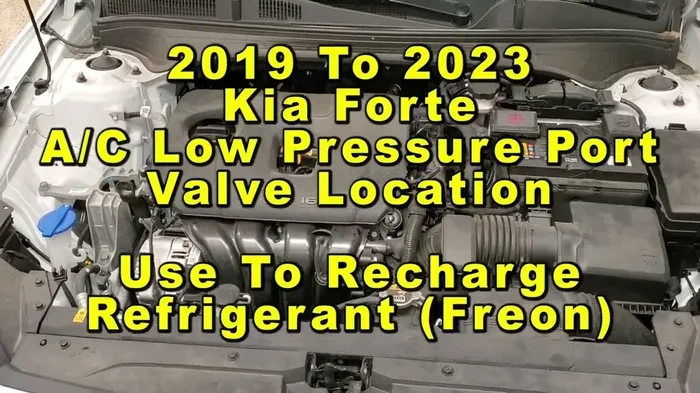
Step 2: Locate the Low-Pressure Port
The low-pressure port is where you will connect the recharge hose. On most Kia Forte models, the low-pressure port is located on the left side of the engine bay, near the firewall. It has a black or silver cap with an L printed on it or near it.
The low-pressure port has a larger diameter fitting than the high-pressure port. This makes it easy to identify. If you are unsure, consult your owner manual or look for labels under the hood. The high-pressure port is smaller and is usually located near the condenser at the front of the car.
Step 3: Clean the Port Area
Before you remove the cap, use a clean rag to wipe around the port. Dirt and debris can enter the system and cause damage. Remove the cap from the low-pressure port carefully. Set the cap aside in a safe place so you do not lose it.
You want the area to be as clean as possible. Even a small particle of dirt can clog the AC system and lead to costly repairs. This simple step takes only a few seconds but can save you a lot of trouble later.
Step 4: Connect the Recharge Hose
Take the recharge hose from your kit and connect it to the low-pressure port. Push the fitting firmly onto the port until you hear a click. Make sure the connection is tight to prevent refrigerant from leaking out during the process.
The other end of the hose connects to the can of refrigerant in your recharge kit. If your kit has a gauge built into the hose, the gauge will display the current pressure in the system. This is how you will know when to stop adding freon.
Step 5: Add Freon Slowly
Now comes the main part of the process. Turn the can of refrigerant upside down. This allows liquid freon to flow through the hose and into the system. Open the valve on the recharge hose slowly. You will see the pressure gauge start to move.
Add freon gradually. Do not rush this step. Watch the gauge closely and stop adding refrigerant when the pressure reaches the recommended level. The recommended pressure for most Kia Forte models is between 25 and 45 psi on the low-pressure side when the engine is running and the AC is on maximum cold.
If you are not sure what the correct pressure is, check your owner manual or look for a sticker under the hood. The sticker will list the specifications for your specific model. Overcharging the system can cause the AC compressor to fail, which is an expensive repair.
Step 6: Check the Temperature
Once you have added the correct amount of freon, disconnect the hose from the low-pressure port. Replace the cap on the port. Start the engine and let the AC run on maximum cold for about 10 minutes. Use your thermometer to measure the air temperature coming from the center vent.
The air should feel noticeably colder than before. In most cases, the temperature should drop by 20 to 30 degrees Fahrenheit. If the air is still warm, you may need to add a little more freon. However, if the system was completely empty, you may have a leak that needs to be addressed first.
Common Mistakes to Avoid
Putting freon in your Kia Forte is straightforward, but there are some common mistakes that people make. Avoiding these errors will keep you safe and protect your AC system.
- Overcharging the system: Too much freon causes high pressure, which can damage the compressor. Always follow the gauge readings and stop when the pressure is correct.
- Using the wrong refrigerant: R-134a and R-1234yf are not interchangeable. Using the wrong type can damage seals and components in your AC system.
- Not checking for leaks: If your freon keeps running low, you likely have a leak. Simply adding more freon without fixing the leak is a temporary fix at best.
- Working with the engine off: The AC compressor needs to be running to properly absorb the refrigerant. Always add freon with the engine on and the AC on maximum cold.
- Ignoring safety precautions: Freon is cold enough to cause frostbite. Always wear gloves and safety glasses. Never point the hose nozzle at your skin.
If you are new to car maintenance, it is a good idea to read up on basic how do you uncap gas procedures and similar simple tasks first. Building your confidence with smaller jobs prepares you for tasks like AC recharging. You will learn how different car systems work and feel more comfortable working under the hood.
When to See a Professional
There are times when a DIY recharge is not enough. If your AC system has a major leak, adding freon will only be a temporary solution. Here are some signs that you should take your Kia Forte to a professional mechanic.
If you hear a hissing sound coming from the engine bay after recharging, there may be a leak in the system. If the AC stops blowing cold air again within a few days, the refrigerant is escaping somewhere. A professional mechanic can use special leak detection equipment to find and repair the problem.
Also, if the AC compressor does not engage at all after you add freon, there could be an electrical issue or a failed compressor. These are repairs that require professional tools and expertise. Do not try to fix compressor problems yourself unless you have experience with automotive AC systems.
Keep in mind that some car systems are complex. If your Kia Forte has additional features like climate control or automatic temperature regulation, the AC system may have sensors and modules that need special diagnostic tools. A professional can handle these advanced systems safely and effectively.
How to Maintain Your Kia Forte AC System
Once you have recharged your Kia Forte AC system, you want to keep it in good shape. Regular maintenance helps prevent freon leaks and keeps your cooling system working efficiently. Here are some simple tips for maintaining your AC system.
- Run your AC regularly: Even in winter, run your AC for a few minutes each week. This keeps the seals lubricated and prevents them from drying out and cracking.
- Check for leaks periodically: Look for oily residue around AC lines and fittings. This residue is a sign of a refrigerant leak.
- Replace your cabin air filter: A dirty cabin air filter reduces airflow and makes your AC work harder. Replace it according to your owner manual schedule.
- Keep the condenser clean: The condenser is located at the front of the car. Debris like leaves and dirt can block airflow and reduce cooling performance. Rinse it gently with water when washing your car.
- Address issues promptly: If you notice any drop in cooling performance, check your freon level right away. Catching a small leak early can prevent expensive repairs later.
Just as regular oil changes and using the right does it really matter what oil I put in my car keep your engine healthy, simple AC maintenance keeps your cooling system running strong. A little preventive care goes a long way toward avoiding major repairs.
Another important maintenance tip is to have your AC system inspected during regular service intervals. A mechanic can check the pressure levels, inspect hoses and connections, and identify potential problems before they become serious. This proactive approach saves you time and money in the long run.
Why DIY Freon Recharge Saves You Money
One of the biggest reasons to learn how to put freon in your Kia Forte yourself is the cost savings. A professional AC recharge at a repair shop typically costs between $150 and $300. A DIY recharge kit costs between $20 and $50. That is a savings of $100 to $250 every time your AC needs a top-up.
Over the life of your Kia Forte, you may need to recharge the AC system several times. The savings add up quickly. Plus, you gain the satisfaction of knowing you can handle this common car maintenance task on your own. It is a valuable skill that every car owner should have in their toolbox.
The process is simple enough that most people complete their first recharge in under 30 minutes. After doing it a couple of times, it becomes second nature. You will wonder why you ever paid a mechanic to do something so straightforward.
Remember that the cost of a recharge kit is just a fraction of what a shop charges for the same service. The kit also comes with a gauge, so you can monitor your AC pressure anytime. This gives you more control over your vehicle maintenance and helps you catch problems early.
Key Takeaways
- Recharging your Kia Forte AC is easy: With a basic recharge kit and about 30 minutes, you can restore cold air to your cabin.
- You need the right refrigerant: Most Kia Forte models use R-134a freon. Check your owner manual to be sure.
- Safety matters: Always wear safety glasses and gloves. Freon can cause frostbite on contact with skin.
- Check for leaks first: If your AC keeps losing charge, you may have a leak that needs repair before recharging.
- Know the warning signs: Warm air from vents, clicking sounds from the engine bay, and reduced cooling are clear signs of low freon.
- Do not overcharge: Too much freon can damage your AC compressor and reduce cooling performance.
- Regular maintenance helps: Just like does it really matter what oil I put in my car, using the right refrigerant keeps your AC system healthy.
Conclusion
Putting freon in your Kia Forte does not have to be intimidating. With the right tools, the correct refrigerant, and a little patience, you can recharge your AC system at home in about half an hour. This simple DIY task saves you money, keeps your car comfortable, and builds your confidence as a car owner.
Always start by identifying the correct refrigerant type for your model year. Locate the low-pressure port, connect the recharge hose, and add freon slowly while monitoring the pressure gauge. Stop when the gauge reaches the recommended level and then test the system by checking the air temperature from your vents.
Remember to take safety precautions and never overcharge the system. If you suspect a leak or if the AC does not improve after recharging, it is time to visit a professional mechanic. With proper maintenance and occasional recharges, your Kia Forte air conditioning system will keep you cool for many summers to come.
Take the time to learn this basic car maintenance skill. Your wallet will thank you, and you will feel more confident every time you work on your vehicle. Cool air is just a recharge kit away, and now you know exactly how to get it done.
Frequently Asked Questions
How much freon does a Kia Forte hold?
Most Kia Forte models hold between 24 and 28 ounces of R-134a refrigerant. Check your owner manual for the exact capacity of your specific model year. Overfilling the system can cause damage, so always add freon slowly and monitor the gauge.
Can I use a recharge kit with a built-in gauge?
Yes, recharge kits with built-in gauges are the easiest option for DIYers. The gauge shows you the pressure in real time so you know exactly when to stop adding freon. These kits are available at most auto parts stores and online retailers for around $25 to $50.
How long does a freon recharge last in a Kia Forte?
A properly done recharge should last for several years. If your AC starts losing cool air again within a few months, you likely have a leak in the system. In that case, adding more freon is only a temporary fix until the leak is repaired by a professional.
Is it safe to put freon in my car myself?
Yes, it is safe as long as you follow the instructions and take proper precautions. Always wear safety glasses and gloves because freon can cause frostbite on contact with skin. Work in a well-ventilated area and never smoke near the refrigerant can. If you feel uncomfortable at any point, consult a professional mechanic.
What happens if I put too much freon in my Kia Forte?
Overcharging the AC system causes high pressure, which can lead to compressor failure. The compressor is one of the most expensive parts of the AC system to replace. Always monitor the pressure gauge carefully and stop adding freon as soon as the gauge reaches the recommended level.
Do I need to evacuate the old freon before recharging?
For a simple top-up, you do not need to evacuate the old freon. However, if your system is completely empty or has been open for a long time, moisture may have entered the system. In that case, a professional evacuation and recharge is recommended to ensure the system works properly and does not get damaged.