How Many Cylinders Does the Toyota Camry Engine Have
The Toyota Camry has been offered with both four-cylinder and V6 engines over its many generations. Most modern Camry models use a 2.5-liter four-cylinder engine, while older and sportier trims featured a 3.5-liter V6. Understanding the cylinder count helps you choose the right trim, maintain your engine properly, and get the best fuel economy for your needs.
When you think about buying or maintaining a Toyota Camry, one of the first questions that comes up is how many cylinders the engine actually has. The answer might surprise you because it has changed a lot over the years. The Toyota Camry has been one of the most popular sedans in the world, and part of its appeal comes from offering different engine options to match different needs.
Whether you are shopping for a used Camry or just curious about your current ride, knowing the cylinder count matters. It affects everything from fuel economy to maintenance costs to how the car feels on the road. In this guide, we will walk through every engine option Toyota has offered in the Camry, explain what the differences mean, and help you figure out which setup is best for you.
The short answer is that most modern Toyota Camry models come with a four-cylinder engine. However, older models and some sportier trims offered a V6 engine with six cylinders. Let us dive deep into the details so you have the full picture.
Key Takeaways
- Most Toyota Camry models use a 4-cylinder engine: The standard 2.5-liter inline-four powers the majority of trims and delivers solid fuel economy.
- V6 options were available in older generations: The 3.5-liter V6 offered more power and was popular in sportier trims before being phased out.
- Cylinder count affects fuel economy, performance, and maintenance costs: Fewer cylinders generally mean lower running costs and better gas mileage.
- You can tune a Toyota Camry for better performance: Tuning your Camry is possible, especially if you know your engine type.
- Using the right oil matters: Oil choice impacts engine health regardless of cylinder count.
- Timing belt replacement is essential: Regular timing belt service keeps your Camry engine running smoothly.
📑 Table of Contents
- Understanding Engine Cylinders: What They Do
- Toyota Camry Four-Cylinder Engine: The Modern Standard
- Toyota Camry V6 Engine: The Six-Cylinder Option
- Camry Hybrid Engine: The Four-Cylinder Revolution
- How to Choose the Right Camry Engine for Your Needs
- Common Camry Engine Problems by Cylinder Count
- Maintenance Tips for Your Camry Engine
- Frequently Asked Questions
Understanding Engine Cylinders: What They Do
Before we get into the specific Camry engines, let us talk about what cylinders actually do. An engine cylinder is the chamber where fuel burns to create power. The more cylinders an engine has, the more power strokes happen at once. This generally means more horsepower and smoother operation.
Most car engines fall into two categories: four-cylinder and six-cylinder (V6). A four-cylinder engine has four pistons moving up and down in a line. This is called an inline-four. A V6 engine has six cylinders arranged in a V shape. Both designs have been used in the Camry at different times.
Why Cylinder Count Matters for Your Camry
The number of cylinders in your Camry engine directly impacts several things. First, it affects fuel economy. Fewer cylinders usually burn less gas. Second, it affects power output. More cylinders generally mean more horsepower and torque. Third, it affects maintenance. More cylinders mean more parts that can wear out.
If you are looking for a daily driver that saves on gas, a four-cylinder Camry is a great choice. If you want more pulling power for towing or highway merging, a V6 might be the better option. Your driving habits should guide which cylinder count works best for you.
Toyota Camry Four-Cylinder Engine: The Modern Standard
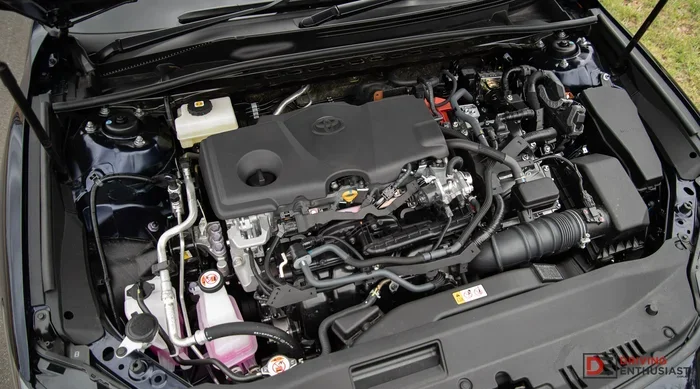
Today, the Toyota Camry is built around a 2.5-liter inline-four engine as the standard option. This engine has been refined over many years and is known for being reliable and efficient. The 2.5-liter four-cylinder is the backbone of the Camry lineup and powers most trims from the base LE to the XSE.
This engine produces around 203 horsepower and 184 pound-feet of torque. Those numbers might not sound exciting if you are used to sports cars, but for a midsize sedan, they are more than enough for daily driving. The engine pairs with either an eight-speed automatic or a continuously variable transmission depending on the trim level.
What Makes the 2.5L Four-Cylinder So Reliable
Toyota designed this four-cylinder engine with longevity in mind. The block and internals are built to last well over 200,000 miles with proper care. Regular oil changes and timing belt service go a long way in keeping this engine healthy for the long haul.
The engine also uses a timing chain rather than a timing belt in newer generations, which reduces maintenance needs. But if you own an older Camry with a timing belt, staying on top of replacement schedules is critical. You can read more about when to replace the timing belt on a Toyota Camry to stay ahead of maintenance.
Fuel Economy of the Four-Cylinder Camry
One of the biggest reasons people choose the Camry is fuel economy. The 2.5-liter four-cylinder engine delivers an estimated 28 to 32 miles per gallon combined, depending on the model year and trim. This makes it one of the most efficient sedans in its class.
For comparison, the hybrid Camry gets even better fuel economy, but we will cover that in a later section. The point is that the standard four-cylinder Camry gives you strong efficiency without sacrificing too much in the way of performance.
Toyota Camry V6 Engine: The Six-Cylinder Option
For many years, Toyota offered a V6 engine in the Camry. The most common was the 3.5-liter V6 that produced around 268 horsepower and 248 pound-feet of torque. This engine was available in sportier trims like the SE and XSE and was a favorite among buyers who wanted more power.
The V6 Camry felt noticeably different to drive. The engine had a smoother, more refined sound, and acceleration felt more confident. If you have ever test-driven a V6 Camry, you know the difference it makes on the highway and when merging onto busy roads.
Which Camry Generations Offered the V6
The V6 engine was available across several Camry generations. Here is a quick breakdown:
- Sixth Generation (2002-2006): Offered a 3.0-liter V6 producing 220 horsepower. This was a very popular setup.
- Seventh Generation (2007-2011): Featured a 3.5-liter V6 with 268 horsepower. This was the peak of V6 Camry performance.
- Eighth Generation (2012-2017): The 3.5-liter V6 continued but was eventually dropped in later model years as Toyota shifted focus to four-cylinder and hybrid engines.
Today, Toyota no longer offers a V6 in the Camry. The four-cylinder and hybrid powertrains have taken over. If you want a V6 Camry, you will need to look at used models from 2002 to 2017.
Pros and Cons of the V6 Camry
The V6 Camry has some clear advantages. More power, smoother acceleration, and a more engaging driving experience. But there are downsides too. V6 engines use more fuel, have higher maintenance costs, and tend to cost more at the pump.
If you are buying a used V6 Camry, make sure to get a full vehicle history report. You can also tune a Toyota Camry to squeeze out extra performance, which is especially popular among V6 owners who want to get the most out of their engine.
Camry Hybrid Engine: The Four-Cylinder Revolution
Toyota has been a leader in hybrid technology for decades, and the Camry hybrid is a great example. The hybrid Camry uses a 2.5-liter four-cylinder engine paired with an electric motor. This combination delivers excellent fuel economy without sacrificing too much power.
The hybrid system produces a combined 208 horsepower. It uses a power-split device that seamlessly switches between the gas engine and electric motor. This means you get the best of both worlds: the range of a gas engine and the efficiency of electric power.
Fuel Economy: Hybrid vs. Standard Four-Cylinder
The hybrid Camry gets an estimated 44 miles per gallon in the city and 47 on the highway. Compare that to the standard four-cylinder Camry which gets around 28 city and 39 highway. The difference is significant, especially if you do a lot of city driving.
Over time, the fuel savings from a hybrid Camry can offset the higher purchase price. If you plan to keep your car for many years, the hybrid is a smart financial choice.
How the Hybrid Four-Cylinder Works
The hybrid system uses a battery pack stored under the rear seats. When you are driving at low speeds, the electric motor handles the work. When you need more power, the gas engine kicks in. The system also uses regenerative braking to recharge the battery while you drive.
This means the four-cylinder engine in a hybrid Camry works less hard than in a standard model. Less work means less wear and tear, which can extend engine life. Many hybrid Camry owners report crossing the 250,000-mile mark with proper maintenance.
How to Choose the Right Camry Engine for Your Needs
With so many engine options across the Camry lineup, how do you pick the right one? The answer depends on what you value most. Let us break down the decision-making process.
Consider Your Daily Driving Habits
If your commute is mostly highway driving, a standard four-cylinder Camry will serve you well. If you are stuck in city traffic all day, the hybrid version will save you a lot of money on fuel. Think about your typical driving conditions before making a decision.
Think About Your Budget
New Camry models range in price depending on the trim and engine. The base four-cylinder LE is the most affordable option. The hybrid trims cost a bit more upfront but save money over time. Used V6 Camrys can be found at good prices, but keep in mind that V6 maintenance costs more than four-cylinder maintenance.
Also consider the cost of parts and service. Using the correct oil is important for any Camry engine. If you are wondering about oil viscosity, check out our guide on whether you can use 5W-30 instead of 5W-20 in a Toyota Camry.
New vs. Used: What Engine Should You Look For?
If you are buying new, the standard four-cylinder or hybrid four-cylinder is the way to go. These engines are modern, efficient, and covered by Toyota’s warranty. If you are shopping for a used Camry, a V6 model can offer a more engaging driving experience at a lower price point.
Just be sure to have a trusted mechanic inspect any used Camry before you buy. Check the engine for leaks, listen for unusual noises, and review the maintenance records. A well-maintained Camry engine can last 300,000 miles or more regardless of cylinder count.
Common Camry Engine Problems by Cylinder Count
No engine is perfect, and the Camry is no exception. Different cylinder counts come with different potential issues. Let us look at what to watch for.
Four-Cylinder Engine Issues
The most common issues with the four-cylinder Camry engine include oil consumption and occasional timing chain tensioner problems. These are not deal-breakers, but they are worth knowing about. Regular oil checks and timely service can prevent most of these issues from becoming serious.
Some early 2020 model year Camrys experienced software-related engine stalling issues. Toyota addressed this with a recall and a free software update. Always check for open recalls before purchasing any Camry. Older Camry models had their own set of recalls, so staying informed is always a good idea.
V6 Engine Issues
The 3.5-liter V6 Camry engine is generally reliable, but it does have some known issues. Oil consumption can be higher than in the four-cylinder models. Some owners have reported issues with the VVT-i system, which controls variable valve timing.
The V6 engine also has more components that can wear out over time. Spark plugs, ignition coils, and valve cover gaskets all need attention at regular intervals. Budgeting for these maintenance items will keep your V6 Camry running strong.
Hybrid Engine Issues
The hybrid Camry is very reliable, but the battery pack does eventually need replacement. Toyota hybrid batteries are designed to last 10 to 15 years, but they can degrade faster in extreme climates. If you live in a very hot or very cold area, keep this in mind.
Also, extreme temperatures can affect how the hybrid system performs. Cold weather can impact any car, including hybrid Camrys. The engine may take longer to warm up, and fuel economy may dip slightly until the system reaches optimal temperature.
Maintenance Tips for Your Camry Engine
Keeping your Camry engine in top shape comes down to following a few simple maintenance practices. Toyota engines are built to last, but they still need regular care. Here are the most important things you can do.
- Change your oil regularly: Every 5,000 to 7,500 miles for conventional oil, or every 10,000 miles for synthetic. Using the right oil weight matters too.
- Replace the timing belt or chain on schedule: If your Camry has a timing belt, replace it every 60,000 to 100,000 miles. A broken timing belt can cause serious engine damage.
- Keep up with spark plug replacements: Fresh spark plugs ensure smooth combustion and good fuel economy.
- Check your coolant level: Overheating is one of the fastest ways to damage any engine. Make sure your cooling system is in good shape.
- Listen for unusual sounds: Knocking, ticking, or whining noises can signal engine problems early. Catching them quickly saves you money.
Following these simple steps will help your Camry engine run reliably for hundreds of thousands of miles. Prevention is always cheaper than repair.
Frequently Asked Questions
Is the Toyota Camry only available with a four-cylinder engine?
No, the Camry has been available with both four-cylinder and V6 engines over the years. Today, the standard option is a 2.5-liter four-cylinder, and Toyota also offers a hybrid version with a four-cylinder engine paired with an electric motor. The V6 option was available in older model years but has been discontinued in recent generations.
How many cylinders does the 2024 Toyota Camry have?
The 2024 Toyota Camry comes standard with a 2.5-liter four-cylinder engine that produces 203 horsepower. The hybrid version also uses a four-cylinder engine paired with an electric motor. Toyota no longer offers a V6 engine in the current Camry lineup.
Is a V6 or four-cylinder Camry better?
It depends on your needs. A V6 Camry offers more power and a smoother driving experience, but it uses more fuel and costs more to maintain. A four-cylinder Camry is more fuel-efficient and cheaper to own. For most drivers, the four-cylinder is the better choice for daily commuting and errands.
Can you improve the performance of a four-cylinder Camry engine?
Yes, there are several ways to boost performance. You can upgrade the air intake, install a performance exhaust, or tune the engine management system. Tuning a Toyota Camry is a popular option for owners who want more power without swapping engines.
How long does a Toyota Camry engine last?
With proper maintenance, a Toyota Camry engine can last well over 200,000 miles, and many owners report crossing 300,000 miles. The four-cylinder engines are especially known for longevity. Regular oil changes, timely belt replacements, and using quality parts all contribute to a long engine life.
What oil should I use in my Camry engine?
Most modern Toyota Camry engines require 0W-20 synthetic oil. However, some older models may use 5W-20 or 5W-30. Always check your owner’s manual for the correct specification. If you are unsure, our guide on oil viscosity for the Camry can help you make the right choice.