How to Cool Down a Car Engine Quickly in Five Minutes
Cooling down a car engine quickly is possible with the right steps. Whether your temperature gauge is climbing or you notice steam under the hood, this guide shows you exactly what to do in under five minutes. You will learn immediate fixes, cooling system essentials, and long-term prevention tips that every driver should know.
There is nothing more stressful than seeing your temperature gauge climb into the red zone while you are driving. Your heart races. You wonder if the engine is about to fail. The good news is that you can cool down a car engine quickly if you know what to do. Most overheating situations can be resolved in just a few minutes with the right approach. This guide walks you through every step, from immediate fixes to long-term prevention.
Overheating happens to everyone at some point. It does not matter if you drive a brand-new sedan or an older truck. Heat builds up fast, especially on hot days or during heavy traffic. The key is staying calm and acting quickly. This article will show you exactly how. You will learn simple tricks that work, why they work, and how to avoid the problem in the future.
Key Takeaways
- Turn on the heater immediately: This redirects heat away from the engine and into the cabin, helping cool things down fast.
- Check your coolant level: Low coolant is one of the most common reasons engines overheat.
- Never open the radiator cap while hot: Scalding coolant can cause serious burns.
- Pull over safely if the temperature gauge hits red: Continuing to drive can cause permanent engine damage.
- Regular maintenance prevents overheating: Simple checks like coolant top-offs and hose inspections go a long way.
- Know when to call a pro: Some overheating issues need a trained mechanic, not a DIY fix.
📑 Table of Contents
- Why Do Car Engines Overheat?
- How to Cool Down a Car Engine Quickly in Five Minutes
- The Role of Your Cooling System
- Quick Tips and Tricks for Faster Cooling
- When to Pull Over and Seek Help
- Preventing Engine Overheating Before It Starts
- Common Mistakes Drivers Make When Their Engine Overheats
- Expert Insight: What Mechanics Wish You Knew
- Key Takeaways
- Conclusion
Why Do Car Engines Overheat?
Before you can fix the problem, you need to understand what causes it. Engines generate a lot of heat during normal operation. Your cooling system is designed to handle that heat. But when something goes wrong, temperatures can spike fast. Here are the most common reasons engines overheat:
Low Coolant Levels
Coolant, also called antifreeze, is the lifeblood of your cooling system. It flows through the engine and absorbs heat. When the level drops too low, there is not enough coolant to do its job. Even a small leak can cause problems over time. Check your reservoir tank regularly to make sure the level is where it should be.
Broken Thermostat
The thermostat controls the flow of coolant through the engine. When it gets stuck closed, coolant cannot circulate. That means heat builds up fast. A stuck thermostat is one of the most common reasons a car overheats. Replacing it is usually inexpensive and straightforward.
Faulty Radiator Fan
Your radiator fan pulls air through the radiator to cool the coolant down. If the fan stops working, your engine can overheat quickly, especially when you are sitting in traffic or idling. The fan relies on a motor, fuse, or sensor. Any one of those can fail.
Low Oil
Engine oil does more than lubricate moving parts. It also helps carry heat away from the engine. When your oil level is too low, friction increases and heat builds up. Low oil can cause your car to overheat even if the coolant system is working perfectly. This is a connection many drivers overlook.
Clogged Catalytic Converter
A clogged catalytic converter can restrict exhaust flow and cause heat to build up in the engine. This is a less obvious cause, but it happens more often than people think. If your car is running hot and you have not found any coolant or oil issues, this could be the culprit.
Bad Alternator
The alternator charges your battery and powers electrical systems. When it starts to fail, it can put extra strain on the engine. In some cases, a bad alternator can make your car overheat. If you notice dimming lights or a dead battery along with overheating, the alternator might be the issue.
How to Cool Down a Car Engine Quickly in Five Minutes
Now that you know why engines overheat, let us get into the action steps. These methods are designed to bring your engine temperature down fast. Follow them in order for the best results.
Step 1: Turn on the Heater Full Blast
This is the fastest and easiest trick. When you turn the heater to maximum, it pulls heat out of the engine and into the cabin. It works like a second radiator. Yes, your passengers might get a little warm, but your engine will cool down much faster.
Many drivers ask, does turning on the heater cool the engine? The answer is yes. It redirects thermal energy away from the engine block. This is one of the first things you should do the moment you notice the temperature gauge rising. Crank the fan to full speed and the heat to the hottest setting.
Some people wonder if running the heater helps cool the engine the same way. It does. Both actions use the heater core as a heat exchanger. The difference is mainly in how aggressively you use it. Full blast is the way to go when you are trying to cool down fast.
Step 2: Pull Over and Turn Off the Engine
If the temperature gauge keeps climbing after a minute or two, pull over safely. Turn off the engine and let it sit. Do not keep driving. Continuing to drive with an overheating engine can cause warped heads, blown head gaskets, or even a cracked engine block. The cost of those repairs can be thousands of dollars.
Once you are stopped, pop the hood. This lets hot air escape and gives the engine room to breathe. Be careful not to touch any hot metal parts. Use a towel or glove if you need to hold the hood open.
Step 3: Wait and Monitor the Temperature Gauge
Give the engine about three to five minutes to cool down. Watch the temperature gauge on your dashboard. You want to see it drop back into the normal range, usually near the center of the gauge. Do not rush this step. Opening the radiator cap too early can result in a dangerous spray of hot coolant.
While you wait, take a mental note of what happened. Did the gauge spike suddenly? Was there steam coming from under the hood? Did you hear any unusual noises? These details will help you figure out the root cause.
Step 4: Check the Coolant Level
Once the engine has cooled down, pop the radiator cap carefully. Use a cloth or towel to protect your hand. Place a rag over the cap and twist it off slowly. You will hear a hiss of pressure releasing. That is normal.
Look at the coolant level inside the radiator. If it is low, you can add a mix of coolant and distilled water. Most cars use a 50/50 mix. If you do not have coolant on hand, plain water will work in a pinch. Just get to a store or auto parts shop as soon as you can to top off with proper coolant.
Step 5: Check for Leaks and Visible Damage
While the hood is open, take a quick look around. Do you see any puddles of green, orange, or pink fluid under the car? That is likely coolant leaking. Follow the hoses from the radiator to the engine. Look for cracks, loose clamps, or wet spots. A small leak can become a big problem fast if you ignore it.
Also check the serpentine belt. This belt drives the water pump and other accessories. If it is cracked, frayed, or loose, it may not be circulating coolant properly. A broken belt will cause the engine to overheat within minutes.
The Role of Your Cooling System
Your car’s cooling system is a complex but elegant setup. It works hard to keep your engine at the right temperature. Understanding how it all fits together helps you troubleshoot problems faster.
How the Cooling System Works
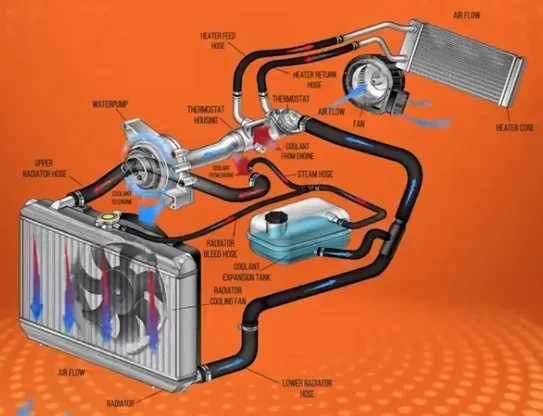
Here is how it works in simple terms. The water pump pushes coolant through passages inside the engine block. The coolant absorbs heat as it flows. It then travels to the radiator, where air flowing through the radiator fins cools it down. The cooled coolant cycles back into the engine, and the process repeats.
The thermostat acts as a gatekeeper. It opens when the engine reaches a certain temperature, allowing coolant to flow to the radiator. When the engine is cold, the thermostat stays closed to help the engine warm up faster. When the thermostat breaks, the whole system suffers.
Key Components to Know
- Radiator: The main heat exchanger that cools the hot coolant.
- Water Pump: Circulates coolant through the engine and radiator.
- Thermostat: Regulates coolant flow based on engine temperature.
- Coolant Reservoir: Stores extra coolant and allows for expansion.
- Radiator Fan: Pulls air through the radiator when the car is slow or idling.
- Hoses and Clamps: Connect all the parts and keep coolant flowing in a closed loop.
Knowing these parts makes it easier to spot problems early. If any one of them fails, your engine can overheat. Regular inspections of each component can save you from a major repair bill.
Quick Tips and Tricks for Faster Cooling
Beyond the five-minute steps, there are some extra tricks that can help you cool down faster or prevent overheating altogether.
Use the Air Conditioning Wisely
Running the air conditioner puts extra load on the engine. That means more heat. If your car is already running hot, turn off the AC. Switch to the heater instead. Once you are safely parked or at a repair shop, you can turn the AC back on.
Drive at a Steady Speed
Stop-and-go traffic is tough on an engine. Constant stopping and starting generates more heat than steady highway driving. If you are stuck in traffic, try to keep a safe distance and avoid hard braking. This reduces the workload on the engine and helps keep temperatures stable.
Carry Extra Coolant
It is a smart move to keep a bottle of coolant in your trunk. You never know when you might need it. A quick top-off can get you back on the road safely. Just make sure the engine is cool before you open the reservoir cap.
Monitor Your Temperature Gauge Regularly
Do not wait for the gauge to hit red before you pay attention. Glance at it every few minutes during long drives. If you notice it creeping up, take action early. Pulling over for a minute is much cheaper than replacing a damaged engine.
Keep Your Radiator Clean
Debris like leaves, bugs, and dirt can block airflow through the radiator. Over time, this reduces cooling efficiency. A quick hose-down of the radiator fins from the front of the car can make a big difference. Just be gentle so you do not bend the delicate fins.
When to Pull Over and Seek Help
Not every overheating situation can be fixed on the side of the road. Knowing when to stop and get professional help is just as important as knowing how to cool the engine down.
Signs You Need a Mechanic
Watch for these warning signs. If you notice any of them, do not keep driving:
- Steam or smoke pouring from under the hood
- A strong sweet smell, which could mean a coolant leak
- The temperature gauge stays in the red even after you turn off the engine
- Coolant leaking out rapidly
- Unusual knocking or pinging sounds from the engine
- The check engine light comes on along with the temperature warning
Ignoring these signs can lead to catastrophic engine failure. A blown head gasket or a cracked engine block can turn a simple fix into a very expensive repair. When in doubt, call a tow truck and let a professional take a look.
Preventing Engine Overheating Before It Starts
The best way to deal with an overheating engine is to never let it happen in the first place. Prevention is simple and costs very little compared to engine repairs.
Regular Coolant Checks
Check your coolant level at least once a month. Look at the reservoir tank and make sure the level is between the minimum and maximum marks. If you find yourself topping off frequently, you likely have a leak that needs to be fixed.
Flush and Replace Coolant on Schedule
Coolant breaks down over time. Old coolant loses its ability to absorb heat effectively. Most manufacturers recommend flushing and replacing coolant every 30,000 to 50,000 miles. Check your owner’s manual for the exact interval for your vehicle.
Inspect Hoses and Belts
Take a look at your hoses and serpentine belt every few months. Look for cracks, swelling, or soft spots. A hose that looks fine on the outside can be failing on the inside. Replacing a worn hose costs very little compared to the damage a burst hose can cause.
Keep Your Radiator and AC Condenser Clean
Wash the front of your car regularly, especially if you drive on dirt roads or in areas with lots of bugs. Clean radiator fins allow maximum airflow, which means better cooling. You can use a soft brush or a gentle stream of water from a hose.
Do Not Ignore Small Problems
A small coolant leak today can become a major overheating problem tomorrow. If you notice a puddle under your car or a faint sweet smell inside the cabin, get it checked. Catching small issues early saves you from big headaches later.
Common Mistakes Drivers Make When Their Engine Overheats
There are some mistakes that drivers make when they face an overheating engine. Avoiding these can save you time, money, and stress.
- Pouring cold water on a hot engine: This can cause the engine block to crack due to thermal shock. Always let the engine cool down naturally.
- Opening the radiator cap while the engine is hot: Pressurized hot coolant can spray out and cause severe burns. Wait until the engine has cooled before opening the cap.
- Ignoring the temperature gauge: Many drivers focus on the road and ignore warning lights and gauges. By the time they notice, the damage is already done.
- Continuing to drive after the gauge hits red: Even a few more minutes of driving can cause irreversible damage to the engine internals.
- Using the wrong type of coolant: Mixing different types of coolant can cause chemical reactions that clog the cooling system. Stick to the type recommended by your manufacturer.
These mistakes are easy to avoid with a little awareness. Stay calm, follow the steps in this guide, and you will handle any overheating situation with confidence.
Expert Insight: What Mechanics Wish You Knew
Experienced mechanics see overheating issues every single day. Here are a few insights they wish more drivers knew:
- Overheating is a symptom, not a diagnosis: The real problem could be anything from a loose hose to a failing water pump. A mechanic can run diagnostics to find the root cause.
- Overheating in winter is just as common: Cold weather can actually make cooling system problems worse. Antifreeze protects against both freezing and boiling, but only if the mix is correct.
- Modern cars have safety modes for a reason: If your car goes into limp mode, it is trying to protect the engine. Do not override this. Pull over and let the engine cool.
- Electric cars can overheat too: While they do not have a traditional engine cooling system, EVs have battery thermal management systems that can fail. If your EV is running hot, the same principle applies: pull over and seek help.
Key Takeaways
- Turn on the heater immediately: This redirects heat away from the engine and into the cabin, helping cool things down fast.
- Check your coolant level: Low coolant is one of the most common reasons engines overheat.
- Never open the radiator cap while hot: Scalding coolant can cause serious burns.
- Pull over safely if the temperature gauge hits red: Continuing to drive can cause permanent engine damage.
- Regular maintenance prevents overheating: Simple checks like coolant top-offs and hose inspections go a long way.
- Know when to call a pro: Some overheating issues need a trained mechanic, not a DIY fix.
Conclusion
Knowing how to cool down a car engine quickly is a skill every driver should have. You do not need to be a mechanic or have fancy tools. With the right steps, you can bring your engine temperature back to normal in just a few minutes. Start with the heater, pull over if needed, and check your coolant level once the engine has cooled.
Prevention is the real game-changer. Regular coolant checks, hose inspections, and keeping your radiator clean can stop overheating before it starts. And if you ever find yourself in a situation you cannot handle, do not hesitate to call a professional. Your engine is the heart of your vehicle. Treat it well, and it will take care of you for miles to come.
Keep this guide saved on your phone or printed in your glove box. You never know when you might need it. Stay cool, stay safe, and keep your engine running at the right temperature.
Frequently Asked Questions
Can I drive my car immediately after it overheats?
No, you should wait at least 15 to 20 minutes after the engine has cooled down before driving again. Driving too soon can cause further damage if the coolant system has not fully recovered. Check your coolant level and look for any leaks before getting back on the road.
How long should I wait before opening the radiator cap?
Wait until the engine is completely cool, which usually takes at least 30 minutes to an hour. Opening the cap while the engine is still hot can cause pressurized coolant to spray out and burn you. Use a thick cloth or towel for extra protection when you do open it.
What should I do if my car overheats on the highway?
Turn on the heater to full blast and pull over to the right as soon as it is safe. Turn off the engine and let it sit. Do not attempt to keep driving or exit the highway aggressively. Call for roadside assistance if the temperature does not drop after a few minutes.
Can low oil cause overheating?
Yes, low oil can contribute to overheating because oil helps carry heat away from engine components. Without enough oil, friction increases and heat builds up. Check your oil level regularly and top it off as needed to help prevent overheating issues.
How often should I check my coolant level?
You should check your coolant level at least once a month and before any long road trips. Look at the reservoir tank when the engine is cool and make sure the level is between the minimum and maximum marks. Frequent top-offs may indicate a leak that needs attention.
Is it safe to add water to my radiator in an emergency?
Yes, plain water is safe to add in an emergency if you are low on coolant. It will help cool the engine temporarily. However, water does not have the same heat protection properties as proper coolant. Get to an auto parts store or mechanic as soon as possible to flush the system and refill with the correct coolant mixture.