How to Charge Audi e-tron – Full Home Charging Guide
Learning how to charge Audi e-tron at home is simpler than most people expect. This guide walks you through every step, from choosing the right charging equipment to understanding costs and charging times. Whether you are new to electric vehicles or an experienced EV driver, you will find practical advice to keep your Audi e-tron powered and ready to go every single day.
When you first bring home an Audi e-tron, one of the first things you want to figure out is how to keep it charged. The good news is that charging your electric SUV at home is straightforward and convenient. This guide covers everything you need to know about how to charge Audi e-tron vehicles right from your own garage or driveway.
Whether you are new to the world of electric vehicles or have been driving EVs for years, understanding your charging options makes a big difference. You will learn about different charging levels, the equipment you need, how long charging takes, and ways to save money on your energy bills. By the end, you will feel confident setting up your own home charging station and keeping your Audi e-tron ready for every drive.
The Audi e-tron is a premium electric SUV that offers impressive range and performance. But to get the most out of your vehicle, you need a reliable charging setup. This article breaks down each step so you can make informed decisions about your EV charging experience at home.
Key Takeaways
- Level 2 home charging is the best option for daily Audi e-tron owners, offering faster speeds and real convenience.
- A dedicated 240V circuit is required for a wall mount charger and delivers the best charging experience at home.
- Public charging stations can supplement home charging for longer trips and road adventures.
- Charging costs are significantly lower than gasoline, saving you money over time.
- Regular maintenance of your charging equipment ensures safe and efficient operation every day.
- Avoid common mistakes like leaving your battery at 100% or using damaged cables to protect battery health.
📑 Table of Contents
Understanding the Audi e-tron Charging Basics
Before you plug in your Audi e-tron for the first time, it helps to understand the basics of how Audi e-tron charging works. The vehicle uses a built-in onboard charger that converts AC power from your home into the DC power your battery needs. Knowing this simple fact helps you choose the right equipment and set realistic expectations for charging time and charging speed.
The good thing about the Audi e-tron is that it is compatible with most standard charging equipment on the market. You do not need any special proprietary gear. This flexibility gives you more choices when selecting a wall mount charger or a portable solution. Let us look at the two main levels of charging available for this vehicle.
What Makes the Audi e-tron Different
The Audi e-tron stands out among electric SUVs for several reasons. It features a large battery pack that delivers solid battery range for daily driving and road trips. The vehicle also supports multiple charging standards, which gives you flexibility when choosing where and how to charge.
One key detail is the charging adapter that comes with your vehicle. Audi includes a portable charger in the box, which lets you plug into a standard household outlet in a pinch. However, for the best experience, you will want to invest in a dedicated home charging station for your garage or driveway. The portable charger is great for travel, but it is not fast enough for daily use.
Battery Capacity and Range
The Audi e-tron typically comes with a battery capacity around 95 kWh. This gives the vehicle an estimated electric vehicle range of over 200 miles on a full charge. Your actual range will vary based on driving habits, weather conditions, and whether you use heating or air conditioning heavily.
Understanding your battery capacity helps you plan your charging routine. If you drive about 30 to 40 miles per day, a full charge every two to three days is usually plenty. This is where home charging really shines because you can plug in overnight and wake up with a full battery every morning. It is as simple as plugging in your phone before bed.
How to Charge Audi e-tron at Home: Charging Options
Now that you understand the basics, let us look at your actual home charging options. There are two main levels of charging available for the Audi e-tron, and each has its own advantages and limitations. Most owners find that one option clearly stands out for daily use.
Level 1 Charging: The Basic Option
Level 1 charging uses a standard 120-volt household outlet. This is the slowest option, adding only about 3 to 5 miles of range per hour of charging. It works in a pinch, but it is not ideal for daily use if you drive any meaningful distance.
You get Level 1 charging with the portable charger that comes with your Audi e-tron. All you need is a standard wall outlet. The benefit is that you do not need any special equipment or electrical work. However, if you drive more than 30 miles a day, Level 1 will not keep up with your needs. You would be waiting all day for a full charge.
Level 2 Charging: The Best Home Solution
Level 2 charging is the gold standard for home EV charging. It uses a 240-volt circuit, similar to what your dryer or oven uses. A Level 2 charger can add about 20 to 30 miles of range per hour, which means a full charge overnight is very realistic.
For most Audi e-tron owners, installing a Level 2 home charging station is the clear winner. You get faster charging, more convenience, and peace of mind knowing your vehicle is ready every morning. If you want the best experience, this is absolutely the way to go.
If you are considering this route, you might want to look into what is involved with setting up a home EV charging station for another vehicle, as the general principles are very similar. The electrical requirements and equipment choices overlap significantly across different EV models.
| Charging Level | Voltage | Range Added Per Hour | Full Charge Time | Best For |
|---|---|---|---|---|
| Level 1 | 120V | 3-5 miles | 50+ hours | Emergency top-ups |
| Level 2 | 240V | 20-30 miles | 8-11 hours | Daily home charging |
| DC Fast Charging | 400V+ | ~200 miles in 30 min | 30-45 min (10-80%) | Road trips and quick stops |
Choosing the Right Home Charging Equipment
Once you decide on Level 2 charging, the next step is picking the right equipment. There are several options available, and choosing wisely saves you money and headaches down the road. The equipment you select affects your charging speed, daily convenience, and long-term satisfaction.
Wall Mount Charger vs. Portable Charger
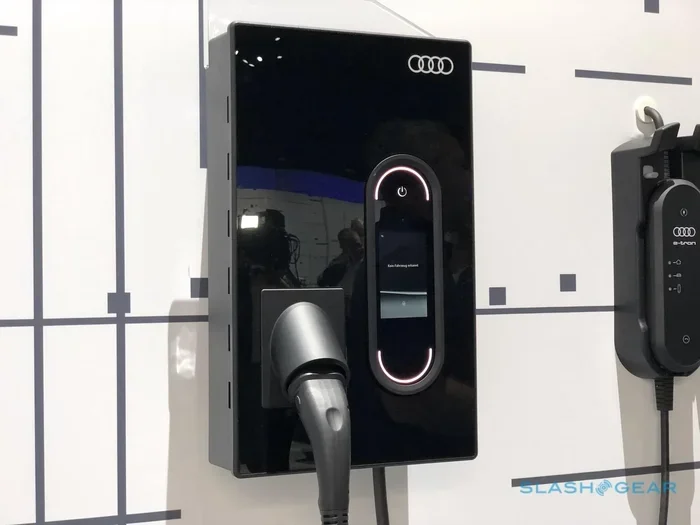
A wall mount charger is a fixed unit that installs on your garage wall or exterior surface. It charges faster than a portable charger and looks clean and organized. Most wall mount units include smart features like app connectivity, scheduling, and energy monitoring. Some even let you track your charging cost in real time.
A portable charger is more flexible because you can move it between vehicles or locations. However, it charges slower than a dedicated wall unit. Many Audi e-tron owners keep both options available. The wall mount for daily use and the portable for travel or when visiting friends and family.
Electrical Panel Requirements
Before installing a Level 2 charger, you need to check your home electrical panel. Most homes in the United States have a 200-amp panel, which is sufficient for EV charging. However, older homes may have 100-amp panels, which could require an upgrade before installation.
You should also consider the location of your panel relative to where you park. The closer the panel is to your charging spot, the less expensive the installation will be. An electrician can assess your setup and give you an accurate quote for the wattage and circuit requirements. Plan for a professional installation to ensure safety and code compliance.
How Long Does It Take to Charge an Audi e-tron?
Charging time is one of the most common questions among new EV owners. The answer depends on several factors, including your charging method and battery level. Understanding these factors helps you plan your routine and avoid surprises.
Charging Time by Method
With Level 1 charging, expect to add about 3 to 5 miles of range per hour. A completely empty 95 kWh battery would take over 50 hours to charge fully on Level 1. This is why most owners skip Level 1 for daily use and reserve it for emergencies only.
With Level 2 charging, the timeline improves dramatically. A full charge from empty typically takes 8 to 11 hours on a 240-volt circuit. This is perfect for overnight charging. You plug in when you get home from work and wake up with a full battery every morning. It becomes second nature very quickly.
Factors That Affect Charging Speed
Several factors influence how fast your Audi e-tron charges. Battery temperature plays a big role, as cold weather can slow down charging significantly. The age and condition of your battery also matter, though modern EV batteries are designed to maintain performance over many years of use.
Your charging cable quality and the circuit’s amperage also affect speed. A 32-amp circuit charges faster than a 24-amp circuit. Always use the cable and adapter that came with your vehicle or one recommended by Audi for the best results. Cheap aftermarket cables may save money upfront but can compromise safety and performance.
Public Charging for the Audi e-tron
Home charging covers most of your daily needs, but what about longer trips? Public charging stations are an essential part of the EV ownership experience. The good news is that the Audi e-tron works with many public charging networks across the country.
Compatible Charging Networks
The Audi e-tron supports both J1772 connectors for Level 2 charging and CCS (Combined Charging System) for faster DC fast charging. This broad compatibility means you can use most public charging stations without worrying about adapters or compatibility issues.
When traveling, you may encounter different charging networks. Some stations are proprietary, while others are universal. It is always a good idea to check your route and identify charging stops before you leave. Apps like PlugShare and the Audi charging app help you find available stations along your planned path and show real-time availability.
For example, if you are planning a road trip and want to use stations that work well with non-Tesla EVs, you can explore compatible public charging stations that support the J1772 or CCS standards your Audi e-tron uses. These networks continue to expand every year, making long-distance EV travel more practical than ever.
DC Fast Charging on the Road
DC fast charging is the quickest way to replenish your battery on the road. With DC fast charging, you can add about 200 miles of range in approximately 30 minutes. This makes long-distance travel much more practical and less stressful for EV owners.
However, frequent use of DC fast charging can slightly reduce battery longevity over time. For daily driving, stick to Level 2 home charging whenever possible. Reserve fast charging for road trips and situations where you need a quick top-up. Think of it as the difference between a gentle overnight charge and a sprint to get back on the road.
Charging Costs, Maintenance, and Final Thoughts
One of the biggest advantages of owning an electric vehicle is the lower fuel cost. Understanding your charging cost helps you budget and maximize your savings over the life of your vehicle. The numbers are genuinely impressive when you compare electricity to gasoline.
Calculating Your Home Charging Cost
Electricity rates vary by location, but the average cost in the United States is around $0.13 to $0.15 per kilowatt-hour. Charging your Audi e-tron from empty to full at home costs roughly $12 to $15, depending on your local rates and the efficiency of your vehicle.
Compare that to filling up a gasoline SUV, which can cost $60 to $80 or more per tank. Over a year, EV owners typically save hundreds or even thousands of dollars on fuel. These savings alone can offset the cost of installing a home charging station within just a few years of ownership.
Tips to Reduce Charging Expenses
Here are some practical tips to keep your charging cost as low as possible:
- Charge during off-peak hours. Many electric utilities offer lower rates at night. Set your charger to run overnight to take advantage of these savings.
- Use a smart charger. Smart chargers let you schedule charging sessions and monitor energy usage, helping you optimize costs automatically.
- Install solar panels. If you have the option, solar panels can dramatically reduce or even eliminate your electricity costs for charging your Audi e-tron.
- Keep your battery between 20% and 80%. This range is the most efficient for daily driving and helps preserve battery health over the long term.
Regular Maintenance for Your Charging Equipment
Your charging cable and wall mount charger need occasional inspection. Check for frayed wires, loose connections, or any signs of wear. Keep the charging port on your Audi e-tron clean and free of debris. A quick wipe-down before plugging in prevents dirt from entering the connection and causing issues.
If you ever notice your vehicle having trouble charging, it may be time for a professional inspection. Before taking your Audi e-tron in for service, keep in mind that dealer diagnostic fees can vary, so it is wise to call ahead and ask about costs before scheduling a visit. This simple step can save you money and help you choose the right service center.
Common Charging Mistakes to Avoid
New EV owners sometimes make mistakes that can affect battery health and charging efficiency. Here are a few to watch out for:
- Leaving your battery at 100% all the time. This can stress the battery over time. Charge to 100% only when you need the full range for a trip.
- Using damaged cables or adapters. Never use a frayed or exposed charging cable. This creates safety risks and can damage your vehicle’s charging port.
- Ignoring software updates. Audi regularly releases updates that improve charging performance and battery management. Keep your vehicle’s software current for the best results.
- Charging in extreme heat without shade. High temperatures can reduce charging speed and affect battery longevity. Park in a shaded or covered area when possible.
Expert Insights
Experienced Audi e-tron owners recommend developing a consistent charging routine. Plug in every time you park at home, even if the battery is not empty. This habit keeps your battery topped off and ready for your next drive without any extra effort. It becomes as automatic as putting your keys on the hook when you walk through the door.
Another expert tip is to invest in a quality J1772 charger for your Level 2 setup. While cheaper options exist, a reliable charger with good warranty coverage saves you money and frustration in the long run. Look for units with at least a 3-year warranty and smart features that match your lifestyle. The small upfront investment pays for itself many times over.
Final Thoughts
How to charge Audi e-tron at home is a straightforward process once you have the right setup in place. A Level 2 wall mount charger gives you the best combination of speed, convenience, and cost savings. With a full charge overnight, your Audi e-tron is ready for whatever the day brings.
Remember that EV charging is not just about the equipment. It is about building a routine that works for your lifestyle. Charge overnight, monitor your battery levels, and take advantage of public charging when you need it. These simple habits keep your electric SUV running smoothly for years to come.
Take the time to set up your home charging station properly, and you will enjoy the full benefits of owning an Audi e-tron. The savings, the convenience, and the peace of mind are all worth the initial investment. Welcome to the world of effortless electric driving.
Frequently Asked Questions
Can I charge my Audi e-tron using a standard household outlet?
Yes, you can use a standard 120-volt outlet with the portable charger that comes with your vehicle. However, this Level 1 method is very slow and adds only about 3 to 5 miles of range per hour. It is best reserved for emergencies or occasional top-ups when you do not have access to a faster charging option.
How much does it cost to install a home charging station for an Audi e-tron?
The cost of installing a Level 2 home charging station typically ranges from $500 to $1,500 for the equipment, plus $500 to $2,000 for professional installation. The total depends on your electrical panel capacity, the distance from the panel to your parking spot, and local labor rates. Many utility companies also offer rebates that can reduce your upfront costs significantly.
Is it safe to charge my Audi e-tron outdoors in the rain?
Yes, it is safe. All Level 2 chargers and the portable charger that comes with the Audi e-tron are designed to be weather-resistant. The charging equipment has built-in safety features that prevent electrical hazards in wet conditions. Still, you should inspect your cables and connections regularly for any signs of wear or damage.
How often should I charge my Audi e-tron?
For best battery health, plug in your Audi e-tron every time you park at home. Keeping the battery between 20% and 80% for daily driving is ideal. Only charge to 100% when you need the full range for a longer trip. This routine helps preserve battery longevity and ensures your vehicle is always ready to go.
Can I use a Tesla charging station to charge my Audi e-tron?
Tesla Superchargers are not directly compatible with the Audi e-tron without an adapter. However, the growing network of non-Tesla public charging stations supports the CCS and J1772 connectors that the Audi e-tron uses natively. You can use apps like PlugShare to find compatible stations near you.
Does fast charging damage the Audi e-tron battery?
Occasional use of DC fast charging will not significantly damage your battery. However, relying on fast charging too frequently over a long period can slightly reduce battery longevity. For daily use, Level 2 home charging is gentler on the battery. Think of fast charging as a tool for road trips, not your everyday charging method.