How Much Are Brakes for a Nissan Altima Right Here
The cost to replace brakes on a Nissan Altima typically ranges from $150 to $400 per axle, depending on whether you choose OEM or aftermarket parts and whether you need front or rear brake service. Brake pad replacement alone costs between $100 and $250 per axle, while a full brake job including rotors and calipers can climb higher. Understanding what goes into the price helps you avoid overpaying and keeps your Altima stopping safely.
If you own a Nissan Altima, sooner or later you are going to face a brake replacement. It is one of those maintenance tasks every driver has to deal with. The big question is always the same: how much are brakes for a Nissan Altima going to cost? The answer depends on several factors, including the type of brake parts you choose, whether you need front or rear brakes replaced, and where you take your car for service.
This guide breaks down everything you need to know about brake costs for the Nissan Altima. We will walk you through parts pricing, labor charges, and smart ways to save money. By the end, you will feel confident making the right decision for your car and your wallet. Let us get into it.
Key Takeaways
- Brake pad replacement for a Nissan Altima runs $100 to $250 per axle, with front brakes wearing faster than rear.
- OEM parts cost more but offer better fit and feel, while aftermarket options save money without sacrificing safety.
- A full brake job including rotors and calipers can reach $400 per axle at a dealership or independent shop.
- Labor costs vary widely, so getting multiple quotes is one of the best ways to save.
- Brake fluid flushes and inspections add $50 to $100 but are essential for long-term brake health.
- Driving habits and road conditions play a huge role in how fast your Altima brakes wear down.
- Knowing the signs of worn brakes early prevents costly damage to rotors and calipers.
📑 Table of Contents
Understanding Brake Costs for the Nissan Altima
The brake replacement cost for a Nissan Altima depends on several variables. Not every brake job is the same. Some drivers only need new pads, while others need a full brake system overhaul. Understanding what drives the price helps you make informed choices.
What Goes Into the Price
Every brake job has two main cost components: parts and labor. The parts include brake pads, rotors, calipers, and sometimes brake hardware like clips and shims. Labor covers the mechanic’s time to remove old parts, install new ones, and test the system.
For a basic Nissan Altima brake pad replacement, you can expect to pay around $100 to $250 per axle. This covers the pads and the labor to swap them out. If your rotors are warped or worn, adding rotor replacement pushes the cost to $250 to $400 per axle.
A complete brake job that includes pads, rotors, and calipers can reach $400 to $600 per axle. This is the most expensive option but sometimes necessary if multiple components have failed.
Why Front Brakes Cost More
Front brakes do the heavy lifting. They handle up to 70 percent of your stopping power. On a Nissan Altima, the front brakes wear out faster than the rear. This means front brake replacements happen more often and sometimes cost a bit more due to the heavier workload on those components.
Rear brake jobs on the Altima are generally cheaper because the rear pads and rotors last longer. Many drivers find that their front brakes need attention every 30,000 to 50,000 miles, while the rear can go 50,000 to 70,000 miles before needing replacement.
Front vs Rear Brake Replacement Costs
Breaking down the cost by axle helps you understand where your money goes. Here is a general comparison of what you can expect for a Nissan Altima.
- Front brake pads only: $80 to $150 per axle
- Rear brake pads only: $70 to $130 per axle
- Front pads and rotors: $200 to $350 per axle
- Rear pads and rotors: $180 to $300 per axle
- Full front brake job (pads, rotors, calipers): $350 to $500 per axle
- Full rear brake job (pads, rotors, calipers): $300 to $450 per axle
These numbers vary based on your location, the shop you choose, and the specific Altima model year. Newer models from 2013 onward tend to use slightly more expensive parts due to updated brake system designs.
OEM vs Aftermarket Brake Parts
One of the biggest decisions you will face is choosing between OEM (Original Equipment Manufacturer) parts and aftermarket alternatives. Both have pros and cons.
OEM Brake Parts
OEM parts come directly from Nissan or from the same suppliers the automaker uses. They are designed to match the exact specifications of your Altima’s brake system. OEM brake pads and rotors tend to last longer and perform more consistently.
The downside is cost. OEM parts typically run 20 to 40 percent more than aftermarket options. If you want peace of mind and a perfect fit, OEM is the way to go. Just know you will pay a premium.
Aftermarket Brake Parts
Aftermarket parts are made by third-party manufacturers. Brands like Bosch, Akebono, and Wagner produce high-quality brake components that meet or exceed OEM standards. Aftermarket brake pads for a Nissan Altima can cost as little as $40 to $80 per set.
The key is choosing a reputable brand. Cheap no-name parts may save money upfront but can wear out faster or cause noise and vibration. Stick with well-known aftermarket brands for the best balance of cost and quality.
Which Should You Choose?
If you plan to keep your Altima for many years, OEM parts are worth the investment. If you want to save money and do not mind replacing pads a bit sooner, quality aftermarket parts work great. Either way, avoid the cheapest options on the shelf. Brake safety should never be compromised for a few dollars saved.
What Is Included in a Full Brake Job
A full brake job does more than just swap out pads. Understanding what is included helps you evaluate quotes and avoid surprises.
Step-by-Step Brake Job Breakdown
- Brake inspection: The mechanic checks all brake components, measuring pad thickness and rotor condition.
- Pad removal and installation: Old pads are pulled out and new ones are fitted in their place.
- Rotor resurfacing or replacement: If rotors are below the minimum thickness, they get replaced. Otherwise, they can be resurfaced on a lathe.
- Caliper check: The mechanic inspects calipers for sticking or leaking. Worn calipers get replaced.
- Brake hardware: New clips, shims, and hardware are installed to reduce noise and vibration.
- Brake fluid flush: Fresh brake fluid is added to the system for optimal performance.
- Test drive: The mechanic test-drives the car to ensure brakes feel firm and responsive.
Not every job requires all of these steps. A basic pad replacement skips the rotor and caliper work. But if your Altima has been driven hard or has high mileage, a full job is the safer choice.
Brake Fluid Flush Cost
A brake fluid flush adds $50 to $100 to the total bill. It is an easy maintenance step that many people skip. Old brake fluid absorbs moisture over time, which reduces braking performance and can corrode internal brake lines. Flushing the brake fluid every two years is a smart habit that keeps your Altima’s brake system in top shape.
How to Save Money on Brake Repairs
Brake repairs can feel expensive, but there are real ways to cut costs without cutting corners. Here are practical tips that work.
Get Multiple Quotes
Never accept the first quote you get. Visit two or three shops and compare prices. Independent mechanics often charge less than dealerships for the same work. Just make sure the shop has good reviews and certified technicians.
Many shops offer free brake inspections, so take advantage of that. You will know exactly what you need before committing to a repair.
Consider Independent Shops
Dealerships charge a premium for labor. An independent mechanic or local brake specialty shop can do the same job for significantly less. Labor rates at independent shops often run $50 to $80 per hour, compared to $100 or more at a dealership.
That said, if your Altima is still under warranty, going to the dealership might be the smarter choice to avoid any warranty disputes.
Learn the Warning Signs Early
The best way to save money on brakes is to catch problems early. Worn brake pads that get ignored can damage rotors and calipers, turning a $200 pad job into a $500 full brake replacement. Watch for these warning signs:
- Squealing or grinding noises when you press the brake pedal
- A vibrating or pulsing feeling through the pedal
- Longer stopping distances than usual
- The brake warning light on your dashboard
- Thin brake pads visible through the wheel spokes
If you notice any of these, get your brakes checked right away. Addressing small issues early saves real money over time.
Do Some Research on How To Avoid Car Salesman Tricks
When you bring your Altima in for brake service, be aware of upselling tactics. Some shops recommend replacing parts that still have plenty of life left. If a mechanic says you need new rotors but they are only slightly worn, ask for a second opinion. Staying informed protects your wallet.
Check How Much Do Mechanics Make Per Hour in Your Area
Understanding local labor rates helps you judge whether a quote is fair. Mechanics in major cities often charge more than those in smaller towns. Use this knowledge to negotiate or choose a shop that offers transparent pricing.
When to Replace Your Nissan Altima Brakes
Timing your brake replacement correctly matters for both safety and cost. Waiting too long can damage other parts. Replacing too early wastes money.
General Replacement Intervals
Most Nissan Altima owners find that their front brake pads need replacement between 30,000 and 50,000 miles. Rear pads last longer, often going 50,000 to 70,000 miles before needing attention. These numbers vary based on driving style, road conditions, and the type of brake pads you use.
Factors That Speed Up Brake Wear
Certain driving habits and conditions wear brakes out faster:
- Stop-and-go city driving: Frequent braking wears pads faster than highway driving.
- Hilly or mountainous terrain: Driving downhill requires more braking, which generates heat and wears components quicker.
- Heavy loads: Carrying extra weight in the trunk puts more strain on the brakes. If you are wondering how much stuff you can put in your car, keep in mind that extra weight affects brake performance too.
- Aggressive driving: Hard braking from high speeds causes rapid pad and rotor wear.
- Cheap brake pads: Low-quality pads wear out faster and can damage rotors prematurely.
Brake Inspection Tips
You do not need a mechanic to check your brake pads at home. Look through the spokes of your wheel and examine the pad surface. If the friction material is less than a quarter-inch thick, it is time for a replacement. Also, listen for any grinding or squealing sounds during normal driving.
Some Nissan Altima models have brake wear sensors that trigger a dashboard warning light. If your light comes on, do not ignore it. It means the pads have worn down to a critical level and need immediate attention.
Common Brake Problems on the Nissan Altima
The Nissan Altima is a reliable car, but it is not immune to brake issues. Here are some common problems Altima owners face.
Warped Rotors
Warped rotors cause a vibrating or pulsing feeling in the brake pedal. They usually happen from heat buildup during hard braking or from driving through deep water. Resurfacing or replacing warped rotors costs between $150 and $300 per axle depending on the severity.
Sticking Calipers
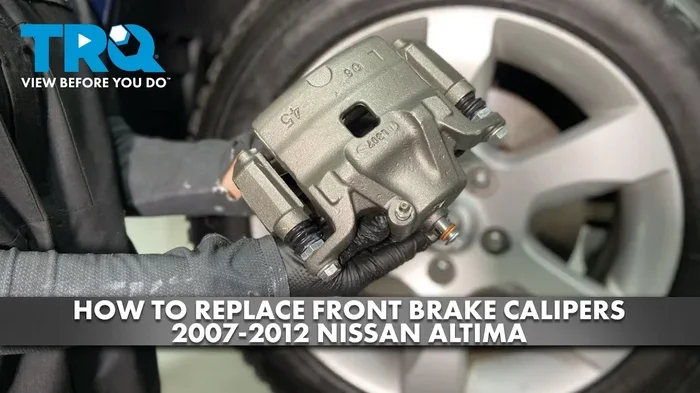
A stuck caliper causes the brake pad to drag against the rotor even when you are not pressing the pedal. This leads to uneven pad wear, reduced fuel economy, and a pulling sensation when braking. Caliper replacement runs $150 to $300 per caliper, plus labor.
Brake Noise
Squealing or grinding noises are the most common brake complaint. Squealing usually means the pads are worn and need replacement. Grinding is worse, as it indicates the pad material is gone and metal is grinding against metal. Ignoring grinding noises can destroy rotors and lead to much more expensive repairs.
Brake Fluid Leaks
Brake fluid leaks are serious and should be addressed immediately. You might notice a puddle of fluid under your car or a spongy feeling in the brake pedal. Leaks can come from the master cylinder, brake lines, or calipers. A leak compromises your entire braking system and must be fixed right away.
Conclusion
The cost to replace brakes on a Nissan Altima depends on what parts you need and where you get the work done. A basic pad replacement runs $100 to $250 per axle, while a full brake job with rotors and calipers can reach $400 to $600 per axle. Understanding these costs empowers you to make smart decisions and avoid paying more than necessary.
Choose quality parts, whether OEM or reputable aftermarket brands. Get multiple quotes from trusted shops. And most importantly, pay attention to the warning signs of worn brakes. Catching problems early keeps your Altima safe and saves you money in the long run. Your brakes are the most important safety system in your car, so invest in them wisely.
Stay on top of your brake maintenance schedule, and your Nissan Altima will reward you with reliable stopping power for years to come. Safe driving starts with well-maintained brakes, and now you have the knowledge to handle brake replacements with confidence.
Frequently Asked Questions
How long do Nissan Altima brake pads last?
Nissan Altima brake pads typically last between 30,000 and 50,000 miles for the front and 50,000 to 70,000 miles for the rear. Your driving habits, road conditions, and the quality of the pads all influence this timeline. Regular brake inspections help you track pad wear and replace them before they cause damage.
Is it safe to drive with worn brake pads on a Nissan Altima?
No, driving with worn brake pads is unsafe. Worn pads increase stopping distance and can damage rotors and calipers, leading to much more expensive repairs. If you hear grinding or squealing sounds, get your Altima inspected immediately. Brake safety should always come first.
How much does a brake fluid flush cost for a Nissan Altima?
A brake fluid flush for a Nissan Altima typically costs between $50 and $100. This is a relatively inexpensive service that protects your entire brake system from moisture damage and corrosion. Most experts recommend flushing brake fluid every two years or as part of a full brake job.
Can I replace just the brake pads without replacing the rotors?
Yes, you can replace just the brake pads if the rotors are still in good condition and above the minimum thickness specification. Your mechanic will measure the rotors during inspection. If they are warped or too thin, replacement is necessary for safe and smooth braking.
How can I tell if my Nissan Altima needs new brakes?
Common signs include squealing or grinding noises, a vibrating brake pedal, longer stopping distances, and a brake warning light on the dashboard. You can also visually inspect the pads through the wheel spokes. If the friction material is less than a quarter-inch thick, it is time for a replacement.
Are dealership brake repairs more expensive than independent shops?
Yes, dealership brake repairs are generally more expensive due to higher labor rates. Independent mechanics often charge $50 to $80 per hour compared to $100 or more at a dealership. That said, dealerships use OEM parts and may offer warranties that give extra peace of mind for newer vehicles.