A Car Traveling With a Velocity of 80 Km Hr Explained
A car traveling with a velocity of 80 km hr is one of the most common speeds on highways and roads worldwide. This speed strikes a great balance between fuel efficiency, road safety, and travel time. Understanding what this velocity means helps drivers plan trips better and drive more confidently.
A car traveling with a velocity of 80 km hr is something you see every day on roads and highways around the world. Whether you are commuting to work or heading out on a weekend road trip, this speed plays a big role in how we drive. It is fast enough to get you where you need to go quickly. But it is also slow enough to keep things safe and fuel-efficient.
Many drivers wonder what exactly it means when a car moves at this velocity. They want to know how far they will go, how much fuel they will use, and whether this speed is safe. This guide answers all of those questions and more. You will learn the science behind this common speed. You will also get practical tips for driving at 80 km/hr every day.
The concept of velocity is not just about going fast. It includes direction too. When a car travels at 80 km/hr on a straight highway, that is a perfect example of velocity in action. It is different from just car speed, which only measures how fast something moves. Understanding this difference makes you a smarter driver. It also helps you appreciate the physics behind every trip you take.
So let us dive in. We will cover everything from distance covered to fuel consumption. We will talk about road safety and travel planning too. By the end, you will have a clear picture of what it really means when a car is moving at this velocity. Let us get started.
Key Takeaways
- 80 km/hr is a widely used highway speed that balances safety and efficiency.
- A car traveling with a velocity of 80 km hr covers about 80 kilometers in one hour.
- Fuel consumption tends to be optimal around this speed for most vehicles.
- Braking distance increases at higher speeds, making 80 km/hr a safer choice.
- Cruise control helps maintain a steady 80 km/hr on long drives.
- Speed limits vary by country, but 80 km/hr is legal on many roads.
- Travel planning becomes easier when you know your average speed.
📑 Table of Contents
What Does a Car Traveling With a Velocity of 80 Km Hr Really Mean?
When we say a car is traveling with a velocity of 80 km/hr, we mean the car covers 80 kilometers in one hour. But there is more to it than just the number. Velocity is a vector quantity. That means it has both speed and direction. Speed just tells you how fast something goes. Velocity tells you how fast and in which direction.
For example, a car going 80 km/hr on a straight eastbound highway has a specific velocity. If that same car turns north but keeps the same speedometer reading, the velocity changes. The speed stays at 80 km/hr. But the direction changed, so the velocity changed too.
Understanding Velocity vs Speed
This is a key concept in physics and driving. Speed is scalar. It only has magnitude. Velocity is vector. It has both magnitude and direction. In everyday driving, we often use the words interchangeably. But scientists and engineers treat them differently.
When you look at your dashboard, the speedometer reading shows your speed. It does not show direction. But when navigation apps calculate your average speed over a trip, they are really tracking your velocity. They know which direction you are going and how fast.
Here is a simple way to remember it. Speed is how fast you go. Velocity is how fast you go and where you end up. A car traveling with a velocity of 80 km hr has both pieces of information locked in.
Why 80 Km/Hr Is a Common Driving Speed
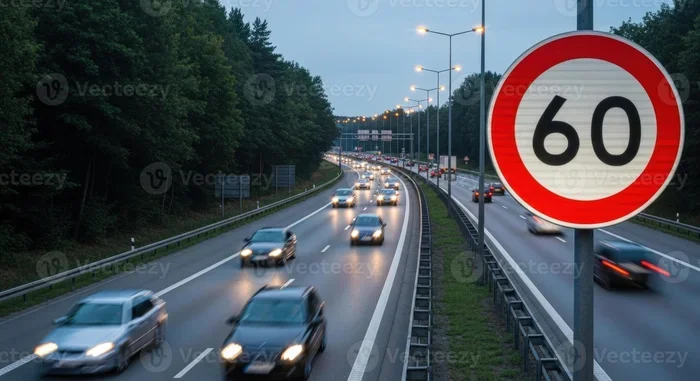
Eighty kilometers per hour is a sweet spot for many reasons. It is fast enough to cover good distance in a short time. It is also slow enough to be safe on most roads. Many countries set their highway speed limit at or near this number.
In Australia, 80 km/hr is common on suburban roads. In Europe, many highways allow 100 to 130 km/hr. But 80 km/hr remains a standard for urban highways and rural roads. It is also the speed limit in many school zones and residential areas during certain hours.
From a vehicle performance standpoint, most cars run efficiently at this speed. The engine does not have to work too hard. The transmission stays in a comfortable gear. This makes 80 km/hr one of the most natural speeds for daily driving.
How Far Does a Car Travel at 80 Km/Hr?
The math here is simple but very useful. If a car moves at a constant 80 km/hr, it covers 80 kilometers in one hour. That is the basic idea. But what about shorter trips? What about longer ones? Let us break it down.
Distance Covered in One Hour
At a steady velocity of 80 km/hr, the distance covered in one hour is exactly 80 kilometers. That is about 50 miles. For many drivers, this is a typical commute distance. It is also a common length for a short road trip segment.
If you drive for 30 minutes at this speed, you cover 40 kilometers. In 15 minutes, you go about 20 kilometers. In just 5 minutes, you travel roughly 6.7 kilometers. These numbers help a lot when you are estimating arrival times.
Distance in Shorter Time Intervals
Let us look at a quick breakdown of how far a car goes at this speed in different time frames:
- 1 minute: about 1.33 kilometers
- 5 minutes: about 6.67 kilometers
- 15 minutes: about 20 kilometers
- 30 minutes: about 40 kilometers
- 45 minutes: about 60 kilometers
- 1 hour: 80 kilometers
- 2 hours: 160 kilometers
- 3 hours: 240 kilometers
These numbers make travel planning much easier. You can quickly estimate how long a trip will take. Just divide your total distance by 80. That gives you the time in hours. It is a handy trick for any driver.
Real-World Travel Planning Examples
Imagine you need to drive from City A to City B. The distance is 240 kilometers. At a constant 80 km/hr, the trip takes about 3 hours. But real driving is never perfectly constant. You stop for gas. You slow down for traffic. You take breaks.
A good rule of thumb is to add 15 to 20 percent to your calculated time. So for a 3-hour theoretical trip, plan for about 3 hours and 30 minutes. This accounts for stops and slowdowns. It also reduces stress and helps you arrive on time.
Another example: you are driving 120 kilometers to visit family. At 80 km/hr, that is 1.5 hours of pure driving time. Add a 10-minute rest stop, and you are looking at about 1 hour and 40 minutes total. Travel planning like this helps you pack snacks, pick good music, and arrive feeling relaxed.
Fuel Consumption at 80 Km/Hr
One of the biggest concerns for drivers is how much fuel they use. The good news is that 80 km/hr is often the most fuel-efficient speed for many cars. This is because the engine operates in its sweet spot at this velocity. Aerodynamic drag is manageable. The transmission stays in an optimal gear.
Why 80 Km/Hr Is Often the Sweet Spot
At lower speeds, the engine works harder relative to the distance covered. The fuel consumption per kilometer is higher. At much higher speeds, air resistance increases dramatically. The engine has to push harder against the wind. This also raises fuel consumption.
But at 80 km/hr, there is a balance. The engine runs efficiently. The wheels turn at a good rate. The fuel efficiency is typically at its best. Studies have shown that most passenger vehicles achieve peak fuel economy somewhere between 60 and 90 km/hr. Eighty falls right in that range.
If you want to save money at the pump, maintaining a steady 80 km/hr on highways is one of the best things you can do. It is simple. It is effective. And it does not require any special equipment.
Tips to Improve Fuel Efficiency at This Speed
Want to get even better fuel efficiency while driving at 80 km/hr? Here are some practical tips:
- Keep your tires properly inflated. Underinflated tires create more rolling resistance. This wastes fuel.
- Remove roof racks when not in use. They increase wind drag and reduce fuel economy.
- Use cruise control on highways. It keeps your speed steady at 80 km/hr and avoids unnecessary acceleration.
- Avoid rapid acceleration. Smooth, gradual pushes on the gas pedal save fuel.
- Keep your car well-maintained. Regular oil changes and air filter replacements help the engine run efficiently.
- Reduce excess weight. Extra cargo makes the engine work harder, increasing fuel consumption.
Small changes add up. Over a long road trip, these tips can save you a surprising amount of fuel and money.
Is Driving at 80 Km/Hr Safe?
Safety is always the number one priority when you are behind the wheel. Driving at 80 km/hr is generally considered safe on appropriate roads. But safety depends on many factors. Road conditions, weather, traffic, and driver behavior all play a role.
Road Safety Considerations
When you are driving at a velocity of 80 km hr, your vehicle performance matters a lot. Well-maintained brakes, good tires, and responsive steering all contribute to safety. A car in good condition can handle this speed confidently.
Road conditions change everything. A dry highway at 80 km/hr is very different from a wet or icy road at the same speed. On a rainy day, you should reduce your speed. The braking distance increases on wet surfaces. Tires have less grip. Visibility drops too.
Always adjust your speed to match conditions. The posted speed limit is a maximum, not a target. If roads are dangerous, drive slower. No trip is worth risking your safety or the safety of others.
Braking Distance at 80 Km/Hr
This is an important topic every driver should understand. When you are moving at 80 km/hr, your car has a lot of kinetic energy. Kinetic energy increases with the square of speed. That means doubling your speed quadruples the energy your brakes must absorb.
On a dry road, a typical car needs about 40 to 50 meters to stop from 80 km/hr. On a wet road, that distance can increase to 60 meters or more. In icy conditions, it can be much longer.
This is why maintaining a safe following distance is so important. At 80 km/hr, keep at least a 2-second gap from the car ahead. In bad weather, increase that to 4 or 5 seconds. This gives you enough room to stop safely if something unexpected happens.
Road safety also means staying alert. Fatigue, distraction, and impairment all reduce your ability to react. At 80 km/hr, you cover over 22 meters every second. That is a long way to travel while your attention is elsewhere.
How to Maintain a Steady 80 Km/Hr on Your Trips
Keeping a consistent speed makes driving easier and more efficient. It also reduces fuel waste and keeps your vehicle performance steady. There are several tools and techniques that help you hold 80 km/hr without constant effort.
Using Cruise Control
Cruise control is one of the best features for long highway drives. It automatically maintains your set speed. You just press a button, set 80 km/hr, and the car does the work. This is especially helpful on long, straight stretches of highway.
Cruise control prevents unintentional speeding. It also reduces driver fatigue. Your foot does not have to stay on the gas pedal for hours. This is a simple way to improve both comfort and fuel efficiency.
However, cruise control is not perfect. It does not adjust for curves or changing traffic. You still need to stay alert and ready to take control. On winding roads or in heavy traffic, it is better to drive manually.
Reading Your Speedometer
Your speedometer reading is your best friend when trying to maintain 80 km/hr. Most modern cars have digital displays that are very accurate. But older cars with analog speedometers can be off by a few kilometers.
It is a good idea to occasionally check your speed against a GPS device. GPS measures your actual ground speed very accurately. It can help you notice if your speedometer is reading slightly high or low. This small check can make a big difference in staying at the right velocity.
Some cars also have average speed displays. These show your mean speed over a trip segment. They are useful for checking whether you have been consistently at 80 km/hr or if you have been speeding up and slowing down a lot.
Common Myths About Car Speed and Velocity
There are a lot of misconceptions about driving speed and velocity. Let us clear up some of the most common ones. Understanding the truth helps you become a better, safer driver.
Myth vs Reality
Myth 1: Speed and velocity are the same thing. As we discussed, velocity includes direction. Speed does not. A car traveling with a velocity of 80 km hr north is different from one going 80 km/hr south. The speed is the same. The velocity is not.
Myth 2: Driving faster saves a lot of time. This is only true to a point. Going from 80 to 100 km/hr on a 200-kilometer trip saves about 24 minutes. But it increases fuel use and risk significantly. The time saved is often not worth the extra danger.
Myth 3: Higher speed means better engine performance. Not true. Most engines perform best in a specific RPM range. For many cars, that range corresponds to speeds around 60 to 90 km/hr. Pushing the engine too hard at very high speeds can actually reduce vehicle performance over time.
Myth 4: Fuel efficiency is the same at all speeds. As we covered earlier, fuel efficiency varies with speed. 80 km/hr is generally the most efficient. Driving much faster or much slower usually burns more fuel.
Myth 5: Braking distance is not a big deal at 80 km/hr. This is dangerously wrong. At 80 km/hr, you are moving fast enough that stopping distance is significant. Always respect your braking distance and keep a safe gap from the car ahead.
Key Takeaways
- A car traveling with a velocity of 80 km hr covers 80 kilometers in one hour on a straight path.
- Velocity includes both speed and direction, unlike simple speed.
- Fuel consumption is often optimal around 80 km/hr for most passenger vehicles.
- Distance covered at this speed is easy to calculate: multiply hours by 80.
- Road safety depends on conditions. Adjust your speed for weather and traffic.
- Cruise control and a steady speedometer reading help maintain this velocity comfortably.
- Travel planning is simpler when you know your average speed and expected travel time.
Conclusion
A car traveling with a velocity of 80 km hr is more than just a number on your dashboard. It represents a balance of safety, efficiency, and practicality. Whether you are commuting daily or planning a longer journey, understanding this speed helps you make better decisions on the road.
We have covered a lot of ground in this guide. You now understand the difference between velocity and speed. You know how far a car travels at this velocity in different time frames. You have learned about fuel consumption and fuel efficiency at 80 km/hr. You also understand the braking distance and road safety factors that come with this speed.
The practical tips in this article can help you drive smarter. Use cruise control to maintain a steady pace. Check your speedometer reading regularly. Plan your trips with confidence using simple distance and time calculations. And always remember that safety comes first, no matter how good your vehicle performance is.
Next time you are on the road and your speedometer reads 80 km/hr, you will know exactly what that means. You will understand the physics, the practical benefits, and the safety considerations behind that number. That knowledge makes you a more informed and confident driver. So go ahead, enjoy the drive, and make every trip at 80 km/hr count.
Frequently Asked Questions
What is the difference between speed and velocity when a car is traveling at 80 km/hr?
Speed tells you how fast the car is moving. Velocity tells you how fast and in which direction. A car moving at 80 km/hr north has a different velocity than one moving at 80 km/hr south, even though the speed is the same.
How far will a car travel at 80 km/hr in 45 minutes?
At a constant velocity of 80 km/hr, the car covers 60 kilometers in 45 minutes. You can calculate this by multiplying 80 by 0.75 hours. This is a handy calculation for estimating arrival times on shorter trips.
Is 80 km/hr the most fuel-efficient speed for all cars?
Most cars achieve their best fuel efficiency between 60 and 90 km/hr. Eighty km/hr falls right in that sweet spot. However, the exact optimal speed can vary based on the vehicle model, engine type, and aerodynamics.
What is the braking distance for a car at 80 km/hr?
On a dry road, a typical car needs about 40 to 50 meters to stop from 80 km/hr. On wet roads, this distance increases significantly. Always keep a safe following distance and adjust for road conditions.
Can cruise control maintain 80 km/hr on all road types?
Cruise control works best on straight, flat highways. It is not ideal for winding roads, steep hills, or heavy traffic. On such roads, manual driving gives you better control and safety.
Why is 80 km/hr a common speed limit on many roads?
Eighty km/hr balances efficient travel with safety. It allows reasonable travel times while keeping kinetic energy at a manageable level. Most drivers can control their vehicles confidently at this speed under normal conditions.