How Many Feet of Vinyl Do I Need to Wrap My SUV Exactly
Knowing how many feet of vinyl do I need to wrap my SUV is the first step to a perfect finish. Most full SUV wraps require between 50 and 75 feet of vinyl, depending on the vehicle size and wrap type. This guide breaks down the exact numbers for every SUV category so you can buy the right amount with zero waste.
This is a comprehensive guide about How Many Feet of Vinyl Do I Need to Wrap My SUV.
Key Takeaways
- Measure twice, buy once: Accurate measurements save money and prevent frustrating shortages mid-project.
- Full wraps need more material: A full SUV wrap typically requires 50 to 75 feet of vinyl film.
- SUV size matters a lot: Compact SUVs need less vinyl than full-size or luxury SUVs.
- Partial wraps use less vinyl: A partial or half wrap can cut your material needs by 40 to 60 percent.
- Always add extra for mistakes: A 10 to 15 percent overage is standard practice among professional installers.
- Wrap quality affects coverage: High-quality cast vinyl stretches better and covers more surface per foot.
[FEATURED_IMAGE_PLACEHOLDER]
You have an SUV. You want to wrap it. And the very first question popping into your head is, “How many feet of vinyl do I need to wrap my SUV?” That is a great question, and it is the right one to ask before you spend a single dollar. Buying too little means a trip back to the store or a visible seam. Buying too much means wasted money sitting in your garage.
The good news is that figuring out your vinyl needs is not rocket science. With a few basic measurements and a little guidance, you can calculate the exact amount of vinyl you need. This guide will walk you through everything step by step. Whether you own a compact SUV or a massive three-row truck, you will find the numbers you need right here.
Let us start with the basics and then dive into the specifics. By the end of this article, you will know exactly how much vinyl to order for your vehicle wrap project.
Understanding Vinyl Wrap Basics
Before we get into the numbers, it helps to understand what vinyl wrap actually is. Vehicle wrap vinyl is a thick, adhesive-backed film that sticks directly to your car’s paint or body panels. It comes in rolls, and those rolls are sold by the foot or by the meter. The most common width for SUV wraps is 60 inches, which gives you a wide sheet to work with.
Not all vinyl is the same. Cast vinyl is the premium option. It is thinner, more durable, and conforms better to curves and contours. Calendered vinyl is thicker and more affordable, but it does not stretch as well. For an SUV, most experts recommend cast vinyl because SUVs have lots of curves, body lines, and contours that need a material that moves with them.
The adhesive on the back of the vinyl is also important. A pressure-sensitive adhesive bonds firmly to the surface and holds up well against weather, UV rays, and road debris. When you are planning your vehicle wrap, the type of vinyl you choose directly affects how much coverage you get per foot of material.
What Is a Vinyl Wrap Roll?
A standard roll of wrapping vinyl is about 60 inches wide. That is five feet wide, which gives you a nice large sheet to work with. The length of the roll varies, but most rolls come in 50-foot, 75-foot, or 100-foot lengths. Some specialty rolls go even longer. When you are shopping for vinyl, you will see these dimensions listed clearly on the packaging.
The width matters because it determines how much of your SUV you can cover in a single piece. The length matters because it determines how many panels you can wrap before you run out. For most SUVs, a single 60-inch by 75-foot roll gives you enough material to complete a full wrap with a small amount left over for mistakes and adjustments.
Why Vinyl Quality Matters for Coverage
Here is something many people overlook. The quality of your vinyl film affects how much you actually need. Cheap vinyl is thicker and less flexible. It does not stretch around sharp curves or compound angles very well. That means you might need more of it to cover the same surface area. Premium cast vinyl is thinner and more pliable, so it conforms to the vehicle more efficiently.
Think of it like wrapping a gift. A thin, stretchy wrapping paper hugs the box tightly and uses less material. A thick, stiff paper bunches up and leaves gaps. The same principle applies to your SUV. Investing in good quality vinyl film means better coverage, fewer seams, and a cleaner finish.
SUV Size Categories and Their Vinyl Needs
Not all SUVs are created equal. A small compact SUV has a much smaller surface area than a full-size luxury SUV. That means the amount of vinyl you need varies significantly depending on the size of your vehicle. Let us break this down by category so you can find your SUV and get the right number.
Compact SUVs
Compact SUVs include models like the Honda CR-V, Toyota RAV4, and Ford EcoSport. These vehicles are smaller and more compact, which means they need less vinyl to cover. A full wrap on a compact SUV typically requires about 50 to 55 feet of 60-inch-wide vinyl film.
If you are doing a partial wrap, such as a hood and roof only, you might need as little as 20 to 25 feet. The key factor is which panels you are covering. The less surface area you wrap, the less material you need. Compact SUVs are great for budget-friendly wrap projects because of their smaller footprint.
Mid-Size SUVs
Mid-size SUVs include popular models like the Toyota Highlander, Honda Pilot, and Chevrolet Traverse. These vehicles are bigger than compacts but not as large as full-size SUVs. For a full wrap, you will need approximately 55 to 65 feet of vinyl.
The extra length comes from the larger side panels, longer hood, and bigger roof surface. If you are planning a partial wrap on a mid-size SUV, plan for about 25 to 35 feet of material. Always round up to the nearest five feet to give yourself a comfortable buffer.
Full-Size SUVs
Full-size SUVs like the Chevy Tahoe, Ford Expedition, and GMC Yukon are big vehicles with a lot of surface area. A full wrap on one of these monsters can require anywhere from 65 to 75 feet of vinyl film. Some oversized models might even push past 80 feet depending on the design.
These vehicles have long hoods, tall roofs, and large side panels that all need to be covered. If you are doing a partial wrap on a full-size SUV, you should still budget for 30 to 45 feet of material. The takeaway here is simple: the bigger the SUV, the more feet of vinyl you need.
Luxury and Extended SUVs
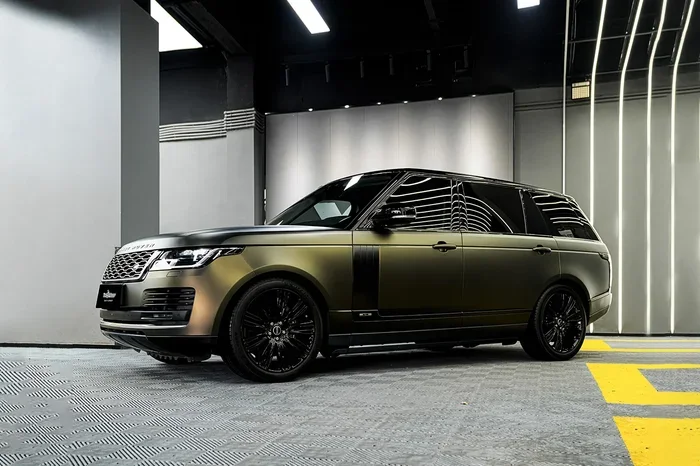
Luxury SUVs like the Mercedes-Benz G-Class, Cadillac Escalade, and Lincoln Navigator often have extended wheelbases and extra body panels. These vehicles demand the most vinyl. A full wrap can require 75 feet or more, especially if you are wrapping every panel including the mirrors, bumpers, and roof racks.
If you own one of these vehicles, always buy a little extra. It is better to have leftover material than to run short in the middle of the project. Luxury SUV wraps also tend to use premium cast vinyl, which is thinner and more forgiving, but you still need enough of it to do the job right.
Full Wrap vs Partial Wrap: How Much Do You Really Need?
One of the biggest decisions you will make is whether to do a full wrap or a partial wrap. This choice has a huge impact on how many feet of vinyl you need. Let us compare both options so you can decide which is right for your project.
What Is a Full SUV Wrap?
A full wrap covers every visible surface of the vehicle. That means the hood, roof, doors, fenders, bumpers, mirrors, and sometimes even the windows (with perforated vinyl). A full wrap gives you the most dramatic transformation and the maximum protection for your original paint.
For a full SUV wrap, you need the most vinyl. As a general rule, expect to use between 50 and 80 feet depending on the size of your vehicle. This is the option that requires the most planning, the most material, and the most patience. But the results are absolutely worth it when done right.
What Is a Partial Wrap?
A partial wrap covers only certain sections of the vehicle. Common partial wrap styles include a half wrap (covering the upper half of the car), a hood and roof wrap, a stripe wrap, or a graphic wrap that covers just a few panels. Partial wraps are popular because they use less material and cost less overall.
For a partial wrap, you might need anywhere from 15 to 45 feet of vinyl depending on which panels you are covering. A simple hood and roof wrap might only need 20 feet. A more elaborate graphic wrap that covers the doors, hood, and roof could need 35 to 45 feet. The design you choose drives the material requirement.
Comparison Table: Full Wrap vs Partial Wrap Vinyl Needs
Here is a quick comparison to help you visualize the differences in material requirements across SUV sizes and wrap types.
- Compact SUV Full Wrap: 50 to 55 feet of vinyl
- Compact SUV Partial Wrap: 15 to 25 feet of vinyl
- Mid-Size SUV Full Wrap: 55 to 65 feet of vinyl
- Mid-Size SUV Partial Wrap: 20 to 35 feet of vinyl
- Full-Size SUV Full Wrap: 65 to 75 feet of vinyl
- Full-Size SUV Partial Wrap: 30 to 45 feet of vinyl
- Luxury SUV Full Wrap: 75 to 85 feet of vinyl
- Luxury SUV Partial Wrap: 35 to 50 feet of vinyl
Use this table as a starting point. Your actual needs may vary based on the specific model, any aftermarket accessories, and the complexity of the design. Always measure your vehicle and adjust your estimate accordingly.
Step-by-Step Guide to Calculate Your Vinyl Requirements
Now that you understand the basics, let us walk through the actual process of calculating how much vinyl you need. This is the part where you grab a tape measure and get hands-on with your vehicle.
Step 1: Measure Your Vehicle
Start by measuring the length and width of each major panel. Use a soft tape measure and measure in inches. For the hood, measure from front to back and from side to side. Do the same for the roof, each door, the fenders, and the bumpers. Write down every measurement in a notebook or on your phone.
Do not forget the mirrors if you plan to wrap them. Do not forget the side windows if you are using perforated vinyl for a see-through effect. Every panel you plan to wrap adds to your total material requirement. This is the most important step because inaccurate measurements lead to wrong estimates.
Step 2: Calculate Surface Area
Once you have your measurements, multiply the length by the width for each panel to get the surface area in square inches. Then add up all the panels to get your total surface area. To convert square inches to square feet, divide by 144. This gives you the total square footage of vinyl you need to cover your SUV.
Next, divide the total square footage by the width of your vinyl roll (usually 60 inches, or 5 feet) to get the total linear feet needed. This is your base estimate. For example, if your SUV has 300 square feet of surface area and your vinyl is 5 feet wide, you need 60 linear feet of vinyl.
Step 3: Add Waste Factor
Here is a tip every installer knows: always add a waste factor. When you wrap curves, corners, and edges, you lose material to trimming, overlapping, and mistakes. A waste factor of 10 to 15 percent is standard for vehicle wraps.
So if your base estimate is 60 feet, add 6 to 9 feet for waste. Your final number becomes 66 to 69 feet. This extra material gives you room to work without stress. It is much better to have leftover vinyl than to run out before you finish. Trust me on this one.
Step 4: Round Up and Buy
Vinyl is sold in standard roll lengths. You will not find a roll that is exactly 67 feet long. So round up to the nearest available size. If you need 67 feet, buy a 75-foot roll. This ensures you have plenty of material to complete the job without any headaches.
Store your leftover vinyl properly. Keep it in a cool, dry place away from direct sunlight. Quality vinyl can last for years if stored correctly, and you might need it for touch-ups or future projects.
Common Mistakes When Estimating Vinyl for Your SUV
Even experienced DIYers make mistakes when estimating vinyl needs. Learning from these common errors can save you time, money, and frustration. Here are the pitfalls to avoid.
Underestimating the Surface Area
The most common mistake is underestimating how much surface area an SUV has. People forget about the door jambs, the mirror housings, and the small panels around the windows. These add up quickly. Always measure every single panel, no matter how small. A few extra inches here and there can make the difference between having enough vinyl and falling short.
Ignoring the Waste Factor
Skipping the waste factor is another rookie mistake. Wrapping a vehicle is not like laying down a flat sheet of paper. You have to stretch the vinyl around curves, tuck it into seams, and trim excess material. Without a waste factor, you will run short. Always add at least 10 percent to your estimate, and 15 percent if your SUV has lots of curves and body lines.
Buying the Wrong Width
Not all vinyl rolls are the same width. If you buy a roll that is too narrow, you will need more linear feet to cover the same area. The standard width for vehicle wrap vinyl is 60 inches, but some rolls are 54 inches or even 48 inches. Always check the width before you buy, and factor it into your calculations.
Forgetting About Pattern Matching
If your wrap design has a pattern or graphic that needs to align across panels, you will need extra material. Pattern matching requires precise alignment, which means more cutting and more waste. If you are doing a detailed graphic wrap, add an extra 20 percent to your waste factor to account for the pattern alignment.
Expert Tips for Getting the Perfect Vinyl Wrap
Getting the right amount of vinyl is only half the battle. The other half is actually installing the wrap correctly. Here are some expert tips that make a big difference in the final result.
Work in a controlled environment. Temperature matters a lot when applying vinyl wrap. The ideal range is between 60 and 80 degrees Fahrenheit. Too cold and the vinyl will not stick properly. Too hot and it will stretch too much and shrink back. If you are working in a garage, make sure the temperature is comfortable before you start.
Use a heat gun for tight curves. A heat gun softens the vinyl and makes it more pliable. This is essential for wrapping the curves and contours of an SUV. Hold the heat gun about six inches from the surface and move it constantly. You want the vinyl to become soft and flexible, not hot and bubbly.
Invest in quality installation tools. A good squeegee, a sharp cutting knife, and a microfiber cloth make a huge difference. These tools help you press the vinyl firmly, cut clean lines, and remove air bubbles. You do not need professional-grade equipment, but cheap tools will make the job harder and the results less polished.
Take your time with the edges. The edges of the wrap are the most visible part of the job. Take extra care to get clean, tight edges. Use a plastic trim tool to tuck the vinyl neatly into seams and edges. Rushing this step is the number one cause of peeling and lifting.
Plan your design before you start. If you are doing a graphic wrap or a two-tone design, lay out the design on paper or digitally before you apply any vinyl. This helps you visualize the final result and ensures you use the material efficiently. A little planning goes a long way toward a professional-looking finish.
How Long Does a Vinyl Wrap Last on an SUV?
A common follow-up question is about the longevity of a vinyl wrap. The answer depends on the quality of the vinyl, the installation, and how well you maintain it. High-quality cast vinyl wraps typically last between five and seven years with proper care. Calendered vinyl lasts about three to five years.
Maintenance is simple. Wash your wrapped SUV regularly with a gentle soap and a soft sponge. Avoid high-pressure car washes, as the strong spray can lift the edges of the wrap. Park in the shade when possible, as prolonged UV exposure can fade the vinyl over time. With basic care, your vehicle wrap will look great for years.
The cost of a vinyl wrap varies widely depending on the material, the design, and whether you hire a professional or do it yourself. A professional full SUV wrap typically costs between $2,500 and $5,000. A DIY wrap can cost significantly less, but it requires patience, skill, and the right tools. Either way, knowing how many feet of vinyl do I need to wrap my SUV is the essential first step that puts you on the path to a stunning result.
Final Thoughts on Vinyl Wrap Material Needs
Figuring out how many feet of vinyl do I need to wrap my SUV does not have to be intimidating. With the right measurements, a clear understanding of your SUV size category, and a simple waste factor calculation, you can estimate your needs with confidence. Whether you are wrapping a compact SUV that needs 50 feet or a luxury SUV that demands 80 feet, the process is the same: measure carefully, calculate accurately, and always buy a little extra.
The key takeaway is this: preparation is everything. Take the time to measure your vehicle thoroughly, choose the right type of vinyl for your project, and factor in enough material to account for waste and mistakes. A well-planned wrap project leads to a flawless finish that turns heads and protects your vehicle for years to come.
Now that you have all the information you need, it is time to grab your tape measure and get started. Your dream SUV wrap is one measurement away from becoming a reality. Happy wrapping!
Frequently Asked Questions
Can I reuse vinyl wrap if I remove it from my SUV?
Generally, no. Once vinyl wrap is applied and the adhesive bonds to the surface, it loses its tackiness if removed. Reusing it often leads to poor adhesion and bubbling. It is always better to buy the right amount of fresh vinyl for your project.
What is the easiest way to measure my SUV for a wrap?
The easiest method is to measure each major panel individually. Use a soft tape measure to record the length and width of the hood, roof, doors, fenders, and bumpers. Write everything down, add up the surface areas, and then convert to linear feet based on your vinyl roll width.
Do I need to wrap the mirrors and bumpers too?
That depends on your design choice. Many full wraps include the mirrors and bumpers for a seamless look. If you are doing a partial wrap, you can skip these areas. Just be sure to include them in your measurements if you plan to cover them.
How much extra vinyl should I buy for mistakes?
A 10 to 15 percent waste factor is standard for most SUV wrap projects. If your base estimate is 60 feet, buy an extra 6 to 9 feet. This buffer ensures you have enough material to fix mistakes, re-position panels, and handle unexpected curves without stopping mid-project.
Is it cheaper to wrap an SUV myself or hire a professional?
DIY wrapping is generally cheaper because you save on labor costs. However, it requires time, patience, and some skill. A professional wrap ensures a flawless finish but costs more. If you are new to wrapping, consider practicing on a small panel first to build your confidence.
What type of vinyl is best for an SUV wrap?
Cast vinyl is the best choice for SUVs. It is thinner, more durable, and conforms better to the curves and contours of an SUV body. Calendered vinyl is a budget-friendly alternative but does not stretch as well and may not hold up as long on a vehicle with complex body lines.
=== CONCLUSION ===
Knowing exactly how many feet of vinyl do I need to wrap my SUV is the foundation of a successful wrap project. From measuring your vehicle to choosing the right vinyl type and adding a waste factor, every step matters. Use the numbers and guidelines in this article as your roadmap, and you will be well on your way to a professional-quality finish that looks amazing and lasts for years.