How Long Does It Take to Build a Car from Start to Finish
Building a car from start to finish takes anywhere from a few hours on the assembly line to several months for a custom build. The car manufacturing process involves dozens of stages, including design, stamping, welding, painting, and final assembly. A mass-produced vehicle typically rolls off the line in about 18 to 24 hours, while a custom car build can take weeks or even months. Understanding each step gives you a real appreciation for the automotive manufacturing journey. Let us break it all down for you.
Have you ever wondered how long it takes to build a car from start to finish? It is a question that sparks curiosity in just about anyone who has ever stood behind a vehicle and thought, “Someone had to make this.” The truth is, the car manufacturing process is one of the most impressive feats of modern engineering. It brings together thousands of parts, hundreds of workers, and advanced robotics to create something you can drive off the lot.
Whether you are a car enthusiast, a curious shopper, or someone considering a custom car build, understanding the timeline helps you appreciate what goes into every vehicle. In this article, we will walk you through every major stage. We will look at factory production timelines, custom build schedules, and the factors that speed things up or slow them down. By the end, you will have a clear picture of the entire vehicle production time from raw metal to a finished ride.
The short answer is that a factory-built car takes about 18 to 24 hours on the assembly line. But that number only tells part of the story. Before a single bolt gets tightened, months of planning and preparation have already taken place. And after the car rolls off the line, more steps happen before it reaches your driveway. Let us dive into the full journey.
Key Takeaways
- Factory car assembly takes 18 to 24 hours on average from start to finish on the production line.
- Custom car builds can take anywhere from a few weeks to several months depending on complexity.
- The car manufacturing process includes design, stamping, welding, painting, and final assembly stages.
- Several factors affect build time, including the type of vehicle, factory efficiency, and supply chain delays.
- Quality checks happen at every stage to ensure each vehicle meets safety and performance standards.
- The journey from design to delivery is a fascinating blend of robotics, human skill, and precision engineering.
📑 Table of Contents
- The Car Manufacturing Process Explained
- How Long Does Each Stage Take?
- Custom Car Build vs Factory Production
- Factors That Affect Car Build Time
- From Factory to Dealership: The Final Steps
- What the Future Holds for Car Production
- Common Mistakes People Make When Estimating Car Build Time
- Key Takeaways
- Conclusion
The Car Manufacturing Process Explained
The automotive manufacturing process is a carefully organized sequence of steps. Each stage has a specific purpose and a set timeline. When all the pieces come together, a fully built vehicle emerges ready for the road. Let us look at each major phase of the car building steps in detail.
1. Design and Engineering Phase
Every car starts as an idea. Engineers and designers spend months or even years developing the concept. They use computer-aided design (CAD) software to create detailed 3D models. During this phase, they test aerodynamics, safety features, and fuel efficiency. This stage alone can take anywhere from 12 months to several years depending on the complexity of the vehicle construction.
Design teams also run crash simulations and weather tests digitally. They refine every curve and panel until the design meets all standards. Only after extensive review does the design move to the next phase. This early investment of time saves money and prevents problems later in the production timeline.
2. Stamping and Body Shop
Once the design is locked in, the production facility begins stamping sheet metal into body panels. Giant presses apply thousands of pounds of force to shape each piece. Robots then move these panels to the welding station. Here, hundreds of spot welds join the body together in just minutes.
The body shop is one of the fastest parts of the entire process. A car body can be fully welded in less than a minute. Precision is critical here because even a small error can affect the fit and finish later. This stage usually takes a few hours per vehicle in a mass production setting.
3. Painting and Coating
After welding, the bare body moves to the paint shop. This is one of the most time-consuming steps. The body goes through a series of washes, primers, base coats, and clear coats. Each layer needs time to dry before the next one goes on.
Factories use huge paint booths with robotic arms to ensure even coverage. The entire painting process takes several hours. Environmental controls keep the paint shop free of dust and moisture. Any imperfection can lead to a rejected body, which adds more time to the car assembly time.
4. Final Assembly
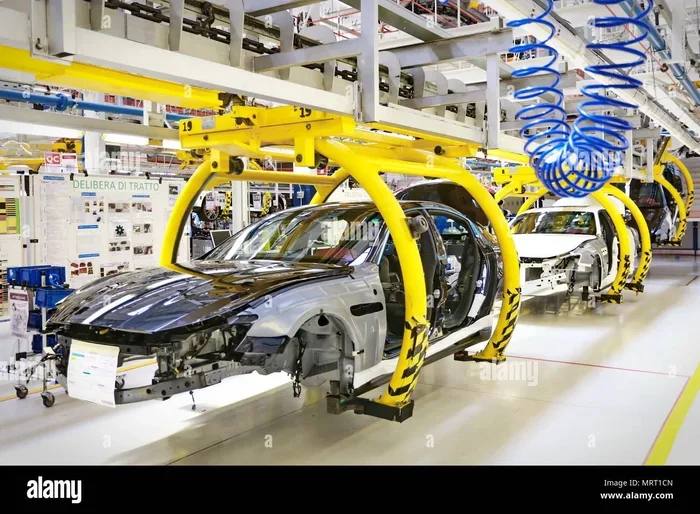
This is where the car really starts to take shape. The painted body moves to the final assembly line. Workers and robots install the engine, transmission, suspension, wheels, interior components, and electronics. Every station on the line adds a specific set of parts.
The assembly line moves at a steady pace. On average, a new vehicle comes off the line every 60 to 90 seconds in a large factory. But the vehicle build time for each individual car adds up to about 18 to 24 hours total. This includes all the stops, checks, and installations along the way.
5. Quality Control and Testing
Before a car leaves the factory, it goes through rigorous quality checks. Technicians inspect every system, from brakes to infotainment. Each vehicle also takes a test drive on a track built into the factory grounds. Sensors scan for leaks, electrical issues, and alignment problems.
Any car that fails these tests gets sent back for repairs. This step is non-negotiable because safety comes first. The quality control phase adds a few hours to the overall manufacturing cycle, but it is well worth the effort.
How Long Does Each Stage Take?
Now that you know the major stages, let us break down the production timeline more precisely. The table below gives you a clear picture of how long each phase typically takes in a modern automotive plant.
- Design and Engineering: 12 months to 4 years
- Stamping and Body Shop: 2 to 4 hours per vehicle
- Painting and Coating: 4 to 8 hours per vehicle
- Final Assembly: 12 to 20 hours per vehicle
- Quality Control and Testing: 2 to 4 hours per vehicle
When you add these up, the total car manufacturing duration from raw materials to a finished vehicle is roughly 18 to 24 hours on the factory floor. But remember, this does not include the months of design work or the shipping time to dealerships. The full journey from concept to customer takes much longer.
Factories also build in buffer time for unexpected delays. A machine breakdown or a shortage of parts can stall the entire line. That is why manufacturers plan for flexibility in their schedules. The goal is always to balance speed with quality.
Custom Car Build vs Factory Production
The timeline changes dramatically when you shift from factory production to a custom car build. Factory lines are designed for speed and efficiency. Custom builds focus on personalization and precision, which naturally takes longer.
In a mass production setting, the same model rolls off the line thousands of times. Workers and robots repeat the same tasks with practiced speed. A custom vehicle build, on the other hand, involves unique specifications for each project. Every weld, paint job, and engine swap is tailored to the owner’s vision.
Custom Build Timelines
A basic custom car build might take 4 to 8 weeks. This applies to vehicles where the core structure is already in place and the owner wants cosmetic or performance upgrades. A full custom build from a bare shell can take 6 months or more.
Some extreme custom projects take years to complete. Think of show cars or one-of-a-kind restorations. The builder sources rare parts, handcrafts components, and spends countless hours perfecting every detail. The custom car build time depends heavily on the scope, budget, and skill level of the builder.
Quick Tip: If you are planning a custom build, always add a 20 to 30 percent time buffer. Delays with parts availability or unexpected repairs are very common in custom projects.
Factory Production Timelines
In contrast, a factory-built car moves through the automotive manufacturing process in less than a day. The efficiency comes from division of labor, robotics, and a continuous production line. Each worker or machine handles one specific task, and the car moves forward without stopping.
Some of the largest factories in the world can produce over 1,000 vehicles per day. That is one car every minute or so. This incredible speed is the result of decades of optimization and investment in automotive production technology.
Factors That Affect Car Build Time
Not all cars take the same amount of time to build. Several factors influence the vehicle build time at any given factory. Understanding these factors helps explain why timelines can vary so much.
Type of Vehicle
A simple sedan takes less time to build than a luxury SUV or a performance truck. More complex vehicles have more components, more electronics, and more labor hours. Electric vehicles also have a different assembly process than gasoline cars. The battery pack installation alone adds extra steps to the car manufacturing process.
Factory Size and Technology
Modern factories with advanced robotics work faster than older facilities. Automated guided vehicles move parts across the floor without human help. Computer systems track every step in real time, reducing errors and delays. A well-equipped production facility can shave hours off the build time.
Supply Chain and Parts Availability
One of the biggest disruptors to the production timeline is parts availability. A shortage of semiconductors, for example, has slowed down car production worldwide. When a factory cannot get the parts it needs, the line slows or stops entirely. This is why manufacturers maintain relationships with multiple suppliers and keep safety stock on hand.
Seasonal Demand
Car factories often adjust their output based on seasonal demand. They may run extra shifts during peak buying seasons to meet customer orders. During slower periods, production lines may run at reduced capacity. These adjustments affect how quickly individual vehicles move through the manufacturing stages.
Model Complexity and Options
A base model with minimal options comes off the line faster than a fully loaded version with every available feature. Each added option means extra wiring, additional components, and more installation time. The car assembly time increases with each customization the customer selects.
From Factory to Dealership: The Final Steps
Once a car passes quality control, it is not quite ready for your driveway. There are still a few more steps in the car design to delivery journey. These final steps add time but are essential for getting the vehicle to the customer.
After assembly, cars are loaded onto transport trucks and shipped to distribution centers. From there, they are sent to individual dealerships. This shipping process can take days or weeks depending on the distance. Some vehicles are also loaded onto trains or cargo ships for long-distance transport.
Dealerships then prepare the vehicles for sale. They add dealer accessories, apply protective coatings, and perform a final inspection. Customers who order a specific configuration may wait weeks for their car to arrive. This is especially true for popular models with high demand.
The total time from the start of the manufacturing cycle to the moment you drive the car home can be several months. The factory work is fast, but logistics and distribution add significant time to the overall vehicle production time.
Expert Insight: According to automotive industry analysts, the average time from factory start to dealership delivery is about 60 to 90 days. However, this can vary widely based on the manufacturer, model, and current market conditions.
What the Future Holds for Car Production
The automotive manufacturing industry is constantly evolving. New technologies are reshaping how and how fast cars are built. Let us look at some trends that will affect future production timelines.
Electric vehicle production is growing rapidly. As more manufacturers shift to EVs, factory lines are being retooled. Battery assembly is a new step that adds complexity to the process. However, advances in automation are helping offset this added time.
AI and machine learning are being used to optimize the assembly line. Predictive systems can forecast delays and adjust schedules in real time. Robots are becoming more flexible and capable of handling diverse tasks. These innovations promise to reduce the car manufacturing duration in the years ahead.
3D printing is another technology making waves in the industry. Some manufacturers now print plastic and metal parts directly. This could reduce the number of steps in the car building steps and speed up prototyping. While mass adoption is still years away, the potential impact is enormous.
The car production line of the future will likely be faster, smarter, and more adaptable. These changes will benefit both manufacturers and consumers. Shorter build times mean faster delivery and more options for buyers.
Common Mistakes People Make When Estimating Car Build Time
There are a few misconceptions that come up again and again when people talk about vehicle construction timelines. Let us clear some of those up.
- Mistake 1: Assuming the factory time is the total time. The assembly line is only one part of the journey. Design, shipping, and dealership prep all add to the total timeline.
- Mistake 2: Ignoring custom build complexity. People often underestimate how long a custom car build takes because they only see the finished product, not the months of work behind it.
- Mistake 3: Overlooking supply chain delays. Even the most efficient production facility cannot work faster than its parts supply allows. Delays upstream directly affect the manufacturing cycle downstream.
- Mistake 4: Confusing model years with build dates. A car labeled as a 2024 model might have been built months earlier. The model year does not always match the actual build date.
Avoiding these mistakes gives you a much more realistic picture of the car manufacturing process and what to expect when you order a new vehicle.
Key Takeaways
- Factory car assembly takes 18 to 24 hours on average from start to finish on the production line.
- Custom car builds can take anywhere from a few weeks to several months depending on complexity.
- The car manufacturing process includes design, stamping, welding, painting, and final assembly stages.
- Several factors affect build time, including the type of vehicle, factory efficiency, and supply chain delays.
- Quality checks happen at every stage to ensure each vehicle meets safety and performance standards.
- The journey from design to delivery is a fascinating blend of robotics, human skill, and precision engineering.
Conclusion
So, how long does it take to build a car from start to finish? The answer depends on what you mean by “build.” On the assembly line, a factory car takes about 18 to 24 hours. But the full car manufacturing process stretches back months before that, and forward weeks after it. From the first design sketch to the moment you drive off the lot, the journey is long and complex.
Custom car builds tell an even more patient story. They can take weeks, months, or even years depending on the vision and the scope. Every custom project is a testament to the skill and dedication of the builders involved.
Understanding the vehicle production time gives you a deeper appreciation for every car on the road. It also helps you set realistic expectations when you are shopping for a new vehicle or planning a personal project. The next time you see a car, remember the incredible journey it took to get there.
Whether it is a speedy factory-built sedan or a painstakingly crafted custom build, every vehicle has a story. And now you know the full production timeline behind it. Use this knowledge to make smarter buying decisions, plan your own builds better, and share the fascinating world of automotive manufacturing with others.
Frequently Asked Questions
How long does it take to build a car on an assembly line?
On average, a factory-built car takes about 18 to 24 hours to complete on the assembly line. This includes stamping, welding, painting, and final assembly. However, the total time from design to delivery is much longer.
Can you build a car in a day?
Yes, a factory production line can build a car in less than a day. Most vehicles roll off the line within 18 to 24 hours. But this only counts the final assembly. The design and engineering phase happens months or years earlier.
How long does a custom car build take?
A custom car build can take anywhere from 4 weeks to over a year. The timeline depends on the complexity of the project, parts availability, and the builder’s experience level. Simple upgrades take less time, while full builds from a bare shell take much longer.
Why do some cars take longer to build than others?
Vehicle complexity is the main factor. Luxury SUVs, electric vehicles, and fully loaded models have more components and require more labor hours. Supply chain issues and factory capacity also play a role in the production timeline.
What happens after a car is built at the factory?
After the factory completes assembly, the car is shipped to a distribution center and then to a dealership. Dealerships perform a final inspection and prepare the vehicle for sale. The entire car design to delivery process can take 60 to 90 days from the factory start date.
How has car production time changed over the years?
Car production has become much faster thanks to robotics and automation. Henry Ford’s original assembly line took about 12 hours per vehicle. Today, modern automotive manufacturing can build a car in under a day. Future innovations like AI and 3D printing may reduce this time even further.