How Do I Turn On Cruise Control on My Toyota Quickly
Turning on cruise control on your Toyota is simple once you know where the buttons are and how the system works. This guide walks you through every step, from locating the cruise control stalk to setting your speed and using adaptive features. Whether you drive a Toyota Camry, RAV4, or Highlander, you will find clear instructions tailored to your model.
There is something genuinely satisfying about cruising down a long highway with your Toyota doing the work for you. How do I turn on cruise control on my Toyota quickly? The answer is simpler than most people think. Whether you are planning a road trip or just dealing with a boring stretch of interstate, cruise control can make your drive more comfortable and even save fuel.
In this guide, we will walk you through every step of activating cruise control on your Toyota. We cover the basic stalk controls, the buttons on the steering wheel, and the smart adaptive systems found in newer models. You will also learn troubleshooting tips, safety guidelines, and model-specific details for popular Toyotas like the Camry, RAV4, and Highlander.
By the end of this article, you will know exactly how to turn on cruise control, adjust your settings, and use advanced features like dynamic radar cruise control. Let us get started.
Key Takeaways
- Easy Access: The cruise control stalk is typically located on the right side of the steering column in most Toyota models.
- Quick Activation: You can turn on cruise control in just a few steps: flip the switch, accelerate to your desired speed, and press the set button.
- Adaptive Options: Newer Toyota models come with dynamic radar cruise control that automatically adjusts your speed based on traffic.
- Safety First: Always cancel cruise control in heavy traffic, rain, or winding roads to maintain full control.
- Troubleshooting Tips: If cruise control won’t engage, check your car battery, engine light, and fuse box before visiting a mechanic.
- Fuel Savings: Using cruise control on highways can improve fuel efficiency and reduce driver fatigue on long trips.
📑 Table of Contents
- Understanding Toyota Cruise Control Systems
- How to Turn On Cruise Control on Your Toyota
- Model-Specific Cruise Control Instructions
- Common Cruise Control Problems and How to Fix Them
- Safety Tips for Using Cruise Control
- Benefits of Using Cruise Control on Your Toyota
- Expert Tips for Getting the Most Out of Toyota Cruise Control
- Quick Tips for Turning On Cruise Control Fast
- Conclusion
Understanding Toyota Cruise Control Systems
Before you press any buttons, it helps to understand what you are working with. Toyota has used different cruise control setups over the years, and newer models include advanced systems that go beyond simple speed maintenance.
Traditional Cruise Control
Traditional cruise control is the basic system found in most Toyota models. It lets you set a constant speed and take your foot off the gas pedal. The system uses a cable or electronic actuator to hold the throttle open at your chosen speed. You can adjust the speed up or down in small increments, and the system remembers your last setting.
This type of cruise control works best on open highways with steady traffic. It does not slow down for cars ahead of you, so you need to stay alert and ready to brake. Most Toyotas from the early 2000s through today still use this reliable system.
Dynamic Radar Cruise Control
Dynamic radar cruise control, often called DRCC, is Toyota’s advanced system. It uses a radar sensor and a camera to detect vehicles ahead of you. When you set a speed, the system automatically slows down if traffic slows and then accelerates back to your set speed when the road clears.
This feature is available on higher trim levels of the Camry, RAV4, Highlander, and newer Tacoma and Tundra models. It makes long drives much less tiring because you do not have to constantly adjust your speed in flowing traffic.
Full-Speed Range Dynamic Radar Cruise Control
The most advanced version works from a complete stop all the way up to highway speeds. This means it can bring your Toyota to a full stop in traffic and then resume driving when the car ahead of you moves. This is a game-changer for stop-and-go highway traffic and long commutes.
How to Turn On Cruise Control on Your Toyota
Now let us get to the main question: how do I turn on cruise control on my Toyota? The process depends slightly on your model year and trim level, but the general steps are very similar across the lineup.
Step 1: Locate the Cruise Control Controls
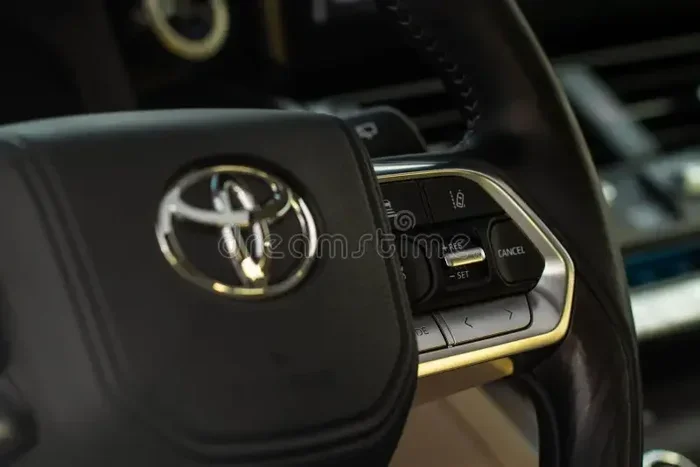
In most Toyota models, you will find the cruise control stalk on the right side of the steering column. It looks like a thin lever that you can push up, pull down, or toggle. On some newer models, the controls are integrated into the steering wheel itself, with buttons on the left side of the wheel.
Here is what to look for on the stalk or steering wheel:
- ON/OFF switch: This turns the entire cruise control system on or off.
- SET button: Press this to lock in your current speed.
- RES (Resume) button: Brings back your previously set speed.
- COAST button: Gently reduces speed without using the brakes.
- ACCEL/SET+ and SET-/DECEL buttons: Adjust your speed up or down in small increments.
- Cancel button: Turns off cruise control temporarily.
Take a moment to locate these controls in your own Toyota. They are easy to miss if you have not used them before. Once you know where everything is, the rest becomes second nature.
Step 2: Turn the System On
Push the ON/OFF switch to activate the cruise control system. You will usually see a small indicator light on the dashboard or instrument cluster turn on. This light might say CRUISE or show a speedometer icon. It tells you the system is ready but not yet set to a speed.
If you do not see the indicator light, try turning the ignition off and back on. Sometimes the system needs a reset after the battery has been disconnected or replaced. If the light still does not appear, you may need to check your car battery or inspect the cruise control fuse under the hood.
Step 3: Accelerate to Your Desired Speed
Drive your Toyota to the speed you want to maintain. This should be a safe and legal speed for the road you are on. Most cruise control systems require you to be going at least 25 to 30 mph before you can set the speed.
Once you reach your target speed, press and release the SET button on the stalk or steering wheel. You will hear a soft click or beep, and the indicator light on the dash will change to show that cruise control is now active. Take your foot off the gas pedal, and your Toyota will hold the speed steady.
Step 4: Adjust Your Speed
Need to go a little faster or slower? Use the adjustment buttons on the cruise control stalk. Hold down the ACCEL/SET+ button to increase speed in small jumps, typically 1 mph at a time. Hold SET-/DECEL to reduce speed the same way.
For bigger changes, you can press and hold the buttons. Some Toyotas also let you tap the buttons for quick single-mph adjustments. Find the rhythm that works for you, and remember that small, gradual changes are safer than large jumps.
Step 5: Cancel or Resume Cruise Control
There are several ways to cancel cruise control temporarily:
- Press the Cancel button on the stalk.
- Tap the brake pedal.
- Pull the clutch pedal (in manual transmission models).
When you want to return to your set speed, press the RES button. Your Toyota will accelerate back to the previously stored speed automatically. This is incredibly handy when you need to slow down for a curve or slower traffic and then get back up to speed quickly.
Model-Specific Cruise Control Instructions
Toyota has many different models, and each one handles cruise control slightly differently. Here are the most common models and their specific cruise control setups.
Toyota Camry Cruise Control
The Camry is one of the most popular sedans in America, and it comes well-equipped with cruise control. Most Camry models use the steering column stalk for cruise control operations. The ON/OFF switch sits near the end of the stalk, and the SET, RES, and cancel functions are built into the lever.
Higher trim levels of the Camry, especially the XSE and TRD models, may include dynamic radar cruise control. This system adds a radar sensor behind the front grille and a camera near the rearview mirror. The controls on the steering wheel let you choose your following distance and adjust the set speed with fine precision.
Toyota RAV4 Cruise Control
The RAV4 uses a combination of stalk-mounted and steering wheel controls depending on the model year. Newer RAV4 models (2019 and up) often have the cruise control buttons on the steering wheel, making them easier to reach while driving.
The RAV4’s dynamic radar cruise control is a standout feature, especially on long highway drives. It includes a low-speed follow feature that can bring the vehicle to a complete stop and resume automatically. This is perfect for stop-and-go highway traffic during rush hour.
Toyota Highlander Cruise Control
The Highlander offers cruise control across most trim levels. The standard system uses the steering column stalk, while the Platinum and Limited trims may include the full dynamic radar cruise control system.
One thing to note about the Highlander is its size. Because this SUV is heavier than a Camry or RAV4, it takes a bit longer to accelerate back to your set speed after canceling. Keep this in mind when using cruise control on hilly terrain or when merging onto highways.
Toyota Tacoma and Tundra Cruise Control
Toyota trucks like the Tacoma and Tundra have traditionally used the steering column stalk for cruise control. The setup is straightforward and works reliably, even when hauling a trailer.
Newer models of the Tacoma and Tundra may include adaptive cruise control on higher trims. If you regularly tow a trailer or carry heavy loads, cruise control can still be useful on flat highways, but be aware that the extra weight may affect how the system performs on inclines.
Common Cruise Control Problems and How to Fix Them
Sometimes cruise control simply does not work the way it should. Here are the most common issues and what you can do about them.
Cruise Control Will Not Turn On
If the cruise control system will not activate at all, start with the basics. Check that the ON/OFF switch is in the ON position and that the indicator light is showing on your dashboard. If the light does not come on, try turning the ignition off and back on again.
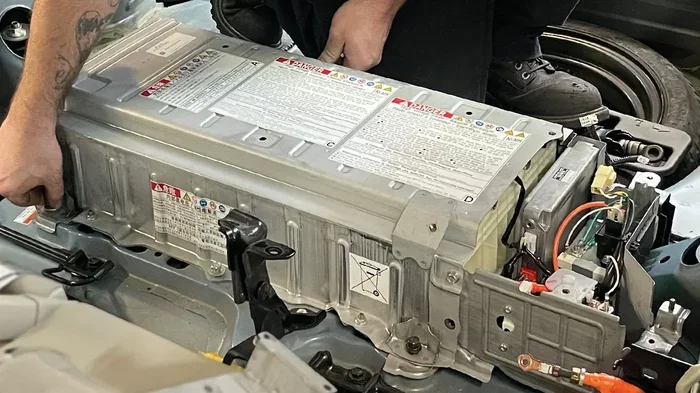
Next, check your car battery. A weak or dying battery can prevent the cruise control system from receiving power. If your battery is more than three years old, it might be time for a replacement. You can also check the cruise control fuse in your owner’s manual to see if it has blown.
Cruise Control Will Not Set
If you can turn the system on but it will not set your speed, there are a few possible causes. First, make sure you are going at least 25 mph. Most Toyota systems will not allow you to set cruise control below this speed.
Second, check if your brake pedal switch is working. The system is designed to cancel cruise control when you tap the brake, and a faulty brake switch can prevent it from engaging at all. Third, make sure your engine management light is not on. If the check engine light is illuminated, the cruise control system may be disabled as a safety measure. You can learn how to get rid of the engine management light by diagnosing the underlying issue, or clear a check engine code if the problem has been resolved.
Cruise Control Surges or Fluctuates
If your Toyota’s cruise control is speeding up and slowing down on its own, the throttle body or the vehicle speed sensor could be dirty or malfunctioning. A dirty throttle body can cause erratic speed changes, and a faulty speed sensor can send incorrect data to the cruise control module.
Another common cause is a low-quality fuel. If you have been using 87 octane gas and notice surging, try switching to a higher octane fuel for a tank or two. While most Toyotas run fine on regular unleaded, some models respond better to mid-grade fuel for smoother performance.
Adaptive Cruise Control Not Responding
For models equipped with dynamic radar cruise control, a dirty radar sensor or camera lens can cause the system to malfunction. The radar sensor is located behind the front grille, and the camera sits near the top of the windshield behind the rearview mirror.
Keep these sensors clean, especially in winter when road salt and grime can build up quickly. If your adaptive cruise control suddenly stops working, a quick wipe-down of the sensors might solve the problem.
Safety Tips for Using Cruise Control
Cruise control is a convenient feature, but it is not a substitute for attentive driving. Here are some important safety tips to keep in mind every time you use cruise control on your Toyota.
- Stay alert at all times. Cruise control does not steer the vehicle. You must keep your hands on the wheel and your eyes on the road.
- Do not use cruise control in heavy traffic. The system is designed for steady-speed driving, not for stop-and-go situations unless you have full-speed range adaptive cruise control.
- Avoid cruise control in bad weather. Rain, snow, and ice reduce traction, and cruise control can cause your wheels to spin if you lose grip. Turn it off and drive manually in poor conditions.
- Use cruise control on long highway drives to reduce fatigue. It takes the pressure off your right foot and helps you maintain a consistent speed, which reduces the risk of speeding tickets.
- Set a safe following distance. If your Toyota has adaptive cruise control, increase your following distance in wet or icy conditions.
- Know how to cancel quickly. Always be ready to tap the brake pedal or press the cancel button if something unexpected happens ahead.
Benefits of Using Cruise Control on Your Toyota
Beyond the obvious convenience, cruise control offers several real benefits that many drivers overlook.
Fuel Efficiency
Maintaining a steady speed helps your engine run more efficiently. When you constantly speed up and slow down, your engine works harder and burns more fuel. Studies show that using cruise control on highways can improve fuel economy by 5 to 15 percent, depending on road conditions and your driving habits.
Reduced Driver Fatigue
Long drives can be exhausting, especially on monotonous highways. Cruise control takes the workload off your right foot and lets you focus more on road conditions and steering. This is especially helpful on road trips where you might be driving for several hours at a time.
Consistent Speed and Fewer Speeding Tickets
It is easy to unintentionally speed up on long stretches of road. Cruise control locks in your chosen speed and keeps you from drifting over the limit. This is a great way to stay within the legal speed range and avoid costly tickets.
Smoother Acceleration
When you set cruise control, your Toyota accelerates and decelerates smoothly and predictably. This reduces wear and tear on your throttle body, transmission, and brakes over time. Smoother driving also means a more comfortable ride for your passengers.
Expert Tips for Getting the Most Out of Toyota Cruise Control
Here are some insider tips from experienced Toyota drivers and automotive experts that will help you get the most out of your cruise control system.
- Practice in safe conditions first. Before you rely on cruise control in heavy traffic or on unfamiliar roads, practice using it on quiet highways during off-peak hours.
- Use the coast button wisely. The coast button gently reduces your speed without applying the brakes. It is perfect for gradual downhill stretches where you do not want to brake unnecessarily.
- Combine cruise control with your navigation system. Many newer Toyotas allow you to set cruise control through the infotainment screen, giving you even more precise control over your speed and following distance.
- Keep your owner’s manual handy. Your Toyota owner’s manual contains detailed information about your specific cruise control system, including warranty coverage and maintenance tips.
- Update your software if applicable. Some Toyota models receive over-the-air software updates that improve cruise control performance. Check with your dealer to see if your vehicle is eligible.
Quick Tips for Turning On Cruise Control Fast
Want to turn on cruise control in record time? Here is a quick cheat sheet:
- Flip the ON/OFF switch on the steering column stalk or steering wheel.
- Accelerate to your desired speed using the gas pedal.
- Press the SET button to lock in your speed.
- Take your foot off the gas pedal and enjoy the drive.
- Use the up and down buttons to make adjustments on the fly.
That is it. Once you have done this a few times, it becomes automatic. You will wonder how you ever drove without it.
Conclusion
Knowing how to turn on cruise control on your Toyota quickly can transform your driving experience. Whether you are commuting to work on the highway or embarking on a cross-country road trip, cruise control adds comfort, safety, and fuel savings to your journey.
Start with the basics: locate your controls, turn the system on, set your speed, and enjoy the drive. As you grow more comfortable, explore the advanced features like dynamic radar cruise control and following distance adjustments. And if you ever run into problems, refer back to the troubleshooting tips in this guide.
Your Toyota is equipped with a smart, reliable cruise control system designed to make your life easier. Take a few minutes to learn it, practice it, and you will wonder how you ever drove without it. Happy cruising.
Frequently Asked Questions
Can I use cruise control in the rain?
It is best to avoid cruise control in wet or rainy conditions. When roads are slick, cruise control can cause your wheels to spin if you lose traction. Turn it off and drive manually to maintain full control of your Toyota.
Why won’t my Toyota’s cruise control set below 25 mph?
Most Toyota cruise control systems require a minimum speed of 25 to 30 mph before they will set. This is a safety feature designed to prevent accidental activation in low-speed or stop-and-go traffic.
Can I use cruise control on hilly terrain?
Yes, but be aware that cruise control may cause your Toyota to slow down significantly on steep hills and then accelerate aggressively on the descent. In hilly terrain, you may want to use manual throttle control for a smoother experience.
Does cruise control damage my Toyota’s transmission?
No, cruise control does not damage your transmission. In fact, it can reduce wear by promoting smoother acceleration and deceleration. The system works within your vehicle’s normal operating parameters and is designed for everyday use.
How do I know if my Toyota has adaptive cruise control?
Check your owner’s manual or look for the dynamic radar cruise control indicator on your dashboard. Higher trim levels of the Camry, RAV4, Highlander, and newer truck models typically include adaptive cruise control as a standard or optional feature.
What should I do if my cruise control keeps canceling on its own?
If your cruise control frequently cancels, check your brake light switch, as a faulty switch can send a false cancel signal. Also inspect the cruise control fuse and make sure your car battery is fully charged. If the problem persists, have a mechanic diagnose the issue.