How Do I Open My Trunk From the Inside Without Keys
Knowing how do I open my trunk from the inside without keys is a must for every car owner. Whether your trunk release button fails or your trunk lock jams, this guide walks you through every solution. You will learn simple emergency trunk release methods, troubleshooting steps, and prevention tips that save time and money.
Have you ever stood in front of your car, keys in hand, and realized you cannot open the trunk from the inside? It happens more often than you might think. A trunk stuck closed can turn a quick errand into a frustrating experience. Whether your trunk release button is broken or the trunk lock mechanism simply will not budge, there is always a way out. This guide will show you every method to open your trunk from the inside without keys. You will learn how each system works, what to do when things go wrong, and how to prevent future problems. Let us get into it.
Understanding your car’s trunk release system is the first step toward solving any problem. Modern vehicles come with multiple safety features built into the trunk latch design. These features make it easier to access your trunk even when the primary method fails. By the end of this article, you will feel confident handling any trunk lockout situation. You will also know exactly when to call for help. No more guessing. No more panic. Just clear, practical steps you can follow right now.
Key Takeaways
- Multiple Methods Exist: Every car has at least one interior trunk release option, and most have several backup systems you can use.
- Emergency Handles Save Lives: The trunk emergency release handle is a safety feature designed for exactly this situation.
- Regular Maintenance Helps: Simple upkeep prevents most trunk latch problems before they start.
- Know Your Specific Model: The trunk release lever location varies by car make and model.
- Call a Pro When Needed: Some trunk lockout situations need a locksmith or mechanic.
- Prevention Is Easy: A few quick habits keep your trunk opening system working smoothly for years.
📑 Table of Contents
Understanding Your Trunk Release System
Every car has a trunk release system designed with safety and convenience in mind. Before you try any fix, it helps to understand how the system works. Different cars use different methods, but they all serve the same purpose. Knowing your setup makes troubleshooting much easier.
How the Interior Trunk Latch Works
The interior trunk latch is the main release point inside your vehicle. In most cars, you will find it on the inside of the trunk lid or on the driver’s side dashboard. When you pull or push this latch, it releases the trunk lock and pops the trunk open. This is the primary method for opening the trunk from the inside. The mechanism is simple. A cable connects the latch to the lock. When you pull the latch, the cable disengages the lock. Then the trunk opens freely.
Some vehicles place the trunk release lever near the driver’s seat. Others put it inside the trunk itself, near the back seat. The exact trunk release lever location depends on your car’s make and model. Check your owner’s manual to find yours. It is usually clearly marked with a trunk icon or the word “trunk.”
Common Types of Trunk Release Mechanisms
Cars use several different trunk release mechanisms. Here are the most common ones you might encounter:
- Pull-style trunk release lever: A lever you pull to open the trunk. Found in many sedans and SUVs.
- Trunk release button: A push button, often near the driver’s seat or on the dashboard. Common in newer models.
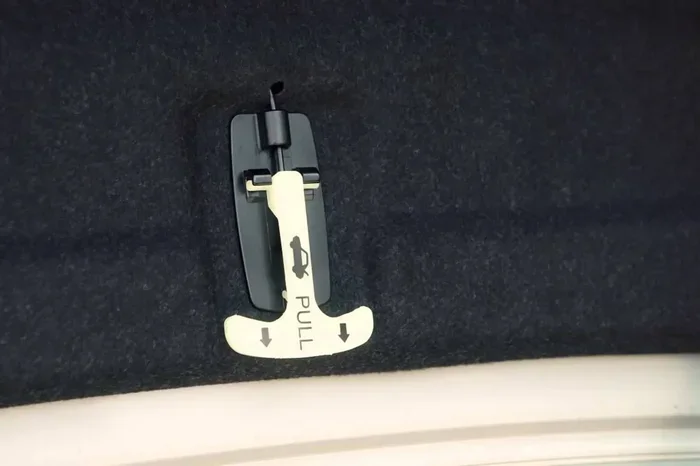
- Emergency trunk release handle: A plastic or metal handle inside the trunk. This is a safety feature required in many countries.
- Remote trunk open: A key fob or smartphone app that signals the trunk to open electronically.
- Fold-down rear seat access: Some cars let you access the trunk by folding down the rear seats.
Each method has its strengths. The trunk release button is the most convenient. The emergency trunk release handle is the most reliable during power failures. Understanding which system your car uses helps you choose the right approach when the primary method fails.
Step-by-Step Guide to Opening Your Trunk From the Inside
Now that you know the basics, let us walk through the actual steps. These methods work for most vehicles. Always start with the simplest approach and work your way down the list.
Locating the Trunk Release Lever
The first thing to do is find your trunk release lever. In most cars, it is easy to locate. Check these common spots:
- On the driver’s side dashboard, near the steering column.
- On the driver’s side door panel, near the seat.
- On the floor between the front seats.
- Inside the trunk, near the latch.
Once you find the lever, give it a firm pull. You should hear a click. The trunk lid should pop open slightly. Then you can lift it fully. If nothing happens, do not worry. Move on to the next step.
Using the Emergency Trunk Release
Every car built in recent years has an emergency trunk release feature. This is a safety requirement. It prevents people from getting trapped inside the trunk. The emergency trunk release handle is usually a bright-colored plastic handle located inside the trunk itself.
To use it, open the trunk as much as you can. Even a small gap works. Reach inside and feel for the handle. It is often near the back of the trunk, near the latch mechanism. Pull the handle firmly. This disengages the lock from the inside. The trunk should open fully.
Quick Tip: If you cannot see the handle, use your phone flashlight. Shine it into the trunk gap and look for a bright-colored lever or cable. The emergency release is almost always easy to spot once you know where to look.
What to Do When the Trunk Release Button Does Not Work
Sometimes the trunk release button simply does not respond. This can happen for several reasons. The most common cause is a dead battery in the key fob or a blown fuse. Here is what to do:
- Check the key fob battery. Replace it if it is low.
- Look for a manual trunk release option in your owner’s manual.
- Try pressing the button multiple times. Sometimes the signal just needs a second attempt.
- Check the fuse box under the dashboard. A blown fuse can stop the trunk release mechanism from working.
If none of these work, do not force anything. Forcing the trunk latch can cause expensive damage. Move on to the troubleshooting section below.
Troubleshooting Common Trunk Problems
When the standard methods do not work, something else is going on. Let us look at the most common trunk opening problems and how to fix them.
Trunk Stuck Closed? Here Is What to Try
A trunk stuck closed is one of the most common car problems. It can happen for many reasons. Here are the top causes and fixes:
- Frozen latch: In cold weather, moisture can freeze the latch. Spray a small amount of silicone lubricant or WD-40 on the latch. Wait a few minutes. Try again.
- Misaligned trunk lid: If the lid is not sitting right, the latch will not catch properly. Gently push or pull the lid while someone else tries the release.
- Broken cable: The cable connecting the release lever to the latch can snap. You will need a mechanic to replace it.
- Child lock engaged: Some cars have a trunk child lock. Check the owner’s manual to find and disable it.
Start with the simplest fix. Lubrication solves more trunk problems than most people realize. A little silicone spray can make a huge difference.
Broken Trunk Handle Solutions
If the outside trunk handle is broken or stuck, you still have options. The interior release and the emergency trunk release handle do not depend on the outside handle at all. Here is what to do:
- Use the interior trunk release lever from the driver’s seat.
- Access the emergency release through the small gap between the trunk and the body.
- If you have a remote trunk open feature, try using the key fob.
- Fold down the rear seats (if your car allows it) and reach the latch from inside the cabin.
A broken outside handle does not mean you are locked out. The trunk latch system has built-in redundancies for exactly this reason.
When the Trunk Latch Is Jammed
A jammed trunk latch is more serious than a stuck release button. The latch itself may be damaged or corroded. Here are some steps to try:
- Apply lubricant directly to the latch mechanism.
- Tap the latch gently with a rubber mallet. Do not use a metal hammer.
- Check for debris or dirt inside the latch. Clean it out with a cloth.
- Try opening the trunk from the inside while someone else presses the release from outside.
Common Mistake: Never use excessive force on a jammed latch. You risk bending the latch, damaging the trunk lid, or breaking the cable. Gentle, patient troubleshooting works better every time.
Expert Insight: According to automotive mechanics, the most common cause of a jammed trunk latch is lack of regular maintenance. A few sprays of lubricant every six months can prevent 90 percent of these problems.
Preventing Trunk Lockout Situations
The best way to handle a trunk lockout is to prevent it from happening in the first place. Simple habits can keep your trunk opening system working perfectly for years.
Regular Maintenance Tips
Here is a simple maintenance routine every car owner should follow:
- Lubricate the trunk latch every six months. Use a silicone-based spray or white lithium grease.
- Check the trunk release cable once a year. Make sure it moves freely and is not frayed.
- Test the trunk release button regularly. Do not wait until you are locked out to discover it does not work.
- Replace the key fob battery every two years. A weak battery can cause intermittent trunk release failures.
- Keep the trunk clean. Debris can get into the latch mechanism and cause jams.
These five habits take less than an hour per year. They can save you from countless frustrating moments.
Quick Tips to Avoid Future Problems
Beyond regular maintenance, a few smart habits make a big difference:
- Always double-check that the trunk is fully closed before walking away.
- Keep a spare key in a safe place at home. A trunk key replacement is much easier than a lockout.
- Know where your emergency trunk release is located before you need it.
- Teach everyone in the household how to open the trunk from the inside.
- Keep a small can of lubricant in your garage for quick touch-ups.
Quick Tip: Take five minutes right now to locate your trunk release lever and emergency release handle. You will be glad you did the next time you need them.
When to Call a Professional
Most trunk lockout situations can be handled at home. But some problems need professional help. Knowing when to call a locksmith or mechanic saves you time and prevents further damage.
Signs You Need a Locksmith or Mechanic
Watch for these warning signs that indicate a professional is needed:
- The trunk release cable is visibly broken or disconnected.
- The trunk latch is physically damaged or bent.
- You have tried all the steps in this guide and the trunk still will not open.
- The trunk lock mechanism feels completely frozen or seized.
- You smell burning or notice electrical issues when pressing the release button.
If you notice any of these signs, stop trying to force the trunk open. Call a qualified professional. They have the tools and expertise to fix the problem safely.
Cost Considerations for Trunk Repairs
The cost of trunk latch repair varies widely. Simple fixes like lubrication or cable adjustment cost little to nothing. More complex repairs can range from $100 to $500 or more, depending on the car model and the damage. A trunk key replacement typically costs between $50 and $200. Always get a quote before authorizing any repair work.
Expert Insight: Many locksmiths offer emergency trunk lockout services at reasonable rates. Having a trusted locksmith’s number saved in your phone is a smart move for any car owner.
Comparison: Opening Methods by Car Type
Different types of vehicles have different trunk release systems. Here is a quick comparison of the most common setups:
| Car Type | Primary Interior Release | Emergency Release | Remote Option |
|---|---|---|---|
| Sedan | Dashboard lever or button | Trunk emergency handle | Key fob or app |
| SUV | Driver seat lever or button | Trunk emergency handle | Key fob or app |
| Hatchback | Rear seat access or dashboard | Inside trunk handle | Key fob or button on tailgate |
| Minivan | Driver console button | Inside trunk handle | Key fob or power liftgate |
| Truck | Cab-side lever or button | Inside truck bed latch | Key fob or remote |
As you can see, most vehicles offer multiple ways to open the trunk from the inside. The key is knowing which methods your specific car has. Check your owner’s manual to confirm your vehicle’s features.
Key Takeaways
- Multiple Methods Exist: Every car has at least one interior trunk release option, and most have several backup systems you can use.
- Emergency Handles Save Lives: The trunk emergency release handle is a safety feature designed for exactly this situation.
- Regular Maintenance Helps: Simple upkeep prevents most trunk latch problems before they start.
- Know Your Specific Model: The trunk release lever location varies by car make and model.
- Call a Pro When Needed: Some trunk lockout situations need a locksmith or mechanic.
- Prevention Is Easy: A few quick habits keep your trunk opening system working smoothly for years.
Frequently Asked Questions
Can I open my trunk from the inside if the car battery is dead?
Yes, in most cases. The emergency trunk release handle works independently of the car battery. It is a mechanical system that does not need electricity. Locate the handle inside the trunk and pull it firmly. This is one reason why every car has this feature. It works even when all the electronics are dead.
What should I do if the trunk release lever inside my car is stuck?
First, try wiggling the lever gently while pulling. Sometimes the cable just needs a little movement to free up. If that does not work, spray a small amount of lubricant around the lever mechanism. Wait a minute or two and try again. If the lever still does not move, the cable may be broken. At that point, it is best to call a mechanic.
Is it safe to use the emergency trunk release handle?
Absolutely. The emergency trunk release handle is a factory-installed safety feature. It is designed to be used by anyone, including children, in case of an emergency. It will not damage your trunk or the latch mechanism. In fact, using it regularly helps keep the mechanism working smoothly.
How much does it cost to fix a broken trunk release mechanism?
The cost depends on what is broken. A simple cable replacement might cost between $100 and $200. A trunk latch repair could run $150 to $400. The trunk release button itself is usually inexpensive to replace, often under $50 for the part. Always get a diagnostic estimate before committing to any repair.
Can I prevent my trunk from getting stuck in cold weather?
Yes, you can. Cold weather is one of the most common causes of a trunk stuck closed. Moisture gets into the latch and freezes overnight. The best prevention is to spray the latch mechanism with a silicone lubricant before winter sets in. You can also park in a garage whenever possible. Keeping the trunk area dry makes a big difference.
Where is the trunk release lever located in most cars?
The trunk release lever location varies by vehicle, but it is almost always easy to find. Check the driver’s side dashboard, near the steering column. It could also be on the driver’s seat door panel or on the floor between the front seats. In some models, the lever is inside the trunk itself, near the back seat. Your owner’s manual will show you the exact spot for your car.
Conclusion
Knowing how do I open my trunk from the inside without keys is one of the most practical skills any car owner can have. A trunk lockout can happen to anyone, at any time. But with the right knowledge, it is almost always a quick fix. You now understand how the trunk release system works. You know the step-by-step methods for opening your trunk. You have troubleshooting tips for the most common problems. And you know how to prevent future issues with simple maintenance.
The emergency trunk release handle is your best friend in any lockout situation. The trunk release button, the interior lever, and the trunk latch system all work together to give you multiple ways in. Use them. Know where they are. Keep them maintained.
Take action today. Spend five minutes locating your trunk release mechanisms. Share this guide with a friend or family member who might need it. A little preparation goes a long way. You will never have to worry about a trunk stuck closed again. Stay prepared, stay calm, and remember, you always have options.