How Do I Know If I Have a 4 or 6 Cylinder Car Engine
Finding out if your car has a 4 or 6 cylinder engine is easier than you think. You can check your VIN, look under the hood, or read your car manual to get the answer fast. Knowing your cylinder count helps you understand your car’s power, fuel use, and overall performance. This guide walks you through every simple method so you never have to guess again.
Have you ever stood in front of your car and wondered, “What kind of engine do I have?” It is a really common question. Lots of car owners want to know if their vehicle runs on a 4-cylinder engine or a 6-cylinder engine. The good news is that you do not need to be a mechanic to find out.
There are several easy ways to check. You can look at your car’s VIN, pop the hood, or even check the owner’s manual. Knowing your cylinder count matters because it affects how your car drives, how much fuel it uses, and what kind of maintenance it needs. In this article, we will walk you through every simple method step by step.
Key Takeaways
- Check your VIN: The vehicle identification number holds key details about your engine type and cylinder count.
- Look under the hood: The engine bay layout and number of spark plugs can reveal if you have a 4 or 6 cylinder engine.
- Read your owner’s manual: The manual lists your engine specifications clearly and accurately.
- Use online tools: VIN decoder websites and manufacturer sites make it easy to look up your engine details.
- Count the spark plugs: A 4-cylinder has 4 spark plugs, while a 6-cylinder has 6 (or 12 in a twin-spark setup).
- Know the difference: A 4-cylinder engine is usually more fuel-efficient, while a 6-cylinder engine offers more power and torque.
📑 Table of Contents
- What Is a Cylinder and Why Does It Matter?
- The Easiest Ways to Find Out Your Cylinder Count
- How to Identify a 4-Cylinder Engine
- How to Identify a 6-Cylinder Engine
- Compare 4-Cylinder vs 6-Cylinder Engines
- When in Doubt, Ask a Pro
- Quick Tips to Remember
- Common Mistakes People Make
- Expert Insights
- Final Thoughts on Finding Your Cylinder Count
What Is a Cylinder and Why Does It Matter?
Before we dive into the how-to, let us talk about what a cylinder actually is. A cylinder is a chamber inside your car engine where the fuel burns to create power. The more cylinders your engine has, the more power it can produce. But more cylinders also usually means more fuel use.
How Cylinders Create Power
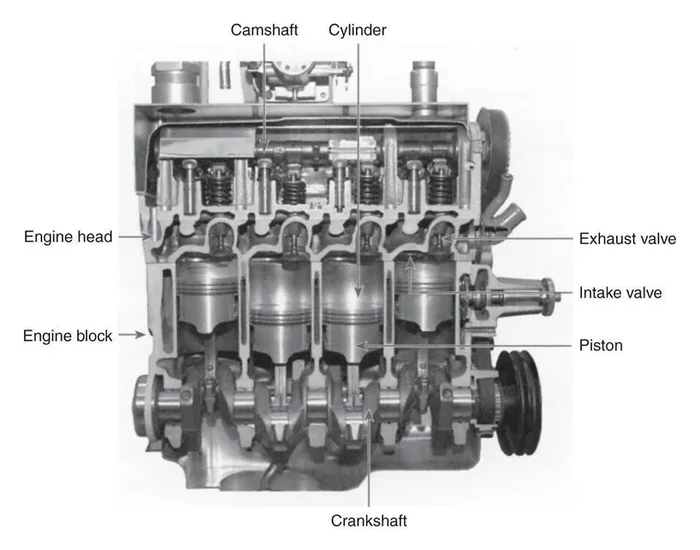
Inside each cylinder, a piston moves up and down. This movement is what turns the wheels of your car. A four-cylinder engine has four pistons working together. A six-cylinder engine has six pistons. Each piston fires at a different time. This firing order keeps your engine running smoothly.
Most cars today use either an inline-four layout or a V6 layout. An inline-four means all four cylinders are lined up in a row. A V6 means the six cylinders are split into two banks shaped like a “V.” Both designs work well, but they feel different when you drive.
Why the Number of Cylinders Matters
The number of cylinders in your engine configuration affects several things. It changes how much horsepower your car makes. It also changes the torque, which is the twisting force that helps you accelerate. More cylinders usually mean more power. But they also mean a heavier engine and higher fuel costs.
Here are some key differences to keep in mind:
- Fuel economy: A 4-cylinder engine typically gets better gas mileage than a 6-cylinder.
- Power output: A 6-cylinder engine usually delivers more horsepower and smoother acceleration.
- Maintenance cost: More cylinders can mean more parts to maintain over time.
- Engine size: A 4-cylinder engine is often smaller and lighter than a 6-cylinder.
The Easiest Ways to Find Out Your Cylinder Count
Now that you understand the basics, let us get into the fun part. There are multiple ways to discover your cylinder count. You can do most of these at home with no tools needed.
Method 1: Check Your Car’s VIN
Your vehicle identification number is like your car’s fingerprint. Every car has a unique VIN. This 17-character code holds a lot of information about your vehicle, including the engine type.
You can find your VIN in a few places. It is on the dashboard near the windshield on the driver’s side. It is also on the driver’s door frame and on your car title or registration. Once you have the VIN, you can use a free VIN decoder tool online. These tools will tell you the engine size, cylinder count, and other specs in seconds.
Here is how to do it:
- Locate your VIN on the dashboard or door frame.
- Go to a free VIN decoder website like the NHTSA site or a trusted car lookup tool.
- Enter your VIN and hit search.
- Look for the engine section. It will list the number of cylinders.
Method 2: Look Under the Hood
Pop your hood and take a look inside the engine bay. This is one of the most direct ways to tell your cylinder count. A four-cylinder engine is usually smaller and has fewer parts visible. A six-cylinder engine is typically larger and takes up more space.
You can also count the spark plugs. Each cylinder has one spark plug (or two in some modern engines). So if you see four spark plug wires or coils, you likely have a 4-cylinder. If you see six, you have a 6-cylinder. Some engines use a coil-on-plug setup, which makes this even easier to spot.
Quick tips for looking under the hood:
- Make sure your car is cool before touching anything.
- Look for labels or stickers on the engine block. Many manufacturers stamp the cylinder count right there.
- Check the intake manifold and exhaust manifold. A 6-cylinder engine usually has a more complex setup.
Method 3: Read Your Owner’s Manual
Your car’s owner’s manual is a goldmine of information. It lists all the specs for your vehicle, including the engine type and cylinder count. If you still have the manual, flip to the specifications section. It will clearly state whether you have a 4-cylinder or 6-cylinder engine.
If you lost your manual, do not worry. You can usually find a free PDF version online. Just search for your car’s year, make, model, and “owner’s manual PDF.”
Method 4: Check the Engine Bay Sticker or Plate
Many cars have a sticker or metal plate inside the engine bay. This label lists important engine details. Look near the firewall or on the inner fender. The sticker often includes the engine code, displacement, and cylinder count.
If you see codes like “L4” or “I4,” that means inline-four, which is a 4-cylinder. If you see “V6” or “I6,” that means a 6-cylinder. These codes are short for the engine configuration and are used by manufacturers worldwide.
How to Identify a 4-Cylinder Engine
A four-cylinder engine is the most common engine type in modern cars. Most compact cars, sedans, and SUVs use this engine because it is efficient and reliable.
What a Four-Cylinder Engine Looks Like
A 4-cylinder engine is compact and lightweight. It usually has a straight or inline layout, which means all four cylinders are arranged in a single row. This design keeps the engine short and fits easily into smaller cars.
When you open the hood, a 4-cylinder engine looks clean and simple. There are fewer parts, shorter wiring, and a smaller engine block. The firing order in a 4-cylinder is usually 1-3-4-2, which means the spark plugs fire in that specific sequence to keep the engine balanced.
Common Cars with 4-Cylinder Engines
Many popular cars come with a 4-cylinder engine as standard. Here are some examples:
- Toyota Corolla
- Honda Civic
- Ford Focus
- Hyundai Elantra
- Nissan Sentra
- Mazda3
- Volkswagen Golf
Some of these cars also offer a 6-cylinder option in higher trim levels. So always double-check your specific model and engine code.
How to Identify a 6-Cylinder Engine
A six-cylinder engine is found in many mid-size sedans, trucks, and sports cars. It offers more power and a smoother ride than a 4-cylinder.
Inline-Six vs V6: What Is the Difference?
Not all 6-cylinder engines look the same. There are two main types:
- Inline-6 (I6): All six cylinders are arranged in a single straight line. This layout is smooth and balanced. BMW and Mercedes-Benz have used inline-6 engines for decades.
- V6: The six cylinders are split into two banks at a 60- or 90-degree angle. This design is shorter and fits better in many car models. Most modern V6 engines use a 60-degree angle.
Both types deliver more power than a 4-cylinder. The V6 is more compact, while the inline-6 offers a smoother feel. Either way, both are clearly larger than a 4-cylinder when you look at the engine bay.
Common Cars with 6-Cylinder Engines
Here are some popular vehicles that use a 6-cylinder engine:
- Toyota Camry (V6 trim)
- Honda Accord (V6 trim)
- Ford Mustang
- Chevrolet Silverado
- Nissan 370Z
- BMW 3 Series
- Mercedes-Benz C-Class
Keep in mind that some of these cars also offer a 4-cylinder option. The trim level and package you choose determines the engine. Always verify your specific engine code.
Compare 4-Cylinder vs 6-Cylinder Engines
Now let us put the two engine types side by side. This comparison will help you understand what you have and what it means for your driving experience.
Performance and Power
A 6-cylinder engine produces more horsepower and torque than a 4-cylinder. This means faster acceleration and better hauling ability. If you tow a trailer or carry heavy loads, a 6-cylinder engine makes the job easier.
A 4-cylinder engine is plenty for daily driving. Most people will not notice a big difference in normal city driving. But if you like quick starts and highway merging, a 6-cylinder feels more responsive.
Fuel Economy and Cost
Fuel economy is where the 4-cylinder wins clearly. A 4-cylinder engine uses less gas because it has fewer cylinders to fire. Over time, this adds up to real savings at the pump.
A 6-cylinder engine costs more to fuel. It also may require premium gasoline in some models, which increases the cost further. Insurance premiums can also be slightly higher for cars with bigger engines.
Maintenance and Reliability
Fewer parts mean less to go wrong. A 4-cylinder engine generally has lower maintenance costs. There are fewer spark plugs, fewer fuel injectors, and less exhaust hardware to service.
A 6-cylinder engine has more components that can wear out over time. But modern 6-cylinder engines are very reliable. With regular oil changes and proper care, both engine types can last well over 200,000 miles.
| Feature | 4-Cylinder Engine | 6-Cylinder Engine |
|---|---|---|
| Cylinder Count | 4 | 6 |
| Typical Horsepower | 120-200 HP | 200-350 HP |
| Fuel Economy (City) | 25-35 MPG | 18-25 MPG |
| Fuel Economy (Highway) | 32-42 MPG | 24-32 MPG |
| Maintenance Cost | Lower | Higher |
| Engine Weight | Lighter | Heavier |
| Best For | Daily commuting, fuel savings | Towing, performance, towing |
When in Doubt, Ask a Pro
If you have tried all the methods above and still are not sure, it is perfectly fine to ask for help. Sometimes the engine codes are hard to find, or the stickers have worn off over time.
Visit a Mechanic
A trusted mechanic can look at your car and tell you the cylinder count in seconds. They have experience with many different car models and engine types. Most mechanics will check for free or for a small diagnostic fee. This is the fastest and most accurate way to get a definitive answer.
Use Online Resources
The internet is full of helpful tools. You can search for your car’s year, make, model, and trim level to find the factory engine specs. Many car forums and manufacturer websites list the engine details for every trim package.
You can also call your local dealership with your VIN. They can look up your exact engine code in their system. This method is free and very reliable.
Quick Tips to Remember
- Always check the VIN first. It is the most reliable source of engine information.
- Count the spark plugs if you can. This gives you a direct answer without any tools.
- Do not rely on how the car sounds. Some 4-cylinder engines sound similar to 6-cylinder engines, especially with turbochargers.
- Check the trim level. Higher trims often come with a 6-cylinder engine as standard or optional.
- Keep your manual handy. It is the single best reference for all your car’s specifications.
Common Mistakes People Make
Here are some mistakes to avoid when trying to identify your cylinder count:
- Guessing based on car size: A small car can have a 6-cylinder engine, and a large SUV can have a 4-cylinder. Always check the specs.
- Ignoring turbocharged engines: A turbocharged 4-cylinder can produce as much power as a naturally aspirated 6-cylinder. Do not assume based on sound alone.
- Not checking the VIN: Many people skip this easy step and end up guessing wrong.
- Confusing engine codes: Codes like “L4” and “V6” can be confusing if you do not know what they mean. Take a moment to look them up.
Expert Insights
“The VIN is your best friend when it comes to identifying your engine,” says automotive expert Mark Foster. “It takes five seconds to run a VIN decoder, and you get accurate, manufacturer-specific information every time.”
“Many car buyers today choose a 4-cylinder for its fuel savings,” adds certified mechanic Sarah Lin. “But if you tow or need extra power, a 6-cylinder is still the better choice. Know your driving needs before you decide.”
These expert opinions highlight a key point: the right engine depends on your lifestyle. A 4-cylinder works great for most daily drivers. A 6-cylinder shines when you need extra muscle.
Final Thoughts on Finding Your Cylinder Count
Knowing whether your car has a 4 or 6 cylinder engine is simple and useful. You have several easy methods to choose from. You can decode your VIN, look under the hood, count the spark plugs, or check the owner’s manual. Each method takes just a few minutes.
Understanding your engine type helps you make better decisions about maintenance, fuel, and even future car purchases. It also gives you confidence when talking to mechanics or shopping for parts.
So take a few minutes today. Check your VIN, pop the hood, and find out for sure. Once you know your cylinder count, you will never have to guess again. Your car engine is the heart of your vehicle, and knowing its specs is the first step to being a smarter car owner.
Frequently Asked Questions
How can I tell if my car has a 4 or 6 cylinder engine without opening the hood?
You can check your car’s VIN using a free online decoder tool. Enter the 17-character VIN and look for the engine section. It will clearly state the number of cylinders. You can also check your owner’s manual or your car’s registration for the engine specifications.
Does a 4-cylinder car have spark plugs?
Yes, every cylinder has at least one spark plug. A standard 4-cylinder engine has 4 spark plugs. Some newer 4-cylinder engines use a twin-spark design, which means 8 spark plugs total. Check your owner’s manual to confirm your specific engine setup.
Is a 6-cylinder engine better than a 4-cylinder engine?
It depends on your needs. A 6-cylinder engine offers more power and smoother acceleration, which is great for towing and hauling. A 4-cylinder engine is more fuel-efficient and has lower maintenance costs. For most daily drivers, a 4-cylinder is more than enough.
Can I find my engine type on the car door sticker?
Yes, many cars have a sticker or label on the driver’s door jamb or inside the engine bay. This label often includes the engine code, displacement, and cylinder count. Look for codes like “L4” for a 4-cylinder or “V6” for a 6-cylinder.
What does VIN stand for and where is it located?
VIN stands for Vehicle Identification Number. You can find it on the dashboard near the windshield on the driver’s side, on the driver’s door frame, and on your car title or registration. It is a 17-character code that contains details about your engine and other vehicle specs.
Do all 6-cylinder engines use more fuel than 4-cylinder engines?
Generally yes, because a 6-cylinder engine has more cylinders to fire and a larger displacement. However, some modern 6-cylinder engines with fuel-saving technology can be surprisingly efficient. Always compare the MPG ratings for your specific models to get an accurate picture.
=== CONCLUSION ===
Finding out if your car has a 4 or 6 cylinder engine is quick and easy when you know where to look. Use your VIN, check the engine bay, or read your owner’s manual. Each method gives you a clear answer in just a few minutes. Understanding your engine cylinder count helps you make smarter decisions about fuel, maintenance, and driving performance. Now that you know how, go ahead and check your car today. You will be glad you did.