Does the Key Inside the Fob Start the Car And Why It Matters
Yes, the key inside the fob does start the car, but it works through a smart electronic system that communicates with your vehicle’s ignition. Understanding how your key fob and transponder key work together can save you time, money, and frustration when things go wrong.
Key Takeaways
- The hidden key inside the fob is essential for starting most modern vehicles.
- Transponder chips inside the key communicate with your car’s immobilizer system.
- A dead car battery or faulty key fob can prevent your vehicle from starting.
- Keyless entry systems use proximity sensors to detect your smart key.
- Push button start vehicles still rely on a physical or electronic key hidden in the fob.
- Common mistakes like a dead fob battery or wrong key placement cause most starting failures.
- Regular key fob maintenance keeps your vehicle running smoothly and securely.
📑 Table of Contents
- What Is a Key Fob and How Does It Work?
- Does the Key Inside the Fob Start the Car?
- How the Ignition System Recognizes Your Key
- Common Key Fob Problems That Prevent Starting
- How to Fix Key Fob Starting Issues
- Expert Tips for Key Fob Maintenance
- Common Mistakes That Cause Fob Starting Failures
- Why Understanding Your Fob Matters
- Conclusion
What Is a Key Fob and How Does It Work?
A key fob is a small handheld device that lets you lock, unlock, and start your car without using a traditional metal key. Most modern vehicles come with these handy remotes built into a single unit. You may not even realize there is a real key hidden inside the fob.
The key fob uses radio frequency signals to talk to your car. When you press a button, it sends a coded message to the vehicle’s receiver. The car then responds by locking the doors or engaging the ignition system. It all happens in a split second.
Inside most fobs, there is a small electronic chip called a transponder. This chip plays a big role in vehicle security. Without it, your car would not recognize the key and would not start. This is a clever anti-theft feature that has been standard in cars for over two decades now.
The Hidden Physical Key
Many people do not realize that a metal key blade is tucked inside the fob. You usually have to press a small release button or slide a panel to reveal it. This hidden key serves as a backup if the electronic part of the fob fails.
The physical key can still unlock the driver’s door in most models. However, for starting the engine, the transponder chip must communicate with the car. The metal blade alone will not turn the ignition in vehicles with push button start systems.
How Keyless Entry Works
Keyless entry systems use a proximity sensor to detect when your fob is nearby. The car can sense the fob from a few feet away. This is why you can unlock your doors just by touching the handle.
Some systems also support remote start. This lets you warm up or cool down your car from a distance. The key recognition technology ensures that only your specific fob can activate these features. It adds a layer of vehicle security that older cars simply do not have.
Does the Key Inside the Fob Start the Car?
So, does the key inside the fob start the car? The short answer is yes. But the process is more complex than just turning a key in an ignition. Let us break down exactly how this works in modern vehicles.
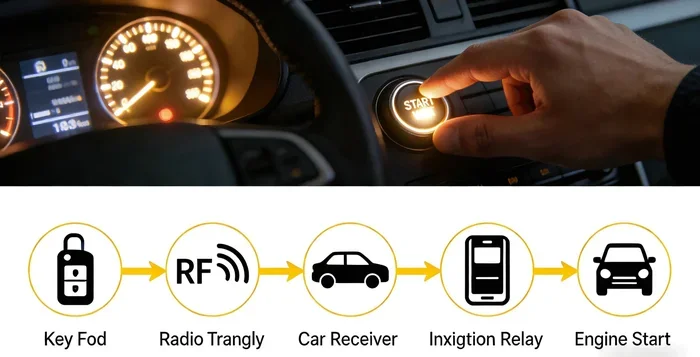
When you insert the key fob into the start slot or press the start button, the car’s computer sends a signal. The transponder chip inside the fob responds with a unique code. If the code matches what the car expects, the ignition system unlocks and the engine turns over.
This entire process is called key recognition. It happens in milliseconds. You do not need to do anything special. Just having the fob in the right place is usually enough. But if something goes wrong with the chip or the signal, your car will not start.
Vehicles With Push Button Start
In push button start vehicles, the key fob must be inside the cabin. Most cars have a designated area on the center console or steering column where you place the fob. The proximity sensor reads the fob and allows the engine to start.
Some vehicles also let you start the car using the metal key blade hidden inside the fob. You insert it into a backup slot, usually near the steering column. The car still reads the transponder chip through the fob housing. The metal blade alone does not start the engine in most cases.
Vehicles With Traditional Ignition
In older models, the key fob is more of a convenience add-on. The metal key blade does the actual work of starting the car. You insert it into the ignition cylinder and turn it. The ignition switch completes the electrical circuit that fires up the engine.
Even in these older systems, many fobs contain a transponder chip. The car immobilizer system reads this chip before allowing fuel to flow to the engine. This means the key inside the fob matters even when you are using the traditional method.
Smart Key Systems
Smart key systems are the most advanced type of keyless entry technology. These fobs do not even need to be taken out of your pocket. The car battery and the vehicle’s computer handle all the communication automatically.
You simply press the start button while the fob is inside the car. The electronic immobilizer verifies the fob’s identity. Once verified, the ignition system engages and the engine starts. This seamless experience is why smart keys have become so popular in recent years.
| Vehicle Type | How the Key Starts the Car | Backup Method |
|---|---|---|
| Push Button Start | Fob placed in cabin; proximity sensor reads transponder | Metal key blade in backup slot |
| Traditional Ignition | Metal key blade turns ignition cylinder | Transponder chip still required for immobilizer |
| Smart Key System | Fob detected by proximity sensor; start button activates engine | Fob placed on designated reader area |
| Remote Start Only | Fob signal triggers starter remotely | Physical key blade for manual start |
How the Ignition System Recognizes Your Key
The ignition system in modern cars is a sophisticated electronic network. It does more than just connect electrical circuits. It also verifies your key’s identity through transponder technology. Understanding this process helps you appreciate why the key inside the fob matters so much.
The Role of the Transponder Chip
The transponder chip is a tiny electronic component embedded in the fob or key head. It does not have its own battery. Instead, it gets powered by the radio signal the car sends out. Once powered, the chip sends back a unique identification code.
This code is specific to your vehicle. No other fob will produce the same signal. The car immobilizer compares the received code with the stored code in the car’s computer. If they match, the ignition system allows the engine to start. If they do not match, the car stays locked down.
The Immobilizer System Explained
The car immobilizer is an anti-theft device built into your vehicle. It prevents unauthorized users from hot-wiring or copying your key. Even if someone inserts a blank key into the ignition, the immobilizer will block the engine from starting.
This system relies entirely on the electronic chip inside your fob. Without a properly programmed chip, the car simply will not turn over. This is why replacing a lost fob can be expensive. You need not just a physical key but also a properly coded transponder key.
Why Key Recognition Matters
Key recognition is the process by which your car identifies your specific fob. It goes beyond simple radio signals. The car checks the unique code, the encryption level, and sometimes even the battery status of the fob.
This multi-step verification makes your vehicle much safer. It also means that a copied or cloned fob will not work in most cases. The vehicle security system is designed to be one step ahead of potential thieves. And it all starts with the key inside the fob.
Common Key Fob Problems That Prevent Starting
Even the best key fob can run into problems. When the fob fails, you might not be able to start your car. Here are the most common issues drivers face.
Dead Fob Battery
The most frequent cause of fob failure is a dead battery. The key fob battery is small and usually lasts two to three years. When it dies, the fob cannot send its signal to the car. You may still be able to unlock the doors with the backup metal key blade, but starting the engine becomes a problem.
Some cars have a low-battery warning on the dashboard. Others give you no notice at all. If your fob suddenly stops working, the battery is the first thing to check. Replacing it is usually simple and inexpensive.
Damaged Transponder Chip
The transponder chip inside the fob can get damaged. This happens if the fob is dropped hard or exposed to water. A damaged chip will not send the correct code to the car’s ignition system. As a result, the car immobilizer blocks the engine from starting.
In this case, you cannot simply replace the battery. The entire fob needs reprogramming or replacement. This can cost anywhere from 50 to 300 dollars depending on your vehicle model and the type of fob you have.
Interference From Other Devices
Sometimes, electronic interference prevents your fob from communicating with the car. Other key fobs, phones, or even USB chargers nearby can cause signal disruption. This is rare but it does happen, especially in crowded parking lots.
If you find your car will not start in a busy area, try moving away from other electronic devices. Then try again. The proximity sensor should pick up your fob’s signal once the interference is removed.
Worn-Out Ignition Switch
In vehicles with a traditional ignition switch, the mechanical parts wear out over time. The key blade may fit loosely or fail to make proper contact. This prevents the ignition system from receiving the signal it needs to start the engine.
A worn ignition switch is a more serious problem. It usually requires professional repair. Do not ignore this issue. A failing switch can leave you stranded unexpectedly.
How to Fix Key Fob Starting Issues
When your car will not start and you suspect the fob is the problem, there are several steps you can take. Most fixes are simple and do not require a trip to the mechanic.
Replace the Fob Battery
Start with the easiest fix. Open the fob and replace the coin-cell battery. These batteries are widely available and cost just a few dollars. Make sure you use the correct battery type for your fob model.
After replacing the battery, test the fob near the car. If the keyless entry works and the car starts, you have solved the problem. If not, the issue may be with the transponder chip or another component.
Reposition the Fob
Some cars have a specific spot where the fob must be placed for starting. Check your owner’s manual for the exact location. In push button start vehicles, placing the fob directly on the start button often works even with a weak battery.
This trick works because the car battery powers the fob reading process. Even if the fob’s own battery is dead, the car can sometimes read the transponder chip through direct contact. This is a handy workaround to keep in mind.
Reprogram or Replace the Fob
If the transponder chip is damaged, you will need professional help. A locksmith or dealership can reprogram a new fob to match your vehicle. Some cars allow DIY reprogramming, but most require specialized equipment.
Always keep a spare fob on hand. Losing your only fob can be a costly and stressful experience. A backup fob saves time and money when the primary one fails.
Check the Car Battery
Sometimes the problem is not the fob at all. A weak car battery can prevent the ignition system from functioning properly. If the dashboard lights are dim or flickering, the car battery may need replacement.
Jump-starting the car can help you determine if the battery is the issue. If the car starts with a jump but not on its own, the battery is likely the culprit. Replace it and your key fob should work normally again.
Quick Tips
- Always carry a spare key fob battery in your glove box.
- Test your fob’s range regularly by standing a few feet away from the car.
- Keep the fob away from water, heat, and heavy impact.
- Replace the fob battery every two years as a preventive measure.
- Learn where the backup metal key blade is stored in your fob.
Expert Tips for Key Fob Maintenance
Taking care of your key fob extends its life and prevents unexpected starting problems. A few simple habits can make a big difference over time.
Clean the Fob Regularly
Dirt and grime can build up around the buttons and the battery compartment. Use a soft, damp cloth to wipe down the fob at least once a month. This keeps the connections clean and the buttons responsive.
Avoid Extreme Temperatures
Leaving your fob in a hot car or out in freezing weather can damage the electronic chip inside. The transponder key circuitry is sensitive to temperature extremes. Keep the fob in a pocket or bag when possible.
Monitor Battery Health
Pay attention to the key fob battery life. If you notice reduced range or sluggish button response, it is time for a replacement. Catching the problem early prevents you from being stranded with a dead fob.
Update Your Fob Software
Some modern vehicles allow fob software updates through the dealership. These updates can improve key recognition and fix known bugs. Check with your dealer if you are experiencing intermittent starting issues.
Expert Insight
Automotive technicians recommend treating your key fob like any other important electronic device. Regular maintenance, timely battery replacement, and careful handling go a long way in preventing starting issues. A well-maintained fob ensures your vehicle security system works exactly as designed every single time you get behind the wheel.
Common Mistakes That Cause Fob Starting Failures
Many drivers make avoidable mistakes that lead to fob-related starting problems. Being aware of these can save you a lot of trouble.
Ignoring the Low Battery Warning
If your dashboard shows a fob battery low warning, do not ignore it. Waiting too long means the fob will eventually stop working. Replace the battery as soon as you see the alert.
Storing the Fob Too Far From the Car
In smart key systems, the fob must be within a certain range. Leaving it in a purse on a different floor of your house can prevent the car from detecting it. Always keep the fob close when approaching your vehicle.
Using the Wrong Type of Key
Not all fobs are compatible with all vehicles. Using a fob from a different car model will not work. The transponder chip code will not match the car’s electronic immobilizer settings.
Forgetting to Remove the Key from the Ignition
In older vehicles, leaving the key in the ignition when the engine is off can drain the car battery. Always remove the key after parking. This simple habit prevents many common starting issues.
Why Understanding Your Fob Matters
Knowing how your key fob works gives you confidence as a driver. You understand what to do when things go wrong. You can troubleshoot basic issues without calling for help. And you appreciate the advanced vehicle security features that protect your car every day.
The key inside the fob is more than just a backup. It is a critical part of your vehicle’s ignition system. Whether you drive a car with push button start, a traditional ignition, or a smart key system, the hidden key plays a role in getting your engine running.
Taking a few minutes to learn about your fob’s features pays off in the long run. You save money on repairs. You avoid the frustration of a car that will not start. And you keep your vehicle secure with a properly functioning anti-theft system.
So the next time you use your fob to start the car, remember what is happening behind the scenes. The transponder chip is sending its unique code. The ignition system is verifying it. The electronic immobilizer is standing guard. And all of this happens because of the key hidden inside your fob.
Conclusion
Does the key inside the fob start the car? Yes, it absolutely does. The hidden key and its transponder chip work together with your vehicle’s ignition system to make starting your car seamless and secure. From push button start to smart key systems, the principle remains the same. The car must recognize the fob before it will allow the engine to turn over.
Understanding this process empowers you as a driver. You know how to maintain your fob. You can troubleshoot common problems. And you appreciate the technology that keeps your vehicle safe. Take care of your key fob, replace its battery on schedule, and keep a spare handy. Your car will reward you with reliable starts every time you turn the key or press the button.
Frequently Asked Questions
Can I start my car if the key fob battery is completely dead?
In most push button start vehicles, you can place the dead fob directly on the start button or a designated reader area. The car’s internal battery powers the key recognition process. However, you should replace the fob battery as soon as possible to avoid being stranded.
How do I know if my transponder chip is damaged?
If your key fob stops working entirely and replacing the battery does not help, the transponder chip may be damaged. Other signs include intermittent starting failures or the car not recognizing the fob at all. A locksmith or dealership can test the chip and recommend a replacement.
Is it safe to use a third-party replacement key fob?
Third-party fobs can work, but they must be properly programmed to match your vehicle’s electronic immobilizer settings. A poorly programmed fob may not start the car or could compromise your vehicle security. Always check compatibility before purchasing a replacement.
How far away can my key fob be for the car to detect it?
Most smart key systems detect the fob from about 30 to 60 feet away. The exact range depends on your vehicle model and the proximity sensor strength. If the fob is too far away, the car will not recognize it and will not start.
What should I do if my key fob gets wet?
If your key fob gets wet, remove the battery immediately and let the fob dry completely before reinserting the battery. Water can damage the transponder chip and other internal electronics. If the fob still does not work after drying, you may need a replacement.
Can I replace the key fob battery myself?
Yes, replacing the key fob battery is one of the easiest maintenance tasks you can do at home. Most fobs pop open with a small coin or flat tool. Just swap out the old battery for a new one of the same type and size. This simple step can save you a trip to the mechanic.