Does One-Way Mirror Tint Work at Night Find Out Now
The short answer is no—standard one-way mirror tint loses its magic after dark. At night, the reflective film becomes transparent from both sides, killing your privacy. However, you can still achieve a mirror-like look after sunset with the right film, lighting tricks, or alternative tints. This guide breaks down the science, the best solutions, and the mistakes to avoid.
You just rolled into the driveway after a long day. The sun is setting, and you want a little privacy in your car. You look at your windows and think, does one-way mirror tint work at night? It is a question many car owners ask, especially after they notice their windows turn into fish bowls once the sun goes down.
The truth is, standard one-way mirror film is a daytime wonder. It creates that sleek, reflective look that keeps prying eyes out. But at night, the magic disappears. The film becomes transparent, and anyone outside can see right into your vehicle. This is not a defect. It is how the film works by design. Understanding this helps you set the right expectations and choose the right product for your needs.
In this guide, we will walk through the science behind one-way mirror film, explain why it fails after dark, and share practical solutions that actually work. Whether you want nighttime privacy for your car or just curious about reflective tint, you will find clear, honest answers here. We will also cover the best alternatives, legal tips, and common mistakes so you do not waste money on a product that does not deliver.
Key Takeaways
- One-way mirror tint fails at night: It relies on bright light outside to create the mirror effect. Once it gets dark, the film becomes see-through from both sides.
- Lighting is the secret: You can fake the one-way look at night by keeping interior lights off and using strong exterior lighting or streetlights.
- Reflective window film is the best night-friendly option: High-quality reflective coatings maintain some mirror appearance even in low light, though not as dark as daytime.
- Consider ceramic or carbon tints for all-day privacy: These non-reflective films block heat and UV without the one-way illusion, and they work 24/7.
- Check your local laws: Many states restrict how dark or reflective a car window tint can be, especially on the front windshield and side windows.
- DIY mistakes are common: Using the wrong film, skipping primer, or installing in humid conditions leads to bubbles, peeling, and poor adhesion.
- Professional installation pays off: A skilled installer ensures a bubble-free finish, proper curing, and compliance with local regulations.
📑 Table of Contents
- What Is One-Way Mirror Tint and How Does It Work?
- Does One-Way Mirror Tint Work at Night? The Science Explained
- Factors That Affect One-Way Mirror Tint Performance at Night
- Daytime vs. Nighttime: How One-Way Mirror Film Behaves Differently
- Best Alternatives for Nighttime Privacy
- Legal Considerations and Common Mistakes
- Expert Tips for Getting the Most Out of Your Mirror Tint
- Conclusion
What Is One-Way Mirror Tint and How Does It Work?
One-way mirror tint is a thin, reflective film applied to glass. It is also called mirror finish tint or reflective window film. The film has a metallic or semi-metallic coating that reflects light. During the day, the outside is brighter than the inside. The bright light bounces off the film, making the window look like a mirror from the outside. Meanwhile, people inside can still see out clearly because the interior is darker.
This effect is called one-way vision. It depends entirely on the difference in light between the two sides. The film does not block light from passing through. It just reflects a large portion of it. The visible light transmission (VLT) of most one-way mirror films is around 35% to 50%. That means you can see through the window, but the reflection dominates when the outside is brighter.
How Is It Different from Regular Dark Tint?
Regular dark tint uses dyes or pigments to absorb light. It makes the window darker but does not create a mirror effect. Reflective tint adds a metallic layer that bounces light back. This gives you both privacy and a shiny appearance. However, the mirror look is a daytime trick. At night, when the inside of the car is brighter than the outside, the reflection fades. The window becomes a normal transparent pane.
Common Uses for One-Way Mirror Film
People use privacy window film in many settings. In offices, it keeps conference rooms private without blocking natural light. In homes, it reduces glare and adds a modern look. In cars, it gives passengers a sense of seclusion. But car owners often run into trouble when they expect the same daytime privacy at night. That is where the confusion starts.
Does One-Way Mirror Tint Work at Night? The Science Explained
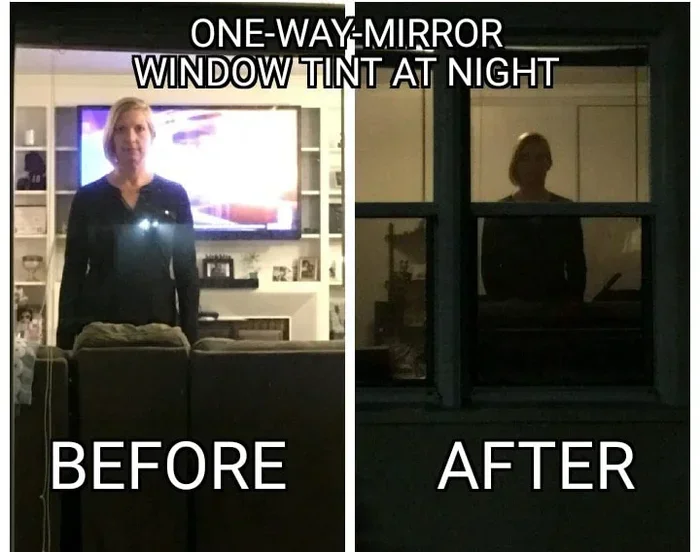
The simple answer is no. One-way mirror tint does not work at night in the same way it works during the day. The film itself does not change. It still reflects light and still transmits light. But the conditions that create the mirror illusion are gone. At night, the outside is dark, and the inside of the car is lit up. The light from your dashboard, seats, and interior shines outward. Instead of reflecting, the film lets that light pass through. Someone standing outside can see everything inside your car.
Think of it like a mirror in a dark room. If you turn on a light behind you, the mirror becomes a window. The reflective coating is still there. But the balance of light has shifted. Nighttime transparency is the term experts use to describe this. The film does not become opaque or dark. It stays the same, but the visual effect flips.
Why the One-Way Effect Depends on Light Balance
The one-way mirror effect is really a light game. Here is how it works:
- Daytime: The sun brightly illuminates the outside. The film reflects this bright light back. Your eyes see a mirror. The darker interior does not produce enough light to pass through the film, so people inside can look out.
- Nighttime: The outside is dark. The inside is lit by your dashboard, dome light, or phone screen. The film now transmits that interior light outward. The reflection weakens. People outside can see in clearly.
This is why reflective tint alone cannot guarantee privacy after sunset. The film is always transparent to some degree. The mirror illusion is just a trick of contrasting light levels.
Can You Still Get a Mirror Look at Night?
Yes, but only with extra effort. Some drivers keep their interior lights off and rely on strong exterior streetlights or headlights to create a partial reflection. Others use a secondary shade or curtain. But these are workarounds, not built-in features of the film. If you want true nighttime privacy without thinking about it, you need a different type of window treatment.
Factors That Affect One-Way Mirror Tint Performance at Night
Not all reflective tints behave the same way after dark. Several factors determine how much privacy you actually get at night. Understanding these helps you choose the right product and set realistic expectations.
1. Film Reflectivity Level
Not all mirror finish tint is created equal. Some films have a higher metallic content and reflect more light even in low conditions. These premium reflective window films can maintain a slight mirror appearance at night if there is any exterior light source. Cheaper dyed films lose all reflectivity quickly once the sun sets. If you are serious about nighttime privacy, look for films with a high reflectivity rating, even if they are labeled as one-way vision films.
2. Exterior Lighting Conditions
Where you park matters a lot. If your car sits under bright streetlights or in a well-lit parking lot, the exterior light can partially restore the mirror effect. The film reflects that light back, creating a dim mirror look from outside. In a completely dark area with no exterior light, the film becomes fully transparent. This is the worst-case scenario for privacy.
3. Interior Lighting Habits
What you do inside the car at night is the biggest variable. If you drive with the dome light on, the map light on, or your phone screen glowing, all that light escapes through the film. The interior becomes a glowing box visible from outside. To preserve any reflection, you must keep the interior as dark as possible. This is not practical for most drivers, which is why one-way mirror tint is not ideal for nighttime use.
4. VLT and Film Darkness
The visible light transmission percentage tells you how much light passes through the film. A lower VLT means a darker window. Some people confuse darkness with privacy. A very dark dyed tint might look private at night because it is simply dark, but it does not create a mirror reflection. A reflective film with a moderate VLT can look mirror-like during the day but still be see-through at night. The darkness and the reflectivity are two separate properties.
5. Glass Type and Cleanliness
Clean, smooth glass helps the film adhere properly and perform consistently. Dirty or textured glass can create uneven reflections, reducing the one-way effect even during the day. At night, any imperfections become more noticeable because the film is already more transparent. A high-quality ceramic tint or carbon tint is less affected by glass quality because it relies on absorption rather than reflection.
Daytime vs. Nighttime: How One-Way Mirror Film Behaves Differently
The difference between daytime and nighttime performance is stark. Here is a side-by-side look at what to expect.
Daytime Performance
During the day, one-way mirror tint shines. The bright outdoor light hits the reflective coating and bounces back. From outside, the window looks like a mirror. You can sit inside and read a book or change clothes without anyone seeing you. The UV protection and heat rejection benefits are also at their peak. The metallic layer blocks a significant amount of solar energy, keeping your car cooler and protecting your interior from fading.
For daytime privacy, reflective tint is hard to beat. It gives you that sleek, darkened look while still allowing you to see out. This is why many car owners love it for their side windows and rear windshield.
Nighttime Performance
After sunset, the same window becomes a clear pane. The reflection fades. The film no longer blocks the view from outside. You lose your interior privacy completely. If you parked under a streetlight, you might see a faint glow on the glass, but it is not a true mirror. The car interior is visible, and your belongings are on display.
This is the biggest drawback of mirror effect tint. It creates a false sense of security. You might think your car is private, but at night it is an open book. For people who frequently park in dark areas or leave valuables in their car, this can be a real problem.
| Feature | Daytime | Nighttime |
|---|---|---|
| Mirror Reflection | Strong, true one-way effect | Weak or absent |
| Interior Privacy | Excellent | Poor to none |
| Exterior Visibility | Reduced reflection, can see in | Clear view into car |
| Heat Rejection | High | Moderate (still blocks IR) |
| Glare Reduction | Excellent | Minimal |
| UV Protection | High | High (unchanged) |
| Overall Privacy | Very good | Very poor |
The table makes it clear that one-way mirror tint is a daytime-only solution for privacy. If you need all-day and all-night privacy, you must look at other options.
Best Alternatives for Nighttime Privacy
If does one-way mirror tint work at night is a no, what can you do instead? Several window film technologies provide real privacy after dark without relying on a light imbalance.
1. Ceramic Window Tint
Ceramic tint is a top choice for drivers who want privacy around the clock. It uses nano-ceramic particles to block heat and UV rays without a reflective coating. The film is non-metallic, so it does not create a mirror effect. Instead, it is a uniform dark shade that looks the same day and night. Because it absorbs light rather than reflecting it, the privacy level remains consistent. Ceramic tint also does not interfere with GPS, phone signals, or radio reception, which is a big plus for modern cars.
2. Carbon Window Tint
Carbon tint offers a matte, non-reflective finish. It is darker than many reflective films and provides excellent heat rejection. At night, it does not turn transparent like one-way mirror film. It simply stays dark. The privacy you get during the day is the same privacy you get at night. Carbon tint is a great middle ground for people who want a sleek look without the mirror gimmick.
3. Dark Dyed Tint with High VLT
A dyed tint with a very low VLT (around 5% to 15%) can make your windows nearly opaque at any time of day. It does not reflect light, so it does not look like a mirror. But it blocks the view from outside effectively. The downside is that very dark tints can limit visibility at night, especially when backing up or turning. Many states also restrict how dark you can go on the front side windows and windshield.
4. Privacy Shades and Curtains
For those who want a removable solution, car window shades or privacy curtains are a practical option. You can roll them down at night or when parked. They are not permanent, so they do not affect the look of your car during the day. Some shades are designed to fit exactly into the window channel, giving a clean, factory-like appearance.
5. Switchable Smart Glass Film
Switchable privacy film is an advanced option. It uses an electric current to change the tint from clear to opaque. You can flip a switch and get instant privacy at night. The technology is still pricey for full car application, but it works beautifully for sunroofs or rear windows. It is the ultimate nighttime privacy solution, though it is more common in luxury vehicles or homes.
Quick Tip: If you already have one-way mirror tint and want better night privacy, consider layering a ceramic tint on the inside. This combination gives you the daytime mirror look outside and the nighttime dark shade inside. Just check local laws to make sure the combined VLT is legal.
Legal Considerations and Common Mistakes
Window tint laws vary widely from state to state and country to country. Before you apply any film, you need to know the rules. Many places limit how reflective a window can be. They also set maximum darkness levels for different windows. Violating these laws can lead to fines, failed inspections, and even orders to remove the tint.
Common Legal Restrictions
- Front side windows: Often limited to 70% VLT or higher, with reflectivity below a certain percentage.
- Rear side windows: Usually allowed to be darker, sometimes with no reflectivity limit.
- Rear windshield: Often permitted to be very dark, but may require dual side mirrors if the rear window is tinted.
- Reflective tint: Many states ban or restrict mirror-like finishes on front windows because they can blind other drivers.
Always check your local window tint laws before purchasing film. The laws are there for safety. Highly reflective windows can cause glare and reduce visibility for other drivers, especially at night or in rainy conditions.
Common Mistakes When Using One-Way Mirror Tint
- Assuming it works 24/7. This is the biggest mistake. People buy the film for the mirror look and are surprised when it disappears at night. Do not expect the same privacy after sunset.
- Choosing the cheapest film. Budget reflective tints use low-quality metals that oxidize and peel. They lose reflectivity faster and can create a bubbly, uneven look. Invest in a reputable brand with a warranty.
- Ignoring interior lighting. Even the best reflective tint will fail at night if you leave the dome light on. The interior brightness overwhelms any reflection.
- Skipping professional installation. DIY tint kits often result in dust bubbles, creases, and peeling edges. Poor installation also traps moisture, which clouds the film and reduces its lifespan.
- Not considering heat rejection. Some one-way mirror films focus only on reflection and do not block infrared heat well. A good solar control film should balance reflectivity with heat rejection and UV protection.
- Forgetting about resale value. Illegal or poorly installed tint can lower your car’s value and make it harder to sell. Stick to legal limits and keep the film in good condition.
Expert Tips for Getting the Most Out of Your Mirror Tint
If you decide to go with reflective tint despite its nighttime limitations, there are steps you can take to maximize its effectiveness and extend your privacy.
1. Use a Dual-Tint Strategy
Many car enthusiasts apply a reflective film on the rear and side windows, and a darker ceramic or carbon tint on the front windows. This gives you the mirror look where you need it most, while keeping the front windows legal and safe for night driving. The front windshield should always have a clear strip at the top to maintain visibility.
2. Park Smart
If you rely on one-way mirror film for daytime privacy, park in shaded areas or under cover when possible. This keeps the exterior light strong and the interior dark, preserving the mirror effect even as the sun lowers. Avoid parking under direct lights at night if you want any residual reflection.
3. Keep the Interior Dark at Night
If you must use your car at night and still want a hint of privacy, turn off all interior lights. Use a dim dashboard light if needed. Keep your phone screen brightness low. The darker the interior, the more the exterior light can bounce off the film and create a faint mirror look. It is not perfect, but it helps.
4. Choose High-Reflectivity Films
Not all reflective films are the same. Look for high-reflectivity mirror tint that uses sputtered metal layers rather than simple dyed films. These premium films maintain a noticeable reflection even in moderate indoor lighting. They cost more, but they give you the closest thing to true nighttime privacy without switching to a completely different product.
5. Combine with Privacy Glass
Some cars come with privacy glass already built into the rear windows. This glass has a light tint that darkens the window naturally. Pairing factory privacy glass with a reflective film can boost your privacy both day and night. The combination is especially effective on minivans, SUVs, and sedans with tinted rear windows.
Expert Insight: According to professional installers, the best way to achieve all-day privacy is to skip the one-way mirror concept entirely. Instead, use a high-quality ceramic or carbon tint with a low VLT. You will get consistent darkness, excellent heat rejection, and true 24-hour privacy without the mirror illusion. The mirror look is a nice bonus, but it is not a reliable privacy solution after dark.
Conclusion
So, does one-way mirror tint work at night? The honest answer is no, not on its own. The film depends on a bright outside environment to create the mirror effect. Once the sun sets and the interior lights come on, the reflection vanishes, and the window becomes a clear view into your car. This does not mean reflective tint is useless. It is a fantastic choice for daytime privacy, glare reduction, and heat rejection. But if your goal is true nighttime privacy, you need a different approach.
Consider switching to ceramic tint or carbon tint for consistent, all-day privacy without the mirror gimmick. If you love the reflective look, use it on rear windows where legal, and pair it with dark ceramic film on the front. Always check your local window tint laws and invest in professional installation for the best results. With the right strategy, you can enjoy privacy, comfort, and style whether the sun is up or the stars are out.
The key takeaway is simple: one-way mirror tint is a daytime tool, not a nighttime solution. Embrace it for what it does well during the day, and explore better alternatives for after dark. Your car, your privacy, and your peace of mind will thank you.
Frequently Asked Questions
Can you see through one-way mirror tint at night?
Yes, you can see through it clearly at night. The film does not change its light transmission properties. When the interior is brighter than the outside, the window becomes transparent from both sides, allowing full visibility.
What is the best tint for nighttime privacy?
Ceramic tint and carbon tint are the best options. They provide a consistent dark shade day and night without relying on reflection. They also block heat and UV rays effectively.
Is reflective tint legal on front windows?
In many places, reflective tint is restricted or banned on front side windows and windshields. The laws vary by state and country. Always check your local window tint regulations before applying reflective film to the front of your vehicle.
Does one-way mirror tint block heat at night?
Yes, it still blocks heat to some degree because the metallic layer rejects infrared radiation. However, the heat rejection is not as strong as during the day because there is less solar energy hitting the window at night.
Can you install one-way mirror tint yourself?
You can, but it is challenging. Reflective films are more prone to bubbles, dust spots, and peeling if not installed correctly. Professional installation ensures a smooth, bubble-free finish and helps you avoid costly mistakes.
How long does one-way mirror tint last?
High-quality reflective tint can last 5 to 10 years with proper care. Cheaper films may peel or fade within 2 to 3 years. The lifespan depends on the film quality, installation method, and how well you maintain the windows.