Does Each Power Window Have Its Own Fuse Or Do They Share
Most vehicles use a shared fuse box, but some cars do give each power window its own fuse. Understanding how your power window fuse system works can save you time and money. This guide breaks down everything you need to know about window electrical systems, blown fuses, and DIY fixes.
Have you ever rolled down your car window and heard nothing but silence? It’s frustrating. You press the switch, and nothing happens. Your first thought might be the motor or the switch. But here is the thing — it could be a blown fuse. And the question most car owners ask is this: does each power window have its own fuse, or do they share one?
The answer is not as simple as yes or no. It depends on your vehicle’s make, model, and year. Some cars give each window its own dedicated fuse. Others use a single fuse for all windows. And some systems rely on a relay instead of a fuse altogether. In this article, we will break it all down. You will learn how your car’s window electrical system works, how to find the right fuse, and how to fix common problems yourself.
By the end, you will know exactly what to do when your window stops working. No more guessing. No more expensive trips to the mechanic for something you can fix in minutes. Let us dive in.
Key Takeaways
- Shared vs. Individual Fuses: Most cars share a single fuse or relay for all windows, but some models give each window its own.
- Blown Fuses Are Common: A blown fuse is the most frequent cause of a stuck power window.
- Check Your Owner’s Manual: It tells you exactly where your fuse box is and which fuse controls your windows.
- DIY Replacement Is Easy: Swapping a blown fuse takes just a few minutes and costs almost nothing.
- Watch for Warning Signs: Slow-moving windows, clicking sounds, and intermittent operation signal potential fuse or wiring problems.
- Avoid Overloading Circuits: Using aftermarket accessories on the same circuit can cause repeated fuse failures.
- Professional Help Matters: If fuse replacement doesn’t fix the issue, you may have a deeper wiring or motor problem.
📑 Table of Contents
- How Power Window Electrical Systems Work
- Does Each Power Window Have Its Own Fuse?
- Common Power Window Fuse Problems
- How to Find and Replace a Blown Window Fuse
- When to Call a Professional
- Preventing Power Window Fuse Issues
- Understanding Your Car’s Electrical System More Broadly
- Key Takeaways
- Conclusion
How Power Window Electrical Systems Work
Before we answer the big question, let us understand the basics. A power window system is more than just a switch and a motor. It is a small electrical circuit that includes several parts working together.
The Main Components
Every power window setup includes a few key pieces:
- Window Switch: This is the button or lever you press to raise or lower the glass.
- Window Motor: This is the small electric motor that actually moves the window up or down.
- Window Regulator: This is the mechanical mechanism that connects the motor to the glass. It guides the window along its track.
- Fuse or Relay: This protects the electrical circuit from power surges and shorts.
- Wiring Harness: These are the wires that connect everything from the switch to the motor.
When you press the switch, it sends a signal through the wiring to the motor. The motor then turns the regulator, which moves the glass. Simple, right? But if any part of that circuit breaks, the whole system fails. And the fuse is often the first thing to go wrong.
Why Fuses Matter in Your Car
A car fuse is a small safety device. It sits in the path of electrical current and acts as a sacrificial link. If too much current flows through the circuit, the fuse melts and breaks the connection. This stops the power before it damages the motor, the switch, or the wiring.
Think of it like a circuit breaker in your home. When too many appliances draw power at once, the breaker trips. A car fuse works the same way. It protects your automotive electrical system from harm.
Does Each Power Window Have Its Own Fuse?
This is the question most drivers want answered. And the honest answer is: it depends on your vehicle. Let us look at the two main setups.
Shared Fuse Systems
Most modern cars use a shared fuse box setup. In this design, all four power windows share one or two fuses. If one window has a problem, the fuse for all windows blows. This is the most common arrangement in sedans, SUVs, and trucks.
Typically, you will find a single 20-amp or 30-amp fuse labeled “WINDOWS” or “POWER WINDOWS” in your fuse panel. If this fuse blows, all four windows stop working at the same time.
Some vehicles use a shared relay instead of a shared fuse. A relay is an electromagnetic switch that controls power flow. If the relay fails, the result is the same — no window operation.
Individual Fuse Systems
Some vehicles, especially older models or certain luxury brands, give each window its own fuse. In this setup, you might have four separate fuses in the fuse box, each labeled for a specific window.
For example:
- Fuse 1: Driver’s side window
- Fuse 2: Passenger’s side window
- Fuse 3: Rear left window
- Fuse 4: Rear right window
This design has one big advantage. If one window has a problem, only that window’s fuse blows. The other three windows keep working. It also makes troubleshooting easier because you can isolate the issue quickly.
Hybrid Systems
Some cars use a combination of both. For instance, the front windows might share one fuse, while the rear windows share another. Or the driver’s side window might have its own fuse, while the other three share one.
This is why checking your owner’s manual is so important. The manual will show you the exact fuse layout for your specific vehicle.
Quick Comparison Table
| System Type | Fuse Setup | What Happens When One Fuse Blows | Common In |
|---|---|---|---|
| Shared Fuse | One fuse for all windows | All windows stop working | Most modern cars |
| Individual Fuse | One fuse per window | Only the affected window stops | Older models, luxury cars |
| Hybrid | Two or more shared fuses | Windows on the affected circuit stop | Some trucks and SUVs |
| Relay-Based | Relay instead of fuse | All windows stop if relay fails | Some European models |
Common Power Window Fuse Problems
Now that you know the different setups, let us talk about what goes wrong. Blown fuses are the number one cause of power window failures. But what causes them to blow in the first place?
Electrical Short Circuits
An electrical short happens when a wire touches something it should not. This can occur when wiring insulation wears out over time. Moisture can also cause shorts, especially in older vehicles or cars that have been in floods.
When a short happens, too much current rushes through the circuit. The fuse heats up and melts almost instantly. This is actually a good thing — the fuse is doing its job and protecting the rest of the system.
Window Regulator Failure
A stuck or failing window regulator puts extra strain on the motor. When the motor works harder than it should, it draws more current. This extra demand can blow the fuse.
If you notice your window moves slowly or makes grinding noises, get it checked. A bad regulator can cause repeated fuse failures.
Water Damage
Water and electricity do not mix. If water gets into the door panel or the switch mechanism, it can cause corrosion and short circuits. This is especially common in vehicles that sit outside in rainy or snowy climates.
Water damage can also affect the wiring harness behind the door. Over time, corrosion builds up and creates resistance in the circuit. This extra resistance can overload the fuse.
Aftermarket Accessories
Have you added a phone charger, a dashcam, or other accessories to your car? These devices sometimes tap into the same electrical circuit as your windows. If the circuit is already near its limit, adding an accessory can push it over the edge and blow the fuse.
Wear and Tear on the Switch
The window switch gets used hundreds of times over the life of a car. The internal contacts can wear out, creating resistance or intermittent connections. This can cause irregular power draws that stress the fuse.
How to Find and Replace a Blown Window Fuse
Good news — replacing a blown fuse is one of the easiest car repairs you can do. It takes about five minutes and costs just a few dollars. Here is how to do it step by step.
Step 1: Locate Your Fuse Box
Most cars have two fuse boxes. One is usually under the dashboard on the driver’s side. The other is often in the engine bay. Check your owner’s manual for the exact location.
Some vehicles also have a third fuse box in the trunk or behind a panel on the rear of the car. The fuse box location varies by manufacturer, so always refer to your manual.
Step 2: Identify the Window Fuse
Open the fuse box cover. Most covers have a diagram printed on the inside that shows which fuse controls what. Look for a fuse labeled “Windows,” “Power Windows,” or “WIP” (which stands for windows in some wiring diagrams).
If your car has individual fuses for each window, look for labels like “Driver Window,” “Passenger Window,” and so on.
Step 3: Remove and Inspect the Fuse
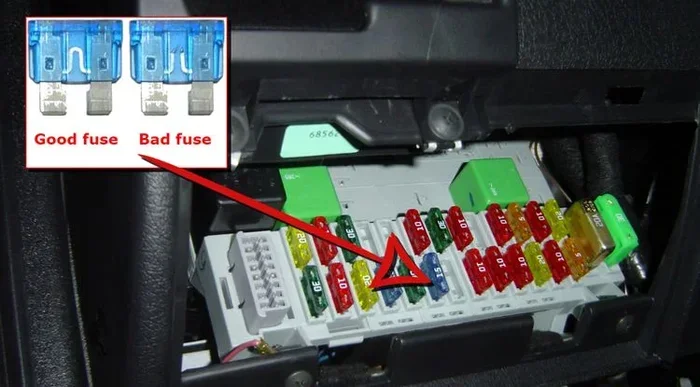
Use a fuse puller (usually included in the fuse box) or a pair of needle-nose pliers to gently pull the fuse out. Hold it up to the light and look at the metal strip inside.
If the metal strip is broken or melted, the fuse is blown. A good fuse will have an intact metal strip that runs continuously from one end to the other.
Step 4: Replace with the Correct Fuse
Check the amperage rating printed on the top of the old fuse. Replace it with a new fuse of the exact same rating. Using the wrong amperage can cause damage or even a fire.
Fuse boxes usually have spare fuses stored in a small compartment on the lid. If you do not have a spare, they are available at any auto parts store for less than a dollar.
Step 5: Test the Window
Insert the new fuse and test the window. If it works, you are done. If the new fuse blows immediately, you have a deeper problem — likely a short circuit or a failing motor. In that case, it is time to dig deeper or call a professional.
Quick Tips for Fuse Replacement
- Always turn off the ignition before touching any fuses.
- Never use a fuse with a higher amperage rating than specified.
- Keep a few spare fuses in your glove box at all times.
- Use a flashlight to inspect the fuse box in low light.
- If a fuse keeps blowing, do not keep replacing it — find the root cause.
When to Call a Professional
Replacing a fuse is simple. But sometimes, the problem goes deeper than a blown fuse. Here are signs that you need a professional mechanic.
The Fuse Keeps Blowing
If you replace the fuse and it blows again within minutes, something is seriously wrong. This usually indicates a short circuit in the wiring or a failing window motor. Continuing to replace fuses without fixing the root cause can damage the entire electrical system.
Multiple Windows Fail at Once
If more than one window stops working and you have already checked the fuses, the problem might be in the wiring harness or the master switch. These repairs require more advanced electrical knowledge.
You Hear Clicking But the Window Does Not Move
A clicking sound usually means the motor is trying to engage but cannot. This could be a broken regulator, a jammed window track, or a motor that has burned out. These issues need hands-on diagnosis and repair.
Windows Work Intermittently
If your windows work sometimes but not others, you might have a loose wire, a corroded connector, or a failing switch. Intermittent electrical problems are tricky to diagnose and often require specialized tools like a multimeter.
Expert Insight
According to experienced automotive electricians, most power window issues that seem like fuse problems are actually wiring or switch issues in disguise. A simple fuse test can rule out the fuse, but a proper diagnosis requires checking the full circuit. If you are not comfortable with basic electrical testing, it is worth paying a professional for a thorough inspection.
Preventing Power Window Fuse Issues
You cannot prevent every electrical problem, but you can take steps to reduce the risk of blown fuses and window failures.
Keep Your Door Seals in Good Shape
Good door seals prevent water from entering the door panel and reaching the wiring. Inspect your door seals regularly and replace them if they look cracked or worn.
Avoid Forcing Stuck Windows
If a window is stuck, do not keep pressing the switch. This puts extra strain on the motor and can cause it to overheat. Instead, have the regulator and track inspected.
Clean Your Window Switches
Dirt and grime can build up around the switch contacts. Use a contact cleaner spray to keep the switch operating smoothly. This prevents resistance buildup that can stress the circuit.
Limit Aftermarket Add-Ons on the Same Circuit
If you are adding accessories, make sure they are wired to a separate circuit or use a relay. Overloading the window circuit is a common cause of repeated fuse failures.
Regular Maintenance Checks
During routine oil changes or service visits, ask your mechanic to inspect the fuse box and look for signs of corrosion or loose connections. Catching small issues early can prevent bigger problems later.
Common Mistakes to Avoid
- Using a higher-amp fuse: This is dangerous and can cause wiring fires.
- Ignoring repeated blown fuses: This usually means a serious underlying issue.
- Assuming it is always the fuse: Sometimes the switch or motor is the real culprit.
- Working on a wet car: Water and electrical components are a dangerous combination.
- Guessing which fuse controls what: Always consult the owner’s manual or the fuse box diagram.
Understanding Your Car’s Electrical System More Broadly
Power windows are just one part of your car’s larger electrical system. Understanding how this system works can help you troubleshoot other issues too.
Your car’s electrical system runs on a 12-volt battery and an alternator that recharges it. The fuse box is the central hub that distributes power to all the electrical components. Each circuit has its own fuse or breaker designed to protect that specific part of the system.
The automotive fuse box in most cars contains fuses for headlights, interior lights, radio, power seats, power mirrors, windshield wipers, and of course, power windows. Knowing which fuse controls what can save you a lot of time and frustration when something goes wrong.
If you are interested in learning more about your car’s electrical system, consider picking up a basic automotive wiring guide or watching a few tutorial videos. Understanding the basics can save you hundreds of dollars in diagnostic fees at the shop.
Key Takeaways
- Shared vs. Individual Fuses: Most cars share a single fuse or relay for all windows, but some models give each window its own.
- Blown Fuses Are Common: A blown fuse is the most frequent cause of a stuck power window.
- Check Your Owner’s Manual: It tells you exactly where your fuse box is and which fuse controls your windows.
- DIY Replacement Is Easy: Swapping a blown fuse takes just a few minutes and costs almost nothing.
- Watch for Warning Signs: Slow-moving windows, clicking sounds, and intermittent operation signal potential fuse or wiring problems.
- Avoid Overloading Circuits: Using aftermarket accessories on the same circuit can cause repeated fuse failures.
- Professional Help Matters: If fuse replacement doesn’t fix the issue, you may have a deeper wiring or motor problem.
Conclusion
So, does each power window have its own fuse? The answer is: sometimes yes, sometimes no. Most vehicles use a shared power window fuse system, while some older or luxury models give each window its own dedicated fuse. Understanding which setup your car uses is the first step to troubleshooting any window problem.
The good news is that checking and replacing a blown fuse is something almost anyone can do. It takes just a few minutes, costs very little, and requires no special tools. Before you assume the worst — like a dead motor or a broken switch — always start with the fuse.
Remember to keep spare fuses in your car, know where your fuse box is, and never ignore repeated fuse failures. These simple habits can keep your power window system running smoothly for years to come.
Next time your window stops working, do not panic. Grab your owner’s manual, pop open the fuse box, and check the fuse. You might just solve the problem in five minutes flat. And if the fuse is fine, you will at least have ruled out the simplest explanation — which means you can focus on the real issue with confidence.
Frequently Asked Questions
Can I drive my car if a power window fuse is blown?
Yes, a blown window fuse does not affect driving safety. Your engine, brakes, and lights operate on separate circuits. However, you may want to fix it soon, especially if you need to lower the window for ventilation or safety reasons.
How much does it cost to replace a power window fuse?
A replacement fuse costs between $1 and $5 at most auto parts stores. If you do it yourself, the cost is essentially nothing. If a mechanic replaces it, you might pay $20 to $50 for labor, which is still very affordable.
Why do my power window fuses keep blowing?
Repeatedly blowing fuses usually indicate an underlying problem. Common causes include short circuits in the wiring, a failing window motor, water damage, or a stuck regulator. Keep replacing the fuse without diagnosing the root cause, and you risk damaging other components.
Is it hard to find the fuse box in my car?
Not at all. Most cars have the main fuse box under the dashboard on the driver’s side and another in the engine bay. Your owner’s manual includes a diagram showing exactly where each fuse is located and what it controls.
Can a bad window switch cause a fuse to blow?
Yes, a faulty window switch can send irregular electrical signals that overload the circuit. If you notice your switch feels loose or works intermittently, have it checked. A bad switch can stress the fuse and cause it to blow repeatedly.
Do all cars use fuses for their power windows?
Most cars use fuses, but some vehicles use a relay instead. A relay is an electromagnetic switch that controls power flow. If your car uses a relay-based system, a failed relay will produce the same symptoms as a blown fuse — no window operation.