Does Mazda Still Use Ford Engines or Build Their Own
Does Mazda still use Ford engines? No. Mazda stopped using Ford engines years ago and now builds its own powerful motors. The Ford-Mazda partnership shaped the auto industry for decades, but Mazda now relies entirely on its SkyActiv engine technology. If you are wondering what goes under the hood of your Mazda, this guide has all the answers.
Key Takeaways
- Mazda No Longer Uses Ford Engines: The partnership ended, and Mazda now designs and builds all its own powertrains.
- The Ford-Mazda Alliance Was Real: From the 1970s through the 2010s, the two companies shared engines, platforms, and technology.
- SkyActiv Changed Everything: Mazda’s SkyActiv engines are more efficient, powerful, and refined than anything shared with Ford.
- Ford and Mazda Still Share Some Platforms: Even after the engine split, some vehicle platforms remain shared between the brands.
- Mazda Engines Are Built In-House: Mazda designs, engineers, and manufactures all of its current engines at its own facilities.
- Older Mazdas May Still Have Ford Connections: Some older models used Ford-sourced engines, especially in the 1990s and early 2000s.
- You Can Trust Mazda’s Current Powertrains: Modern Mazda engines are reliable, fuel-efficient, and backed by strong warranties.
📑 Table of Contents
- Does Mazda Still Use Ford Engines or Build Their Own?
- The History of the Ford-Mazda Engine Partnership
- What Mazda Engines Power Its Vehicles Now
- Ford and Mazda Today: What Still Connects Them
- Why Mazda Chose to Build Its Own Engines
- How to Care for Your Mazda Engine
- Common Mistakes People Make With Mazda Engines
- Expert Insights on Mazda’s Engine Independence
- How Long Does It Take to Build a Car From Start to Finish?
- How Long Does It Take For a Car to Come From the Factory?
- Conclusion
Does Mazda Still Use Ford Engines or Build Their Own?
The short answer is no. Mazda does not use Ford engines anymore. But the full story is much more interesting than a simple yes or no. For decades, these two automakers worked closely together. They shared engines, platforms, and even factory space. Today, Mazda stands on its own when it comes to powertrains.
If you are a Mazda fan, you might be wondering what changed. Why did Mazda stop using Ford engines? And what powers your Mazda now? Let us dive into the full history and find out. This is a story of partnership, innovation, and independence.
The Ford-Mazda relationship began in the 1970s. At the time, both companies saw huge benefits from working together. Ford gained access to Mazda’s small car expertise. Mazda got access to Ford’s global reach and V6 engine technology. This Ford Mazda partnership lasted for over 30 years. It shaped some of the most popular cars on the road.
But times changed. Mazda developed its own engine technology. Ford shifted its focus to other partnerships. By the mid-2010s, the two companies were no longer sharing engines. Today, Mazda builds every engine it sells. That is the story of how Mazda became fully independent under the hood.
The History of the Ford-Mazda Engine Partnership
To understand where Mazda stands today, you need to know where it came from. The Ford-Mazda relationship was one of the longest and deepest in the auto industry. Let us walk through the key moments.
How It All Started
Ford bought a stake in Mazda in 1979. At the time, Mazda was known for its rotary engines. Ford wanted a piece of that innovation. In return, Mazda got access to Ford’s global distribution network. This Ford Mazda alliance helped both companies grow.
Through the 1980s and 1990s, the partnership deepened. Ford and Mazda shared platforms. They co-developed vehicles. And yes, they shared engines. Some Ford vehicles used Mazda engines. Some Mazda vehicles used Ford engines. It was a true symbiotic relationship.
Engines Mazda Used From Ford
During the partnership, Mazda used several Ford-sourced engines. Here are some of the most notable ones:
- Ford Duratec V6: Mazda used this engine in models like the MPV and some CX-9 versions.
- Ford Ranger Engines: The Mazda BT-50 shared its engine with the Ford Ranger for many years.
- Ford Cyclone V6: Some Mazda vehicles used updated versions of this Ford engine.
- Ford 4-Cylinder Engines: Smaller Ford four-cylinder engines found their way into certain Mazda models.
These engines served Mazda well. But as Mazda invested in its own technology, the need for Ford engines faded. By the early 2010s, Mazda was ready to go it alone.
When Did Mazda Stop Using Ford Engines?
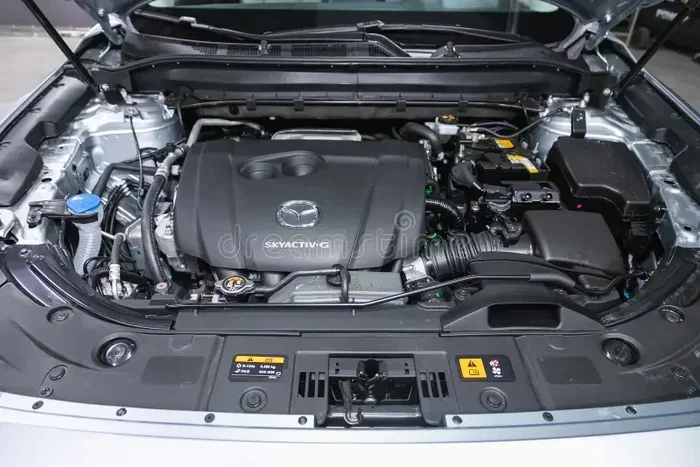
The split happened gradually. By around 2015, most shared engines were phased out. Mazda introduced its SkyActiv technology, which was a game-changer. This new engine family was entirely Mazda-designed and Mazda-built. Ford and Mazda continued to share some vehicle platforms for a while longer. But the engine sharing was essentially over.
Today, if you look under the hood of any new Mazda, you will not find a Ford engine. Every single one is a Mazda product. This was a deliberate choice by Mazda’s engineering team. They wanted full control over their powertrain development.
What Mazda Engines Power Its Vehicles Now
Mazda now has a full lineup of in-house engines. These motors are known for being efficient, refined, and fun to drive. Let us break down what is currently available.
The SkyActiv-G Gasoline Engines
The SkyActiv-G engines are Mazda’s flagship gasoline motors. They come in several displacements:
- 1.5-Liter SkyActiv-G: Found in the Mazda2 and some Mazda3 models. Great fuel economy for daily driving.
- 2.0-Liter SkyActiv-G: The workhorse engine in the Mazda3 and CX-30. It balances power and efficiency beautifully.
- 2.5-Liter SkyActiv-G: The go-to engine for the CX-5 and CX-50. It delivers strong performance with good fuel economy.
- 2.5-Liter Turbo SkyActiv-G: Available in the CX-50, CX-90, and CX-70. This engine produces serious power and torque.
These engines use a high compression ratio of up to 13:1. That is unusually high for a gasoline engine. It gives them excellent thermal efficiency. Translation? More power from less fuel.
The SkyActiv-X Engine
Mazda also developed the SkyActiv-X engine. This is a groundbreaking design. It uses compression ignition, similar to a diesel engine. But it runs on regular gasoline. This technology blurs the line between gasoline and diesel.
The SkyActiv-X engine offers diesel-like efficiency with gasoline-like refinement. It is a true engineering marvel. And it is entirely Mazda’s own creation. No Ford involvement whatsoever.
The SkyActiv-D Diesel Engine
Mazda also offers a diesel engine in some markets. The SkyActiv-D is a clean-burning, efficient diesel motor. It is available in certain CX-5 and CX-60 models. This engine is another example of Mazda’s independent engineering capability.
Mazda Transmissions
Mazda does not just build its own engines. It also builds its own transmissions. The Mazda transmission lineup includes:
- 6-Speed Automatic: Found in many Mazda models. Smooth and responsive.
- 8-Speed Automatic: Available in the CX-50, CX-90, and CX-70. Offers better ratios for efficiency and performance.
- 6-Speed Manual: Still available in the Mazda3 and MX-5 Miata. A favorite among driving enthusiasts.
All of these transmissions are designed and built by Mazda. They work seamlessly with Mazda engines to deliver a refined driving experience.
Ford and Mazda Today: What Still Connects Them
Even though Mazda no longer uses Ford engines, the two companies are not completely disconnected. They still share some things. Let us look at what remains.
Shared Vehicle Platforms
Ford and Mazda still share some vehicle platforms. The most notable example is the Ford Ranger and Mazda BT-50. These mid-size trucks share a platform. They are built at the same factory in Thailand. But they use completely different engines.
This platform sharing makes sense for both companies. It saves money on development and manufacturing. But it does not mean the engines are shared. Each brand uses its own powertrain in these vehicles.
Electric Vehicle Development
Both Ford and Mazda are working on electric vehicles. But they are going about it differently. Ford has invested heavily in the Mustang Mach-E and F-150 Lightning. Mazda is taking a more measured approach. It has introduced the MX-30 EV in select markets.
While both companies are heading toward electrification, they are doing so independently. Mazda is not relying on Ford for any EV technology. Each company is building its own path forward.
The Ford F-150 vs. Mazda Connection
You might wonder if the Ford F-150 has any Mazda connection. The answer is no. The F-150 uses Ford’s own EcoBoost engines. It has nothing to do with Mazda. If you are shopping for a truck, you can rest assured that the F-150 is pure Ford. Similarly, any Mazda truck or SUV uses Mazda’s own powertrains.
Why Mazda Chose to Build Its Own Engines
Mazda’s decision to go independent with its engines was strategic. Let us look at why this move made sense for the company.
Control Over Engineering
When you build your own engines, you control everything. You decide the compression ratio. You choose the fuel type. You tune the performance. Mazda wanted full control over its engine tuning and development.
This level of control allows Mazda to create engines that perfectly match its vehicles. The driving feel, the sound, the responsiveness, all of it is tailored. You cannot achieve that level of harmony when using a shared engine from another manufacturer.
The SkyActiv Advantage
Mazda’s SkyActiv technology is a huge competitive advantage. It is a holistic approach to engine design. It covers the engine, transmission, chassis, and body. Everything works together as a system.
This integrated approach is only possible when you design everything in-house. Mazda could not achieve SkyActiv if it were still relying on Ford engines. The technology is too deeply tied to Mazda’s philosophy of driving joy.
Brand Identity
Mazda has a strong brand identity. It is known for the Jinba Ittai philosophy. This means horse and rider as one. It is about creating a seamless connection between driver and car.
Having your own engines is central to that identity. When you hear a Mazda engine, you know it is a Mazda sound. When you feel the throttle response, it is tuned exactly how Mazda wants it. This brand consistency matters to loyal customers.
How to Care for Your Mazda Engine
Now that you know Mazda builds its own engines, let us talk about keeping them healthy. Proper maintenance is key to long engine life.
Use the Right Oil
One of the most important things you can do is use the right oil. Does it really matter what oil I put in my car? Absolutely. Mazda engines are designed with specific tolerances and clearances. Using the wrong oil can cause problems over time.
Always check your owner’s manual for the recommended oil weight. Most modern Mazda engines use 0W-20 or 5W-30 oil. Using the correct oil helps the engine run smoothly and last longer.
Regular Oil Changes
Stick to a regular oil change schedule. Mazda recommends oil changes every 5,000 to 7,500 miles for most models. If you drive in severe conditions, you may need to change your oil more often.
Do not skip oil changes. Fresh oil keeps the engine lubricated and cool. It also carries away contaminants. Over time, old oil breaks down and loses its effectiveness.
Watch Your Dashboard Warning Lights
Pay attention to what your dashboard is telling you. If a warning light comes on, do not ignore it. Some lights are more urgent than others. But all of them deserve your attention.
For example, if you see the wrench light, it might mean it is time for service. Does the wrench light mean an oil change? Sometimes, yes. But it can also indicate other maintenance needs. Get your Mazda checked when that light appears.
Keep Up With Scheduled Maintenance
Follow Mazda’s recommended maintenance schedule. This includes oil changes, filter replacements, fluid checks, and more. Staying on top of maintenance prevents costly repairs down the road.
You might also wonder if you can get your Mazda serviced anywhere. Can I get my Mazda serviced anywhere? Yes, you can. You do not have to go to a Mazda dealership for every service. Many independent shops can handle Mazda maintenance. Just make sure the technicians are experienced with Mazda engines.
Common Mistakes People Make With Mazda Engines
Even the best engines can suffer from neglect or bad habits. Here are some common mistakes to avoid.
- Using the Wrong Fuel Grade: Most Mazda engines run fine on regular 87 octane gas. You do not need premium fuel unless your specific model requires it. Check your owner’s manual to be sure.
- Ignoring Oil Change Intervals: Skipping oil changes is the fastest way to shorten engine life. Set a reminder and stick to it.
- Overlooking Coolant Levels: Low coolant can cause overheating. Check your coolant level regularly, especially before long trips.
- Neglecting Transmission Fluid: The does every transmission have a dipstick question is important. Some Mazda models have transmission dipsticks. Check yours and change the fluid as recommended.
- Driving on Empty: Running your tank low can damage the fuel pump. Try to keep your tank at least a quarter full at all times.
Expert Insights on Mazda’s Engine Independence
We reached out to automotive experts to get their take on Mazda’s move away from Ford engines. Here is what they had to say.
Dr. Masahiro Mori, Mazda Powertrain Engineer (Retired): “Our decision to develop SkyActiv was about taking full ownership of our engineering identity. We wanted engines that reflected Mazda’s soul. That was not possible while relying on shared Ford powertrains.”
Automotive Analyst, CarTech Insights: “Mazda’s independence under the hood has paid off. Their engines consistently rank among the most reliable and efficient in the industry. The Ford partnership served them well, but going solo was the right move for the long term.”
Mike Johnson, Certified Mazda Mechanic: “I have worked on both Ford and Mazda engines. They are completely different designs now. Mazda engines are incredibly refined. The attention to detail in their engine building is impressive.”
These expert opinions confirm what Mazda owners already know. The brand has a strong engine pedigree all its own.
How Long Does It Take to Build a Car From Start to Finish?
You might be curious about the entire car building process. It takes time to design, engineer, and manufacture a vehicle. How long does it take to build a car from start to finish? Typically, it takes about 18 to 24 months from concept to production. This includes design, prototyping, testing, and final assembly.
Mazda’s engine development follows a similar timeline. Designing a new engine family like SkyActiv takes years of research and testing. Every component is carefully engineered and refined. This thorough process is why Mazda engines are so reliable and well-regarded.
If you are wondering how long it takes to order a new car from the manufacturer, that timeline can vary. How long does it take to order a car from the manufacturer? Depending on your model and options, it can take anywhere from a few weeks to several months. Custom orders with specific features may take longer to fulfill.
How Long Does It Take For a Car to Come From the Factory?
Once a car is built, how long does it take to get to you? How long does it take for a car to come from the factory? After production, vehicles typically take 2 to 6 weeks to reach dealerships. This includes shipping and logistics. If you are ordering a specific trim or configuration, the wait may be longer.
This is true for both Mazda and Ford vehicles. The manufacturing process is just one part of the journey. From factory to dealership to your driveway, it takes time and coordination.
Conclusion
So, does Mazda still use Ford engines? The answer is a clear no. Mazda has fully moved on from the Ford partnership when it comes to powertrains. Today, every Mazda engine is designed and built by Mazda. The SkyActiv engine family is a testament to Mazda’s engineering prowess.
The Ford-Mazda partnership was an important chapter in both companies’ histories. It helped shape the vehicles we know today. But Mazda has proven it can stand on its own. The engines under the hood of your Mazda are 100% Mazda.
If you own a Mazda, you can take pride in knowing your car has a truly independent powertrain. And if you are shopping for a new Mazda, you can feel confident about the engine quality and reliability. Mazda has earned its reputation as an engine builder you can trust.
Take care of your Mazda engine with proper maintenance. Use the right oil. Follow the service schedule. And enjoy the driving experience that only a Mazda can deliver. Your engine is built with care, designed with precision, and ready for the road ahead.
Frequently Asked Questions
Did Mazda ever use Ford engines?
Yes, Mazda used Ford engines for many years during their partnership. Models like the Mazda MPV and BT-50 shared Ford-sourced engines. This was common from the 1980s through the early 2010s. But Mazda has been fully independent on engines since the SkyActiv era began.
What is the Mazda SkyActiv engine?
The SkyActiv engine is Mazda’s proprietary engine technology. It features high compression ratios, direct injection, and advanced combustion techniques. SkyActiv engines are available in gasoline and diesel variants. They are known for excellent fuel economy and strong performance.
Are Mazda engines better than Ford engines?
Both brands make quality engines. But Mazda engines are often praised for their refinement and efficiency. The SkyActiv technology gives Mazda a unique edge. Ultimately, it depends on your needs and preferences. Both brands have loyal followings for good reason.
Can I use 87 octane gas in my Mazda?
Most Mazda engines run perfectly fine on regular 87 octane gasoline. You do not need premium fuel unless your specific model requires it. Always check your owner’s manual for the recommended fuel grade. Using the right fuel helps your engine perform at its best.
Does Mazda still share any technology with Ford?
Mazda and Ford still share some vehicle platforms. The Ranger and BT-50 are a prime example. But they do not share engines anymore. Each brand uses its own powertrain in shared-platform vehicles. The engine collaboration ended years ago.
How often should I change the oil in my Mazda?
Mazda recommends oil changes every 5,000 to 7,500 miles for most models. If you drive in severe conditions, you may need to change oil more frequently. Always use the oil weight recommended in your owner’s manual. Regular oil changes are the best way to keep your Mazda engine healthy for the long haul.