Can Hail Damage Total a Car And What You Should Know
Can hail damage total a car? Yes, severe hail storms can absolutely total a vehicle. When hail causes extensive damage to the body panels, glass, and structural components, the repair costs often exceed the car’s actual cash value. Understanding how hail damage is assessed, how insurance claims work, and what factors lead to a total loss can save you time, money, and stress after a storm.
Hail storms can be terrifying. One minute you are driving or parked safely, and the next, ice chunks the size of golf balls are hammering your car. It is a scary situation for any vehicle owner. If you have ever wondered whether hail can total a car, you are not alone. This is a question many drivers ask after a severe storm rolls through their area.
The answer is yes, hail can total a car. But it depends on several factors. The size of the hail, the type of vehicle, the age of the car, and your insurance coverage all play a role. Understanding these factors can help you make smart decisions after a hail event. Let us break down everything you need to know about hail damage and total loss vehicles.
Key Takeaways
- Hail can total a car: Large hail and severe storms can cause damage that exceeds your vehicle’s value.
- Comprehensive coverage matters: Only comprehensive auto insurance covers hail damage claims.
- Total loss thresholds vary: Most states use a 70-80% rule, but thresholds differ by insurer and location.
- Paintless dent repair helps: This affordable method fixes many hail dents without repainting.
- Document everything: Take hail damage photos immediately for your insurance claim.
- Act quickly after a storm: File your claim promptly and get a professional hail damage assessment.
- Prevention works: Parking in a garage or using a hail cover can reduce storm damage car risk.
📑 Table of Contents
What Happens When Hail Hits Your Car
Hail can cause serious harm to your vehicle. The damage depends on hailstone size, wind speed, and how long the storm lasts. Even small hail can leave marks. But large hail, especially stones over two inches, can cause deep dents, cracked windshields, and chipped paint.
When a hail storm hits, the impact can be widespread. A single storm can damage every panel on your car. The hood, roof, trunk, and doors are all vulnerable. Even the mirrors and antennas can suffer storm damage auto-related issues.
How Hail Causes Damage
Hail forms inside powerful thunderstorm clouds. Strong updrafts carry water droplets high into the atmosphere where they freeze. As hailstones grow, they fall back down and pick up more moisture. This cycle repeats until the stone is too heavy for the updraft to hold.
When these ice balls strike your car at high speed, they dent the metal. The paint can crack or chip. Glass can shatter or develop stress cracks. Over time, even small dents can lead to rust if the protective paint layer is compromised.
Types of Hail Damage
Hail damage comes in several forms. Each type affects your car differently. Here are the most common types of hail damage you might see after a storm:
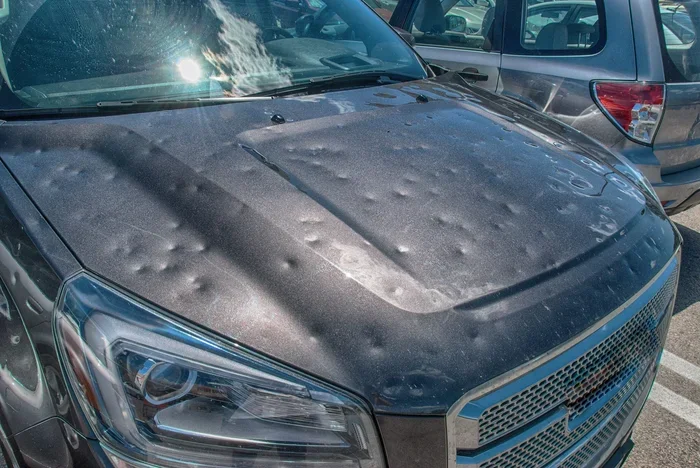
- Dents and Dimples: These are the most visible signs of hail impact. They appear on metal panels and vary in size based on hailstone diameter.
- Paint Damage: Hail can chip or crack the paint layer. This exposes the bare metal underneath, which can lead to rust.
- Glass Damage: Windshields, rear windows, and side windows can crack or shatter from hail impact.
- Body Panel Damage: Severe hail can bend or deform metal panels, affecting the car’s structural integrity.
- Trim and Seal Damage: Weather stripping, moldings, and seals around windows can crack or detach.
Quick Tips for Assessing Hail Damage
- Check your car in daylight for the clearest view of dents.
- Run your hand over the panels to feel for small dents you might not see.
- Inspect the windshield and all windows for cracks or chips.
- Look at the roof carefully, especially if the car is parked on a slope.
- Take plenty of hail damage photos from multiple angles.
Key Takeaway: Even if the damage looks minor at first glance, have a professional hail damage assessment done. Some damage hides under trim or in hard-to-see areas.
Can Hail Actually Total Your Car?
Many drivers worry about this question after a bad storm. The short answer is yes, hail can total a car. But what does “totaled” really mean? And what makes the difference between a repairable car and a total loss vehicle?
What Does Totaled Mean?
When an insurance company declares a car totaled, it means the cost of repairs exceeds the vehicle’s actual cash value. Every state has its own rules about this. Most insurance companies follow a total loss threshold. This is the percentage of the car’s value that repair costs must exceed before the insurer declares it a total loss.
For example, if your car is worth $10,000 and your state uses a 75% threshold, repairs over $7,500 would result in a total loss declaration. Hail damage repair cost can add up fast, especially if multiple panels need work or if the windshield is shattered.
Factors That Determine a Total Loss
Several factors decide whether hail damage totals your car. Here is what insurance adjusters look at:
- Vehicle Age and Value: Older cars with lower market value are more likely to be declared total losses. Newer, luxury, or rare vehicles have higher thresholds before reaching total loss status.
- Extent of Body Damage: Widespread dents across multiple panels increase repair costs significantly.
- Glass Damage: A cracked or shattered windshield adds to the total repair bill quickly.
- Paint Condition: If the paint is damaged on many panels, repainting costs can be very high.
- Structural Integrity: If the hail has affected the car’s frame or structural components, the vehicle may be unsafe to drive.
- Previous Damage: Cars with existing damage or high mileage may reach total loss status more easily.
Expert Insights on Total Loss Thresholds
Insurance professionals say that hail is one of the leading causes of weather-related total losses in the United States. According to industry data, hail claims account for a large percentage of comprehensive auto insurance claims each year. The average hail damage repair cost ranges from $2,000 to $10,000 depending on severity.
“Hail damage can be deceptive,” says one auto body repair expert. “What looks like surface dents can sometimes indicate deeper structural issues. Always get a thorough inspection before deciding on repairs or a claim.”
Key Takeaway: A hail storm can total a car even if the dents look small. The cumulative cost of fixing all the damage is what matters most.
How Insurance Handles Hail Damage Claims
Dealing with insurance after a hail storm can feel overwhelming. But knowing how the process works can make it much easier. Your insurance company wants to help you recover, but you need to understand your coverage and your responsibilities.
Comprehensive Coverage and Hail
Hail damage is covered under comprehensive auto insurance coverage. This is important to know because liability-only policies do not cover weather-related damage. Comprehensive coverage protects your car from events like hail, flooding, theft, and vandalism.
If you have comprehensive coverage, your insurance company will pay for repairs or a total loss payout, minus your deductible. The insurance deductible is the amount you pay out of pocket before your coverage kicks in. Typical deductibles range from $500 to $1,000 for comprehensive claims.
Filing a Claim After a Hail Storm
Filing a hail damage claim is straightforward if you follow these steps:
- Document the Damage: Take clear photos of every dent, crack, and chip. Capture the whole car from multiple angles.
- Contact Your Insurance Company: Call your agent or file a claim online as soon as possible. Most companies have time limits for filing claims after storm events.
- Get an Assessment: An adjuster will inspect your vehicle and provide a hail damage estimate. You can also get independent estimates from auto body repair shops.
- Choose a Repair Shop: You have the right to choose where your car gets repaired. Some insurers have preferred shops, but you are not required to use them.
- Review the Settlement: Make sure the auto insurance payout covers your repair costs or the fair market value of your vehicle.
Common Mistakes to Avoid with Insurance Claims
- Waiting too long to file: Delays can complicate your claim. File as soon as you can after the storm.
- Not documenting properly: Poor photos or missing damage areas can lead to low payouts.
- Repairing before the adjuster visit: Never start repairs before your insurance company has assessed the damage.
- Accepting the first offer without question: If the payout seems low, ask for a review or get an independent appraisal.
- Ignoring hidden damage: Some hail damage does not show up immediately. Have a professional inspect the car thoroughly.
Key Takeaway: Comprehensive coverage is your best protection against hail damage. Know your deductible and document everything to get a fair claim settlement.
Repair vs. Total Loss: What Determines the Outcome
When your car suffers hail damage, one of the biggest questions is whether to repair or accept a total loss. This decision depends on several factors. Understanding them can help you make the best choice for your situation.
Repair Cost vs. Vehicle Value
The key comparison is simple. If the hail damage repair cost is less than the car’s value minus your deductible, your insurer will likely pay for repairs. If the cost exceeds the threshold, your car becomes a total loss vehicle.
For example, let us say your car is worth $8,000. Your comprehensive deductible is $500. The hail damage estimate comes in at $6,000. Since $6,000 is more than 75% of $8,000 (minus deductible), your insurer may declare it a total loss. You would receive a payout based on the car’s pre-storm market value.
Comparison Table: Repair vs. Total Loss
| Factor | Repairable | Total Loss |
|---|---|---|
| Repair Cost | Below total loss threshold | Exceeds total loss threshold |
| Vehicle Age | Newer or low-mileage cars | Older or high-mileage cars |
| Damage Scope | Localized or minor dents | Widespread damage across panels |
| Insurance Payout | Covers repair costs minus deductible | Pays actual cash value minus deductible |
| Time Off Road | Shorter repair timeline | Longer process to replace vehicle |
| Resale Value After Repair | May have reduced value | N/A, vehicle is replaced |
Key Takeaways for Policyholders
- Always get at least two hail damage estimates before agreeing to a settlement.
- Understand your state’s total loss threshold rules.
- Consider the car’s overall condition, not just the storm damage.
- A total loss payout may be better financially if repair costs are very high.
Key Takeaway: The decision between repair and total loss comes down to numbers. Know your car’s value and get a detailed hail damage estimate before making any decisions.
How To Protect Your Car From Hail Damage
Prevention is always better than cure. While you cannot control the weather, you can take steps to reduce the risk of hail damage to your car. These strategies can save you money and stress during storm season.
Parking Strategies During Storm Season
Where you park your car makes a big difference. Here are some smart parking strategies for storm season car care:
- Use a Garage: Parking in a covered garage is the best protection. If you have a garage, use it during storm season.
- Seek Covered Parking: Shopping mall parking garages, covered parking structures, and carports offer good protection.
- Avoid Open Areas: Stay away from open fields, under trees, and near structures that could drop debris during a storm.
- Monitor Weather Alerts: Check local weather forecasts regularly. Move your car indoors when hail is predicted.
Hail Covers and Protective Products
If you do not have access to a garage, hail covers can help. These protective covers are designed to absorb the impact of hailstones. They are especially useful for cars parked outdoors.
Look for hail covers that are thick, durable, and fit your vehicle snugly. Some covers come with air pockets that cushion the impact. While no cover can prevent all damage, a good hail cover can significantly reduce storm damage car risk.
Quick Tips for Hail Protection
- Invest in a quality hail cover if you live in a hail-prone area.
- Use old blankets or moving blankets as a budget-friendly alternative.
- Park next to taller buildings or structures that can block hail.
- Consider a carport or portable shelter if you park in your driveway.
- Keep your comprehensive insurance coverage active year-round.
Key Takeaway: Simple protective measures can reduce the chance of hail damage. A good cover and smart parking go a long way during storm season.
When to Seek Professional Help
After a hail storm, knowing when to call in the professionals can save you time and money. Not all hail damage is visible, and not all repair shops are created equal. Finding the right help is crucial.
Finding a Reliable Auto Body Shop
Look for auto body repair shops that specialize in hail damage. These shops have the tools and experience to handle storm damage car repairs efficiently. Ask friends, family, or neighbors for recommendations. Check online reviews and ratings.
Make sure the shop is licensed and insured. Get multiple estimates before committing. A reputable shop will provide a detailed hail damage estimate that breaks down every repair needed.
Getting a Fair Hail Damage Estimate
A good estimate should include all of the following:
- A full list of dents and damage locations
- The recommended repair method for each area
- The cost of paintless dent repair vs. traditional body work
- Any glass replacement costs
- The estimated timeline for completion
Key Takeaway: Professional help ensures your car is repaired correctly. Do not skip the inspection or settle for the first shop you find.
Conclusion
Can hail damage total a car? Yes, it absolutely can. Severe hail storms have the power to cause damage that exceeds a vehicle’s value, leading to a total loss declaration. But understanding how hail damage works, how insurance handles claims, and what steps you can take to protect your car makes all the difference.
Whether your car is repairable or declared a total loss vehicle, the key is to act quickly. Document the damage thoroughly. File your car insurance claim promptly. Get professional assessments and estimates. And most importantly, do not skip the comprehensive coverage that protects you from weather-related damage.
Hail storms are unpredictable, but your response does not have to be. With the right knowledge and preparation, you can navigate hail damage with confidence. Stay informed, stay protected, and do not let a storm catch you off guard.
Frequently Asked Questions
What size hail can total a car?
Hailstones larger than one inch in diameter can cause significant damage. Golf ball-sized hail or larger can easily total a car, especially older vehicles or those with thin body panels. The duration of the storm also matters, as prolonged hail exposure increases damage severity.
Does comprehensive insurance cover hail damage?
Yes, comprehensive auto insurance coverage covers hail damage. This includes hail dent removal, glass replacement, and body panel repairs. However, you must pay your insurance deductible before the coverage kicks in. Always check your policy details to understand your specific coverage limits.
How long does a hail damage claim take to process?
Most insurance companies process hail damage claims within a few weeks. The timeline depends on the severity of the storm, the number of claims filed, and how quickly you document and submit your claim. Getting a hail damage assessment done early can speed up the process significantly.
Can I drive a car with hail damage?
You can drive a car with minor hail damage, but it is not recommended for vehicles with severe damage. Cracked windshields, compromised structural integrity, and exposed bare metal can create safety risks. Have a professional assess the damage before deciding to drive the vehicle.
What is paintless dent repair for hail damage?
Paintless dent repair is a technique used to remove hail dents without damaging the original paint. Technicians use specialized tools to gently push dents out from behind the panel. This method is faster, more affordable, and preserves the factory paint finish of your vehicle.
Will hail damage affect my car’s resale value?
Yes, hail damage can reduce your car’s resale value even after repairs. Buyers may be wary of a vehicle with a history of storm damage. However, professional hail damage repair, especially paintless dent repair, can minimize this impact and restore the car’s appearance significantly.