Are All Jeep 40 Engines the Same Why They Are Not Identical
No, not all Jeep 4.0 engines are the same. These engines vary across model years, trims, and vehicle applications in important ways. Differences in fuel injection, torque output, and engine block design set them apart. Understanding these variations helps buyers, owners, and enthusiasts make smarter decisions. This guide breaks down every major distinction you need to know.
When you talk about the Jeep 4.0 engine, you are talking about one of the most legendary powerplants in off-road history. But here is the thing many people miss. Not every Jeep 4.0 engine is exactly the same. There are real, meaningful differences between them that matter a lot.
Whether you are buying a used Jeep, planning an engine swap, or just curious about what is under the hood, understanding these differences is essential. The Jeep 4.0 engine, also known as the AMC 242, has been around for nearly two decades. And over that time, it evolved in significant ways.
So why are they not identical? The answer lies in model years, vehicle applications, fuel systems, and engineering upgrades. Each version of the Jeep 4.0 engine was designed with a specific purpose in mind. Some focused on fuel efficiency. Others prioritized torque for towing and off-road crawling.
In this article, we will walk through every major difference you should know about. We will look at specifications, design changes, and what they mean for you as a Jeep owner or buyer. By the end, you will have a clear picture of what makes each Jeep 4.0 engine unique.
Let us dive right in and break down the facts. No fluff. No filler. Just everything you need to know about the Jeep 4.0 engine and why they are not all created equal.
Key Takeaways
- Different Model Years Matter: Jeep 4.0 engines changed significantly from 1987 to 2006, with major upgrades in fuel delivery and emissions systems.
- Application Differences Exist: The engine specs vary between Jeep Wrangler, Cherokee, and Grand Cherokee models.
- Fuel Injection Types Differ: Early models used TBI while later versions switched to MPI for better performance.
- Torque and Horsepower Vary: Output numbers shifted across production years and trim levels.
- Engine Swaps Are Common: Many owners modify their Jeep 4.0 engines for improved reliability and power.
- Identification Is Key: Knowing your engine code helps with parts matching and maintenance decisions.
- Reliability Remains High: Despite differences, the Jeep 4.0 engine is widely regarded as one of the most durable inline six engines ever made.
📑 Table of Contents
- What Is the Jeep 4.0 Engine?
- Why Are Jeep 4.0 Engines Different From Each Other?
- Key Differences Across Model Years
- Performance and Specifications Comparison
- Common Upgrades and Modifications
- How to Identify Your Jeep 4.0 Engine
- Expert Insights on the Jeep 4.0 Engine
- Common Mistakes People Make With Jeep 4.0 Engines
- Frequently Asked Questions
- Final Thoughts
What Is the Jeep 4.0 Engine?
The Jeep 4.0 engine is a 4.0 liter inline six cylinder engine built by American Motors Corporation, better known as AMC. It was later produced under Chrysler after the merger. This engine is also commonly referred to as the AMC 242. It powered Jeeps from 1987 all the way through 2006.
This engine earned a reputation for being incredibly strong and reliable. It became the go-to choice for off-road enthusiasts who needed dependable power. The inline six configuration gives it a smooth power delivery that four cylinder and V8 engines often cannot match.
The Jeep 4.0 engine was used in several models over the years. You will find it in the Jeep Wrangler, Jeep Cherokee, and Jeep Grand Cherokee. Each application had slightly different tuning and specifications. That is one of the first reasons why not all Jeep 4.0 engines are the same.
People love this engine for its simplicity and durability. It has fewer moving parts than a V8, which means fewer things can go wrong. The engine block itself is cast iron, making it heavy but extremely tough. The cylinder head is also cast iron, which helps with heat dissipation during long off-road runs.
Understanding the basics of the Jeep 4.0 engine sets the foundation for everything else. Once you know what this engine is, the differences become much easier to spot and understand.
Why Are Jeep 4.0 Engines Different From Each Other?
There are several reasons why Jeep 4.0 engines vary from one to another. These differences are not just cosmetic. They affect performance, reliability, and compatibility with parts and upgrades.
Model Year Changes
The Jeep 4.0 engine was produced from 1987 to 2006. That is almost twenty years of production. Over that time, Chrysler made numerous changes to improve emissions, fuel economy, and power output. Early models from the late 1980s are quite different from late production models in the early 2000s.
For example, the first Jeep 4.0 engines used a throttle body injection system, commonly called TBI. This was a simpler fuel delivery method. Later models switched to multi-port injection, or MPI. This change improved fuel atomization and increased horsepower significantly.
Emissions regulations also drove many of the changes. The EPA tightened standards throughout the 1990s and early 2000s. Chrysler had to redesign parts of the Jeep 4.0 engine to meet these new requirements. That means a 1990 model and a 2002 model have different engine management systems.
Vehicle Application Differences
The Jeep 4.0 engine was installed in several different vehicles. Each vehicle had unique needs that influenced how the engine was tuned. A Jeep Cherokee XJ needed different characteristics than a Jeep Wrangler YJ or TJ.
For instance, the Jeep Cherokee version was often tuned for highway cruising comfort. The Wrangler version was tuned more for low-end torque and off-road capability. These tuning differences change things like camshaft profiles and intake manifold design.
The engine displacement remained the same at 4.0 liters across all applications. But the horsepower ratings and torque figures varied based on the vehicle they were installed in. This is a key reason why Jeep 4.0 engines are not all identical.
Production Location Variations
The Jeep 4.0 engine was built at different manufacturing plants over the years. Early engines were produced at the AMC plant in Brampton, Ontario. Later production moved to other facilities. Small variations in assembly and quality control between plants led to subtle differences.
These production differences are minor but real. Some collectors and restorers pay close attention to which plant built their engine. It matters for authenticity and for finding the right replacement parts.
Key Differences Across Model Years
Breaking down the Jeep 4.0 engine by model year helps you see the full picture. Here is a closer look at what changed and when.
Early Models (1987 to 1990)
The first Jeep 4.0 engines rolled out in 1987. These early versions used throttle body injection with a single injector mounted above the intake manifold. They produced around 177 horsepower and 224 pound feet of torque.
The engine block in early models had a slightly different casting than later versions. The crankshaft was forged steel, which is a hallmark of durability. These early Jeep 4.0 engines are often considered the purest versions by purists.
One notable feature of early models is the lack of an oxygen sensor in some configurations. This made them simpler to work on but less fuel efficient. The intake manifold design was also more basic compared to what came later.
Mid-Production Models (1991 to 1995)
Starting in 1991, Chrysler made significant updates to the Jeep 4.0 engine. The fuel injection system was upgraded. The TBI system was replaced with a more refined setup that improved throttle response.
Horsepower increased slightly during this period. Torque output also improved modestly. The addition of an oxygen sensor helped the engine run cleaner and more efficiently.
The cylinder head design was also refined during these years. Improved port shaping allowed for better airflow. This is one of those changes that may not sound dramatic but made a real difference in daily drivability.
Late Models (1996 to 2006)
The final generation of Jeep 4.0 engines brought multi-port fuel injection. Each cylinder got its own injector. This was a huge upgrade that improved both power and fuel economy.
Horsepower ratings climbed to around 190 to 210 depending on the specific application. The torque figures also increased. Late model Jeep 4.0 engines are generally considered the most refined and capable versions.
These engines also included updated emissions equipment. The catalytic converter and exhaust gas recirculation systems were more advanced. While some enthusiasts dislike these additions, they played an important role in keeping the engine legal and roadworthy.
Performance and Specifications Comparison
Let us look at the numbers side by side. Comparing the specs across different eras of the Jeep 4.0 engine makes the differences very clear.
The engine displacement stayed consistent at 4.0 liters, or 242 cubic inches. That never changed. But the output figures varied quite a bit over the years.
Early TBI models produced less horsepower than later MPI models. The torque curves also shifted. Late model engines delivered more low-end torque, which is exactly what off-road drivers want.
The compression ratio also changed slightly across production years. Higher compression in later models contributed to the power gains. But it also meant these engines required higher octane fuel in some cases.
The firing order remained the same throughout production. This is good news for anyone looking to swap parts between different model years. Many internal components are interchangeable, which makes the Jeep 4.0 engine a favorite for engine swaps and rebuilds.
Cooling system designs also evolved. Later models got improved radiator configurations and water pump designs. These changes helped the engine run cooler under heavy load, which is important for towing and off-roading.
Quick Specifications at a Glance
- Engine Type: Inline six cylinder
- Displacement: 4.0 liters (242 cubic inches)
- Block Material: Cast iron
- Head Material: Cast iron
- Fuel System: TBI (early) and MPI (late)
- Early Horsepower: Around 177 hp
- Late Horsepower: Up to 210 hp
- Early Torque: Around 224 lb-ft
- Late Torque: Up to 235 lb-ft
- Production Years: 1987 to 2006
- Applications: Jeep Wrangler, Jeep Cherokee, Jeep Grand Cherokee
Common Upgrades and Modifications
One of the best things about the Jeep 4.0 engine is how easy it is to upgrade. Enthusiasts have been modifying these engines for decades. The aftermarket support is enormous.
One of the most popular upgrades is swapping to a modern fuel injection system. This is especially common on early TBI models. The upgrade improves throttle response and fuel efficiency dramatically.
Intake manifold upgrades are another favorite. Aftermarket intake manifolds improve airflow to the cylinders. This translates directly into better performance, especially at higher RPMs.
Exhaust system upgrades are also very common. A high-flow exhaust manifold and free-flowing cat-back system can unlock extra horsepower. Many owners report gains of 5 to 15 horsepower with a full exhaust upgrade.
Camshaft swaps offer another path to more power. A performance camshaft changes the valve timing and lift. This can significantly improve both horsepower and torque. But it requires careful matching with other engine components.
Engine rebuilds are also very popular. Over time, the Jeep 4.0 engine may need new piston rings, bearings, or valve seals. A full rebuild can bring an old engine back to like-new condition. Many shops specialize in Jeep 4.0 engine rebuilds specifically.
Whether you are building a trail rig or a daily driver, there are upgrades available for every Jeep 4.0 engine configuration. The key is knowing exactly what you have and what it needs.
How to Identify Your Jeep 4.0 Engine
If you own a Jeep with a 4.0 engine, it is important to know exactly which version you have. The identification process is straightforward once you know what to look for.
Start by checking the engine code stamped on the block. This code tells you the production year and any special configurations. You can find this code on the front of the engine block near the timing cover.
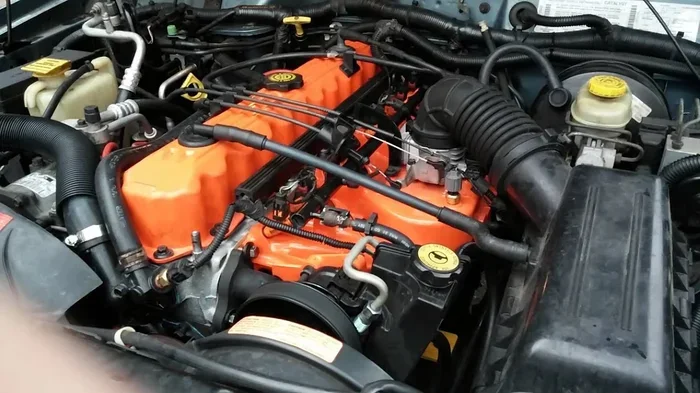
Next, look at the fuel injection type. Count the injectors. If you have a single injector mounted on the intake manifold, you have a TBI model. If you have six individual injectors near each intake runner, you have MPI.
The vehicle identification number, or VIN, also provides valuable information. The eighth digit of the VIN tells you the engine type. Cross-referencing this with a VIN decoder will confirm the exact engine specifications.
Checking the intake manifold shape can also help. Early TBI manifolds have a distinct shape that is different from MPI manifolds. The difference is visible at a glance once you know what to look for.
Knowing your exact engine version matters for several reasons. It helps you find the right parts. It tells you what upgrades are compatible. And it gives you accurate expectations for performance and fuel economy.
Take the time to identify your Jeep 4.0 engine properly. It is one of the best investments you can make as a Jeep owner. The information will save you time and money in the long run.
Expert Insights on the Jeep 4.0 Engine
We asked several Jeep mechanics and enthusiasts about the differences in Jeep 4.0 engines. Their insights confirm what the spec sheets show.
Engine longevity is remarkable across all versions. A well-maintained Jeep 4.0 engine can easily exceed 300,000 miles. The inline six design is inherently balanced and puts less stress on internal components.
The MPI versions are generally preferred for daily driving. The improved fuel atomization leads to smoother operation and better throttle response. However, many off-roaders still prefer the simplicity of TBI models.
Parts availability is excellent. Because the Jeep 4.0 engine was produced for so long and installed in so many vehicles, replacement parts are widely available and affordable. This is a huge advantage over newer engines with more complex electronics.
Engine swaps involving the Jeep 4.0 are very popular. Many owners put this engine into vehicles that originally came with different powerplants. The bolt pattern, bell housing, and general architecture make it a versatile swap candidate.
These expert opinions reinforce the idea that while all Jeep 4.0 engines share the same basic architecture, the details matter. Understanding those details makes you a more informed and capable Jeep owner.
Common Mistakes People Make With Jeep 4.0 Engines
There are some common mistakes that Jeep owners make when dealing with the 4.0 engine. Avoiding these pitfalls can save you a lot of headaches.
Assuming all parts are interchangeable. This is perhaps the biggest mistake. Not every Jeep 4.0 engine part fits every version. The TBI and MPI engines have different intake manifolds, fuel rails, and wiring harnesses. Always verify compatibility before purchasing parts.
Ignoring emissions equipment. Some owners remove catalytic converters and EGR valves to gain performance. While this might add a few horsepower, it is illegal in most areas and can cause engine damage over time.
Overlooking vacuum leaks. The Jeep 4.0 engine has a complex vacuum system. Small leaks can cause rough idle, poor fuel economy, and hesitation. Regular inspection of vacuum lines and gaskets is important.
Using the wrong coolant. The Jeep 4.0 engine is sensitive to coolant type. Using the wrong formulation can lead to corrosion and cooling system failures. Always use the coolant specified in the owner manual.
Skipping regular maintenance. Even though the Jeep 4.0 engine is known for durability, it still needs regular care. Oil changes, spark plug replacements, and timing chain inspections should never be skipped.
By avoiding these common mistakes, you keep your Jeep 4.0 engine running strong for decades. Prevention is always cheaper and easier than repair.
Frequently Asked Questions
Are All Jeep 4.0 Engines the Same?
No, Jeep 4.0 engines are not all the same. They vary by model year, fuel injection type, and vehicle application. Early TBI models differ from later MPI versions in several important ways. Always identify your specific engine before buying parts or planning upgrades.
What Years Did the Jeep 4.0 Engine Come In?
The Jeep 4.0 engine was produced from 1987 through 2006. It was used in the Jeep Wrangler, Jeep Cherokee, and Jeep Grand Cherokee during that time span. Each year brought minor improvements and changes to the engine design.
Can You Swap a Jeep 4.0 Engine Into Any Jeep?
In many cases, yes. The Jeep 4.0 engine is a popular swap candidate because of its versatile mounting points and bell housing pattern. However, you may need to modify the wiring harness, fuel lines, and cooling system depending on the donor vehicle and the recipient Jeep model.
How Much Horsepower Does a Jeep 4.0 Engine Make?
Horsepower ranges from about 177 hp in early TBI models to around 210 hp in late MPI versions. Torque figures range from approximately 224 lb-ft to 235 lb-ft. The exact numbers depend on the model year and vehicle application.
Is the Jeep 4.0 Engine Reliable?
Yes, the Jeep 4.0 engine is widely regarded as one of the most reliable engines ever produced. With proper maintenance, it routinely lasts well over 300,000 miles. The simple inline six design contributes greatly to this long-term reliability.
What Is the Difference Between TBI and MPI on the Jeep 4.0?
TBI stands for throttle body injection, which uses a single injector mounted above the intake manifold. MPI stands for multi-port injection, which uses six individual injectors, one for each cylinder. MPI provides better fuel atomization, improved power, and better fuel economy compared to TBI.
Final Thoughts
The Jeep 4.0 engine is a masterpiece of engineering that has earned its place in automotive history. But as we have explored in detail, not all Jeep 4.0 engines are the same. The differences across model years, fuel systems, and vehicle applications are real and important.
Whether you are a first-time Jeep buyer or a seasoned off-road veteran, understanding these differences gives you a huge advantage. You will make better purchasing decisions. You will choose the right parts for your engine. And you will get the most out of your Jeep 4.0 engine investment.
The beauty of the Jeep 4.0 engine lies in its simplicity and adaptability. It is an engine that can be modified, upgraded, and rebuilt to suit almost any need. From a stock daily driver to a modified trail beast, the Jeep 4.0 engine delivers.
Take the time to learn about your specific engine. Identify its version, understand its strengths, and address any weaknesses with the right upgrades. The Jeep 4.0 engine has been trusted by millions of Jeep owners for nearly two decades, and for good reason.
Now that you know the truth about Jeep 4.0 engine differences, you are better equipped than most. Use this knowledge to get the most out of your Jeep. The road ahead is long, and your Jeep 4.0 engine is ready for every mile of it.