How Many Miles Can a Toyota Mirai Go on a Full Tank
The Toyota Mirai can travel approximately 402 miles on a full tank under EPA estimates, but real-world results typically range from 350 to 400 miles. Factors like driving style, weather, terrain, and hydrogen station pressure all influence how far you can go. This guide breaks down the official numbers, real-world experiences, and practical tips to maximize your hydrogen fuel cell vehicle’s driving range.
The Toyota Mirai stands out as one of the most innovative hydrogen fuel cell vehicles on the market today. It offers a quiet, smooth ride with nothing but water vapor coming from the tailpipe. But for many shoppers, the burning question is simple: How Many Miles Can a Toyota Mirai Go on a Full Tank? Range is a top concern for anyone considering a fuel cell vehicle, especially with the still-growing hydrogen refueling network. Understanding the Mirai’s capabilities helps you decide if it fits your daily driving and long-distance needs.
Toyota designed the Mirai to deliver a competitive driving range while maintaining the comfort and features of a mid-size sedan. The second-generation Mirai, introduced in 2020, brought improvements in range, efficiency, and packaging. In this article, we will explore the official numbers, real-world experiences, and the factors that can shrink or stretch your miles between fill-ups. By the end, you will have a clear picture of what to expect from a full tank.
Key Takeaways
- EPA Range: The 2024 Toyota Mirai is rated at 402 miles on a full tank, making it one of the longest-range hydrogen vehicles available.
- Real-World Variation: Actual mileage can drop to 350 miles in cold weather or hilly terrain, but steady highway driving often hits the upper end.
- Hydrogen Tank Capacity: The Mirai carries about 5.6 kilograms of hydrogen stored in two carbon-fiber tanks at 70 MPa.
- Refueling Speed: Filling the tank takes roughly 5 minutes, similar to gasoline, but depends on station pressure.
- Maximizing Range: Smooth acceleration, proper tire pressure, and minimizing climate control use can significantly stretch your miles.
- Longevity: Unlike a gasoline car where high mileage is a red flag, the Mirai’s fuel cell stack is built for the vehicle’s lifetime.
- Infrastructure Matters: Range planning is essential because hydrogen stations are still limited compared to gas stations.
📑 Table of Contents
- Understanding the Toyota Mirai’s Hydrogen Tank and Capacity
- Official EPA Range vs Real-World Mileage
- Factors That Affect How Far You Can Go
- Hydrogen Refueling: How Long Does It Take?
- Comparing the Mirai to Other Fuel Cell Vehicles
- Tips to Maximize Your Toyota Mirai’s Range
- Key Takeaways
- Frequently Asked Questions
- Conclusion
Understanding the Toyota Mirai’s Hydrogen Tank and Capacity
The Mirai stores its fuel in two carbon-fiber reinforced hydrogen tanks. These tanks hold approximately 5.6 kilograms of hydrogen gas compressed at 70 MPa (about 10,000 psi). One tank sits under the rear seats, and the other is located in the trunk area. This dual-tank setup maximizes space while keeping the center of gravity low. The high-pressure system is a key reason the Mirai achieves such a long full tank mileage without a bulky tank design.
The fuel cell stack converts hydrogen into electricity, which powers an electric motor. The only emission is water vapor. Because the Mirai is a zero emission vehicle, it qualifies for various incentives and carpool lane access in many states. The tank capacity directly determines the theoretical range, but real-world fuel cell vehicle efficiency also plays a big role. Toyota engineered the system to balance energy output with storage density, giving drivers a practical and clean alternative to gasoline.
Official EPA Range vs Real-World Mileage
The U.S. Environmental Protection Agency rates the 2024 Toyota Mirai at 402 miles on a full tank. This number comes from a standardized testing cycle that simulates a mix of city and highway driving. The EPA estimate is a useful baseline, but it does not account for every variable you will face on the road. To put it in perspective, 12 gallons of gas might take you about 300 to 400 miles in a typical sedan, but the Mirai uses hydrogen measured in kilograms, not gallons.
Real-world Mirai range reports from owners vary. Many drivers report getting between 350 and 400 miles per fill-up. Those who drive mostly on flat highways at steady speeds often hit the higher end. Others who live in mountainous areas or deal with extreme temperatures may see the lower end. The official EPA range gives you a best-case scenario, but your daily driving habits and local conditions will shape your actual numbers.
The Mirai also carries a fuel economy rating of about 60 MPGe (miles per gallon equivalent). This metric helps compare the Mirai to battery electric and plug-in hybrid vehicles. While MPGe is not a perfect measure, it gives you a sense of how efficiently the hydrogen fuel cell converts stored energy into miles driven. The higher the MPGe, the more miles you get per kilogram of hydrogen.
Factors That Affect How Far You Can Go
Several variables influence the distance you can cover on a single tank. Understanding these factors helps you plan trips and manage expectations. Here are the main elements that impact your Mirai mileage.
Driving Style and Speed
Your foot on the pedal matters a great deal. Aggressive acceleration and high speeds consume hydrogen faster. The Mirai is most efficient when you maintain a steady pace, especially on the highway. Cruising at 65 to 70 mph is generally more efficient than stop-and-go city driving, but the Mirai’s fuel cell system recovers some energy during deceleration. Smooth, predictable driving is the single best way to maximize your range.
Weather and Temperature
Cold weather can reduce your range by 10 to 20 percent. The fuel cell stack needs heat to operate efficiently, and the Mirai’s built-in heater draws power from the system. In freezing temperatures, you may notice that the driving range drops noticeably. Hot weather also plays a role because running the air conditioning puts an extra load on the electrical system. Extreme heat or cold means the Mirai must work harder to maintain cabin comfort, which uses more hydrogen.
Road Conditions and Terrain
Hilly and mountainous terrain uses more hydrogen than flat roads. Climbing grades demands more power from the electric motor, which in turn requires more electricity from the fuel cell. Think of it like how long you can drive with a full tank of gasoline; the terrain plays a huge role in your final mileage. Flat interstate highways are ideal for stretching every kilogram of hydrogen. Conversely, stop-and-go city driving with frequent stops and starts can also lower efficiency, though the Mirai handles it better than a traditional engine because of its electric motor’s instant torque.
Vehicle Load and Accessories
Carrying heavy cargo or extra passengers adds weight, which the motor must move. The Mirai is a mid-size sedan, so its cargo space is limited compared to an SUV. Using the air conditioning or heating system heavily draws energy from the hydrogen fuel cell. Even something as simple as driving with the windows down at high speed increases aerodynamic drag and reduces range. Keeping the vehicle light and using climate control sparingly helps you get the most out of each fill-up.
Hydrogen Refueling: How Long Does It Take?
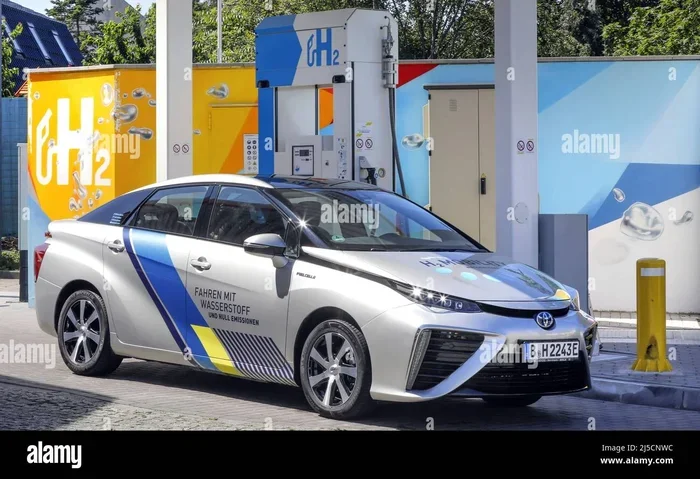
Refueling a Toyota Mirai is very similar to filling up a gasoline car. At a proper 70 MPa hydrogen station, the Mirai’s tank fills in about 5 minutes. This is one of the biggest advantages of fuel cell vehicles over battery electrics, which can take 30 minutes to several hours for a full charge. The station pumps hydrogen into the tanks until the pressure equalizes, and then the nozzle clicks off.
Not all hydrogen stations deliver the same pressure. Some older or rural stations may only provide 35 MPa, which means a slower fill and potentially less hydrogen in the tank. The Mirai’s system is designed to accept whatever pressure is available, but a full 70 MPa fill gives you the maximum full tank mileage. The network of hydrogen stations is growing, especially in California, but coverage is still limited in many parts of the country. Planning your route around available stations is an important part of owning a Mirai.
Comparing the Mirai to Other Fuel Cell Vehicles
The Toyota Mirai competes with the Hyundai Nexo and the upcoming Honda CR-V e:FCEV. The Nexo offers a similar hydrogen fuel cell experience with a range of about 380 miles in its top trim. The Mirai’s 402-mile EPA rating gives it a slight edge in range. However, the Nexo is an SUV, which means more cargo space and seating for five. The Mirai is a sedan, so it appeals to those who prefer a lower, sportier profile.
Both vehicles use the same basic technology: a fuel cell stack that converts hydrogen into electricity, a small lithium-ion battery buffer, and an electric motor. The Mirai’s second generation improved the stack’s power density and reduced costs. Toyota has also focused on durability, claiming the fuel cell stack can last the lifetime of the vehicle without major degradation. When comparing Mirai range to competitors, remember that real-world results will vary based on the same factors discussed above.
Tips to Maximize Your Toyota Mirai’s Range
Getting the most miles out of a full tank is all about smart driving and preparation. Here are practical steps you can take to stretch your hydrogen fuel cell vehicle’s range.
- Accelerate smoothly: Avoid jackrabbit starts. Gentle acceleration uses less hydrogen and keeps the fuel cell operating in its sweet spot.
- Maintain steady speeds: Use cruise control on highways when safe. Constant speed is more efficient than constantly changing velocity.
- Keep tires properly inflated: Underinflated tires create rolling resistance, which forces the motor to work harder and draw more electricity.
- Reduce unnecessary weight: Remove heavy items from the trunk and cabin that you do not need for your trip.
- Use climate control wisely: Pre-condition the cabin while the car is still plugged in or before you start driving. In extreme heat or cold, the Mirai mileage can drop, so minimizing the load helps.
- Plan your routes: Use apps that show hydrogen station locations. Even if you have a long range, knowing where to refuel gives you peace of mind.
- Avoid excessive idling: The fuel cell still consumes hydrogen when the car is idling. Turn off the engine if you expect to stop for more than a minute.
Many people worry that putting a lot of miles on a car is a red flag, but the Mirai’s fuel cell stack is designed to last the lifetime of the vehicle with minimal degradation. Regular maintenance and using only hydrogen from reputable stations will keep the system running smoothly for years. The Mirai range is not just about the number on the gauge; it is about how efficiently and reliably you can use that fuel over the long haul.
Key Takeaways
- EPA Range: The 2024 Toyota Mirai is rated at 402 miles on a full tank, making it one of the longest-range hydrogen vehicles available.
- Real-World Variation: Actual mileage can drop to 350 miles in cold weather or hilly terrain, but steady highway driving often hits the upper end.
- Hydrogen Tank Capacity: The Mirai carries about 5.6 kilograms of hydrogen stored in two carbon-fiber tanks at 70 MPa.
- Refueling Speed: Filling the tank takes roughly 5 minutes, similar to gasoline, but depends on station pressure.
- Maximizing Range: Smooth acceleration, proper tire pressure, and minimizing climate control use can significantly stretch your miles.
- Longevity: Unlike a gasoline car where high mileage is a red flag, the Mirai’s fuel cell stack is built for the vehicle’s lifetime.
- Infrastructure Matters: Range planning is essential because hydrogen stations are still limited compared to gas stations.
Frequently Asked Questions
How many miles can a Toyota Mirai go on a full tank?
The Toyota Mirai is rated at 402 miles on a full tank by the EPA. Real-world results typically range from 350 to 400 miles depending on driving habits, weather, and terrain. The official number represents a mix of city and highway driving under standardized test conditions.
How long does it take to refuel a Toyota Mirai?
Refueling the Mirai at a 70 MPa hydrogen station takes about 5 minutes, which is comparable to filling a gasoline tank. Older or lower-pressure stations may take slightly longer. The Mirai’s system automatically stops when the tank is full.
What affects the Mirai’s driving range?
Several factors influence range, including driving style, speed, weather temperature, road terrain, vehicle load, and use of climate control. Cold weather and hilly roads tend to reduce mileage, while steady highway driving on flat roads helps maximize it.
Is the Toyota Mirai a good long-distance car?
The Mirai can handle long-distance travel well where hydrogen stations are available. Its 400-mile range means fewer stops compared to many battery electric vehicles. However, you must plan your route around hydrogen refueling stations, especially outside of California.
How does the Mirai’s range compare to electric vehicles?
The Mirai’s 402-mile range is competitive with many battery electric vehicles, but it refuels much faster. A hydrogen fill-up takes about 5 minutes, while most EVs take 30 minutes to several hours for a full charge. The Mirai is ideal for drivers who want long range and quick refueling.
Can you tow with a Toyota Mirai?
The Toyota Mirai is not designed for towing. It is a mid-size sedan with a limited cargo capacity. The vehicle’s fuel cell system is optimized for passenger comfort and efficient driving, not for hauling heavy loads. Towing would significantly reduce your range and is not recommended by Toyota.
Conclusion
The Toyota Mirai delivers an impressive driving range that makes it a compelling choice for those interested in hydrogen fuel cell technology. With an EPA rating of 402 miles on a full tank, it offers one of the longest ranges among zero emission vehicles available today. Real-world mileage will vary, but understanding the factors that influence your range helps you get the most out of every fill-up.
From the hydrogen tank capacity to the refueling experience, the Mirai is designed to be practical, efficient, and clean. By adopting smooth driving habits and planning your routes around hydrogen stations, you can enjoy the freedom and benefits of a fuel cell vehicle without range anxiety. Whether you are commuting in the city or taking a road trip, the Mirai proves that hydrogen power is a viable and exciting option for the future of driving.