Does Your Credit Score Affect Car Insurance Premiums
Yes, your credit score can significantly impact your car insurance premiums. Most insurers use a credit-based insurance score to help determine your rates, meaning drivers with lower credit often pay more for coverage. Understanding this connection helps you take control of your auto insurance rates and potentially save hundreds of dollars each year.
Your credit score does more than just determine whether you qualify for a loan or a credit card. It can also directly impact how much you pay for car insurance. If you have been shopping for auto insurance and noticed big differences in quotes, your credit profile might be one of the reasons.
Many drivers are surprised to learn that insurers use a credit-based insurance score alongside other factors to calculate premiums. This means your financial history plays a role in how much you pay every month for car insurance coverage. The good news is that understanding this connection gives you the power to make smarter decisions.
In this article, we will break down exactly how your credit score affects car insurance premiums. We will cover what a credit-based insurance score is, which states restrict this practice, and what you can do to improve your rates. Whether you have excellent credit or are working on building it, this guide will help you navigate the insurance rate landscape with confidence.
Key Takeaways
- Credit-based insurance scores are a major factor: Insurers use your credit history to assess risk and set premiums.
- Lower credit often means higher rates: Drivers with poor credit can pay significantly more than those with excellent credit.
- Some states ban the practice: California, Hawaii, and Massachusetts prohibit credit-based insurance scoring.
- Improving your credit can lower premiums: Small credit score improvements may lead to meaningful insurance savings over time.
- Other factors still matter: Driving record, age, location, and vehicle type also influence your final rate.
- Shopping around helps: Different insurers weigh credit differently, so comparing quotes is always smart.
- You can take action now: Simple credit-building habits can benefit both your financial health and your insurance costs.
📑 Table of Contents
- What Is a Credit-Based Insurance Score?
- How Much Does Your Credit Score Affect Your Premium?
- Which States Restrict or Ban Credit-Based Insurance Scoring?
- Other Factors That Influence Your Car Insurance Rates
- How to Lower Your Car Insurance Premiums If You Have Less-Than-Perfect Credit
- Common Mistakes Drivers Make With Credit and Insurance
- Expert Insights on Credit and Auto Insurance
- Final Thoughts
What Is a Credit-Based Insurance Score?
A credit-based insurance score is a number that insurance companies calculate using information from your credit report. It is different from your regular FICO credit score, though the two share many of the same data points. Insurers use this score to predict how likely you are to file a claim.
Here is what goes into a credit-based insurance score:
- Payment history: Whether you pay bills on time.
- Credit utilization: How much of your available credit you are using.
- Length of credit history: How long you have had credit accounts open.
- Credit mix: The variety of credit types you hold.
- New credit inquiries: How often you have applied for new credit recently.
Insurance companies believe that people with higher credit scores tend to file fewer claims. This belief is based on years of statistical data. However, it is important to remember that a credit-based insurance score is not the only factor in your premium calculation.
How Is It Different From a Regular Credit Score?
Your regular credit score looks at your overall financial health. Lenders use it to decide if you are a good candidate for a loan. A credit-based insurance score focuses only on the patterns that predict claim behavior. It does not consider factors like your income or employment history.
This distinction matters because you might have a great FICO score but a lower insurance score if you have recently opened several new credit accounts. Conversely, someone with a modest credit score might still qualify for low insurance rates if they have a long, stable credit history.
How Much Does Your Credit Score Affect Your Premium?
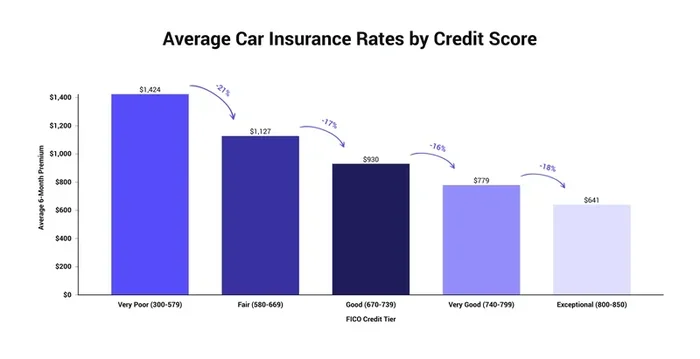
The impact of your credit score on car insurance premiums can be substantial. Studies show that drivers with poor credit pay significantly more than those with excellent credit. The exact difference varies by state, insurer, and individual circumstances.
Here is a general breakdown of how credit tiers affect rates:
- Excellent credit (750+): Typically qualifies for the lowest available premiums.
- Good credit (700-749): Receives competitive rates with moderate discounts.
- Fair credit (600-699): May face higher premiums than drivers with better credit.
- Poor credit (below 600): Often pays the highest rates, sometimes double those of excellent-credit drivers.
These numbers can vary widely depending on your location and the insurer you choose. Some companies place more weight on credit than others. This is exactly why comparing car insurance quotes from multiple providers is so important.
Real-World Example of Credit Impact
Consider two drivers with identical profiles except for credit score. Driver A has a credit score of 780. Driver B has a score of 580. Both live in the same city, drive the same car, and have clean driving records. Driver B could easily pay 50 to 100 percent more per month for the same coverage. That difference adds up to hundreds or even thousands of dollars over the life of a policy.
This is why many financial experts recommend checking your credit report regularly. Errors on your report can drag your score down and inflate your insurance costs unnecessarily.
Which States Restrict or Ban Credit-Based Insurance Scoring?
Not all states allow insurers to use credit when setting premiums. Some states have passed laws that limit or completely ban the use of credit-based pricing in auto insurance. If you live in one of these states, your credit score has no impact on your rates.
Currently, the states that restrict or prohibit credit-based insurance scoring include:
- California: Bans the use of credit entirely for auto insurance pricing.
- Hawaii: Prohibits credit-based insurance scoring.
- Massachusetts: Does not allow credit to factor into insurance premiums.
Several other states have considered similar legislation but have not yet passed it. The rules around credit and insurance continue to evolve, so it is worth checking your state’s current regulations.
If you do not live in one of these states, your credit score will likely influence your premiums. However, the degree of impact can vary based on local laws and company practices.
What If You Have No Credit History?
Some insurers treat a lack of credit history similarly to poor credit. This can be frustrating for young drivers or immigrants who have not yet built a credit profile. If you fall into this category, you may want to explore insurers that do not heavily weight credit or look into state-specific programs that offer fair rates for new drivers.
Other Factors That Influence Your Car Insurance Rates
While your credit score plays a big role, it is far from the only factor. Insurance companies use a complex formula that weighs many elements. Understanding these can help you see the full picture of what drives your insurance premiums.
Driving Record and Claims History
Your driving history is one of the most important factors. Tickets, accidents, and DUI convictions all signal higher risk to insurers. A clean driving record can offset a lower credit score to some degree. On the other hand, a poor driving record can raise your rates regardless of your credit.
Age, Gender, and Experience
Younger drivers typically pay more because they have less experience on the road. Statistically, male drivers under 25 tend to have higher accident rates. As you gain experience and maintain a clean record, your rates should decrease over time.
Location and Vehicle Type
Where you live matters a great deal. Urban areas with high traffic and theft rates generally cost more to insure. The type of car you drive also plays a role. Vehicles that are expensive to repair or replace, or those with high theft rates, will carry higher premiums.
Some drivers wonder if they should drop collision coverage on an older car to save money. This is a valid strategy worth considering, especially if your vehicle has depreciated significantly.
Coverage Limits and Deductibles
The amount of coverage you choose and your deductible directly affect your premium. Higher deductibles lower your monthly payment but increase your out-of-pocket costs in a claim. Finding the right balance is key to managing your auto insurance costs effectively.
How to Lower Your Car Insurance Premiums If You Have Less-Than-Perfect Credit
A lower credit score does not mean you are stuck with high premiums forever. There are several practical steps you can take to reduce your car insurance costs while you work on improving your credit.
1. Shop Around and Compare Quotes
Different insurers weigh credit differently. One company might charge you a premium for a 620 credit score, while another might barely look at it. Always get quotes from at least three providers before choosing a policy. Comparison shopping is one of the easiest ways to find affordable auto insurance.
2. Ask About Discounts
Many insurers offer discounts that have nothing to do with credit. Safe driver discounts, bundling discounts, and loyalty discounts can all add up. Ask your agent or check your online account for available savings opportunities.
3. Improve Your Credit Over Time
Building your credit score takes time, but the payoff can be significant. Pay your bills on time, keep your credit utilization low, and avoid opening unnecessary new accounts. As your score improves, you should see your insurance rates drop too.
You might also consider checking your credit report for errors. Disputing inaccurate information can boost your score quickly. If you are interested in learning more about how credit affects financial products, you can read about what car insurance covers to better understand how different coverage types interact with your financial profile.
4. Consider Usage-Based Insurance
Some insurers offer programs that track your driving behavior through a mobile app or device. Safe driving habits like obeying speed limits and avoiding hard braking can earn you significant discounts. These programs often weigh your actual driving more than your credit score.
5. Raise Your Deductible
Increasing your deductible is one of the fastest ways to lower your monthly premium. Just make sure you can afford the deductible if you ever need to file a claim. This strategy works best if you have a clean driving record and do not expect frequent claims.
Common Mistakes Drivers Make With Credit and Insurance
Avoiding common pitfalls can save you money and frustration. Here are mistakes many drivers make when it comes to the relationship between credit and insurance:
- Assuming all insurers use credit the same way: Each company has its own formula. One insurer might consider credit a major factor while another barely weighs it at all.
- Not checking your credit report: Errors are more common than you think. A simple dispute could improve your score and lower your premiums.
- Closing old credit accounts: This can shorten your credit history and hurt your score. Keep old accounts open when possible.
- Only looking at price when switching insurers: The cheapest policy might not offer the best coverage for your needs. Always compare coverage levels too.
- Ignoring state-specific rules: If you live in California, Hawaii, or Massachusetts, your credit does not affect your rates. Make sure you know the rules in your state.
Expert Insights on Credit and Auto Insurance
Insurance industry experts generally agree that credit-based scoring helps companies assess risk more accurately. However, the practice remains controversial. Consumer advocates argue that it can penalize lower-income households and create barriers to affordable coverage.
Insurance regulators in states that allow credit scoring emphasize that it is just one factor among many. They also require insurers to notify customers when credit information is used to set or change their rates. This transparency gives consumers the ability to review and dispute inaccurate information.
Financial advisors often recommend that drivers focus on building strong credit habits not just for loan approvals but also for lower insurance costs. The benefits of good credit extend far beyond borrowing money. They touch nearly every area of your financial life, including the protection you get from your car insurance policy.
If you are currently shopping for insurance, keep in mind that you have the right to ask your insurer how your credit affects your rate. You can also request a re-evaluation if your credit improves during your policy term. Many companies will adjust your premium if you provide updated credit information.
Final Thoughts
The connection between your credit score and car insurance premiums is real and significant. Your financial history influences how much you pay for coverage every month. While you cannot change your credit overnight, you can take steps to improve it over time and save money on your insurance.
Remember that credit is just one piece of the puzzle. Your driving record, location, vehicle choice, and coverage levels all play important roles. The best approach is to manage your credit responsibly, shop around for the best rates, and take advantage of every discount available to you.
If you are currently dealing with high premiums due to a lower credit score, do not give up. Start with small steps like checking your credit report for errors, paying bills on time, and comparing quotes from multiple insurers. Over time, these efforts can lead to meaningful savings on your auto insurance and better financial health overall.
Your credit score is a powerful tool. Use it wisely, and it can work in your favor not just for loans and credit cards, but also for keeping your car insurance costs as low as possible.
Frequently Asked Questions
Does every car insurance company use your credit score?
Most major insurers use credit-based insurance scoring as one factor in determining premiums. However, not all companies rely on credit equally. Some insurers place heavy weight on credit, while others focus more on driving history and other factors. It is always a good idea to ask a specific insurer how they use credit before purchasing a policy.
Can improving my credit score lower my car insurance rates?
Yes, improving your credit score can lead to lower insurance premiums over time. As your credit improves, you may qualify for better rate tiers. Many insurers allow you to request a rate re-evaluation when your credit improves significantly. The savings can be substantial, especially if you move from a poor credit tier to a fair or good credit tier.
Which states do not allow credit-based insurance scoring?
California, Hawaii, and Massachusetts currently prohibit or heavily restrict the use of credit in auto insurance pricing. In these states, your credit score has no impact on your premiums. Other states may have regulations that limit how insurers can use credit information. Always check your state’s current insurance laws for the most up-to-date information.
How often do insurers check your credit?
Most insurers check your credit when you first get a quote and again at renewal. Some companies may also check credit when you make changes to your policy. These are typically soft inquiries that do not affect your regular credit score. The frequency varies by company and state regulations.
Is a credit-based insurance score the same as a regular credit score?
No, they are not the same. A credit-based insurance score uses similar data from your credit report but is calculated differently. It focuses specifically on patterns that predict claim behavior rather than overall creditworthiness. Insurance companies use this specialized score to assess risk and set premiums.
What should I do if I think my credit is unfairly affecting my insurance rate?
First, check your credit report for errors and dispute any inaccuracies. You can also ask your insurer for a detailed breakdown of how your credit affects your rate. If your credit has improved since your policy started, request a re-evaluation. Shopping around with other insurers can also help you find a company that weighs credit less heavily.
=== CONCLUSION ===
Your credit score does affect your car insurance premiums, and understanding this relationship is the first step toward saving money. By maintaining good credit, shopping around for the best rates, and taking advantage of available discounts, you can keep your insurance costs manageable. Start taking action today, and your wallet will thank you tomorrow.