How Does a Hydrogen Combustion Engine Actually Work
A hydrogen combustion engine works by burning hydrogen gas instead of gasoline to create power. It operates much like a traditional engine but produces only water vapor as a byproduct. This technology offers a promising path toward cleaner transportation without completely replacing the internal combustion design we already know.
You have probably heard about electric cars taking over the roads. But there is another clean energy option that does not get as much attention. The hydrogen combustion engine is turning heads in the automotive world. So how does a hydrogen combustion engine actually work? Let us break it down in plain language.
A hydrogen combustion engine is a type of engine that burns hydrogen gas instead of gasoline or diesel. The concept is not entirely new. Engineers have been experimenting with hydrogen fuel for decades. What is exciting today is that modern technology is making it more practical and efficient than ever before. Hydrogen combustion engines could play a big role in reducing vehicle emissions. They offer a familiar driving experience with a much smaller environmental footprint.
If you have ever wondered what happens inside an engine when hydrogen replaces gasoline, you are in the right place. We will walk through every step of the process. We will cover the basics of combustion, the key differences from traditional engines, and why this technology matters for the future of driving. Whether you are a car enthusiast or just curious about clean energy, this guide has something for you.
Key Takeaways
- Hydrogen combustion engines burn hydrogen gas instead of gasoline, producing water vapor as the main exhaust emission.
- The process is similar to traditional engines, involving intake, compression, combustion, and exhaust strokes.
- Hydrogen offers zero tailpipe emissions, making it an attractive alternative fuel for reducing air pollution.
- Engine modifications are needed to handle hydrogen’s unique properties, including different ignition timing and fuel storage.
- Challenges remain around hydrogen production, storage, and refueling infrastructure.
- Hydrogen engines differ from fuel cells, which use chemical reactions rather than combustion to generate electricity.
- Several automakers are actively developing hydrogen combustion technology for future vehicles.
📑 Table of Contents
What Is a Hydrogen Combustion Engine?
A hydrogen combustion engine is an internal combustion engine that uses hydrogen gas as its fuel source. Instead of gasoline, hydrogen is injected into the combustion chamber. There, it mixes with air and ignites to create energy. This energy pushes the pistons and turns the wheels, just like in a regular car engine.
The big difference lies in what comes out of the exhaust pipe. A gasoline engine produces carbon dioxide, carbon monoxide, and other harmful pollutants. A hydrogen engine produces mostly water vapor. That is a huge win for air quality. Hydrogen combustion is clean at the point of use, which makes it appealing for cities trying to reduce smog and pollution.
How Does It Differ From a Gasoline Engine?
The basic structure of a hydrogen engine is very similar to a gasoline engine. Both have cylinders, pistons, valves, and spark plugs. However, the fuel system and engine tuning are different. Hydrogen burns faster than gasoline. It also has a wider flammability range. This means engineers must adjust the engine timing and fuel delivery to get the best performance.
Hydrogen is also much lighter than gasoline. It takes up more volume for the same amount of energy. This creates storage challenges that we will talk about later. But in terms of raw power, hydrogen engines can be quite impressive. They deliver strong torque and smooth acceleration.
The Science Behind Hydrogen Combustion
Understanding the science behind a hydrogen combustion engine helps you appreciate why it works so well. At its core, the process is a chemical reaction. Hydrogen gas combines with oxygen from the air to produce water and energy. This reaction releases a significant amount of heat. That heat drives the pistons and creates mechanical power.
The Combustion Process Step by Step
The combustion process follows the same four strokes as a traditional engine. Here is how each stroke works with hydrogen:
- Intake Stroke: The engine draws in hydrogen gas and air through the intake valve. The mixture is leaner than gasoline because hydrogen is so light.
- Compression Stroke: The piston moves up and compresses the hydrogen-air mixture. Compression ratios are often higher in hydrogen engines because hydrogen is harder to ignite.
- Combustion Stroke: A spark plug ignites the compressed mixture. The hydrogen burns rapidly and produces a large amount of energy. This pushes the piston down with force.
- Exhaust Stroke: The burnt gases exit through the exhaust valve. The main emission is water vapor, with very little to no harmful pollutants.
Each of these strokes happens thousands of times per minute. The engine converts the chemical energy stored in hydrogen into mechanical energy that moves your car. It is a remarkably efficient process when done right.
Why Does Hydrogen Burn So Cleanly?
The secret is in the chemistry. When hydrogen burns, it reacts with oxygen to form water. The chemical equation is simple: 2H2 plus O2 equals 2H2O. No carbon is involved. That means no carbon dioxide, no soot, and no harmful hydrocarbons. Hydrogen fuel is one of the cleanest burning fuels available today.
There is one caveat. At very high combustion temperatures, hydrogen can produce small amounts of nitrogen oxides, or NOx. These are pollutants that contribute to smog. However, modern engine modifications and exhaust treatment systems can reduce NOx emissions to very low levels. This is an area of active research and improvement.
Key Components of a Hydrogen Combustion Engine
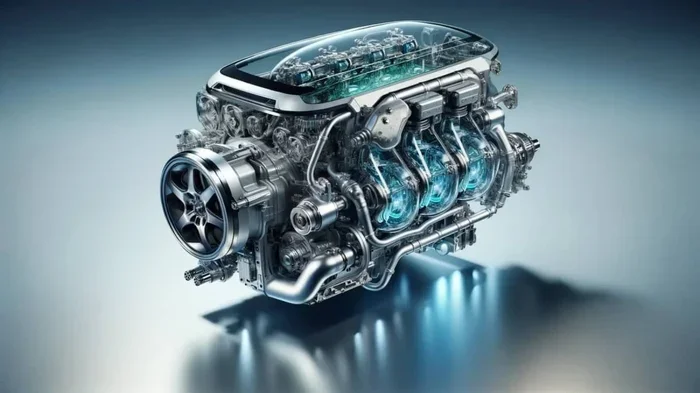
A hydrogen engine looks a lot like a regular engine on the outside. But under the hood, several key components are different or upgraded to handle hydrogen. Let us look at the most important parts.
Hydrogen Storage Tanks
Hydrogen gas needs to be stored at high pressure. Most vehicles use tanks rated for 700 bar of pressure. These tanks are made from strong carbon fiber materials. They are designed to be lightweight yet extremely durable. Hydrogen storage is one of the biggest engineering challenges in this technology.
The tanks need to be safe in the event of a collision. Engineers have done extensive crash testing to ensure hydrogen tanks perform well under extreme conditions. They are equipped with multiple safety valves and leak detection systems.
Fuel Injection System
Hydrogen needs to be delivered to the combustion chamber with precision. A high-pressure fuel injection system handles this job. The injectors spray hydrogen directly into the cylinder at the right moment. Timing is critical because hydrogen ignites faster than gasoline.
Unlike gasoline, hydrogen does not pool in the cylinder. It mixes with air as it enters. This requires a different approach to fuel delivery. Fuel injection systems for hydrogen engines are designed to handle this unique behavior and ensure a consistent air-fuel mixture.
Modified Ignition System
Because hydrogen is harder to ignite than gasoline, the ignition system needs to be more powerful. Spark plugs in hydrogen engines often have a stronger spark. Some designs use multiple spark plugs per cylinder. This ensures reliable ignition even at lean mixtures.
The ignition timing is also different. Hydrogen burns faster, so the spark needs to happen slightly earlier in the cycle. These adjustments are managed by the engine control unit, or ECU. The ECU constantly monitors conditions and optimizes the engine performance in real time.
Exhaust and Emission Controls
While hydrogen engines produce very clean exhaust, they still need emission controls. A three-way catalytic converter handles any NOx that forms during combustion. Some systems also use a diesel particulate filter or specialized aftertreatment systems.
The exhaust itself is mostly water vapor. You might even notice steam coming from the tailpipe on cold mornings. This is completely normal and is actually a sign that the engine is working correctly.
Benefits of Hydrogen Combustion Engines
There are many reasons why automakers and researchers are excited about hydrogen combustion technology. Here are the biggest benefits.
Zero Tailpipe Emissions
The most significant advantage is the lack of harmful exhaust. A hydrogen engine produces no carbon monoxide, no hydrocarbons, and no particulate matter. The only emission is water vapor. This makes hydrogen engines excellent for urban areas where air quality is a major concern.
Familiar Driving Experience
Unlike battery electric vehicles, hydrogen engines feel very similar to traditional gasoline cars. They offer quick refueling, strong acceleration, and long driving range. You fill up the tank in minutes, just like at a gas station. This familiarity makes the transition easier for drivers who are not ready to switch to full electric.
Uses Existing Engine Technology
Hydrogen combustion engines are based on proven internal combustion technology. Engineers do not need to invent an entirely new powertrain from scratch. They can adapt existing engine designs to run on hydrogen. This reduces development costs and speeds up production timelines.
Several automakers are already modifying their existing engine platforms for hydrogen. This means the engine efficiency and reliability we have come to expect from modern engines can be preserved.
Reduces Dependence on Fossil Fuels
Hydrogen can be produced from many sources, including water, natural gas, and biomass. When produced using renewable electricity through electrolysis, it is truly a clean fuel. This diversifies our energy supply and reduces our dependence on oil. Clean energy vehicle technologies like hydrogen engines help build a more sustainable transportation system.
Challenges and Limitations
Hydrogen combustion engines are not perfect. There are real challenges that need to be addressed before this technology becomes mainstream. Let us look at the biggest hurdles.
Hydrogen Production and Availability
Most hydrogen today is produced from natural gas through a process called steam methane reforming. This method does produce carbon emissions. Green hydrogen, made from water using renewable energy, is cleaner but still expensive and rare. The hydrogen infrastructure for refueling stations is limited, especially outside of California and a few other regions.
Until green hydrogen becomes more affordable and widely available, the full environmental benefit of hydrogen engines will be limited. This is a challenge the entire industry is working to solve.
Storage and Safety Concerns
Hydrogen is the lightest element in the universe. It is hard to store enough of it in a vehicle to get a long driving range. The high-pressure tanks are safe, but they are bulky. This takes up space that could be used for passengers or cargo.
Safety is always a concern with any fuel. Hydrogen is highly flammable and burns with an invisible flame. However, extensive safety testing has shown that hydrogen tanks are extremely robust. They are designed to vent safely in the event of a leak and have passed rigorous crash standards.
Energy Efficiency
One area where hydrogen engines fall behind battery electric vehicles is efficiency. Converting hydrogen to mechanical energy involves several energy losses. Battery electric vehicles convert energy to motion more directly and efficiently. A hydrogen engine might convert around 40 percent of the fuel energy into motion. A battery electric vehicle can convert over 80 percent.
This does not mean hydrogen engines are useless. They serve a different purpose. For applications where fast refueling and long range are critical, hydrogen has clear advantages. Think long-haul trucks, buses, and heavy machinery.
Cost of Engine Modifications
Converting a gasoline engine to run on hydrogen requires significant modifications. The fuel system, ignition system, and exhaust system all need upgrades. These changes add cost to the vehicle. As production scales up, these costs are expected to come down. But for now, engine conversions remain expensive compared to standard gasoline engines.
Hydrogen Combustion vs. Fuel Cell Vehicles
People often confuse hydrogen combustion engines with fuel cell vehicles. They are quite different. A fuel cell uses hydrogen in a chemical reaction to produce electricity. That electricity then powers an electric motor. There is no combustion involved.
A hydrogen combustion engine, on the other hand, actually burns the hydrogen. It uses the heat from combustion to create mechanical power. Both technologies use hydrogen as fuel, but they convert that fuel into motion in completely different ways.
Fuel cell vehicles are often more efficient than hydrogen combustion engines. But hydrogen combustion engines have their own advantages. They use simpler technology, are cheaper to manufacture, and can be built using existing production lines. Both technologies have a role to play in the future of clean transportation.
Which Technology Is Better?
There is no single answer. It depends on the application. Fuel cells work well for passenger cars where efficiency matters most. Hydrogen combustion engines may be better for heavy-duty vehicles where power and refueling speed are priorities. The alternative fuels landscape is diverse, and different solutions will serve different needs.
Some experts believe the future will include both technologies. They complement each other rather than competing directly. A diversified approach to clean transportation gives us more options and greater resilience.
Real-World Applications and Future Outlook
Hydrogen combustion engines are not just a theory. Several automakers and racing teams are already putting them to the test. Toyota has been a leader in hydrogen technology with its Mirai fuel cell vehicle. But the company is also exploring hydrogen combustion for other applications.
In motorsports, hydrogen engines are gaining attention. Racing series are experimenting with hydrogen-powered race cars to demonstrate the technology’s potential. These high-performance applications push the boundaries of what hydrogen engines can do. They also help improve engine efficiency and durability for everyday vehicles.
Looking ahead, the future of hydrogen combustion engines depends on several factors. Green hydrogen production needs to scale up. Refueling infrastructure needs to expand. And costs need to come down. If these challenges are addressed, hydrogen engines could become a common sight on roads around the world.
The technology is evolving fast. Every year brings new improvements in storage, efficiency, and emissions control. Automakers are investing billions in hydrogen research. The hydrogen combustion engine is no longer a distant dream. It is a real technology with a real future.
For those interested in how hydrogen fits into the broader automotive maintenance landscape, understanding your vehicle’s engine type matters. Whether you drive a traditional gasoline car or are considering a hydrogen or hybrid vehicle, staying informed helps you make better decisions. If you are curious about how engines respond to different conditions, you might want to read about how turning on the heater affects your engine or whether running the heater actually helps cool it down.
The automotive world is changing fast. Hydrogen combustion engines represent an important piece of that change. They bridge the gap between old and new technologies. They offer a cleaner way to power our vehicles without asking us to abandon everything we know about driving. As research continues and infrastructure grows, this technology will only become more relevant and accessible.
Conclusion
A hydrogen combustion engine works by burning hydrogen gas in a modified internal combustion engine. The process is similar to gasoline engines but produces water vapor instead of harmful pollutants. It is a clean, efficient, and familiar technology that could transform how we think about vehicle power.
The benefits are clear. Zero tailpipe emissions, fast refueling, and strong performance. The challenges are real. Limited infrastructure, high costs, and energy efficiency gaps. But the progress being made is encouraging. Automakers and researchers around the world are working hard to overcome these obstacles.
If you are curious about this technology or considering a vehicle that uses hydrogen, staying informed is the first step. The future of transportation is diverse, and hydrogen combustion engines will play an important role in that future. Keep learning, keep asking questions, and keep an eye on this exciting technology as it continues to evolve.
Frequently Asked Questions
Can a hydrogen combustion engine be used in regular cars?
Yes, hydrogen combustion engines can be adapted for use in regular passenger cars. Several automakers have built prototype vehicles using modified gasoline engines that run on hydrogen. The main challenge is the availability of refueling stations and the cost of hydrogen storage tanks. As infrastructure improves, more consumer vehicles will likely adopt this technology.
Is hydrogen combustion safer than gasoline combustion?
Hydrogen has different safety characteristics than gasoline. It is lighter than air, so it disperses quickly in the event of a leak. Gasoline, on the other hand, pools and can pool on the ground. Hydrogen burns with an invisible flame, which is a unique hazard. However, hydrogen tanks are built to extremely high safety standards and have passed rigorous crash and leak tests.
How far can a hydrogen combustion engine car travel on a full tank?
The driving range depends on the size of the hydrogen tanks and the efficiency of the engine. Most prototype vehicles achieve a range similar to gasoline cars, around 300 to 400 miles. The exact range varies based on driving conditions, tank size, and engine tuning. As storage technology improves, ranges will continue to increase.
What is the difference between a hydrogen engine and a hydrogen fuel cell?
A hydrogen combustion engine burns hydrogen to create mechanical power, similar to a gasoline engine. A fuel cell uses hydrogen in a chemical reaction to produce electricity, which then powers an electric motor. Fuel cells are generally more efficient, but hydrogen combustion engines are simpler and use existing engine technology.
Can hydrogen engines run on green hydrogen?
Yes, hydrogen engines can run on any grade of hydrogen, including green hydrogen produced from renewable energy. Green hydrogen is the cleanest option because it produces no carbon emissions during production. The challenge is that green hydrogen is currently more expensive and less available than hydrogen made from natural gas.
Are hydrogen combustion engines louder than gasoline engines?
Hydrogen combustion engines are generally similar in noise level to gasoline engines. Because hydrogen burns differently, the sound profile can be slightly different. Some people describe a higher-pitched combustion sound. Overall, the noise level is comparable to a traditional engine and is not considered a significant drawback.