How to Fix Adaptive Headlight Malfunction in Your BMW
An adaptive headlight malfunction in your BMW can compromise night driving safety and visibility. This guide walks you through the most common causes, diagnostic steps, and practical fixes for BMW adaptive headlight problems. You will learn how to identify error codes, check sensors, reset modules, and decide when to visit a professional BMW technician for headlight repair.
Dealing with a adaptive headlight malfunction BMW problem can be frustrating, especially when you rely on your car’s advanced lighting system for safe night driving. BMW vehicles come equipped with sophisticated adaptive headlights that adjust their beam pattern based on steering angle, vehicle speed, and road conditions. When these systems fail, you may notice flickering lights, error messages on the dashboard, or uneven beam patterns that make driving at night dangerous.
The good news is that many adaptive headlight issues are fixable with basic troubleshooting. Whether you own a BMW 3 Series, BMW X5, or another model, the steps to diagnose and repair headlight problems follow a similar path. This guide covers everything you need to know about identifying the root cause and applying the right fix. We will walk you through simple checks you can do at home and explain when it is time to seek professional help.
Understanding your BMW headlight system is the first step toward solving the problem. These systems use a combination of sensors, motors, control units, and wiring to deliver the perfect light pattern. When any one of these components fails, the entire adaptive function can shut down. Let us break down how these systems work and what typically goes wrong.
Key Takeaways
- Common Causes: Most BMW adaptive headlight malfunctions stem from sensor failures, wiring issues, or module errors that are surprisingly easy to diagnose.
- DIY Fixes Work: Simple resets, fuse checks, and sensor cleaning often resolve the problem without a trip to the shop.
- Warning Signs Matter: Pay attention to headlight error messages, uneven beam patterns, and flickering lights early.
- Professional Help Has Limits: Some issues like module replacement or headlight recalibration require specialized BMW diagnostic tools.
- Preventive Care Helps: Regular cleaning and inspections of your headlight system can extend component life significantly.
- Safety First: Never ignore adaptive headlight warnings, as they directly affect your night driving visibility and safety.
📑 Table of Contents
Understanding Your BMW Adaptive Headlight System
BMW adaptive headlights, also known as adaptive driving beam systems, use a headlight leveling sensor and a steering-linked motor to swivel the light beam around corners. The system constantly monitors your vehicle’s pitch, yaw, and speed to adjust the headlight angle in real time. This technology significantly improves visibility on dark roads and in poor weather conditions.
The core components of the system include the headlight control unit, the headlight motor, the leveling sensor, and the wiring harness that connects everything. Each part plays a specific role. The control unit acts as the brain, processing input from multiple sensors and sending commands to the headlight motors. When one link in this chain breaks down, the whole adaptive function stops working.
How Adaptive Headlights Work in BMW Models
In most BMW models, the adaptive headlight system activates automatically when you turn on the low beams. The system uses a headlight sensor mounted near the front suspension to detect how level the car is. If the car is loaded heavily or sitting on an incline, the sensor tells the control unit to adjust the headlight angle upward or downward. At the same time, the steering sensor sends data to swivel the beam direction as you turn.
This entire process happens in milliseconds. The result is a headlight beam that follows your steering input, lighting up the road ahead more effectively than standard fixed headlights. When this system malfunctions, you lose the adaptive feature and may be stuck with static headlights or a dashboard warning light.
Common BMW Headlight Warning Signs
Watch for these signs that your BMW headlight system needs attention:
- A yellow or red headlight warning light on the dashboard
- Headlights that stay fixed and do not swivel with steering
- Uneven or flickering beam patterns
- Error messages related to headlight malfunction on the iDrive display
- One headlight aiming significantly higher or lower than the other
- Headlights that fail to adjust when you load the trunk or back seat
If you notice any of these symptoms, it is important to address them quickly. Driving at night with malfunctioning adaptive headlights reduces your visibility and increases the risk of accidents. Headlight malfunction warnings should never be ignored.
Top Causes of Adaptive Headlight Malfunction in BMW
Several issues can trigger an adaptive headlight malfunction in BMW vehicles. Understanding the most common causes helps you narrow down the problem faster and apply the correct fix. Below are the top reasons BMW owners experience headlight system failures.
1. Faulty Headlight Leveling Sensor
The headlight leveling sensor sits near the front suspension and measures the car’s ride height. Over time, this sensor can wear out, get contaminated with road grime, or suffer electrical damage. When the sensor fails, it sends incorrect data to the control unit, causing the adaptive system to shut down as a safety precaution.
BMW models that frequently carry heavy loads or tow trailers put extra stress on these sensors. If you notice the headlight beam stays at one angle regardless of load changes, a bad leveling sensor is a likely culprit. Replacing the sensor is usually straightforward and affordable.
2. Headlight Control Module Failure
The headlight control module, sometimes called the headlight processor, manages all adaptive functions. This electronic unit can fail due to moisture intrusion, electrical surges, or simple age. A dead module will cause the entire adaptive system to go offline.
In some cases, the module needs a full replacement. In others, a BMW diagnostic scan can reveal whether the module needs reprogramming or replacement. A certified BMW technician can run the proper tests to determine which path to take.
3. Wiring and Connector Problems
BMW headlight wiring runs through tight spaces near the front bumper and wheel wells. Vibration, heat, and moisture can cause connectors to corrode or wires to chafe and break. A loose or damaged connection interrupts the signal between sensors, the control unit, and the headlight motors.
Before replacing expensive parts, always inspect the wiring harness and connectors. Look for green corrosion, melted plastic, or disconnected plugs. Many headlight issues trace back to a simple wiring problem that costs almost nothing to fix.
4. Blown Headlight Fuse
A blown fuse is one of the simplest and most overlooked causes of headlight problems. The BMW headlight system uses multiple fuses for different circuits, including the adaptive motor, the control unit, and the sensor. If one blows, the adaptive function may stop while the basic headlights still work.
Check your owner’s manual for the fuse box location and the specific fuse numbers for the headlight system. Testing fuses with a multimeter takes just a few minutes and can save you a costly trip to the shop.
5. Software or Coding Glitches
Modern BMWs rely heavily on software to manage the adaptive headlight system. After a battery replacement, a software update, or a module reset, the headlight system may need recalibration. Sometimes a simple coding error or an incomplete software update causes the adaptive function to disable itself.
This issue is more common than many owners realize. A BMW diagnostic scan tool can often detect software-related faults and clear them with a simple reset or update. Many independent BMW shops offer this service at a fraction of dealer costs.
Step-by-Step Guide to Fixing Adaptive Headlight Malfunction
Now that you understand the common causes, let us walk through the steps to diagnose and fix the problem. Start with the simplest checks and work your way toward more advanced repairs.
Step 1: Check the Dashboard Warning and Error Codes
When the adaptive headlight system fails, your BMW will usually display a warning message. The iDrive screen may show a headlight error or a service message. Use a BMW-compatible diagnostic scanner to read the fault codes stored in the headlight control module. These codes point directly to the failing component.
Common error codes include messages related to the headlight motor, the leveling sensor, or the control unit. Write down the exact code and search for its meaning in a BMW repair database. This step alone saves hours of guesswork.
Step 2: Inspect the Headlight Fuse
Open the fuse box and locate the fuses for the headlight system. Remove each fuse and inspect it visually. A blown fuse will show a broken metal strip inside the plastic body. Replace it with a fuse of the exact same amperage rating.
If the new fuse blows immediately, you have a short circuit somewhere in the headlight wiring. This requires further investigation before you replace any more fuses. Do not keep swapping fuses without finding the root cause.
Step 3: Clean and Check the Leveling Sensor
Locate the headlight leveling sensor on the front suspension. Remove any dirt, mud, or debris that may be blocking the sensor. Use a clean cloth and a mild cleaner to wipe the sensor surface. Sometimes a dirty sensor sends false readings that trigger the malfunction warning.
After cleaning, clear the error codes with a diagnostic tool and test drive the vehicle. If the adaptive headlights work again, the dirty sensor was the problem. If not, the sensor may need replacement.
Step 4: Test the Headlight Motor and Wiring
The headlight motor physically moves the headlight assembly to adjust the beam direction. To test it, turn the ignition on and activate the headlights. Listen for any clicking or humming sounds from the motor area. If you hear nothing, the motor may be dead or the wiring to it may be broken.
Use a multimeter to check for power reaching the motor connector. If power is present but the motor does not move, the motor itself needs replacement. If no power reaches the motor, trace the wiring back to the control unit to find the break or disconnect.
Step 5: Reset and Recalibrate the Headlight System
After completing repairs, you must reset the adaptive headlight system. Use a diagnostic tool to clear all stored fault codes and initiate a headlight recalibration procedure. This process typically involves driving the vehicle at a specific speed on a flat surface while the system relearns the correct headlight position.
Some BMW models allow you to perform a basic reset by turning the ignition off and on three times in quick succession. Check your specific model’s manual for the exact procedure. A proper recalibration ensures the headlights aim correctly and the adaptive function works reliably.
Step 6: Seek Professional Help for Complex Issues
If the above steps do not resolve the problem, it is time to visit a qualified BMW technician. Issues involving the headlight control module replacement, internal wiring repairs, or software coding require professional tools and expertise. A BMW diagnostic scan at a reputable shop can uncover problems that are not visible to the naked eye.
When choosing a repair shop, look for one that specializes in BMW vehicles. Independent shops that focus on European cars often charge less than dealerships while providing the same quality of work. Ask about their experience with your specific BMW model and headlight system.
Preventing Future Adaptive Headlight Problems
Once you fix the issue, you want to keep it from coming back. Regular maintenance and simple habits can protect your BMW headlight system for years to come.
Keep Headlights Clean
Dirt, salt, and road grime build up on the headlight housing and can interfere with the sensors and motors. Wash the front of your BMW regularly, paying special attention to the headlight area. A clean headlight housing also improves light output and visibility.
Address Electrical Issues Promptly
If you notice flickering lights, dimming beams, or intermittent warning messages, get them checked right away. Small electrical problems tend to grow into bigger, more expensive repairs when ignored. Early detection saves money and keeps you safe on the road.
Use Quality Replacement Parts
When replacing headlight components, choose OEM BMW parts or high-quality aftermarket alternatives. Cheap parts may save money upfront but often fail faster and can cause additional problems. Quality components ensure the adaptive system works correctly and lasts longer.
Protect the Wiring
Inspect the headlight wiring harness periodically, especially if you drive on rough roads. Look for signs of chafing, cracking, or exposed copper. Applying dielectric grease to connectors helps prevent moisture and corrosion that cause electrical failures.
When to Replace the Entire Headlight Assembly
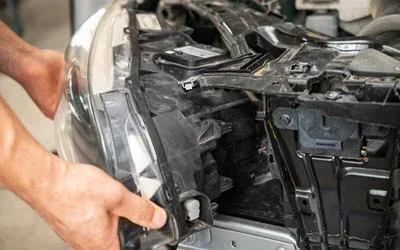
In some cases, the adaptive headlight malfunction points to a deeper issue that makes replacing the entire headlight assembly the most practical solution. This is especially true when the headlight projector lens is cracked, the internal motor is seized, or water has entered the housing and damaged multiple components.
BMW headlight assemblies can be expensive, but they often come pre-assembled with the adaptive motor, sensor, and wiring already integrated. Replacing the full assembly eliminates multiple potential failure points at once. If your BMW is older and has high mileage, this can be the most reliable long-term fix.
Some owners wonder whether they can replace just one headlight when the other is still working. The answer depends on the extent of the damage and your budget. However, replacing both headlights ensures matching performance and beam patterns, which is important for safety. If cost is a concern, check whether replacing just one headlight is feasible for your specific model and budget.
Keep in mind that electrical issues like a dead battery or corroded connections can sometimes mimic headlight problems. If your BMW has a car not starting but battery is fine what to check situation alongside headlight issues, the root cause may be a shared electrical problem that needs a broader diagnosis.
Conclusion
Fixing an adaptive headlight malfunction BMW issue is manageable for most owners who follow a systematic approach. Start with the basics, check the fuses and sensors, and work your way up to more complex repairs. Most headlight problems have straightforward solutions that do not require a dealership visit.
Regular maintenance and prompt attention to warning signs keep your BMW’s adaptive headlight system working at its best. Whether it is a simple sensor cleaning or a full module replacement, addressing the problem early saves time, money, and most importantly, keeps you safe on dark roads. Trust your instincts, use quality parts, and do not hesitate to call a professional when the job calls for it.
Your BMW’s adaptive headlights are a premium feature that makes night driving safer and more comfortable. Taking care of them ensures you get the full value from this advanced technology. Now you have the knowledge to tackle most headlight problems with confidence.
Frequently Asked Questions
Can I still drive my BMW if the adaptive headlights are malfunctioning?
Yes, you can still drive your BMW with a headlight malfunction warning, but your adaptive beam feature will be disabled. The basic headlights should still work, giving you standard illumination. However, you lose the automatic beam adjustment and cornering light feature. It is best to get the problem fixed promptly to restore full functionality and ensure safe night driving.
How much does it cost to fix a BMW adaptive headlight malfunction?
Costs vary widely depending on the root cause. A simple fuse replacement or sensor cleaning may cost under $50. Replacing a headlight leveling sensor typically runs between $150 and $300. A headlight control module replacement can range from $300 to $800, and a full headlight assembly replacement may cost $1,000 or more per unit. Getting an accurate diagnosis first helps you budget properly.
What causes a BMW headlight error message to appear on the dashboard?
Headlight error messages appear when the BMW control unit detects a fault in the adaptive headlight system. Common triggers include a failed sensor, a dead motor, a blown fuse, corroded wiring, or a software glitch. The diagnostic trouble code stored in the system tells you exactly which component is causing the issue. A BMW-compatible scanner is the fastest way to read this code and pinpoint the problem.
Can I reset the adaptive headlight system myself?
Yes, you can perform a basic reset in many cases. Start by disconnecting the car battery for about 15 minutes, then reconnect it. This clears temporary error codes and resets the system. For a full recalibration, you may need a diagnostic scanner to clear codes and run the relearn procedure. Check your BMW owner’s manual for model-specific reset instructions.
Do I need to use OEM BMW parts for headlight repairs?
OEM parts are recommended because they match the exact specifications of your BMW’s adaptive system. Aftermarket parts can work well too, but quality varies significantly. Cheap aftermarket components may not integrate properly with the control module or may fail sooner. If you choose aftermarket parts, look for reputable brands with positive reviews and warranty coverage.
How often should BMW adaptive headlights be serviced?
BMW adaptive headlights do not require regular scheduled service like oil changes. However, a visual inspection of the headlight assembly, wiring, and connectors during routine maintenance visits is a good practice. Cleaning the headlight housing and checking for moisture intrusion should be done every few months, especially if you drive in harsh weather or on salted roads in winter.